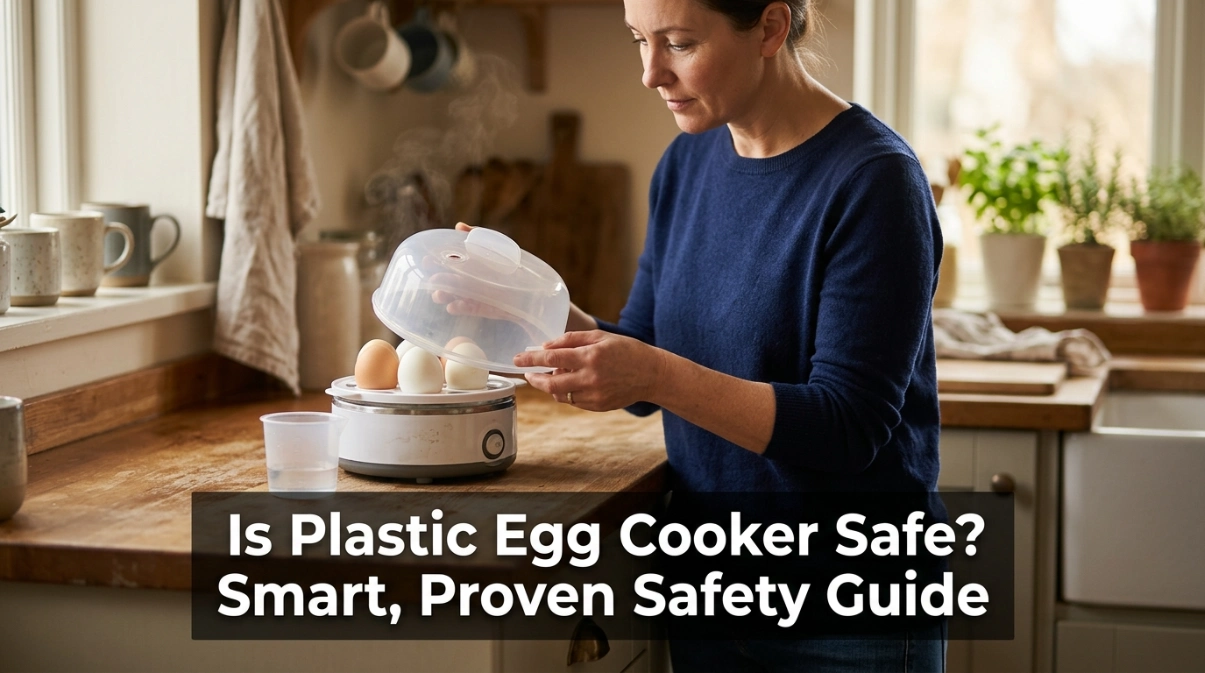
If you are asking is plastic egg cooker safe, the short answer is yes, in many cases. A plastic egg cooker can be safe when its plastic parts are made for food contact and the heat they will face.
The part I pay most attention to is not simply whether the cooker contains plastic. I check what that plastic is meant to do, how close it gets to heat, and whether it shows any sign of damage.
A microwave egg cooker and an electric egg cooker also need different checks. Microwave models must be clearly rated for microwave use, while an electric model should only be used as its maker directs.
This guide will show you what warning signs to look for, what can cause trouble, and when it is safer to stop using the cooker.
Common Signs of the Problem
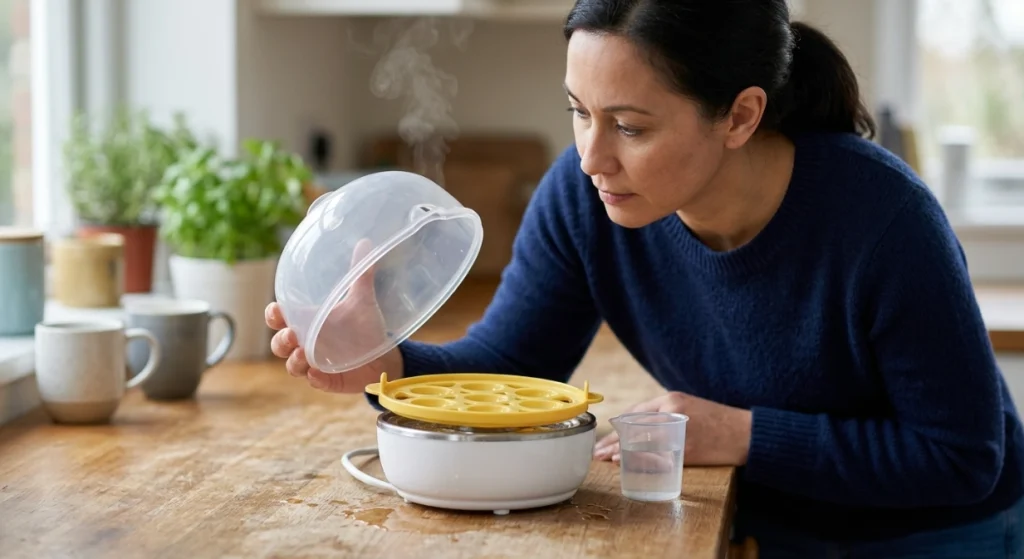
Most plastic egg cookers do not fail without giving some clues first. Heat damage, poor lid fit, or a blocked steam vent can often be spotted early.
I would stop and check the cooker if I noticed any of these signs.
| Symptom | Likely Cause | Quick Fix |
|---|---|---|
| Plastic is bending | Too much heat or damaged plastic | Stop using the part |
| Strong plastic smell | Overheating or poor material | Unplug and inspect |
| Steam escapes badly | Lid or vent problem | Check lid and vent |
| Water leaks out | Poor fit or cracked part | Replace damaged part |
| Eggs cook unevenly | Wrong water level | Measure water again |
A light smell from a brand-new appliance may sometimes come from manufacturing residue. A strong smell that keeps returning, however, should not be ignored.
Check the lid, egg tray, and measuring cup as well. If a plastic tray or lid has warped, I would rather use the correct replacement egg tray or replacement lid than keep forcing the damaged part into place.
A missing measuring cup can also lead to poor results. Using the correct replacement measuring cup can make it easier to add the right amount of water.
Possible Causes
The biggest concern is usually heat. Plastic that is designed for an egg cooker should handle the normal heat and steam produced during cooking.
Problems can start when the cooker is used outside its intended limits.
Common causes include:
- Plastic parts that are not rated for the appliance.
- Using a microwave model that is not marked microwave-safe.
- Running an electric cooker with too little water.
- Blocking the steam vent.
- Using a cracked, melted, or badly scratched lid.
- Letting mineral buildup affect the heating plate.
- Using the wrong lid or egg tray.
- Continuing to use the cooker after a burning smell appears.
The words “BPA-free” can be useful, but I would not rely on that label alone. A part should also be intended for food use and suitable for the heat or microwave conditions it will face.
The manufacturer’s instructions matter too. A plastic part that is safe in one cooker may not be safe in another appliance or in a microwave.
How to Fix Safety Concerns: Is Plastic Egg Cooker Safe?
There is no reason to take the appliance apart to check its safety. Most useful checks can be done from the outside.
Check the Plastic Rating
Start with the bottom of the cooker, packaging, or instruction manual. Look for directions about food contact, heat, dishwasher use, and microwave use.
For a microwave egg cooker, I would not put it in the microwave unless the maker clearly says it is suitable for microwave cooking.
With an electric cooker, use only the lid, egg tray, and other parts designed for that model.
Inspect the Egg Tray and Lid
Remove the lid and look closely at the plastic. Check for cracks, bubbles, deep scratches, bending, sticky areas, or sections that appear melted.
A slightly scratched surface is different from badly damaged plastic. If the part has changed shape or no longer fits well, replacement is the safer choice.
Check that the lid sits where it should. Do not force a warped lid onto the cooker.
Keep the Steam Vent Open
Steam needs a safe way to escape. Covering the vent can cause more pressure and heat to build inside the cooker.
I always treat the steam vent as a safety part rather than a small design detail. Keep food, towels, and other objects away from it while cooking.
Be careful when lifting the lid after cooking. Hot steam can burn skin even when the plastic itself is safe.
Use the Correct Amount of Water
For an electric egg cooker, the water amount affects both cooking time and heat. Follow the measuring guide supplied with your model.
Do not assume more water is always better. Too much water can increase cooking time, while too little may cause the heating plate to become very hot.
| Problem | Recommended Solution | Difficulty |
|---|---|---|
| Wrong water amount | Use marked measuring cup | Easy |
| Warped lid | Replace the lid | Easy |
| Blocked steam vent | Clear it before use | Easy |
| Scale on heating plate | Descale as directed | Easy |
| Burning smell continues | Stop using cooker | Easy |
Check the Heating Area
If you have an electric egg cooker, inspect the heating plate after it has cooled and the power cord has been unplugged.
White or chalky marks are often mineral deposits from water. They do not always mean that the cooker has overheated.
Regular cleaning can help the heating plate work as intended. A soft cloth, non-abrasive sponge, or diluted white vinegar may be useful if the manufacturer’s care instructions allow it.
Never pour water into electrical openings. The electric base should not be submerged unless the manual clearly says that it can be.
Watch for Overheating
Many electric egg cookers use an auto shut-off or overheat protection system. These features should never be bypassed.
If the cooker keeps getting too hot, smells burnt, shuts off in an unusual way, or shows flashing lights, unplug it and let it cool.
Do not open a sealed heating unit to try to repair the safety switch yourself. Electrical work inside a small appliance can create shock and fire risks.
Mistakes to Avoid
One mistake is assuming that all plastic can handle boiling water or microwave heat. Plastic products are made for different jobs.
Another mistake is continuing to use a lid after it has warped. A bad fit can allow hot water or steam to escape in places you do not expect.
Do not:
- Place a non-microwave-safe cooker in a microwave.
- Cover the steam vent.
- Touch the lid or steam outlet during cooking.
- Run an electric unit without the required water.
- Use cracked or partly melted plastic.
- Submerge an electrical heating base.
- Bypass an auto shut-off or safety switch.
- Open a sealed heating unit for DIY repairs.
I would also avoid harsh scrubbers on plastic parts. Deep scratches can make the surface harder to keep clean.
Let the cooker cool before washing it. Sudden temperature changes can also put stress on some plastic parts.
When to Replace the Egg Cooker
A minor mineral deposit or dirty heating plate does not normally mean that the whole appliance needs replacement.
Physical heat damage is different. If the plastic melts, becomes badly warped, develops deep cracks, or gives off a strong burning smell during normal use, I would stop using it.
Replacement also makes sense if the electrical base becomes unusually hot, the power cord is damaged, or the auto shut-off no longer works as expected.
If only a removable lid or egg tray is damaged, check whether the manufacturer offers the correct replacement part. Do not use a random part that happens to fit.
For a low-cost cooker with electrical faults, replacement is often more sensible than trying to repair a sealed heating unit.
My Personal Experience
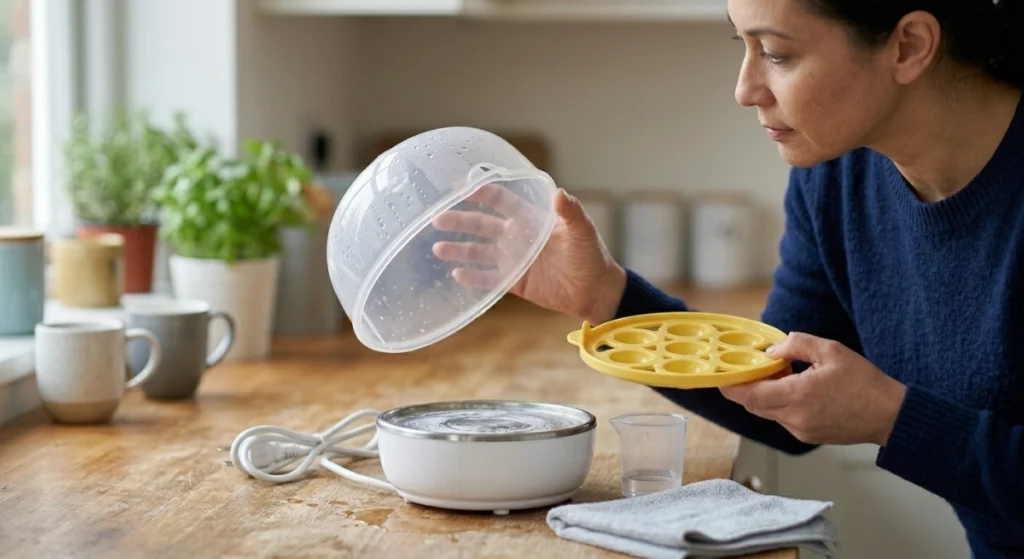
My practical approach to this question is to judge the condition and intended use of the plastic rather than becoming worried by the word “plastic” itself.
I first check the instructions. Then I inspect the lid, tray, steam vent, water level, and heating area before deciding whether there is a real safety problem.
The most useful lesson is that appearance matters. Plastic that keeps its normal shape, has no cracks, and is being used within the maker’s directions is very different from plastic that has melted or warped.
I would also take a recurring burning or chemical-like smell seriously. Stopping the cooker and checking it is far better than hoping the smell disappears.
Simple care makes a difference too. Keeping the vent clear and removing mineral buildup can prevent several heat-related problems without touching the electrical parts.
Final Thoughts
So, is plastic egg cooker safe? Usually, yes, if the cooker uses food-safe, heat-appropriate plastic and you use it exactly as intended.
For microwave models, make sure the product is rated for microwave use. For electric models, use the right water level, keep the steam vent open, and never immerse or open the electrical base.
Replace plastic parts that are cracked, badly scratched, melted, sticky, or warped. Stop using the appliance if you notice a persistent burning smell or a failed safety feature.
The safest rule is simple: use the right cooker for the right type of heat, keep it in good condition, and never ignore visible heat damage.
1 thought on “Is Plastic Egg Cooker Safe? Smart, Proven Safety Guide”