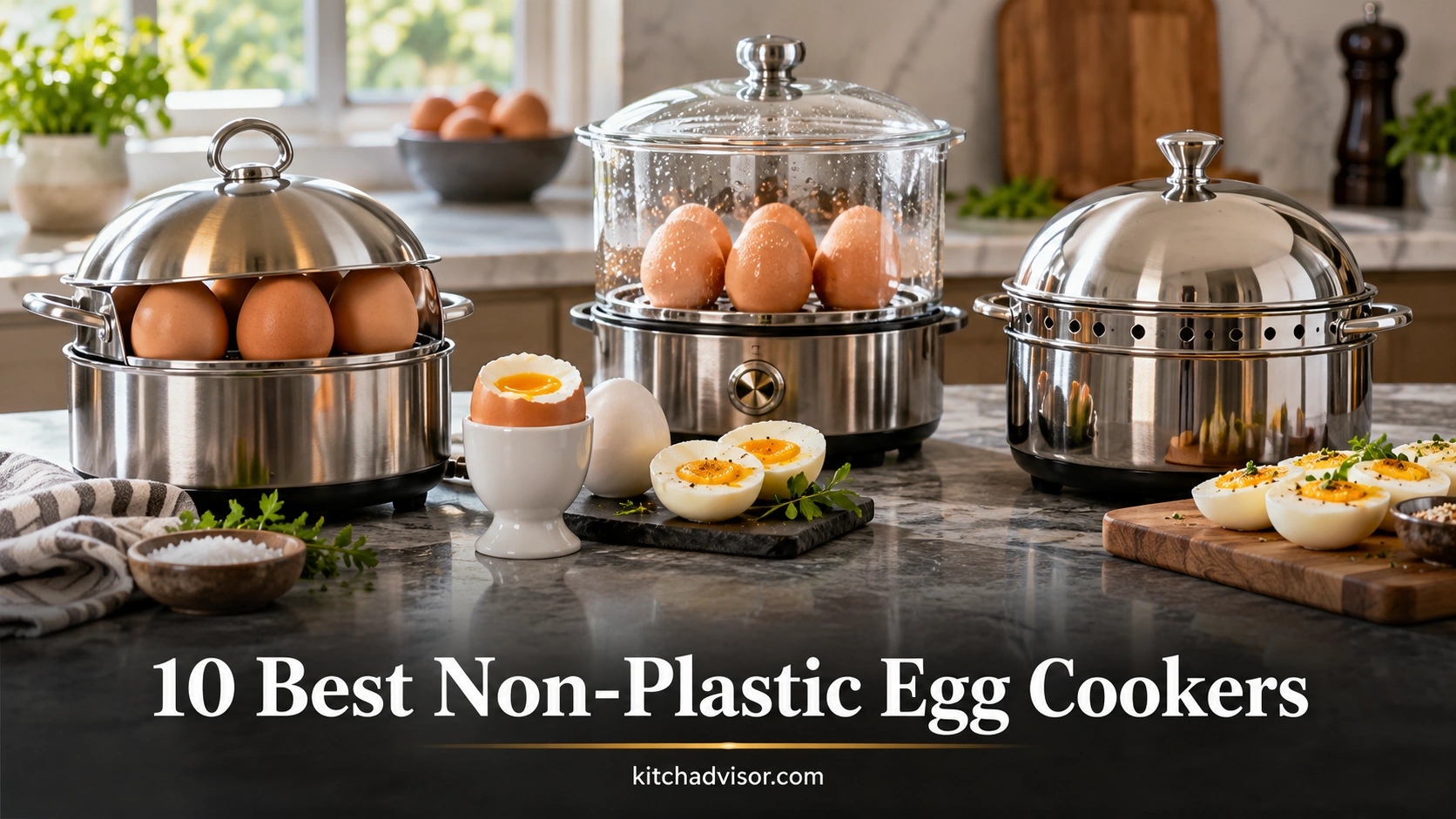
Egg cookers promise a shortcut past the fussy stovetop routine of timing, water temperature, and guesswork peeling. Electric models and microwave pods both aim to make soft, medium, or hard-boiled eggs consistent, but the materials touching your food vary far more than the marketing suggests. Many “BPA-free” appliances still route steam through plastic lids or seat eggs on plastic trays, even when the base is stainless steel.
Ceramic and stoneware cookers sidestep that question by cooking eggs directly against a fired clay or glazed surface, usually in a microwave. Stainless-steel electric cookers steam eggs over heated water, which keeps the food-contact area metal in the better designs, though many still rely on plastic measuring cups, poaching bowls, or lid seals. Reading the parts list matters as much as reading the headline material claim.
A cooker labeled “stainless steel” can still include plastic trays, handles, or internal seals that touch the eggs directly, so checking the actual food-contact surface is the only way to judge how non-plastic a model really is. The picks below range from all-ceramic microwave pods to steel electric steamers, with honest notes on where plastic sneaks back in.
Best for hands-off boiling with minimal plastic contact: Elite Gourmet EGC648 Egg Boiler Cooker
Best all-ceramic microwave omelet maker: American Made Stoneware Pottery Omelette Cooker
Best for large families needing high capacity: AMPOIA 14 Eggs Electric Egg Cooker
Best microwave cooker for quick scrambled eggs: EliteVibe Ceramic Microwave Egg Cooker
Best nearly all-steel electric steamer: Annie & Mia Design All Stainless Steel Egg Cooker
Elite Gourmet EGC648 Egg Boiler Cooker
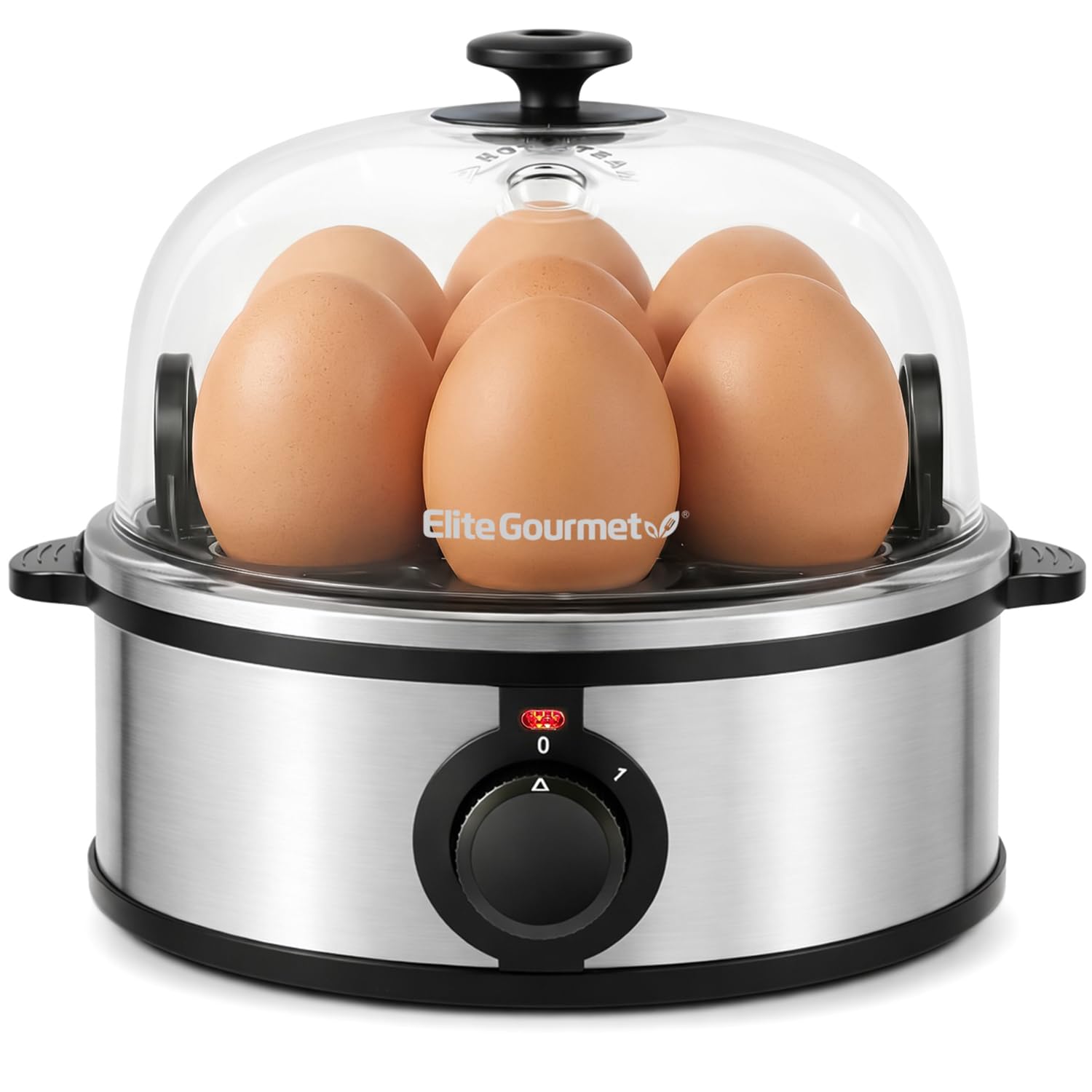
This is a solid pick for anyone who wants a steel-bodied cooker with useful accessories, as long as they accept that the trays and lid are still largely plastic.
Pros
- Cooks up to seven eggs with soft, medium, or hard settings
- Auto shut-off buzzer prevents overcooking
- Doubles as a poacher and omelet steamer
Cons
- Egg tray, poaching tray, and lid are plastic, not steel
- Only the outer housing is stainless steel
- A few buyers reported units failing early
The stainless-steel shell looks the part on a countertop, but the food-contact surfaces, the egg tray and poaching insert, are BPA-free plastic. That’s standard for this appliance category, and the piercing pin on the measuring cup is a nice touch for reducing cracked shells. Cleanup is easy since the removable parts go in the dishwasher. Buyers consistently praise how easily shells peel afterward, though a small number received units with faulty buzzers or power buttons.
Elite Gourmet EGC-508 Rapid Egg Cooker

A budget-friendly steel-and-plastic hybrid that suits shoppers who mainly want reliable hard-boiled eggs without fuss.
Pros
- Stainless steel cover with a cool-touch handle
- Removable egg tray for quick cold-water rinsing
- Comes with a 16-recipe booklet
Cons
- Egg tray and internal components include plastic
- Some buzzers reportedly won’t shut off automatically
- May need two cycles for fully hard yolks
This model shares the same basic formula as its sibling: a metal cover paired with plastic trays and a plastic base housing. The cool-touch handle is a genuine convenience, and the auto shut-off works well for most users. A recurring complaint involves the alarm sticking on, which is worth watching for during the return window. For simple boiling with minimal fuss, it performs reliably.
Pampered Chef Ceramic Egg Cooker

This is a strong choice for buyers who want the food-contact surface to be entirely ceramic, with only the removable grip made of silicone.
Pros
- Ceramic body with a silicone sleeve for grip, not plastic
- Works in both microwave and oven
- Dishwasher safe for easy cleanup
Cons
- Silicone handle gets hot during longer cooks
- Lid fits loosely, which complicates transport
- Draining poached-egg water can be messy
The ceramic construction here is a genuine advantage for anyone avoiding plastic food-contact surfaces, since only the removable silicone sleeve isn’t ceramic. It handles scrambled eggs and small omelets well in the microwave. The loose-fitting lid means this isn’t the cooker to carry across the kitchen without a steady hand, and the silicone grip needs a towel when pulled hot from the microwave.
American Made Stoneware Pottery Omelette Egg Cooker
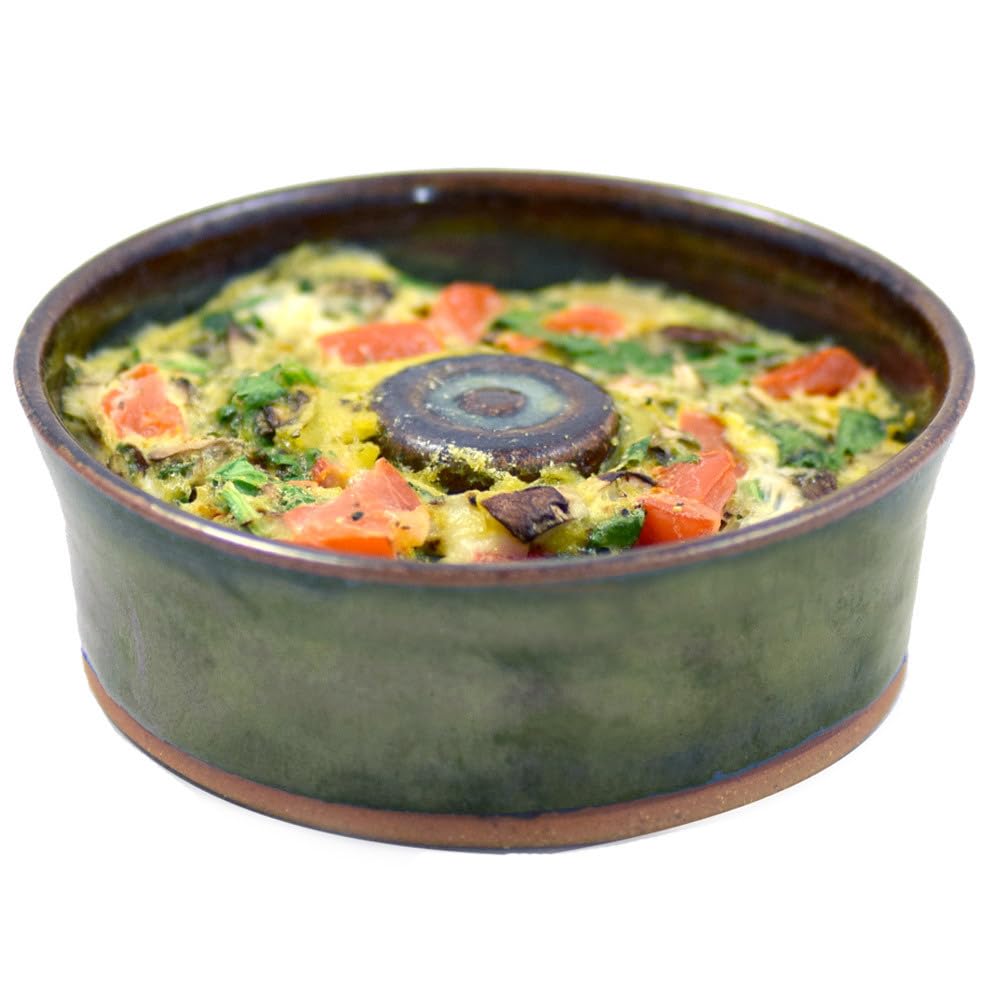
This handmade stoneware cooker is the closest thing on this list to a fully plastic-free egg tool, with no plastic components at all.
Pros
- Entirely stoneware, no plastic parts anywhere
- Even heating from thick-walled pottery
- Made in the USA with lead-free, cadmium-free glaze
Cons
- Small capacity, best for one to two eggs
- Fragile compared to steel or hard ceramic options
- Some units have arrived cracked in shipping
For shoppers whose main goal is avoiding plastic entirely, this stoneware dish delivers exactly that. The center riser promotes even cooking, and the glaze is confirmed lead-free and cadmium-free. It’s sized for a single omelet or two beaten eggs, not a family batch, and its pottery construction means it can chip or crack if dropped or shipped roughly. Handle it the way you’d handle a ceramic mixing bowl.
Wdcfxy Microwave Egg Cooker

This ceramic pod with a chimney lid works well for single servings and includes a genuinely cool-touch hollow handle.
Pros
- Ceramic body and lid, dishwasher safe
- Chimney vent reduces microwave splatter
- Hollow handle stays cooler than solid designs
Cons
- Capacity suits one serving, not a family breakfast
- Some buyers find it oversized for a single egg
- Cook times need adjusting per microwave wattage
The dome-shaped chimney lid is a practical detail, letting steam escape so the dish is less likely to erupt inside the microwave. Ceramic construction throughout means no plastic touches the eggs, and the hollow handle genuinely stays cooler to the touch. It works for eggs, soup, or small vegetable portions, though a couple of reviewers found it too large for cooking just one egg efficiently.
AMPOIA 14 Eggs Electric Egg Cooker
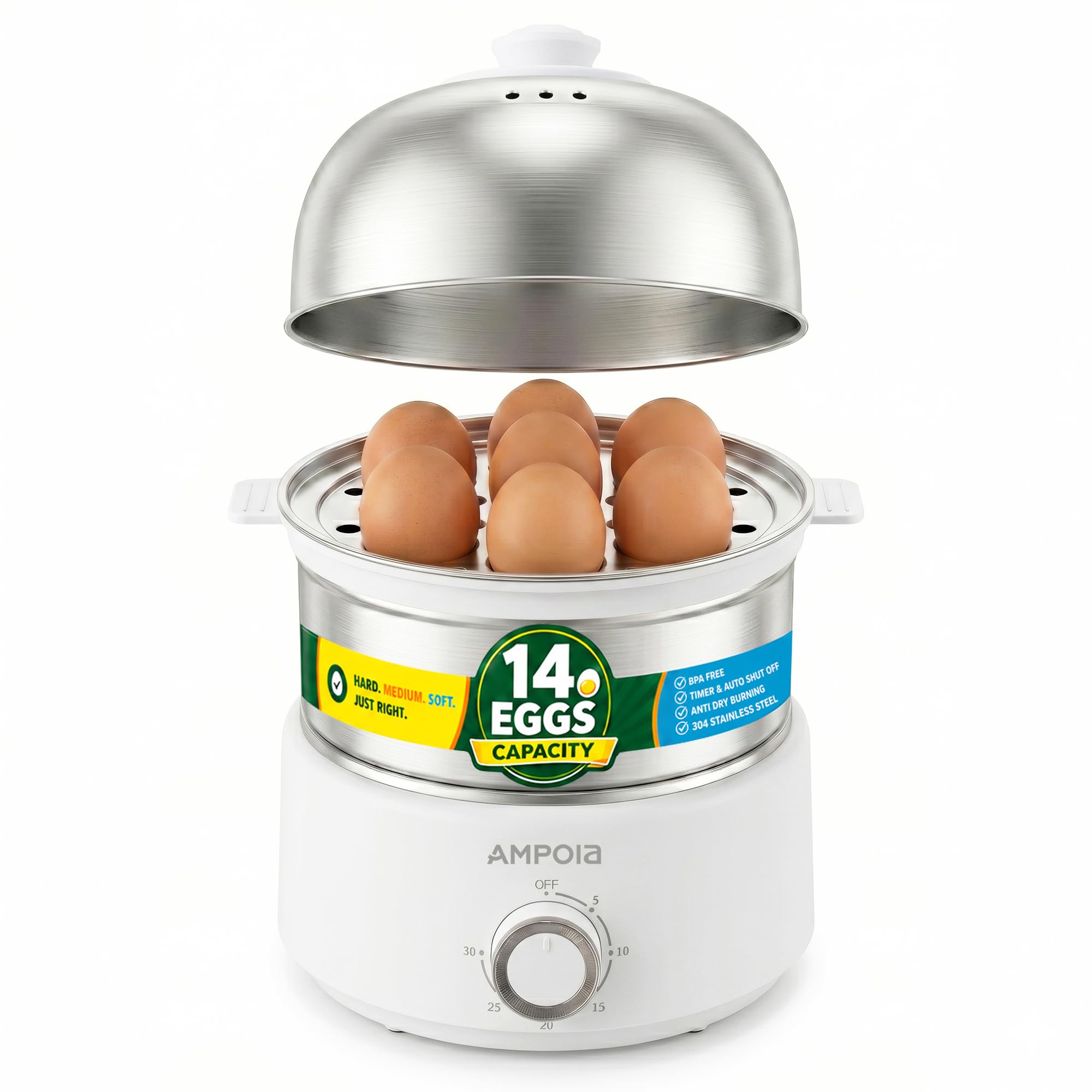
This dual-tier steamer suits large households that need to cook a big batch of eggs alongside vegetables or seafood in one session.
Pros
- 304 stainless steel lid, trays, and poaching bowl
- Stacks two tiers for up to 14 eggs at once
- 30-minute timer with boil-dry protection
Cons
- Heat-resistant components are still plastic (PP)
- Bulkier footprint than single-tier cookers
- A few buyers reported early failures
The stated food-contact parts, lid, trays, and poaching bowl, are 304 stainless steel, which is a meaningful step up from cookers relying on plastic trays. Heat-resistant polypropylene appears in handles and structural spots, so it isn’t entirely plastic-free, but the steel-to-plastic ratio favors steel more than most competitors here. The dual-tier design is genuinely useful for meal prepping eggs and vegetables simultaneously.
Annie & Mia Design 8-Egg Cooker
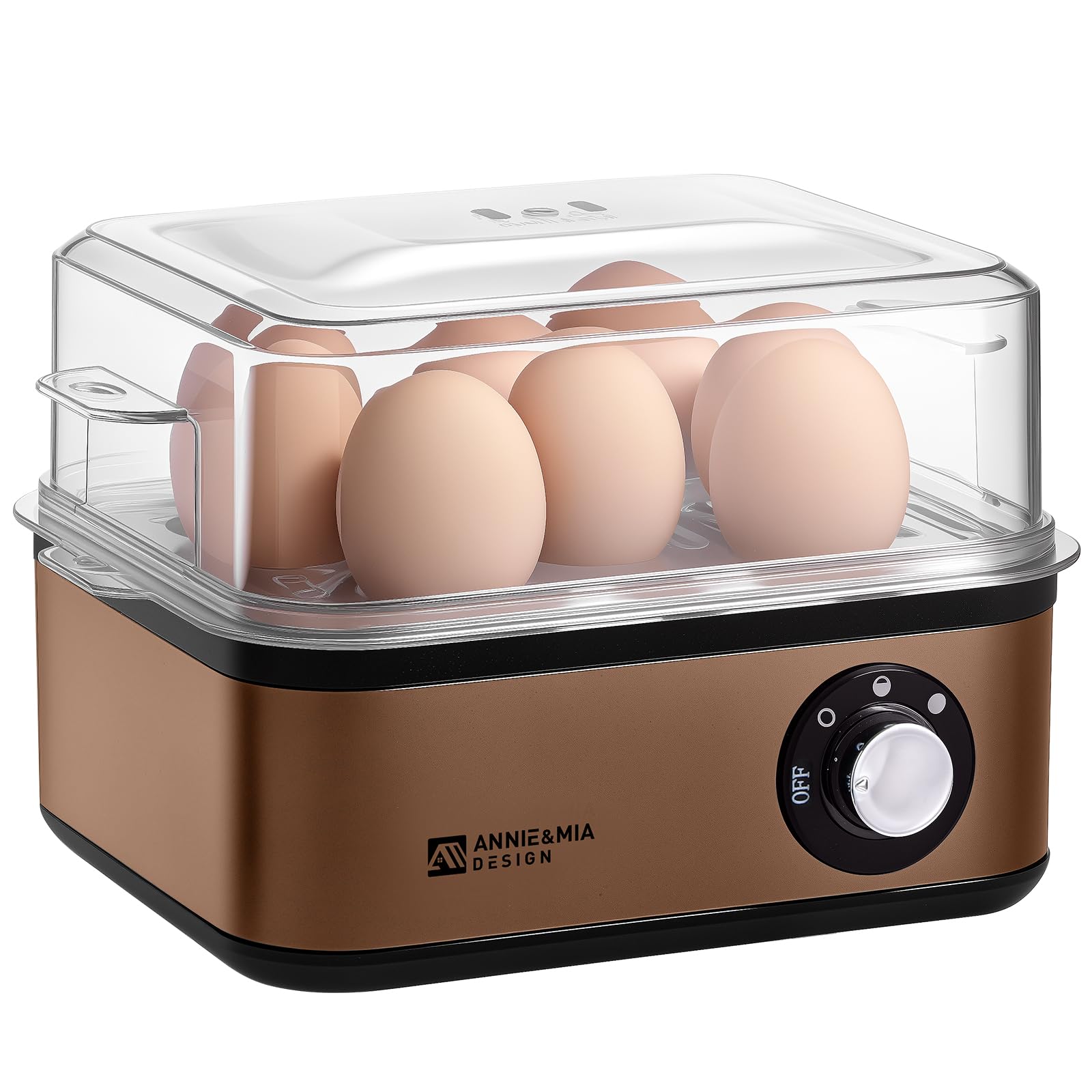
A knob-controlled steamer with a fingerprint-resistant steel finish, best for buyers who want manual control over doneness rather than a fixed timer.
Pros
- Fingerprint-resistant stainless steel exterior
- Knob control for soft, medium, or hard settings
- Holds up to eight eggs per batch
Cons
- Omelette bowl and measuring cup are plastic
- Some buyers report inconsistent hard-boil results
- Instruction diagrams have caused piercing confusion
The knob interface is straightforward once you match water amounts to your desired firmness, and the steel shell resists fingerprints better than typical brushed finishes. The omelette bowl and piercing measuring cup remain plastic, so this isn’t a fully metal food-contact solution. A subset of reviewers found large eggs came out under-set on the hard setting, so testing your first batch before committing to a routine is worth the time.
EliteVibe Ceramic Microwave Egg Cooker

This all-ceramic pod handles scrambled eggs and small omelets well, provided you stick to two eggs rather than pushing it to three.
Pros
- Ceramic body and lid with non-stick coating
- Vented lid reduces microwave splatter
- Hollow handle designed to stay cooler
Cons
- Handle can get uncomfortably hot despite design
- Cooking three eggs risks boil-over
- Sides cook faster than the center
Ceramic construction here means no plastic touches the eggs at any stage, and the non-stick coating helps with release. Reviewers consistently recommend limiting batches to two eggs, since three can cause the lid to lift under pressure. The hollow handle is meant to stay cool, but multiple users needed a potholder after longer microwave runs, so treat that claim with some skepticism.
Meedome Rapid Egg Cooker
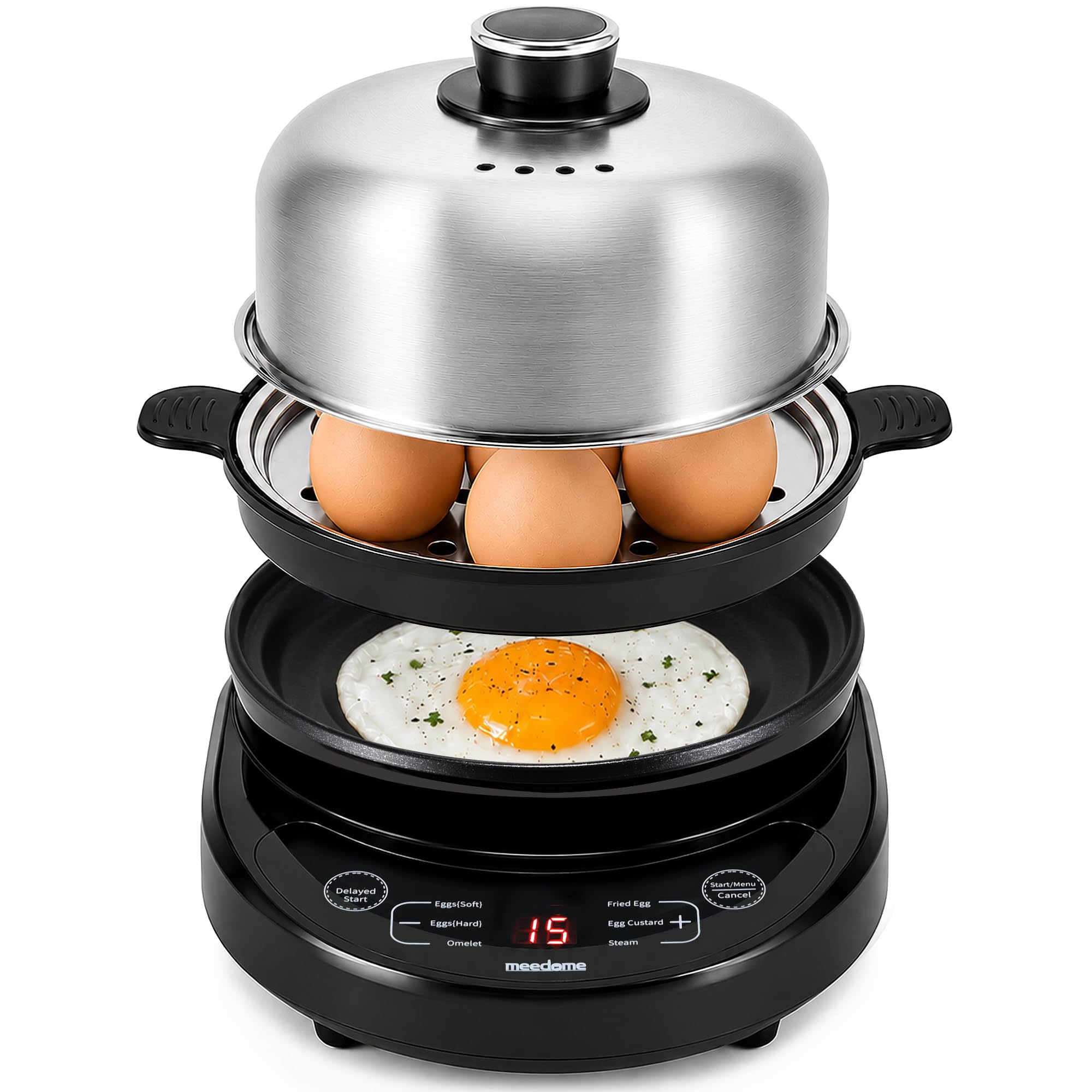
A compact steel-bodied steamer that works for fried eggs directly on the nonstick plate, though build consistency varies between units.
Pros
- Nonstick heating plate handles fried eggs directly
- Compact footprint fits small kitchens easily
- Dishwasher-safe trays and accessories
Cons
- Piercing pin reported as too dull to use reliably
- A few units failed to power on
- Lower average satisfaction than comparable models
The nonstick heating plate is a versatile feature, letting you fry an egg directly instead of only steaming inside a tray. Stainless steel forms the visible cover and trays, though the piercing tool included with the measuring cup drew complaints for not being sharp enough to reliably puncture shells. Quality control seems inconsistent based on scattered reports of dead-on-arrival units, so it’s worth testing the cooker immediately after unboxing.
Annie & Mia Design All Stainless Steel Egg Cooker

This is the most steel-forward electric cooker on this list, with the lid, tray, and poaching bowl all made from food-grade 304 stainless steel.
Pros
- Lid, egg tray, and poaching bowl are 304 stainless steel
- Auto shut-off with no timer needed
- Steams vegetables and dim sum alongside eggs
Cons
- Small plastic handles remain on the egg rack
- Thin lid can feel flimsy compared to the base
- Instructions on water measurement have drawn complaints
Reviewers specifically note switching to this model to reduce plastic in the kitchen, and the food-contact parts back that up: lid, tray, and poaching bowl are all 304 stainless steel. Two small plastic grips on the rack remain the exception. The 360-watt heater cooks a batch in five to thirteen minutes depending on firmness, and long-term users report continued satisfaction after months of daily use. The lid’s thin gauge is the main construction compromise, so gentle handling in the dishwasher matters.
Buying Guide
Check the Actual Food-Contact Surface, Not Just the Headline Material
A product name mentioning stainless steel doesn’t guarantee eggs never touch plastic. Look specifically at the egg tray, poaching bowl, and lid interior, since these are the parts that contact food directly. Housings and bases are often plastic even on “steel” cookers, which is acceptable since food never touches them.
| Material | Where it typically appears | Plastic-free? |
|---|---|---|
| Ceramic | Microwave pods, bowls | Yes, if lid and sleeve are also ceramic or silicone |
| Stoneware | Handmade microwave omelet dishes | Yes, typically fully plastic-free |
| Stainless steel | Electric cooker lids, trays, poaching bowls | Depends on handles, seals, and measuring cups |
| Silicone | Grips, sleeves | Not plastic, but check for separate plastic parts |
| Polypropylene (PP) | Heat-resistant handles, structural parts | Plastic, despite being BPA-free |
Understand What “BPA-Free” Actually Means
BPA-free labels only confirm the absence of one specific chemical, bisphenol-A. The material can still be plastic. A BPA-free tray is not the same as a ceramic or steel tray, and shoppers focused on reducing plastic contact should look past this label toward the actual material name.
Match Capacity to Household Size
Single-serving ceramic pods suit one or two eggs per session, ideal for solo cooks or quick lunches. Electric cookers holding seven to fourteen eggs suit families or meal-preppers who want a week’s worth of hard-boiled eggs in one cycle. Buying more capacity than needed adds counter space demands without daily benefit.
Weigh Microwave Convenience Against Electric Consistency
Microwave ceramic and stoneware cookers are fast and require no dedicated appliance space, but results vary more by microwave wattage and require manual timing. Electric cookers offer repeatable timers and auto shut-off, trading counter space for consistency.
Look for Vented Lids and Splatter Control
Microwave egg dishes benefit from a vented or chimney-style lid that lets steam escape gradually. Without ventilation, pressure can build and cause the lid to pop or eggs to erupt mid-cook.
Prioritize Dishwasher-Safe Parts for Daily Use
Removable trays and lids that go in the dishwasher save meaningful time for anyone using an egg cooker several times a week. Hand-wash-only components tend to get used less often over time.
Editor’s Choice
The American Made Stoneware Pottery Omelette Egg Cooker stands out as the most genuinely plastic-free option reviewed here, built entirely from handmade stoneware with a lead-free, cadmium-free glaze. It suits anyone prioritizing material purity over batch size or electric convenience.
For households needing higher capacity, the Annie & Mia Design All Stainless Steel Egg Cooker offers the best balance, with 304 stainless steel forming nearly every food-contact surface while still delivering the speed and auto shut-off convenience of an electric appliance.
Conclusion
Reducing plastic contact in an egg cooker comes down to reading past the headline material and checking what actually touches the eggs. Ceramic and stoneware microwave dishes deliver the cleanest material profile but limit batch size to one or two eggs. Stainless-steel electric cookers scale up for families while a handful of models keep plastic limited to small handles or seals rather than trays and lids.
Matching the cooker to your kitchen routine, single-serving ceramic for quick solo breakfasts, or a steel electric steamer for weekly batch cooking, makes the material question easier to answer alongside the practical one. Check the parts list before buying, since “stainless steel” in a product name doesn’t guarantee the tray your eggs sit in is metal.
FAQS
Does “BPA-free” mean a product is plastic-free?
No. BPA-free confirms the absence of one chemical, not the absence of plastic. A tray can be BPA-free polypropylene and still be plastic through and through.
Are ceramic and stoneware egg cookers microwave-safe?
The models reviewed here are rated microwave-safe by their makers, provided you follow suggested power levels and cook times. Glazes described as lead-free and cadmium-free carry that assurance from the manufacturer.
Can stainless-steel electric egg cookers be completely plastic-free?
Few are entirely plastic-free. Most include small plastic handles, seals, or measuring cups even when the lid, tray, and poaching bowl are steel. Checking the parts list against the description is the only reliable way to confirm.
Why do some microwave egg dishes have a chimney or dome lid?
The vent lets steam escape gradually during cooking, reducing the chance of a pressure buildup that causes the lid to pop off or eggs to splatter.
Is a stoneware or ceramic egg cooker more fragile than steel?
Yes. Pottery and ceramic dishes can chip or crack if dropped or shipped roughly, while stainless steel resists that kind of damage. Handle stoneware cookers the way you would a ceramic mixing bowl.