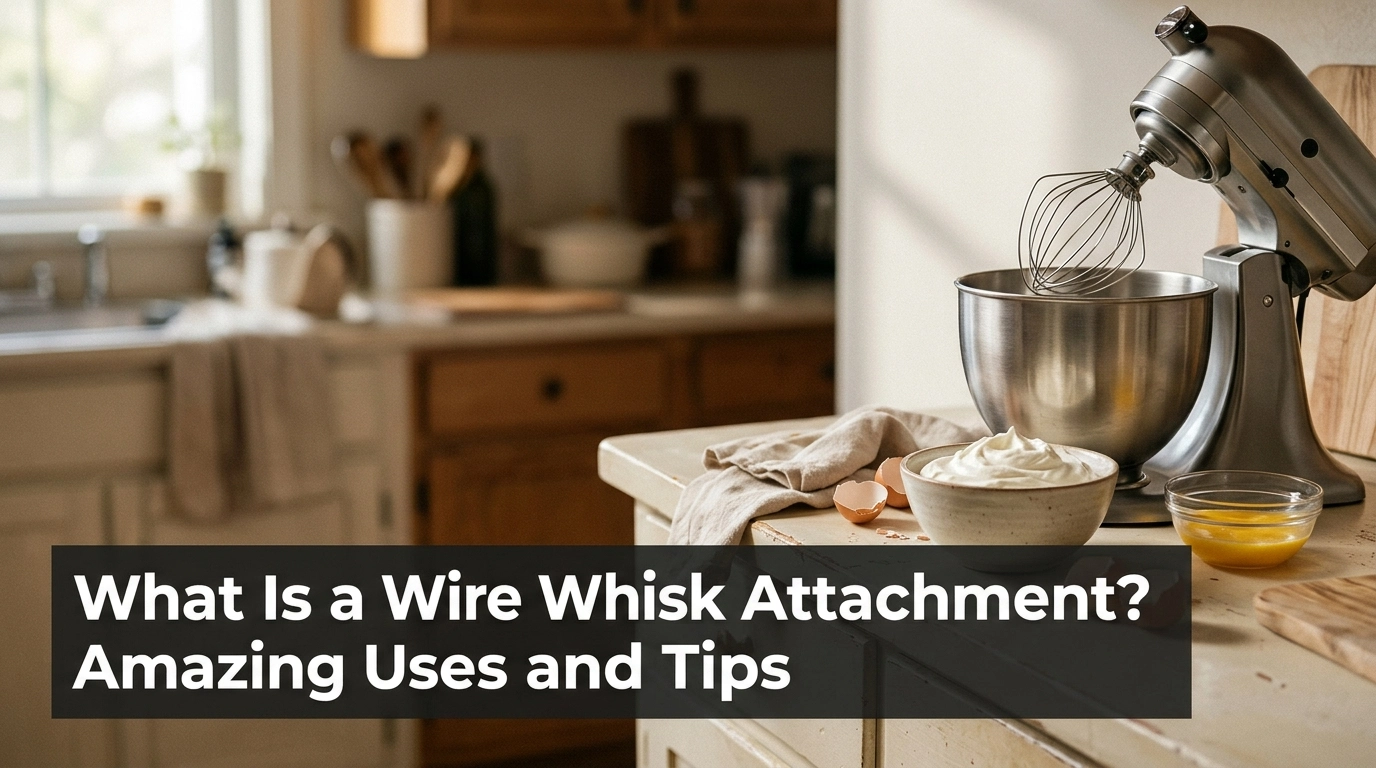
What is a wire whisk attachment? It is a mixing tool with thin metal wires that help add air to food as you mix. You can use it to whip cream, beat egg whites, and make light, fluffy mixtures.
I find it helpful to know which attachment to use before I start mixing. A wire whisk works well for some jobs, but it is not the best choice for every recipe.
In this guide, I will explain what a wire whisk attachment does, how to use it, and which mistakes to avoid. You will also learn how it differs from other mixer attachments.
Common Signs You Need a Wire Whisk Attachment
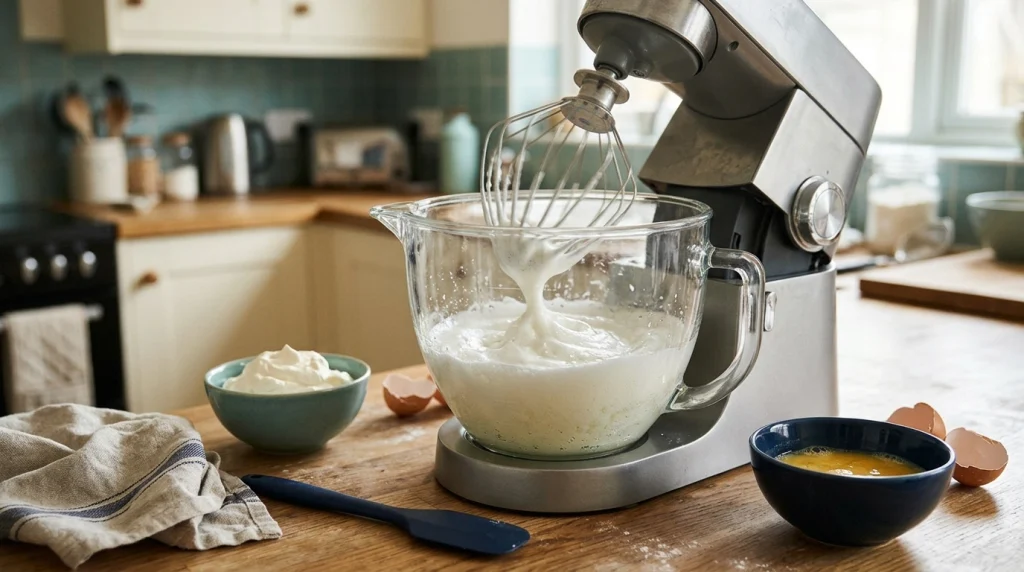
A wire whisk is useful when a recipe needs air mixed into it. It can make some foods lighter and softer.
Here are a few signs that this attachment is the right choice:
- You want fluffy egg whites for meringue.
- You need soft, whipped cream for a dessert.
- You want to mix eggs until they look even and smooth.
- You need to blend a thin batter or light sauce.
- You want to add air to a mixture as you beat it.
A whisk can also help mix dry or liquid ingredients in some recipes. However, it is not meant for every thick dough or heavy mixture.
Quick Guide to Wire Whisk Uses
| Food or Task | What the Whisk Does | Best Tip |
|---|---|---|
| Egg whites | Adds air to make foam | Use a clean, dry bowl |
| Whipped cream | Makes cream thicker and fluffy | Start with cold cream |
| Whole eggs | Blends yolks and whites | Use a low speed first |
| Light sauces | Helps mix smooth liquids | Keep the speed low |
| Thin cake batter | Blends light ingredients | Stop when just mixed |
Possible Causes of Poor Mixing Results
A wire whisk is simple to use, but the results can still go wrong. The issue may come from the attachment, the ingredients, or the way you mix.
These are the most common reasons.
- Wrong attachment: A wire whisk may struggle with thick dough or stiff mixtures.
- Wrong speed: Starting too fast can splash liquid out of the bowl.
- Dirty wires: Old food on the wires can affect mixing and cleanliness.
- Poor fit: A whisk that is not fitted securely may wobble or fall off.
- Wrong bowl: A very wide bowl may make it harder for the whisk to reach the ingredients.
- Too little food: A small amount may not reach the whisk wires well enough.
The recipe matters, too. For example, egg whites need a clean bowl without grease if you want a firm foam.
How to Use a Wire Whisk Attachment
Using the whisk the right way can help you get better results. Follow these simple steps.
1. Check the Attachment Fit
Turn off and unplug the mixer before fitting the whisk. Check that the attachment matches your mixer model.
Push or lock it into place as directed by the maker. Never force it if it does not fit.
2. Choose the Right Bowl
Use a bowl that is deep enough to hold the food without splashing. The whisk should reach the ingredients without scraping hard against the bottom.
A bowl that is too wide may leave some ingredients unmixed. If this happens, stop the mixer and scrape the sides with a spatula.
3. Start at a Low Speed
Begin slowly, especially when mixing eggs or cream. Increase the speed once the ingredients start to blend.
This helps reduce splashes and keeps food from flying out of the bowl. It also gives you more control over the mixing process.
4. Use the Whisk for Light Mixtures
A wire whisk is best for adding air and blending light ingredients. It works well for egg whites, cream, and some thin mixtures.
Do not use it to knead bread dough or mix very thick cookie dough. A dough hook or flat beater is usually better for those jobs.
5. Watch the Texture
Check the food as it mixes. Stop when it reaches the texture your recipe needs.
For whipped cream, look for soft or firm peaks, depending on the recipe. For beaten eggs, stop when the yolks and whites look evenly mixed.
6. Clean the Whisk After Use
Remove the attachment after switching off and unplugging the mixer. Wash it according to the maker’s care instructions.
Good cleaning helps prevent dried food from building up between the wires. Dry the attachment well before storing it.
If the wires are bent, loose, or rusty, stop using the attachment. Check whether the maker offers a compatible replacement whisk.
Wire Whisk vs. Other Mixer Attachments
Different attachments serve different purposes. Choosing the right one can save time and help protect your mixer.
| Attachment | Main Use | Best For |
|---|---|---|
| Wire whisk | Adds air and blends light foods | Cream and egg whites |
| Flat beater | Mixes thicker mixtures | Cake batter and cookie dough |
| Dough hook | Works and stretches dough | Bread and pizza dough |
A wire whisk has several thin wires. These wires move through the mixture and help trap air.
A flat beater has a broader shape. It is better for thicker foods that need steady mixing rather than lots of air.
A dough hook is shaped to pull and stretch dough. It is the better choice for many yeast-based recipes.
Can You Use a Wire Whisk for Eggs?
Yes. A wire whisk can beat whole eggs for omelets, scrambled eggs, and some baking recipes.
It can also whip egg whites until they form foam. For best results, make sure the bowl and whisk are clean and free from grease.
A wire whisk attachment is not the same as an egg cooker. An egg cooker heats eggs with water or steam, while a whisk mixes ingredients.
Mistakes to Avoid
Small mistakes can affect both your results and your safety. Keep these points in mind.
- Do not fit the whisk while the mixer is running. Turn off and unplug the mixer first.
- Do not force an attachment into place. It may be the wrong part for your model.
- Do not use the whisk for heavy dough. This may strain the mixer.
- Do not start at full speed. Food may splash out of the bowl.
- Do not touch moving wires. Keep hands and utensils away while mixing.
- Do not ignore damage. Bent wires or a loose fitting may make the attachment unsafe.
Never open the mixer’s motor housing to fix an attachment problem. If the fitting or drive mechanism is damaged, contact the maker or a qualified repair service.
When to Replace the Wire Whisk Attachment
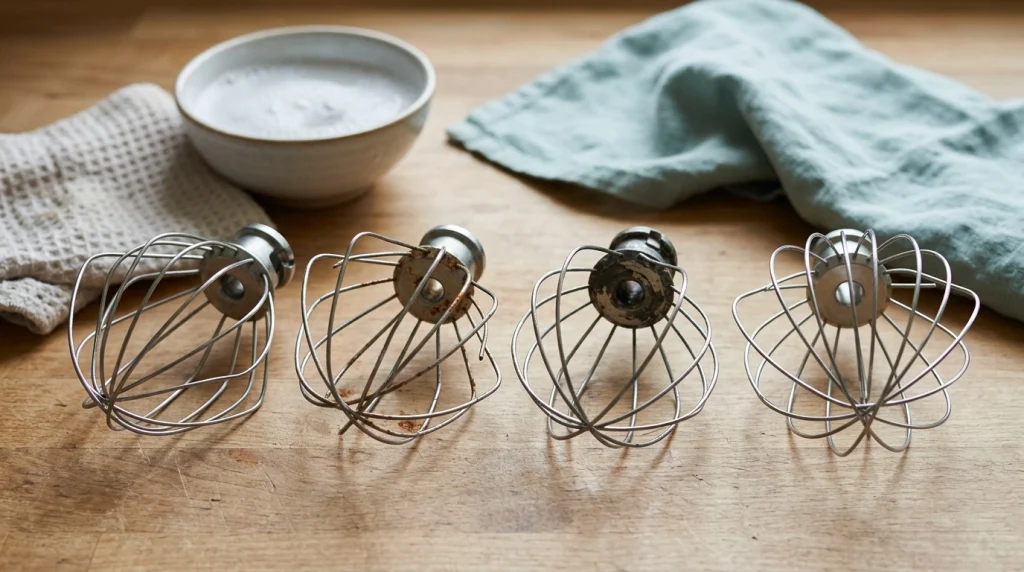
A wire whisk can last a long time if you care for it properly. However, some signs mean it is time to replace it.
| Problem | Recommended Action | Replace It? |
|---|---|---|
| Bent or broken wires | Stop using it | Yes |
| Rust on the wires | Check the maker’s advice | Usually |
| Loose fitting | Check the attachment and mixer | If damaged |
| Food stuck between wires | Wash and clean well | Not usually |
| Wrong size or model | Check compatibility | Only with the correct part |
Before buying a replacement, check the mixer model number and the maker’s parts guide. Not every whisk fits every mixer, even if the attachments look alike.
If the mixer itself makes unusual noises or the attachment drive will not hold the whisk, the problem may be with the mixer rather than the attachment.
My Personal Experience
When comparing the main uses of a wire whisk, I find it easiest to think about the texture I want. If the goal is a light, airy mixture, a whisk is often the right tool.
For example, when beating eggs, I would start at a low speed and increase it slowly. I would then check the mixture rather than leave the mixer running for too long.
For whipped cream, cold cream and a clean bowl are useful starting points. I would stop as soon as the cream reaches the texture the recipe calls for, since overmixing can make it grainy.
I would not use a whisk to mix stiff bread dough. A dough hook is made for that job and is usually the more suitable choice.
These are practical usage guidelines, not a claim of a specific hands-on test with a particular mixer model. Your results may vary with the attachment design, mixer speed, and recipe.
Final Thoughts
A wire whisk attachment is a mixing tool made to blend light ingredients and add air. It is especially useful for egg whites, whipped cream, beaten eggs, and other light mixtures.
For the best results, choose a suitable bowl, start slowly, and check the texture as you mix. Clean the whisk after use and replace it if the wires or fitting become damaged.
Most importantly, match the attachment to the task. A wire whisk is great for light, fluffy results, while a flat beater or dough hook is better for heavier mixtures.