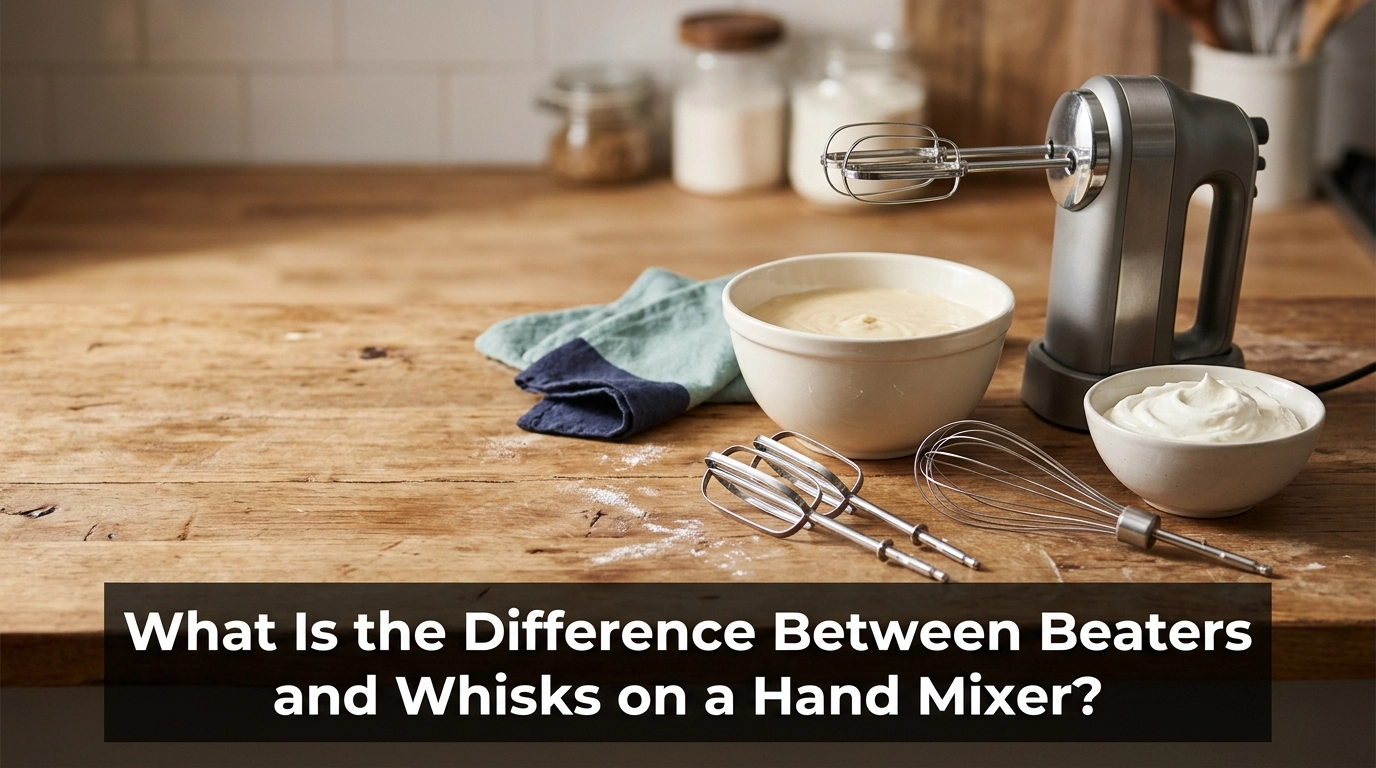
Beaters and whisks may look alike, but they do different jobs. If you use the wrong one, your cake mix may turn out heavy or your cream may take too long to whip.
The main difference is simple. Beaters mix and blend ingredients, while whisks add air to make mixtures light and fluffy.
I would choose beaters for cake batter, cookie dough, and mashed potatoes. For whipped cream, egg whites, and light foams, I would reach for a whisk.
In this guide, I’ll explain how each attachment works, when to use it, and which common mistakes to avoid.
Common Signs You Are Using the Wrong Attachment
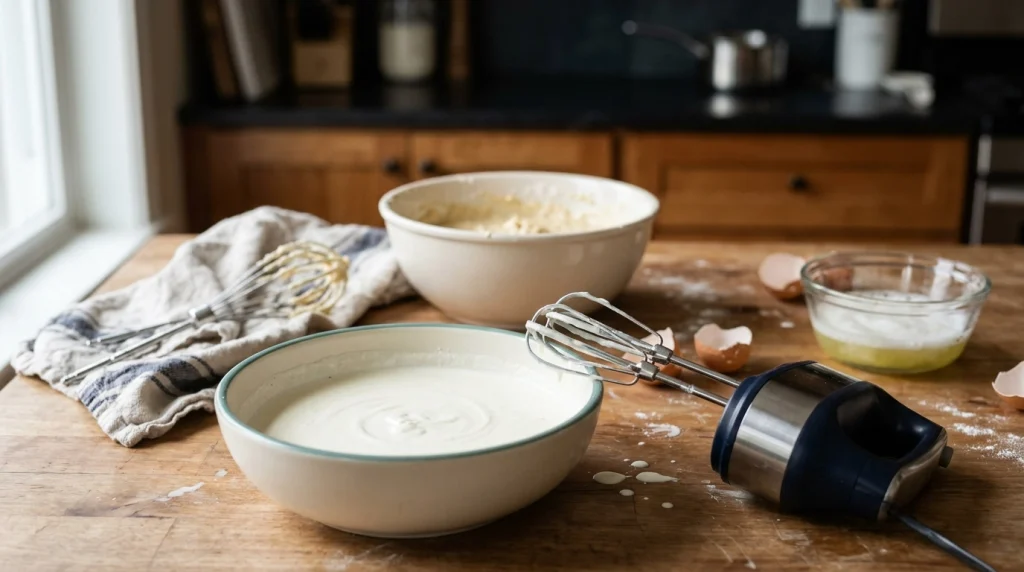
The wrong attachment can make a simple recipe harder than it needs to be. Here are a few signs to watch for.
- Your cream stays runny: You may be using beaters when a whisk would help add more air.
- Your cake batter has lumps: You may need to mix with beaters at a suitable speed.
- Your egg whites take too long to foam: A whisk is usually the better choice.
- Your mixture splashes everywhere: Your speed may be too high, or your bowl may be too small.
- Your dough gets stuck around the beaters: The mixture may be too thick for a standard hand mixer.
These signs do not always mean the attachment is wrong. Ingredients, mixing time, and speed also affect the result.
Possible Causes of Poor Mixing Results
A hand mixer works best when you match the attachment to the food.
Here are the main things that can affect your results:
- Wrong attachment: Beaters are built for general mixing. Whisks are built to trap air in a mixture.
- Wrong speed: Starting too fast can send flour or liquid out of the bowl.
- Cold ingredients: Cold butter may stay in hard lumps instead of blending well.
- Wrong bowl: A wide, shallow bowl can make whipping messy.
- Overmixing: Too much mixing can make some batters tough or cause whipped cream to become grainy.
A useful rule is to start slowly and increase the speed as needed. Let the attachment do the work.
What Is the Difference Between Beaters and Whisks on a Hand Mixer?
The key difference is their shape and purpose. Beaters usually have solid metal loops or narrow frames. Whisks have many thin wires that catch and move air through the mixture.
| Feature | Beaters | Whisks |
|---|---|---|
| Main job | Mix and blend | Whip and add air |
| Best foods | Cake batter, cookie mixtures, soft butter | Cream, egg whites, light sauces |
| Typical result | Smooth, even mixture | Light, airy mixture |
| Thick mixtures | Better suited to soft, thick mixes | Best for lighter mixtures |
| Common limitation | May add less air | May struggle with thick batter |
Not every hand mixer includes a whisk attachment. Some models use special wire beaters that can handle both mixing and light whipping.
Always check your mixer’s manual before fitting an attachment. The shape and approved use can vary by model.
When to Use Beaters
Beaters are the everyday choice for most home baking. They mix ingredients together and help make a smooth blend.
Use them for:
- Cake and muffin batter
- Softened butter and sugar
- Cookie mixtures that are not too thick
- Pancake batter
- Mashed potatoes, if your mixer manual allows it
- Cream cheese mixtures and simple frostings
Beaters work well when you need to combine ingredients without making a very airy foam.
They are not meant for very stiff dough. If the mixture becomes hard to move, stop the mixer and use a suitable dough hook or mix by hand.
When to Use Whisks
Whisks are the better choice when air is important. Their thin wires move through the mixture and help create small air bubbles.
Use them for:
- Whipped cream
- Egg whites
- Meringue mixtures
- Light egg mixtures
- Thin sauces that benefit from extra air
- Some light batters, if your recipe allows it
For whipped cream, start at a low speed to avoid splashes. Increase the speed gradually as the cream thickens.
For egg whites, use a clean, grease-free bowl. Even a small amount of fat can make it harder to build a stable foam.
Can You Use Beaters Instead of a Whisk?
Sometimes, yes. Standard beaters can mix eggs and may whip cream, depending on their design and the power of the mixer.
However, a whisk is often more effective when you want a light, airy result. If your cream is taking a long time to thicken, check the attachment, the cream’s fat content, and its temperature before assuming the mixer is faulty.
Can You Use a Whisk Instead of Beaters?
You can use a whisk for some light mixtures, but it is not a good substitute for beaters in every recipe.
A whisk may struggle with thick cake batter or a heavy butter-and-sugar mixture. Thick food can also put extra strain on an attachment that was designed for light mixing.
If a recipe calls for creaming butter and sugar, use beaters. If it calls for whipping egg whites, use a whisk when one is available.
How to Choose and Use the Right Attachment
Follow these simple steps to get a better result from your hand mixer.
1. Check the Recipe
Look at the texture you want to create. For a smooth, blended mixture, choose beaters. For a light foam or whipped topping, choose a whisk.
2. Fit the Attachment Correctly
Switch off and unplug the mixer before changing attachments. Match each attachment to the correct socket, following the maker’s instructions.
Never force an attachment into place. If it does not fit, check that it belongs to your model.
3. Start at a Low Speed
Place the beaters or whisk into the bowl before turning on the mixer. Start slowly, then raise the speed as the ingredients combine.
This helps reduce splashes and keeps dry ingredients in the bowl.
4. Watch the Mixture
For cake batter, stop when the ingredients are just combined unless the recipe says otherwise. For whipped cream, keep going until it reaches the texture your recipe needs.
Check often near the end. A few extra seconds can change soft peaks into stiff peaks or turn whipped cream grainy.
5. Clean the Attachments After Use
Unplug the mixer before removing the attachments. Wash them according to the manual, then dry them well before storage.
Check whether the beaters and whisk are dishwasher-safe. Do not put the mixer body or electrical parts in water.
If an attachment is bent, rusty, cracked, or no longer locks into place, stop using it and look for a compatible replacement approved by the manufacturer.
Mistakes to Avoid
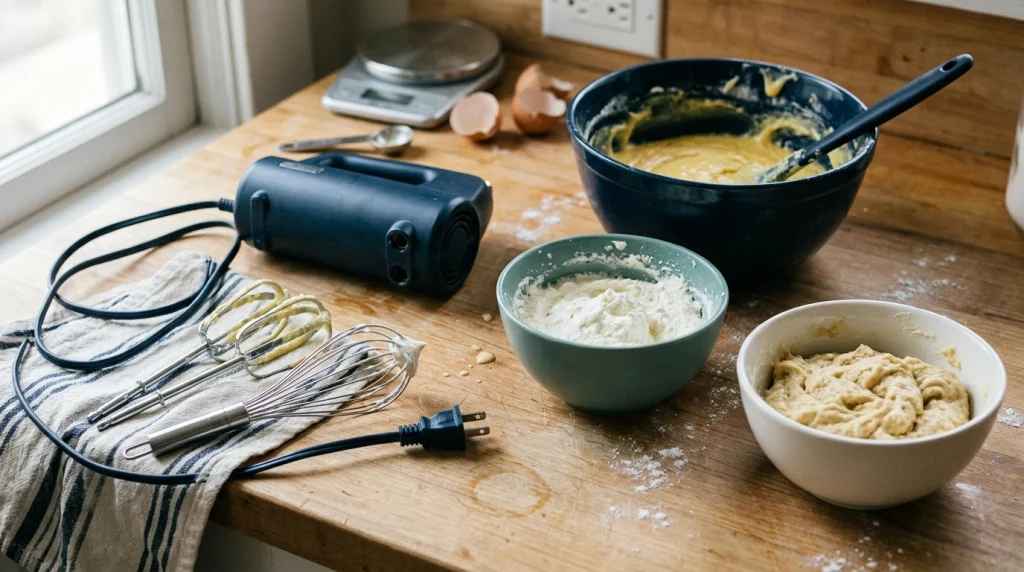
A few small errors can affect both the result and the life of your mixer.
- Using a whisk for thick dough: This can strain the mixer and damage an unsuitable attachment.
- Starting at full speed: This can cause splashes and make ingredients harder to control.
- Overmixing cake batter: This may lead to a tougher texture.
- Whipping cream for too long: The cream can become grainy and eventually turn toward butter.
- Changing attachments while plugged in: Always unplug the mixer first.
- Forcing incompatible parts: Use only attachments approved for your specific model.
If the mixer smells burnt, makes an unusual noise, or becomes very hot, switch it off and unplug it. Let it cool as directed in the manual. Do not open the motor housing or attempt unsafe electrical repairs.
When to Replace a Beater or Whisk
You usually do not need a new hand mixer just because one attachment is worn.
Consider replacing the attachment if it is bent, badly corroded, cracked, or loose in the socket. Use the manufacturer’s replacement part or one confirmed to fit your exact model.
If the mixer itself will not run, sparks, or keeps overheating, stop using it. A repair service can assess whether repair or replacement makes more sense.
| Problem | Recommended solution | Difficulty |
|---|---|---|
| Bent beater | Replace with a compatible part | Easy |
| Damaged whisk wires | Replace the whisk | Easy |
| Attachment will not lock | Check fit and model compatibility | Easy |
| Mixer overheats repeatedly | Stop use and seek service | Professional |
| Motor fails or sparks | Unplug and arrange inspection | Professional |
My Practical Experience With Beaters and Whisks
When choosing between these attachments, I focus on the result the recipe needs rather than the shape of the tool alone.
For a cake mixture, I would use beaters to blend the butter, sugar, eggs, and other ingredients. I would work at a low speed first, then increase it only as needed.
For whipped cream or egg whites, I would choose a whisk. I would use a clean bowl and check the texture often instead of running the mixer for a fixed time.
One mistake worth avoiding is assuming that a whisk is always better because it looks more delicate. It is great at adding air, but it is not designed to handle every thick mixture.
The main lesson is to match the attachment to the task, use a suitable speed, and stop when the mixture reaches the texture you want.
Final Thoughts
Beaters and whisks have different jobs, even though both attach to a hand mixer.
Choose beaters for blending, creaming, and mixing thicker ingredients. Choose a whisk for whipping cream, beating egg whites, and adding air to light mixtures.
If your results are poor, check the attachment first, then review the speed, ingredients, and mixing time. With the right tool and a little care, most everyday mixing jobs become easier.