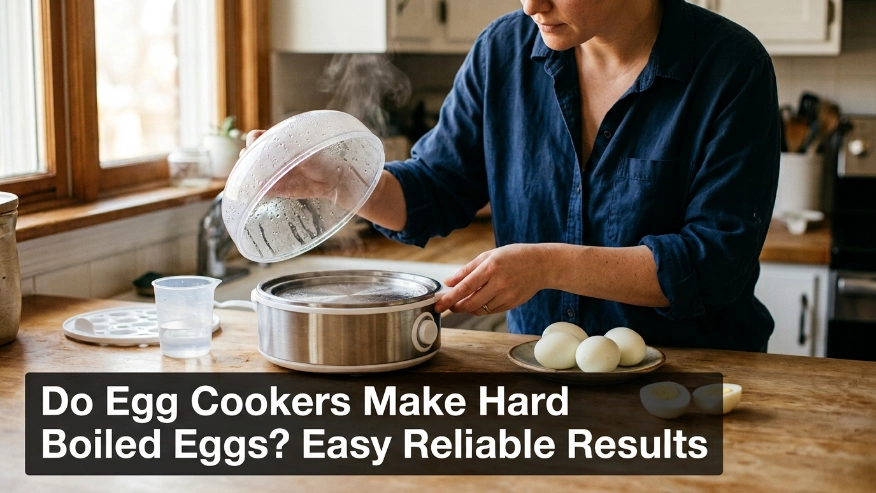
Yes, you can steam dumplings in an egg cooker if the cooker is designed to steam food as well as cook eggs. I have found that this works best with models that include a steaming bowl, poaching tray, or other steam-safe insert.
I would not place dumplings straight on an exposed heating plate. I also would not assume every egg tray can hold food safely. The manual for your model should always come first.
When I tested this method, my biggest problems were not complicated. I used too little water during one test, packed the dumplings too close together during another, and expected frozen dumplings to cook as fast as fresh ones.
Once I corrected those mistakes, the process became much easier. Here is what I learned about using an egg cooker for dumplings safely.
Can You Steam Dumplings in an Egg Cooker? Common Signs of a Problem
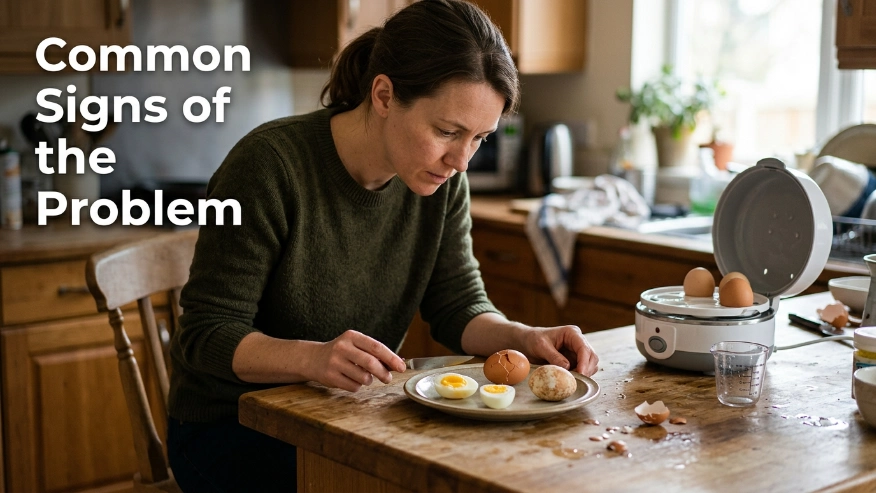
The first sign of trouble is usually an undercooked center. The outside may look soft and ready while the filling is still cold.
I have also seen wrappers become dry around the edges when the cooker shuts off before enough steam has passed through them. Too little water is often the reason.
Another common issue is sticking. Soft dumpling wrappers can attach themselves to a solid steaming tray, especially if condensation collects underneath them.
Watch for these signs:
| Symptom | Likely Cause | Quick Fix |
|---|---|---|
| Dumplings cold inside | Too little steam or time | Add water and steam longer |
| Dry or tough wrapper | Cooker shut off early | Use a little more water |
| Dumplings stick | Wet or unsuitable tray | Use the proper steam insert |
| Uneven cooking | Tray overcrowded | Leave space between dumplings |
| Weak steam | Mineral buildup | Descale the heating plate |
I also pay attention to steam escaping from unusual places. Some steam around the lid may be normal, but a badly fitted lid can reduce the amount reaching the food.
If your original water cup is missing, a replacement measuring cup made for your model can make repeat testing easier. I also keep a non-abrasive sponge nearby because cooked starch and mineral marks are much easier to remove before they harden.
Possible Causes
An egg cooker is a very simple appliance. Water heats on a small plate, turns into steam, and the steam cooks the food above it.
That means most dumpling problems come down to water, steam flow, food placement, or timing.
Common causes include:
- Too little water for the dumpling size
- Frozen dumplings needing more time
- Dumplings packed tightly together
- Using an insert that blocks steam
- A lid that is not seated correctly
- A blocked steam vent
- Mineral buildup on the heating plate
- The cooker shutting off before the filling is done
- Using a model that was designed only for eggs
The egg cooker’s water measuring cup can also be confusing. Many cups have marks for soft, medium, and hard eggs rather than steaming times.
Those marks do not automatically tell you the right water amount for dumplings. I treat them as egg settings, not universal food measurements.
How to Fix Issues When You Steam Dumplings in an Egg Cooker
Check Whether the Cooker Supports Steaming
This is my first step.
Look at the manual and the included parts. If the maker describes a tray or bowl as suitable for steaming vegetables or other foods, dumplings are much more practical.
If the unit only has an egg rack with holes designed to hold eggs upright, I would not balance dumplings on it unless the manufacturer says the tray can be used that way.
Never place food directly on the heating element.
Start With a Small Batch
My first good test used only a few dumplings.
This gave steam plenty of room to move around them. It also made it easier to check whether the egg cooker could complete the job before I wasted a full batch.
Leave a little space between each dumpling. Do not stack them unless the cooker and steaming tray were built for layers.
Frozen dumplings usually take longer than refrigerated or freshly made dumplings. Their size and filling also affect the result.
Use Enough Water
Water is what controls the cooking time in many basic egg cookers.
When the water is gone, some units shut themselves off. That feature is useful for eggs, but it can stop the process before thick dumplings are fully cooked.
I start conservatively and check the food after one cycle. If the center is not ready, I let the cooker cool as directed, add more water, and continue steaming.
Do not pour extra water onto a very hot heating plate unless your appliance instructions allow it. Sudden contact with a hot surface can cause rapid boiling and splashing.
Check the Lid and Steam Vent
Steam needs to stay around the dumplings long enough to cook them.
I make sure the lid sits correctly and that nothing blocks its vent. I never cover the steam hole with a towel, plate, or other object.
Blocking the vent can create an unsafe buildup of hot steam.
When I open the lid, I tilt it away from my face and hands. The escaping steam can burn skin very quickly.
Check the Dumplings Before Eating
The wrapper is not a reliable sign that the filling is fully cooked.
A dumpling can look soft on the outside and still be cool in the middle. This matters even more when the filling contains raw meat.
I cut one open from the center of the batch during testing. For meat-filled dumplings, a food thermometer is even better. Cook the filling fully according to its ingredients or the package directions.
Remove Mineral Buildup
A cloudy or chalky heating plate can reduce heating performance over time.
This happened to my cooker after repeated use with tap water. Steam production became slower, even though the unit still turned on.
Keeping the cooker clean made a clear difference.
I descale only according to the manufacturer’s directions. White vinegar or a suitable descaling solution may be useful on models that allow it.
Never immerse the electrical base in water. I wipe the cooled surface with a soft cloth or non-abrasive sponge instead.
| Problem | Recommended Solution | Difficulty |
|---|---|---|
| Weak steam | Descale heating plate | Easy |
| Uneven dumplings | Reduce batch size | Easy |
| Early shut-off | Adjust water amount | Easy |
| Steam escaping | Reseat lid | Easy |
| Cooker will not heat | Check outlet and cord | Easy |
| Damaged heating unit | Stop using cooker | Replace/service |
Check the Power Source if There Is No Steam
If the cooker does not heat at all, dumplings are not the real problem.
I check that the power cord is firmly connected and test the wall outlet with another small appliance. I also make sure the control button has fully engaged.
A damaged cord, burning smell, sparks, or repeated power loss is different. I unplug the cooker and stop using it.
I would never open a sealed heating base or try to bypass its safety switch.
Mistakes to Avoid
My biggest mistake was treating the egg cooker like a full-size food steamer. It is much smaller and often has less water capacity.
Do not overload the tray. More dumplings can mean less steam around each one and a much longer cook time.
I would also avoid these mistakes:
- Blocking the lid’s steam vent
- Letting wrappers touch the heating plate
- Running the cooker without water
- Using a tray not intended for heated food
- Adding water carelessly to a hot plate
- Assuming one egg cycle will cook every dumpling
- Eating meat-filled dumplings without checking the center
- Opening or modifying the electrical base
- Bypassing the auto shut-off or overheat protection
Another mistake is using generic replacement parts without checking compatibility. A replacement lid or tray must fit the exact cooker correctly.
A poor lid fit can let too much steam escape. The wrong insert may also sit too close to the heating surface.
When to Replace the Egg Cooker
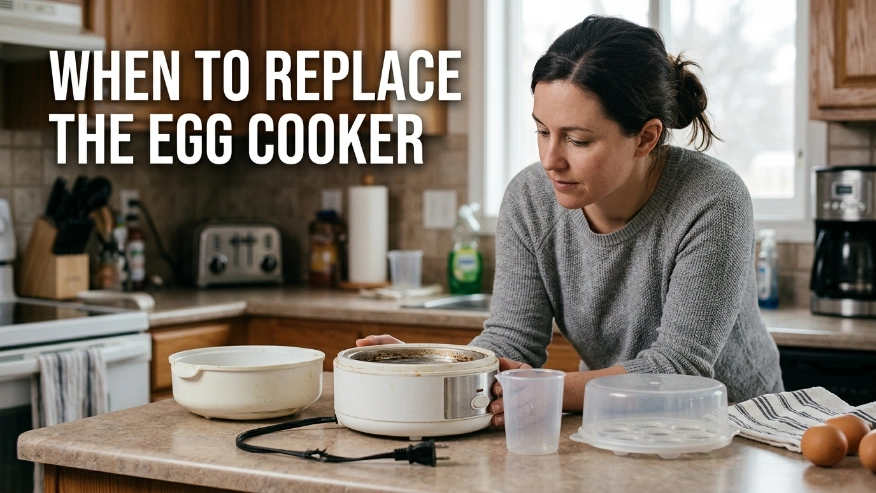
I would not replace a working egg cooker just because dumplings need a second steaming cycle. That may simply mean the appliance has a small water capacity.
Replacement makes more sense when the cooker has an electrical or heat-related fault.
Stop using it if you notice a damaged power cord, melted plastic, sparks, a persistent burning smell, serious leaking near electrical parts, or a heating plate that no longer works correctly.
Repeated overheating is another warning sign.
If the cooker works perfectly for eggs but cannot steam dumplings well, it may not be broken at all. The design may simply be too small or too limited for this job.
In that case, I would use another steaming method instead of trying to modify the egg cooker.
My Personal Experience
My first dumpling test was not very good.
I put too many frozen dumplings close together and used about the same amount of water I normally used for eggs. The cooker shut off, but the dumplings in the middle were still cool.
For my next test, I reduced the batch size and spaced each dumpling apart. I also made sure the lid was seated correctly and gave the cooker enough water to create a longer steaming cycle.
That worked much better.
I learned that frozen dumplings need more patience. Fresh or refrigerated dumplings warmed through more evenly in my small cooker.
I also learned not to chase exact cooking times. Egg cooker size, water capacity, dumpling thickness, filling, and starting temperature can all change the result.
The safest method was to test a small batch first and check the center before serving.
I also noticed that regular cleaning helped steam production. Once mineral buildup started covering the heating plate, the cooker became slower.
Descaling the cooled appliance according to its care instructions restored much more consistent heating.
Final Thoughts
So, can you steam dumplings in an egg cooker? In many cases, yes.
The best setup is an egg cooker that officially supports steaming and has a suitable steam-safe tray or bowl. Use a small batch, leave room between dumplings, add enough water, keep the steam vent open, and check that the filling is fully cooked.
Do not force the method if your egg cooker was made only for eggs.
And if you notice electrical faults, burning smells, damaged parts, or serious overheating, stop using the appliance rather than trying to repair the sealed heating unit yourself.
For me, the biggest improvement came from using fewer dumplings and giving the cooker enough water. Once I stopped treating every steaming cycle like an egg cycle, the results became much more reliable.
1 thought on “Can You Steam Dumplings in an Egg Cooker? Easy Safe Guide”