If you read hand mixer product descriptions, repair guides, or replacement part lists, you will eventually see the term housing. In plain language, the housing is the outer body or shell of the mixer. It is the part you hold, the part that gives the mixer its shape, and the part that encloses the working components inside.
That makes the housing more important than it may sound at first. It is not just cosmetic. The housing helps protect the motor and other internal parts, supports the controls, influences how the mixer feels in your hand, and can affect how durable or easy to clean the appliance is.
If you are trying to understand a product listing, inspect a damaged mixer, or compare models, knowing what the housing does gives you a better way to judge the mixer’s quality and safety.
What the hand mixer housing is
The housing is the mixer’s outer casing. It is the shell that surrounds the internal mechanism and forms the main body of the appliance. On a typical hand mixer, the housing includes the handle area, the upper body, and the sections around the speed controls and attachment area.
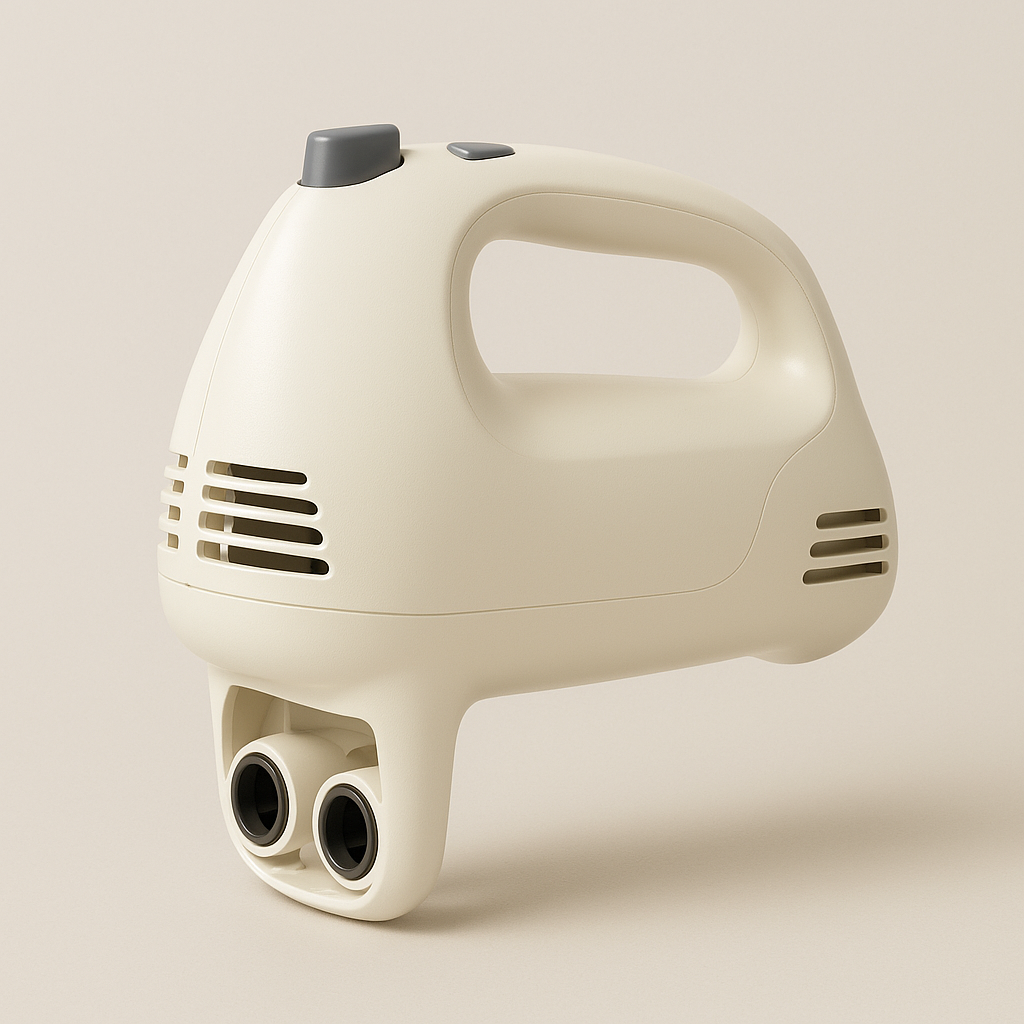
It is easy to confuse the housing with the beaters or other accessories, but they are different things. The beaters are removable mixing attachments. The housing is the permanent body that drives them.
A useful way to think about it: if you could remove the beaters, the cord, and any detachable accessories, what remains is largely the housing and the components it protects.
What parts are inside the housing
The exact layout varies by brand and model, but the housing usually encloses the mixer’s main working parts. These often include:
- the motor
- the gear assembly
- the speed control mechanism
- the attachment sockets
- internal wiring or battery components, depending on the model
- structural supports that hold the parts in place
Some mixers also route airflow through vents in the housing to help manage heat during use. That is one reason the shell design matters: it is not only covering parts, it is helping the appliance function as a system.
For a more detailed breakdown of mixer components, see What Parts Make Up a Hand Mixer? Complete Parts Guide for 2026.
Why this matters in practice
If a housing crack opens near the speed switch, the issue may not be just cosmetic. It can be a possible sign that the internal controls or wiring are under stress. If a seam is separating near the beater sockets, that may indicate the mixer is no longer holding its internal parts as securely as it should.
That is why housing damage deserves attention even when the mixer still turns on.
Why the housing affects performance and comfort
A hand mixer can work perfectly well on paper and still feel awkward in use because of its housing design. The outer body affects several everyday factors.
Grip and control
The shape of the housing determines how the mixer sits in your hand. A well-shaped body gives you a steadier grip, especially when you are mixing something thick or holding the mixer at an angle over a bowl.
A bulky or slippery housing can make the mixer feel harder to control. A slimmer housing may feel lighter and easier to move, but it can also feel less stable if the grip area is too narrow.
Balance and vibration
The housing helps determine weight balance. If the motor or internal parts are positioned so the mixer feels front-heavy, your wrist may work harder. If the housing design distributes weight more evenly, the mixer often feels easier to guide.
Housing fit also matters. Loose seams or poorly fitted panels can increase vibration or rattling. Even if the mixer still functions, that kind of fit can make it feel less solid.
Noise and long-term reliability
The housing does not create noise by itself, but it can influence how much noise you notice. A tight, well-assembled body may reduce rattling. A loose shell can make the mixer sound rougher during operation.
Long-term reliability is also tied to housing design because the shell protects the internal parts from impact, spills, and general wear. A stronger housing does not make a mixer indestructible, but it can help it hold up better to regular kitchen use.
Common housing materials and what they mean
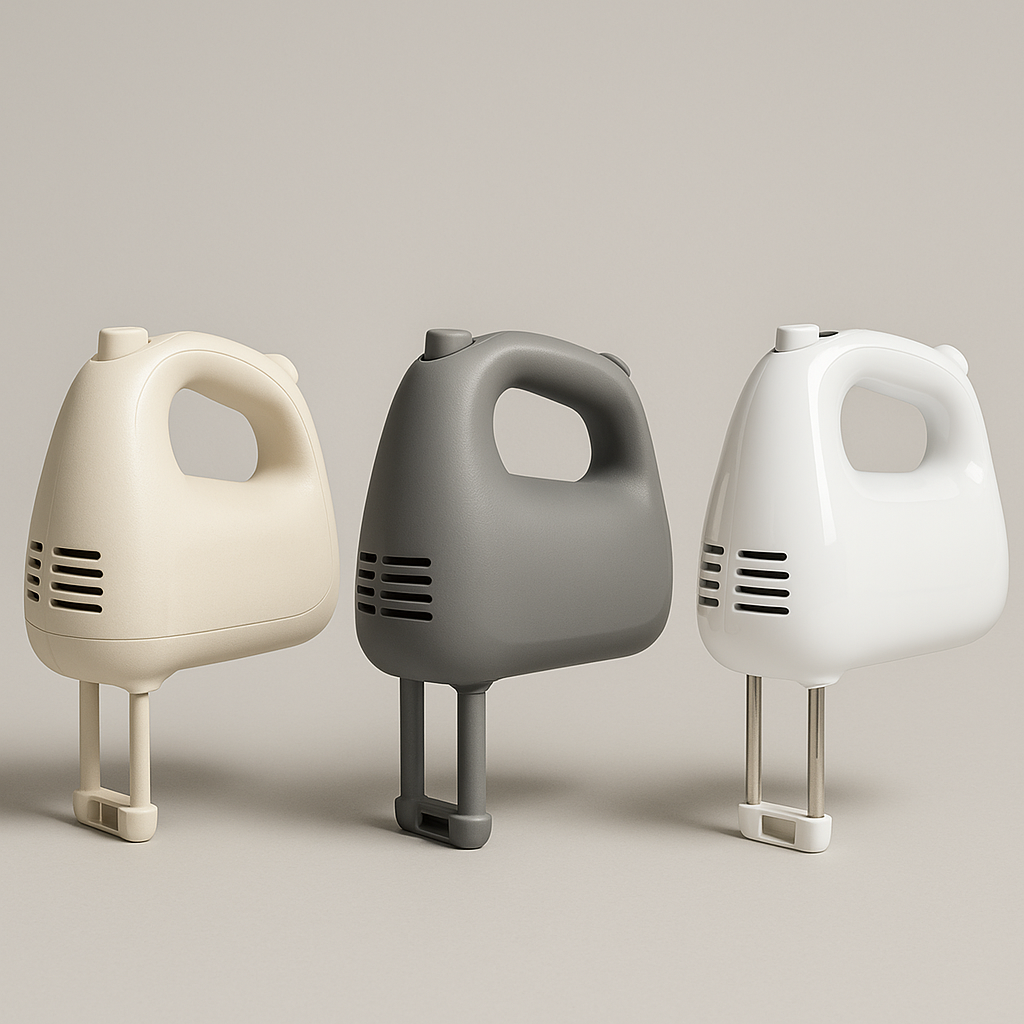
Most hand mixer housings are made from some type of plastic or plastic blend, though the exact material depends on the manufacturer. Some models may use a mix of materials or decorative finishes.
The table below gives a practical overview.
| Housing material | Typical benefits | Trade-offs |
|---|---|---|
| Standard plastic | Usually lightweight, common, and often less expensive | Can feel less rigid or less premium depending on build quality |
| ABS plastic | Often chosen for a balance of toughness, weight, and moldability | Still a plastic shell, so finish and thickness matter |
| Polycarbonate | Often used when impact resistance is a priority | Can cost more and may not appear on every model |
| Metal accents or panels | Can improve the feel of sturdiness and add visual appeal | May add weight and can still be paired with plastic underneath |
| Composite or mixed materials | Can combine comfort, strength, and styling | Harder to judge quality at a glance because the build varies |
How to read material claims
A material name alone does not tell the whole story. Two mixers can both have plastic housings and feel very different in use. Thickness, internal reinforcement, assembly quality, and finish all matter.
For that reason, it is better to treat material as one clue rather than the only clue. A lightweight plastic housing may be perfectly acceptable for occasional baking. A more robust shell may be preferable if you use the mixer often or mix heavier batters.
Cleaning and finish
Smoother housings are generally easier to wipe clean than textured ones, especially if flour or batter splashes onto the body. However, textured surfaces may provide a better grip. That is a practical trade-off: easier cleaning versus better handling.
How to inspect a hand mixer housing for damage
If a mixer has been dropped, stored poorly, or used for years, inspect the housing carefully before the next use. You do not need special tools for a basic check.
Look for cracks and splits
Check the outer shell around the handle, speed selector, cord entry point, and beater socket area. Small cracks can spread over time, especially if the mixer vibrates during use.
A hairline crack may seem minor, but if it is near a seam or control area, it can matter more than a larger cosmetic scratch in a non-structural area.
Check for looseness or gaps
Press gently along the seams. If the housing shifts, separates, or clicks in a way it did not before, the internal parts may not be fully secured.
A small gap can allow dust, moisture, or food residue to enter the appliance. It can also indicate that screws, clips, or internal mounts have loosened.
Watch for heat damage
If the housing feels unusually hot during normal use, or if you notice warping, discoloration, or a burnt smell, stop using the mixer. Heat damage can suggest the motor is under stress or the internal components are not venting properly.
Make sure no internal parts are exposed
Any opening that reveals wiring, moving gears, or other internal components is a safety concern. A housing is supposed to keep those parts enclosed.
If you can see inside the mixer through a crack or split, that is a stronger warning sign than a purely cosmetic scratch.
When housing damage means repair or replacement
Not every mark on a mixer means it must be discarded, but some damage should be treated seriously.
Damage that may be minor
A superficial scuff or small surface scratch on the outer shell is usually cosmetic. If the mixer runs smoothly, the shell is still tight, and no internal parts are exposed, the damage may not affect use.
Damage that deserves caution
A crack near a seam, a loose panel, or a small gap around the control area deserves closer attention. Even if the mixer still works, those problems can worsen with vibration and regular handling.
If the housing is damaged but replacement parts are available from the manufacturer, repair may be reasonable. That is more likely to make sense when the mixer is otherwise in good condition and the repair is straightforward.
Damage that usually means stop using it
Stop using the mixer if:
- the housing is cracked enough to expose internal parts
- the body feels loose or unstable in your hand
- the mixer rattles in a way it did not before
- the shell shows heat damage, melting, or a burnt odor
- the controls no longer sit securely in the housing
In those cases, replacement may be safer and more practical than continued use. A mixer is a small appliance, but it still contains electrical and moving parts that should remain enclosed.
Choosing between a lighter and more rugged housing
If you are buying a hand mixer, housing design is one of the best ways to compare models that otherwise seem similar.
A lighter housing can be easier to lift, especially if you mix for longer periods. That can be a benefit if you want a mixer that feels nimble and easy to store.
A more rugged housing may feel sturdier and better suited to frequent use, but it can also add weight. Some users prefer that solid feel; others find it tiring.
A practical way to decide is to match the housing to your use pattern:
- Occasional baking: lighter, simpler housing may be enough
- Frequent use: sturdier shell and better fit may be worth prioritizing
- Long mixing sessions: comfort and balance matter more than appearance
- Kitchen storage in tight spaces: compact housing may be easier to handle
If you are comparing models in person, hold each mixer for a few seconds before looking at the specs. A housing that feels awkward in your hand is unlikely to become more comfortable later.
When to consult a professional
If the mixer housing is cracked near electrical parts, if the appliance has a burnt smell, or if the body is loose enough to expose internal components, a qualified appliance repair professional may be able to tell you whether the mixer is repairable.
That is especially useful when the mixer is a higher-end model or when replacement parts are available. For a lower-cost mixer with significant housing damage, replacement is often the more practical option.
Bottom line
The hand mixer housing is the outer shell that encloses the motor, controls, and other internal parts. It is more than the mixer’s “cover.” It affects safety, comfort, balance, noise, and durability.
If you are evaluating a mixer, look beyond the color or styling. Check how solid the housing feels, whether the seams are tight, and whether the material and shape match how you plan to use it. If you are inspecting a damaged mixer, treat cracks, looseness, heat damage, or exposed internal parts as warning signs, not minor cosmetic issues.
For a hand mixer, the housing is where design and safety meet everyday use.
FAQ
Is the hand mixer housing the same as the body?
Yes. In most product descriptions, the housing and the body refer to the same outer shell that surrounds the internal parts.
Can a cracked mixer housing still be safe to use?
Sometimes a small cosmetic crack may not affect use, but cracks near controls, seams, cords, or beater sockets deserve caution. If internal parts are exposed or the body feels loose, stop using it.
What is the most important thing to check on a damaged housing?
Look for looseness, exposed internal parts, heat damage, and cracks near structural or electrical areas. Those are more important than surface scratches.
Do better housing materials always mean a better mixer?
Not always. Material matters, but thickness, assembly quality, and overall design matter too. A well-made plastic housing can be better than a poorly made “premium” one.
Does a heavier housing mean the mixer is higher quality?
Not necessarily. Extra weight can come from sturdier materials or simply from design choices. Balance, fit, and comfort are better indicators than weight alone.