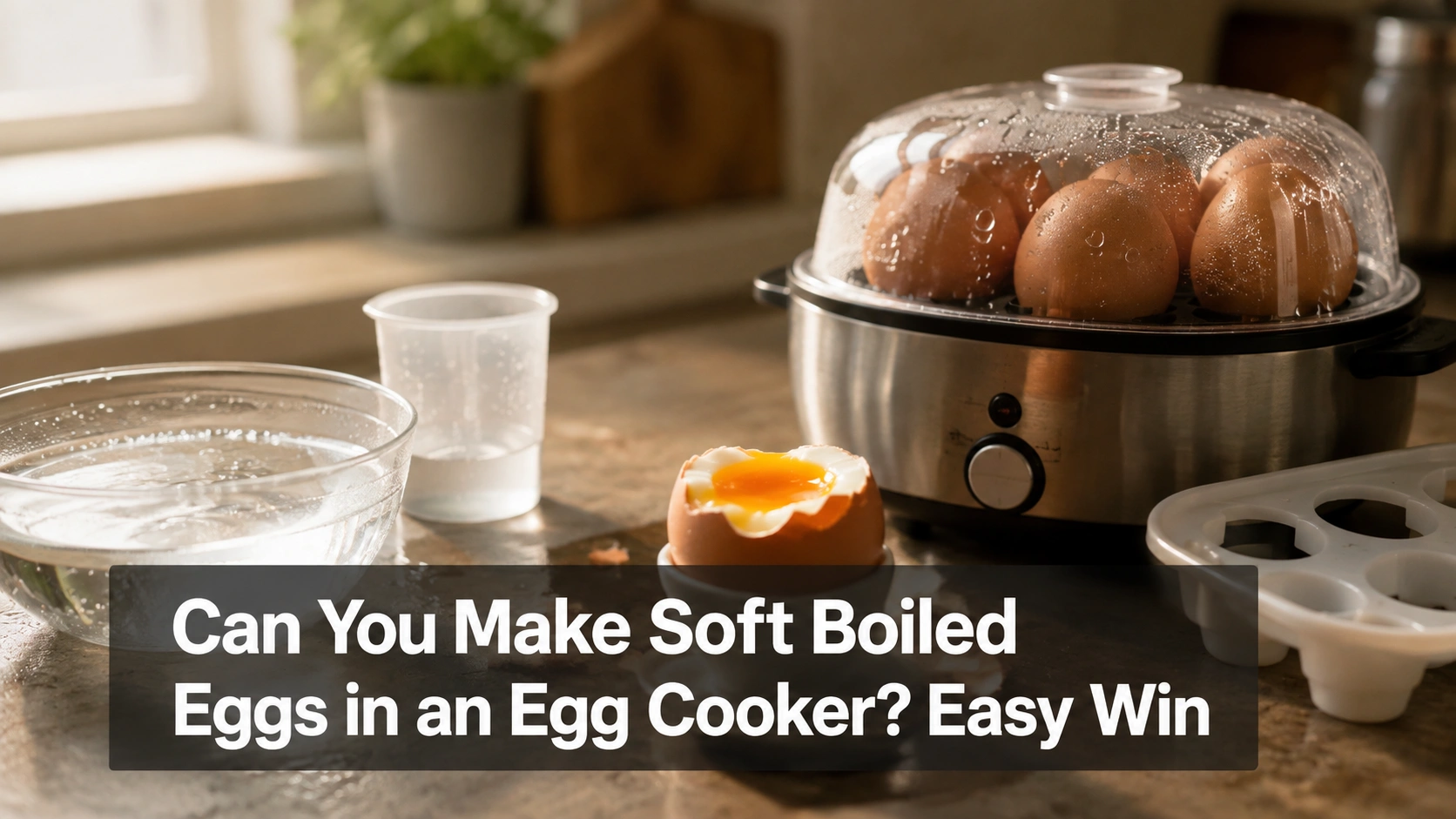
Yes, you can make soft boiled eggs in an egg cooker. The key is to use the right amount of water and stop the cooking at the right time.
My first batch did not go as planned. The whites were soft, but the yolks had turned firm. I had used too much water and left the eggs under the hot lid.
After a few small changes, I got tender whites and warm, runny yolks. This guide explains what worked, what failed, and how to fix common problems safely.
Common Signs of the Problem
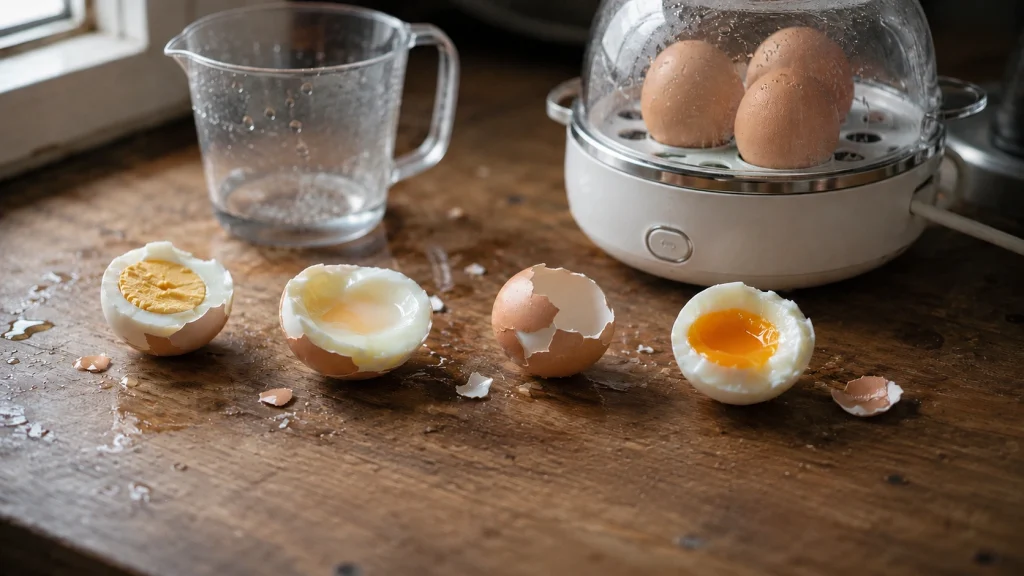
A soft boiled egg should have a set white and a soft yolk. The middle may be runny, thick, or jam-like based on how you prefer it.
Egg cookers can give poor results when the water level or egg size changes. Here are the signs I noticed during testing.
- The yolk is hard instead of soft.
- The egg white is still clear or wet.
- One egg cooks more than another.
- The shell cracks while steam builds.
- Water remains on the heating plate.
- The cooker shuts off too soon.
- The cooker runs much longer than normal.
This table can help you spot the cause fast.
| Symptom | Likely Cause | Quick Fix |
|---|---|---|
| Hard yolk | Too much water | Use less water |
| Raw white | Too little water | Add a small amount |
| Cracked shell | Egg was cold or pierced poorly | Warm the egg a bit |
| Uneven eggs | Tray was crowded | Leave space between eggs |
| Slow cooking | Mineral buildup | Descale the heating plate |
Your cooker may come with a water measuring cup. Check it for a soft-boil mark before using a random amount of water.
If the cup is lost or its marks have faded, a replacement measuring cup can help. It is safer and more useful than guessing with a large kitchen cup.
Possible Causes
Most soft boiled egg problems are not signs of a broken cooker. They often come from water, egg size, or heat left inside the unit.
Too Much Water
Most basic egg cookers run until the water turns to steam. More water means a longer cooking time.
I first thought more water would make the eggs softer. It did the reverse. The cooker ran longer, so the yolks became firm.
Too Little Water
Too little water can make the cooker stop before the whites set. The yolk may be cool, and the white near the shell may look wet.
Add only a small amount more on your next try. A few drops can change the final texture.
Egg Size and Temperature
Large eggs take more time to heat than small eggs. Cold eggs also need a little more time than eggs that have sat out for a few minutes.
Do not leave raw eggs out for long. Ten minutes on the counter is often enough to remove the deep chill.
Wrong Tray or Setting
Some cookers have a boil tray, a poaching tray, and an omelet bowl. Soft boiled eggs should stay in their shells and sit in the boil tray.
A cooker with buttons may also have soft, medium, and hard settings. Check that you chose the soft setting before starting it.
Heat After Shut-Off
The eggs keep cooking under the warm lid. Even one or two extra minutes may turn a runny yolk into a thick one.
The beep is not a reminder to come back later. It is the time to remove and cool the eggs.
Mineral Buildup
White or brown marks on the heating plate may be limescale. This layer can slow heat flow and cause odd cooking times.
It may also make the cooker shut off late. That can leave you with hard yolks even when the water level seems right.
Can You Make Soft Boiled Eggs in an Egg Cooker Reliably?
Yes, but you may need one test batch. Egg cookers differ, and the marks on the cup are only a starting point.
Use the same egg size and water level each time. This makes it much easier to adjust the result.
How to Fix Soft Boiled Egg Problems
Check the Power Source
Place the cooker on a dry, flat surface. Push the plug into a working wall outlet and check that the power cord is not cut or bent.
If the cooker has no light, heat, or sound, test the outlet with another small device. Do not take apart the cooker or try to repair its sealed heating unit.
Use the Correct Egg Tray
Place whole eggs in the boil tray or egg insert. Do not put shell-on eggs in the poaching or omelet tray.
Make sure the tray sits flat. A tilted tray can place some eggs closer to steam than others.
Measure the Water with Care
Start with the soft-boil line on the cup that came with your cooker. Use cool, clean water unless the manual says otherwise.
If the yolk is too firm, use a little less water next time. If the white is raw, add a little more.
| Result | Next Adjustment | Difficulty |
|---|---|---|
| Yolk too firm | Use less water | Easy |
| White too soft | Add a little water | Easy |
| Eggs cook unevenly | Use equal-size eggs | Easy |
| Cooker runs too long | Descale the plate | Easy |
| No heat or light | Test the outlet and cord | Moderate |
Make one change per batch. If you alter the water, egg size, and starting heat at once, you will not know which change worked.
Pierce the Egg Only If Directed
Many measuring cups have a small pin in the base. Some brands tell you to pierce the wide end of each egg before cooking.
Follow the manual for your model. Do not pierce an egg while holding it in your hand, as the pin can slip.
I place the egg on a firm surface and press with care. This may reduce cracks, but it is not needed for every cooker.
Fit the Lid and Check the Steam Vent
Set the lid in its normal position. Check that the steam vent is open and free of food or scale.
Never cover the vent. Hot steam needs a safe path out of the cooker.
Keep your face and hands away from the vent during use. Lift the lid by its handle and tilt it away from you.
Cool the Eggs at Once
Remove the eggs as soon as the beep sounds or the auto shut-off works. Move them into a bowl of cold water for two to five minutes.
This quick cooling step stops the yolks from cooking more. It also makes the eggs safer to hold and easier to peel.
For a warm breakfast, I cool them for about two minutes. For later use, I give them a longer cold bath.
Clean the Heating Plate
Unplug the unit and let it cool fully. Then wipe the plate with a damp, soft cloth.
Good cleaning helps the cooker heat at the same rate each time. Never place the electric base in water.
For mineral marks, use the brand’s approved descaling method. Many units can be treated with a small amount of white vinegar and water, but the manual should guide the mix.
Let the solution sit only as directed. Wipe it away with a non-abrasive sponge or soft cloth.
Test the Controls
Press the soft-boil button if your unit has one. Watch for the normal light, beep, or other signal.
Flashing lights can mean the tray, lid, or water level is wrong. Since error signals vary by brand, check the manual before trying a reset.
If overheat protection has stopped the unit, unplug it and let it cool. Do not bypass the safety switch or force the cooker to restart.
A Simple Soft-Boil Method
This is the basic method that gave me the most even result.
- Place equal-size eggs in the egg tray.
- Add water to the soft-boil mark.
- Pierce the eggs only if the manual says to do so.
- Fit the lid and keep the steam vent clear.
- Select the soft setting or start the cooker.
- Remove the eggs as soon as cooking ends.
- Cool them in cold water for two to five minutes.
- Open one egg and note the yolk texture.
If the yolk is too firm, reduce the water a little. If the white is too loose, add a little more next time.
Mistakes to Avoid
Do not fill the base by guess when a marked cup is available. A small change in water can make a large change in yolk texture.
Do not leave cooked eggs inside the closed unit. Trapped heat keeps cooking them after the power turns off.
Never block the lid vent or touch it during cooking. Steam burns can happen fast.
Do not pour cold water on a hot heating plate. The sudden heat change may harm the plate or cause hot water to splash.
Avoid rough pads and metal tools when removing scale. They can scratch the plate and make future buildup worse.
Do not open the electric base, change its wires, or bypass auto shut-off. Replace the unit if its electrical parts appear unsafe.
When to Replace the Egg Cooker
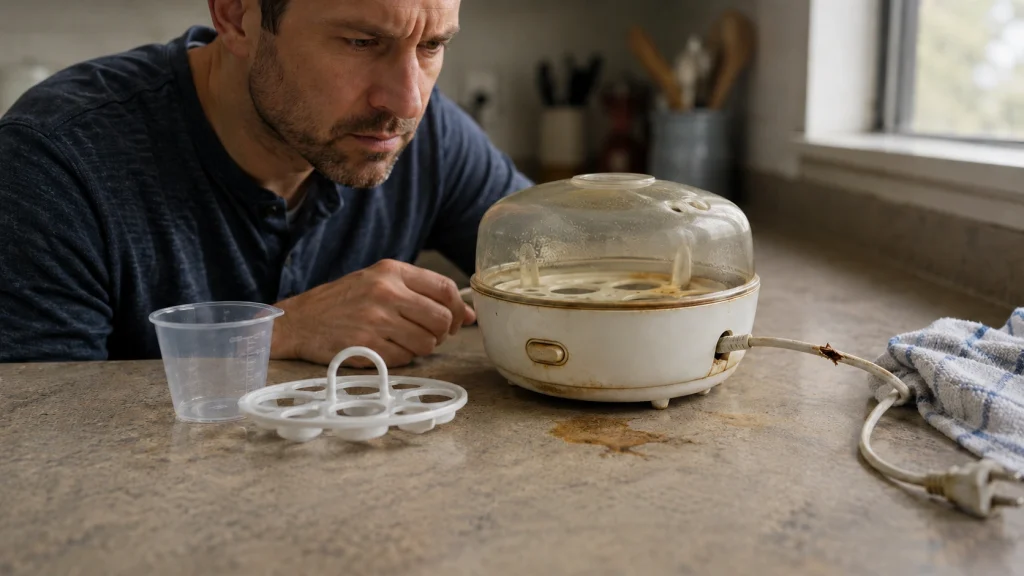
A wrong yolk texture does not mean you need a new cooker. Try water changes, fast cooling, and descaling first.
Replacement makes sense when the cord is damaged, the base leaks, or the unit smells like burnt plastic. Stop using it at once if you see sparks or smoke.
| Repair Issue | Typical Cost | Replace Instead? |
|---|---|---|
| Lost measuring cup | $5–$15 | No |
| Cracked egg tray | $8–$20 | Usually no |
| Damaged lid | $10–$25 | Compare costs |
| Faulty power cord | Varies | Usually yes |
| Burning smell from base | Not a safe DIY repair | Yes |
Prices vary by brand and seller. Use only parts made for your model, since the wrong tray or lid may affect steam flow.
My Personal Experience
My first eggs came out closer to hard boiled. I had filled the cup above the soft line and waited after the beep before lifting the lid.
On the next batch, I used the marked soft-boil level. I also moved the eggs into cold water at once.
The yolks were much softer, but one white was still loose. That egg was larger than the rest, so I tested again with eggs of the same size.
The last batch was far more even. My best lesson was simple: use equal-size eggs, measure the water, and cool the eggs right away.
I also learned to write down the water level that works. Once I found the right amount for my cooker, I could repeat the result with little fuss.
Final Thoughts
So, can you make soft boiled eggs in an egg cooker? Yes, and the process is quite easy once you control the water and stop the cooking fast.
Start with your cooker’s soft-boil mark. Use equal-size eggs, keep the steam vent clear, and place the eggs in cold water as soon as the cycle ends.
If the result is not right, change the water by a small amount. That one simple fix solves most soft boiled egg problems.
3 thoughts on “Can You Make Soft Boiled Eggs in an Egg Cooker? Easy Win”