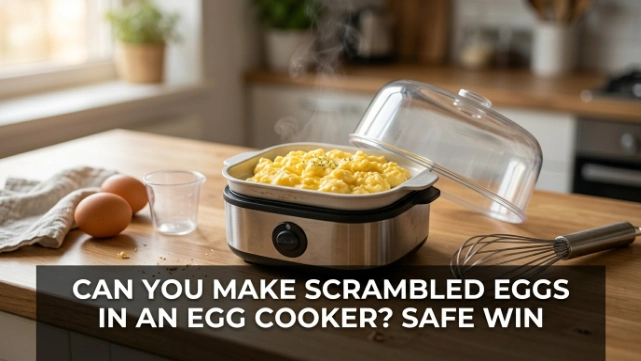
Can you make scrambled eggs in an egg cooker? Yes, you can in many models. You need a solid omelet tray, poaching tray, or another insert approved for your cooker.
I learned that the tray matters more than anything else. My first batch had firm edges but a wet center. I had used too much milk and left the eggs in the hot tray after the cooker stopped.
A smaller batch worked far better. In this guide, I will show you how to check your cooker, set it up, and fix common texture problems.
Common Signs of the Problem
Scrambled eggs from an egg cooker may not look like eggs made in a pan. Steam gives them a soft, moist texture. You will not get crisp or browned edges.
A real problem exists when the eggs stay raw, cook in patches, stick to the tray, or turn hard and dry.
| Symptom | Likely cause | Quick fix |
|---|---|---|
| Wet center | Too much egg or liquid | Cook a smaller batch |
| Hard, dry eggs | Too much water or heat | Use less water |
| Egg sticks | Tray was not greased | Add a thin coat of oil |
| Uneven texture | Egg mix was not blended | Whisk it well first |
| Cooker stops early | Wrong water level | Check the measuring cup |
If the heating plate stays cold, the issue may be with the power cord, wall outlet, or safety switch. That is an appliance fault rather than a recipe problem.
Before buying extra parts, check what came with your cooker. A replacement measuring cup or solid egg tray may help if the old one is lost or damaged. Only use parts made to fit your model.
Possible Causes
The most common cause is using the wrong insert. The shell rack has open holes and cannot hold raw egg. Pouring egg into it will make a mess and may damage the cooker.
Other likely causes include:
- Using more eggs than the solid tray can hold
- Adding too much milk, cream, or water
- Filling the heating plate with too much water
- Leaving the eggs inside after auto shut-off
- Blocking the lid’s steam vent
- Using a bent or cracked cooking tray
- Letting limescale form on the heating plate
The water measuring cup also causes some confusion. Its marks are often made for eggs cooked in their shells. Those marks may not give the right time for scrambled eggs.
Start with the amount listed for an omelet or poached eggs. If your manual gives no such setting, use a small amount and test one batch first.
Can You Make Scrambled Eggs in an Egg Cooker Safely?
Yes, if the cooker has a solid tray approved for cooking liquid egg. Read the manual before you start because some basic models are designed only for eggs in their shells.
Never pour beaten egg straight onto the metal heating plate. The plate is meant to heat water and make steam. Raw egg can burn onto it and enter parts that are hard to clean.
Also check the lid and steam vent. Steam must be able to leave through the vent. Keep your face and hands away when you lift the lid.
How to Make Scrambled Eggs in an Egg Cooker
Check the Cooker and Tray
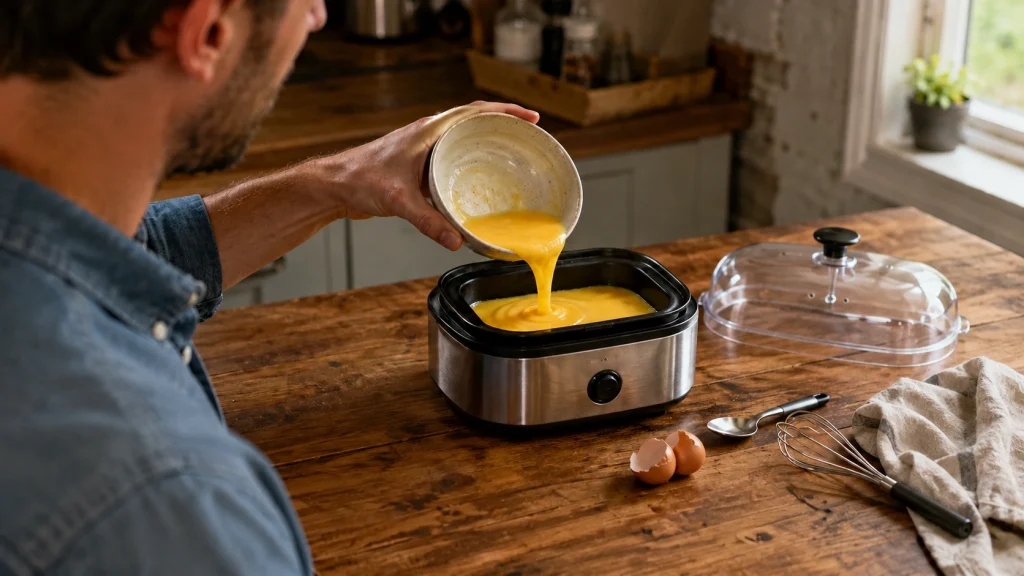
Unplug the cooker and let it cool. Find the omelet or poaching tray that came with it. It should have a solid base with no open holes.
Check the tray for cracks, warping, or loose parts. It should sit flat inside the cooker without touching or blocking the steam vent.
If your cooker has only a shell rack, do not use it for loose eggs. The safer choice is to cook the eggs in a pan or use a tray approved by the maker.
Prepare a Small Batch
Crack one or two eggs into a bowl. Whisk them until the yolks and whites are well mixed. Add a small pinch of salt if you wish.
I avoid adding much milk. One or two teaspoons is enough for two eggs. Too much liquid can leave the center wet after the cooker switches off.
You may add a little soft cheese or finely cut cooked vegetables. Do not overfill the tray, since the eggs may rise as they cook.
Grease the Solid Tray
Rub a very thin layer of butter or cooking oil over the tray. This helps the cooked egg slide out and makes washing easier.
Do not use so much oil that it pools at the bottom. A light coat is enough. Cooking spray should only be used if the cooker’s manual allows it.
Measure the Water
Add water to the heating plate with the supplied cup. Use the omelet or poached-egg mark when one is present.
Water controls the cook time in many egg cookers. More water often means a longer steam cycle. This can make a small batch dry and firm.
For my first test, I use slightly less water than I would use for poached eggs. I then adjust the next batch in small steps.
| Result | Water adjustment | Difficulty |
|---|---|---|
| Center is too wet | Add a little more | Easy |
| Eggs are dry | Use a little less | Easy |
| Edges cook too fast | Reduce batch size | Easy |
| Cooker shuts off at once | Cool and inspect plate | Moderate |
Water marks differ between brands. Treat this table as a test guide, not a replacement for the manual.
Cook With the Lid in Place
Place the solid tray in the cooker. Fit the lid as shown in the manual and make sure the steam vent is clear.
Switch on the cooker and let it finish its cycle. Do not cover the vent or hold the power button down. Never bypass the auto shut-off or overheat protection.
When the cooker beeps or turns off, unplug it. Lift the lid away from your face so hot steam moves in the other direction.
Stir and Check the Eggs
Some models let you pause and stir the eggs partway through cooking. Only do this if the manual says the lid can be safely opened during a cycle.
If you cannot stir them, let the cycle finish. Check that no liquid egg remains. The eggs should look set but still soft.
Egg dishes should reach 160°F or 71°C for food safety. A small food thermometer is useful if the texture makes it hard to tell whether they are done.
Adjust the Next Batch
If the eggs are wet, use a little more water or make a smaller batch. If they are rubbery, use less water and remove them as soon as the cycle ends.
Change only one thing at a time. This helped me find the right water level without wasting several batches.
Remove Mineral Buildup
A dull or spotted heating plate may have limescale. This layer can slow heat transfer and cause uneven cooking.
For safe cleaning, unplug the cooker and let it cool. Use white vinegar or a descaling mix approved in the manual. Wipe it with a soft cloth or non-abrasive sponge.
Do not soak the electrical base. Never scrape the plate with a knife, steel wool, or a rough pad.
Mistakes to Avoid
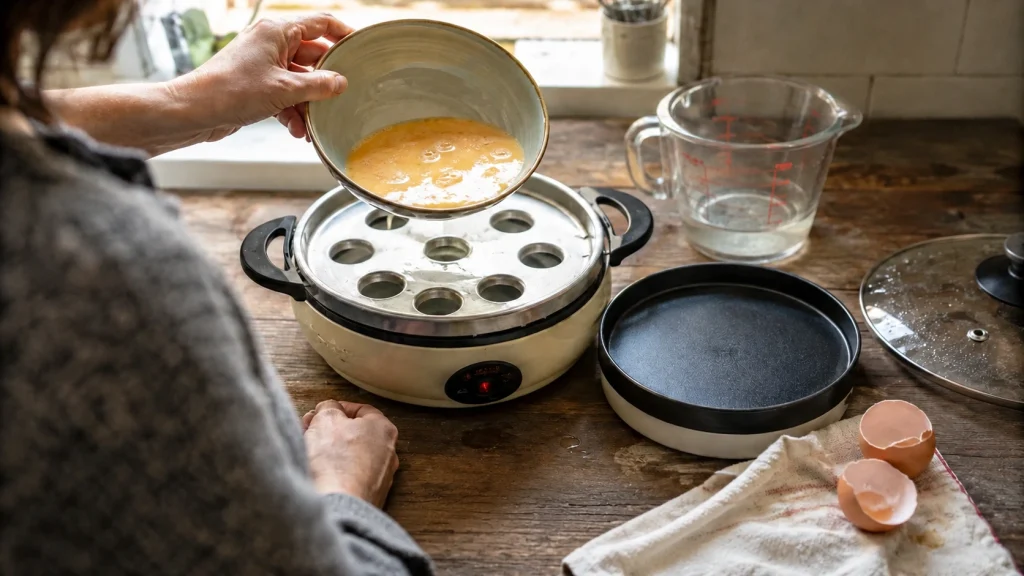
Do not use the open egg rack as a bowl. Raw egg can leak onto the heating element and burn.
Avoid these common errors:
- Pouring egg onto the heating plate
- Overfilling the solid tray
- Adding too much milk
- Blocking the lid vent
- Touching the lid while steam escapes
- Leaving cooked eggs in the hot tray
- Washing the electrical base under running water
- Opening a sealed heating unit
- Bypassing a safety switch or shut-off feature
Stop using the cooker if you smell burnt plastic, see a damaged cord, or notice water entering the electrical base. Unplug it by holding the plug, not by pulling the cord.
A hot metal smell from dried food is also a warning. Let the unit cool, then inspect and clean the plate before using it again.
When to Replace the Egg Cooker
A lost cup or cracked tray does not always mean you need a new cooker. A maker-approved replacement part may solve the issue.
The full unit should be replaced when the cord is split, the base leaks, or the safety controls fail. Repair is rarely worth the risk on a small sealed appliance.
| Repair issue | Likely cost | Replace instead? |
|---|---|---|
| Missing measuring cup | Low | No |
| Cracked cooking tray | Low | Usually no |
| Damaged lid | Low to moderate | Maybe |
| Faulty cord or switch | Moderate | Usually yes |
| Leaking electrical base | High safety risk | Yes |
Do not open the base to repair wires or the heating element. Contact the maker if the cooker is still under warranty.
My Personal Experience
My first attempt used three eggs and a large splash of milk. The edges became firm while the center stayed loose. I then left the tray inside, which made the edges even tougher.
For the next test, I used two eggs and only one teaspoon of milk. I greased the tray, used less water, and removed the eggs as soon as the cooker stopped.
That batch was soft and even. I also found that whisking the eggs well helped more than stirring them late in the cycle.
The biggest lesson was simple: start small. Egg cooker trays hold little food, and steam keeps cooking the eggs for a short time after shut-off.
Final Thoughts
So, can you make scrambled eggs in an egg cooker? Yes, as long as your model has a solid tray made for omelets, poached eggs, or liquid egg dishes.
Use a small batch, little added liquid, and the correct water level. Remove the eggs at once, keep the steam vent clear, and never place raw egg on the heating plate.
Your first batch may need a small adjustment. Once you find the right amount of water, an egg cooker can make soft scrambled eggs with very little work.