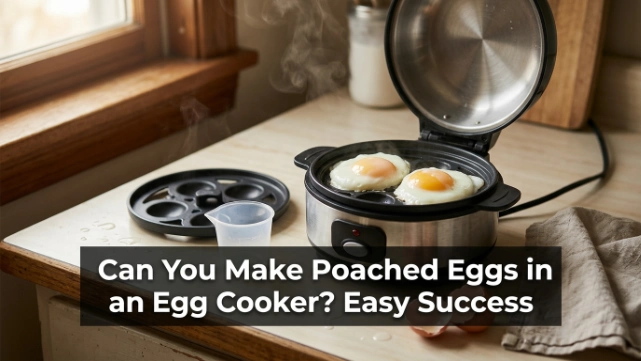
Can you make poached eggs in an egg cooker? Yes, you can, as long as your cooker has a poaching tray. The tray holds each egg above the hot water while steam cooks it.
My first batch did not go well. I used too much water, skipped the oil, and opened the lid too soon. The whites stuck to the tray, while the centers became firm.
After a few tests, I found that the tray, water level, and egg size matter most. This guide explains how to get soft poached eggs and fix the common problems that can spoil them.
Common Signs of the Problem
A poached egg from an egg cooker should have a set white and a soft center. It should also slide out of the tray without falling apart.
You may notice one or more of these problems:
- The egg white stays wet or clear.
- The yolk becomes hard.
- The egg sticks to the poaching tray.
- Water leaks from beneath the lid.
- The cooker shuts off too soon.
- Water spits from the steam vent.
- The heating plate smells hot.
- The cooker beeps, but the eggs are not done.
These issues are often easy to fix. Most come from the wrong water amount, a poorly fitted tray, or mineral buildup on the heating plate.
| Symptom | Likely cause | Quick fix |
|---|---|---|
| Runny egg white | Too little water | Add a little more water |
| Hard yolk | Too much water | Reduce the water |
| Egg sticks | Dry poaching tray | Add a thin coat of oil |
| Water spits out | Too much water | Follow the cup markings |
| Uneven cooking | Tray or lid is tilted | Refit both parts |
If your poaching tray is cracked or bent, replace it with one made for your model. A replacement measuring cup can also help if the original cup is lost or its marks have faded.
I would not guess the water amount with a drinking glass. Egg cooker cups often use special markings that do not match standard kitchen measures.
Possible Causes
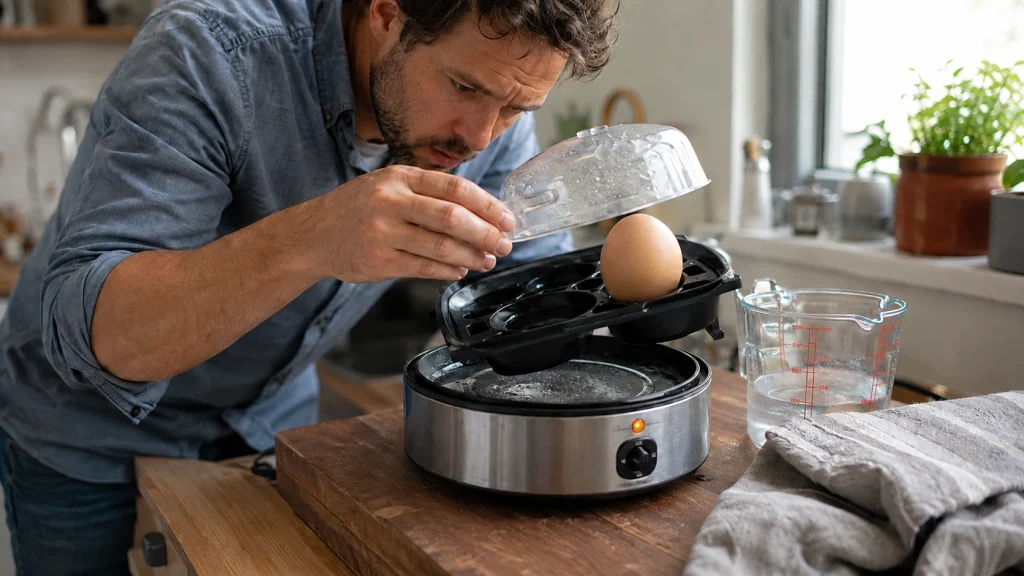
Poached eggs can fail even when the egg cooker appears to work normally. The machine may heat and beep, yet still leave you with wet whites or firm yolks.
Here are the most likely causes:
- Your model does not support poaching.
- The poaching tray is missing or installed the wrong way.
- You used the water mark for boiled eggs.
- The eggs were very large or cold.
- The tray was not lightly greased.
- The lid was not seated well.
- The steam vent was blocked.
- Limescale covered part of the heating plate.
- The cooker shut off before enough steam formed.
The water level controls the cooking time in many basic egg cookers. More water creates a longer steam cycle, while less water creates a shorter one.
However, models are not all the same. Check your manual before changing the water level, especially if the measuring cup has separate poached-egg marks.
How to Fix: Can You Make Poached Eggs in an Egg Cooker?
The safest method is to use the poaching tray and follow the water guide for your model. Do not crack eggs into the boiling tray or place them straight on the heating plate.
Confirm That Your Cooker Has a Poaching Tray
Look for a shallow insert with one or more rounded cups. Each cup should hold one cracked egg.
A standard boiled-egg rack has holes for whole eggs. It cannot hold raw eggs and should not be used as a poaching tray.
If no poaching tray came with your machine, check its manual. Do not use a random plastic bowl because it may melt or block the steam vent.
Place the Cooker on a Safe Surface
Set the cooker on a flat, dry, heat-safe counter. Keep the power cord away from the sink and the hot heating plate.
Plug it straight into a working wall outlet when possible. Avoid a loose plug or a damaged extension cord.
Measure the Water Carefully
Fill the supplied measuring cup to the poached-egg mark. Pour the water onto the heating plate before fitting the egg tray.
For my first test, I used the boiled-egg mark. That made the cycle too long and gave me a dry yolk.
If your manual gives a volume instead of a line, measure it as stated. Do not keep adding water during a hot cycle.
Lightly Grease the Poaching Tray
Rub a tiny amount of cooking oil or butter inside each egg cup. A thin coat is enough.
Too much oil can pool around the egg and affect its shape. With no oil, the cooked white may tear when you lift it out.
Add the Eggs
Crack one egg into a small bowl first. Then slide it into the greased cup.
This helps you catch shell pieces and bad eggs. It also makes it easier to place the yolk near the center.
Do not overfill the tray. If the cups are small, large eggs may spread over the sides and cook unevenly.
Fit the Tray and Lid
Place the main egg insert in its normal position if your model requires it. Set the poaching tray on top with the cups facing upward.
Fit the lid firmly, but do not force it. Make sure the steam vent remains open and points away from your hands and cabinets.
Start the Correct Setting
Select the poached-egg setting if your cooker has control buttons. Basic models may start as soon as you press the power switch.
Do not lift the lid to check the eggs. Escaping steam lowers the heat and can leave the whites partly raw.
When the cooker beeps or shuts off, unplug it. Let it rest for about 30 seconds if the whites still look slightly loose.
Adjust One Detail at a Time
If the whites are runny, add a small amount of water during the next batch. If the yolks are hard, use slightly less.
Make small changes. A large change can turn a soft egg into a dry one.
| Problem | Recommended solution | Difficulty |
|---|---|---|
| White is undercooked | Use slightly more water next time | Easy |
| Yolk is too firm | Reduce the water a little | Easy |
| Egg tears on removal | Grease the tray lightly | Easy |
| Steam leaks at the side | Refit or replace the lid | Easy |
| Cooker stops very early | Descale the heating plate | Moderate |
Check for Mineral Buildup
A white or brown film on the heating plate is often limescale. It can cause uneven heat and early shutoff.
Unplug the cooker and let it cool fully before cleaning it. Wipe away loose dirt with a soft cloth or a non-abrasive sponge.
If the manual allows descaling, add a small amount of white vinegar and water to the cool plate. Let it sit briefly, wipe it away, and rinse the removable parts.
Never immerse the electrical base in water. Keep liquid away from the switch, power cord, and control panel.
Inspect the Lid and Steam Vent
A blocked vent can trap too much steam. A cracked lid may let too much steam escape.
Wash the removable lid and clear the vent with a soft brush. Do not push metal tools into it.
Replace a cracked or badly warped lid. If your model uses a silicone lid gasket, inspect it for tears, gaps, or a poor fit.
Let Overheat Protection Reset
Some cookers shut down when the plate gets too hot or runs dry. Unplug the unit and let it cool for at least 20 minutes.
Do not bypass the auto shut-off or safety switch. If the cooker keeps stopping with the correct water amount, stop using it and contact the maker.
Mistakes to Avoid
Do not crack raw eggs onto the heating plate. The egg can burn, damage the surface, and create a hard mess around the sensor.
Avoid these other common mistakes:
- Using a boiled-egg water mark without checking the manual
- Blocking the lid’s steam vent
- Touching the lid or tray with bare hands
- Opening the lid toward your face
- Pouring cold water onto a hot plate
- Scraping limescale with a knife
- Immersing the electrical base
- Running the cooker without water
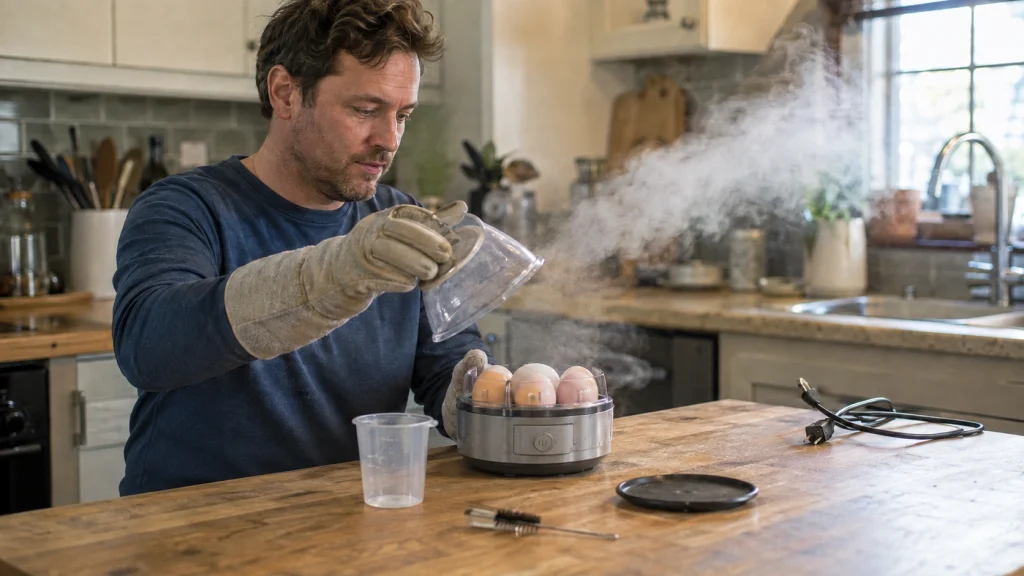
Steam can cause a fast and painful burn. Lift the lid away from your face and use dry oven gloves if the tray handles are hot.
Never open the sealed heating unit or attempt electrical repairs at home. Do not bypass the shut-off system, fuse, sensor, or safety switch.
When to Replace the Egg Cooker
A poor poached egg does not always mean the whole cooker has failed. A damaged tray, cup, lid, or gasket may be the only part that needs replacement.
Stop using the cooker if the cord is split, the plug becomes hot, or smoke appears. A lasting burning smell also points to an electrical fault.
| Repair issue | Likely cost | Replace instead? |
|---|---|---|
| Lost measuring cup | Low | No |
| Cracked poaching tray | Low | Usually no |
| Damaged lid or gasket | Low to moderate | Compare part cost |
| Faulty switch or heater | Moderate to high | Usually yes |
| Burned cord or plug | Unsafe for home repair | Yes |
Replacement is also sensible when parts are no longer available. A new cooker may cost less than professional electrical repair.
My Personal Experience
My first mistake was treating poached eggs like boiled eggs. I filled the cooker to the wrong line and expected the same timing to work.
The eggs cooked, but the yolks were far too firm. The whites also clung to the dry tray.
On my next test, I used the poaching mark, added a very thin coat of oil, and left the lid closed until the beep. That batch released cleanly and had much softer centers.
I also learned that fridge-cold, extra-large eggs may need a little more steam. Instead of making a large change, I adjusted the water by a small amount.
The best lesson was to change only one thing per batch. That made it clear whether the water, tray, or egg size caused the problem.
Final Thoughts
So, can you make poached eggs in an egg cooker? Yes, if the appliance includes a proper poaching tray and you use the correct water level.
Lightly grease the tray, keep the steam vent clear, and avoid opening the lid early. Make small water changes if the yolk or white is not cooked the way you like.
Always unplug the cooker before touching the heating plate or removing stuck food. If you notice smoke, electrical smells, or a damaged cord, replace the unit instead of trying to repair it yourself.
