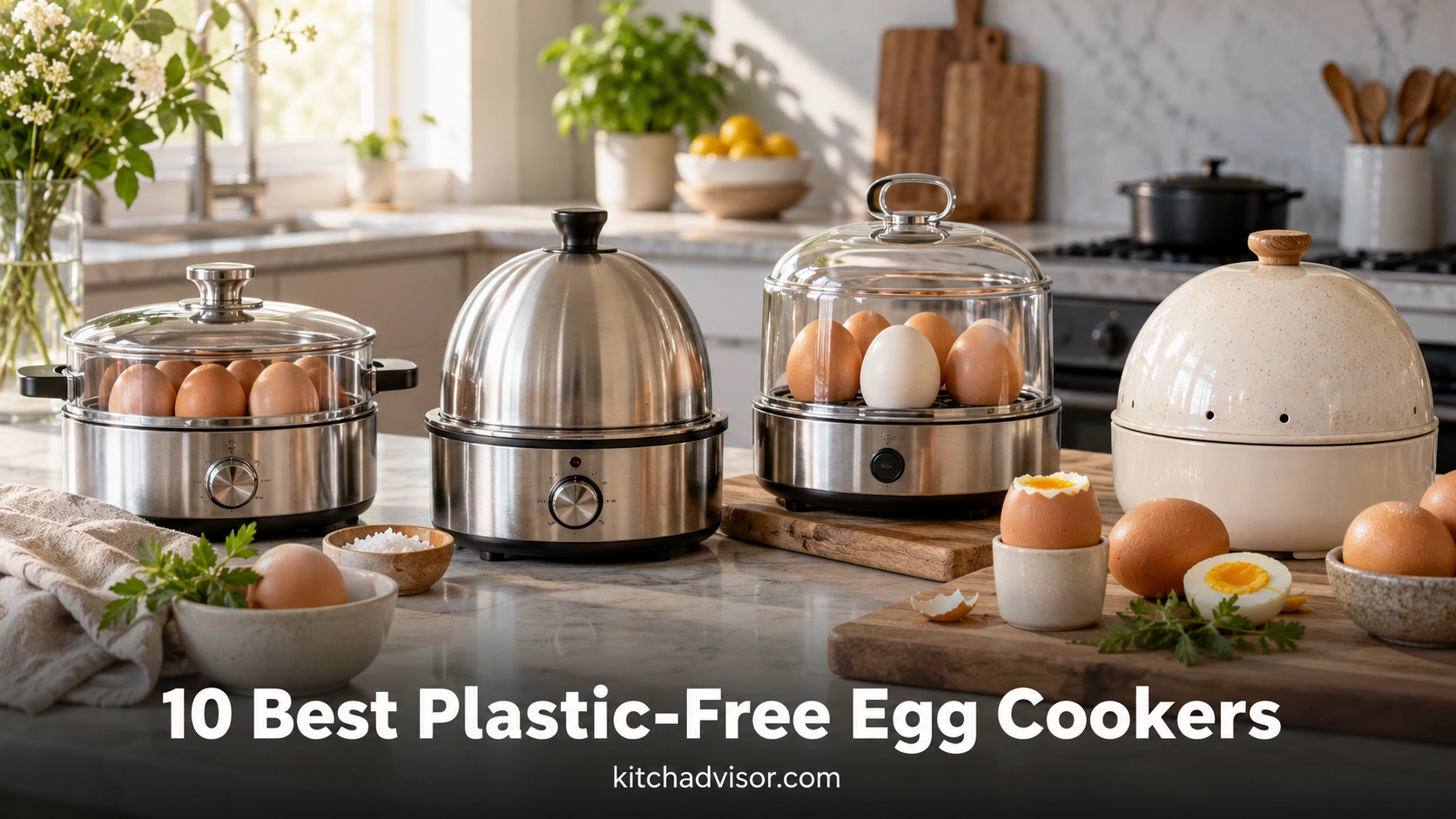
Egg cookers promise a shortcut to breakfast, but most electric models are built around plastic housings, plastic egg trays, and plastic measuring cups, even when the marketing leans on words like “BPA-free.” For anyone trying to cut down on plastic in the kitchen, that distinction matters more than the auto-shutoff feature or the recipe booklet in the box. A genuinely low-plastic egg cooker uses stainless steel, glass, or ceramic for every surface that touches food or heat, not just the outer shell.
Steaming and poaching eggs works differently than boiling them in a pot. Electric cookers use a measured amount of water that turns to steam, cooking eggs gently and consistently without the guesswork of watching a rolling boil. Stovetop poachers and microwave dishes rely on the same steam principle, just without a heating element built in. Each approach has real trade-offs in capacity, cleanup, and how hands-off the process is.
The clearest way to judge these products isn’t by the “BPA-free” label on the box, but by counting how many food-contact parts are actually plastic versus stainless steel, glass, or ceramic. We looked at ten cookers spanning fully electric stainless models, stovetop poaching pans, and microwave-safe glass and stoneware dishes, and sorted out which ones actually minimize plastic contact and which ones just avoid the scariest chemicals while keeping the same plastic trays.
Best for large stainless-steel batches: Annie & Mia Design Electric Egg Cooker
Best for microwave meal prep without plastic: Anyday 2-Pack Glass Microwave Egg Cooker
Best for stovetop poaching parties: EXCELSTEEL 6 Cup Egg Poacher
Best for single-serve microwave eggs: Pampered Chef Ceramic Egg Cooker
Best for families needing high egg volume: Cuisinart CEC-10 Egg Central
Dash Rapid Egg Cooker
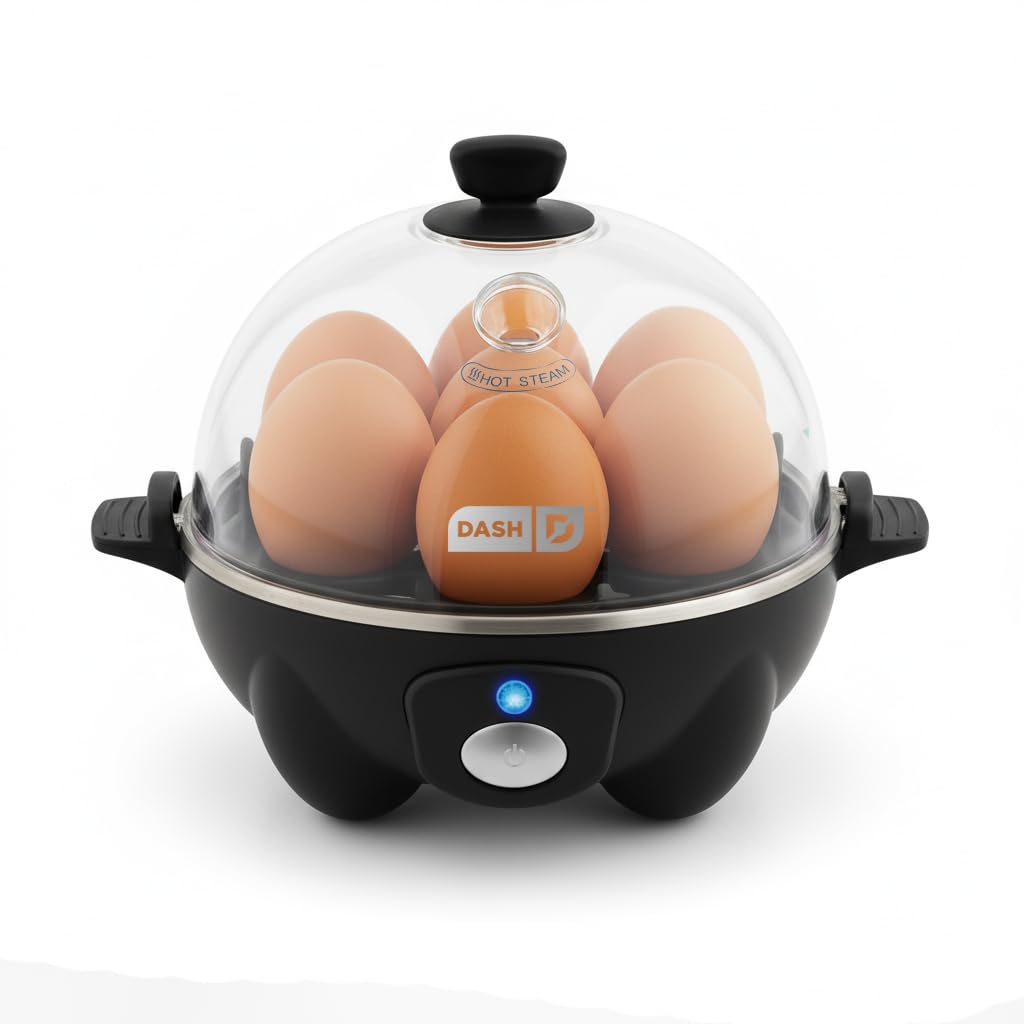
This is a solid electric egg cooker for convenience, but its plastic housing and trays make it a poor fit for anyone prioritizing plastic-free cooking.
Pros
- Cooks up to 7 eggs at once with multiple styles
- Precision thermal sensor gives consistent results
- Compact storage with nesting accessories
Cons
- Entirely plastic body, trays, and omelet bowl
- No true auto shut-off, despite some marketing language
- Not dishwasher-safe for the base unit
The appeal here is speed and simplicity: eggs go in, a button gets pressed, and breakfast happens with minimal supervision. Reviewers confirm it handles hard-boiled, soft-boiled, poached, and scrambled eggs with reasonable consistency. But every part that touches food, the tray, the poaching cups, the omelet bowl, is molded plastic. One reviewer specifically noted the advertised auto shut-off doesn’t actually stop cooking; it just beeps. For an eco-conscious shopper, this lands firmly outside the plastic-free category despite the BPA-free label on the box.
Cuisinart Egg Central

This cooker suits households that need to cook ten eggs at once and can live with a plastic egg tray inside a stainless steel shell.
Pros
- Two-tier system cooks up to 10 eggs simultaneously
- Brushed stainless steel lid feels more durable than plastic-bodied rivals
- Audible alert and standby mode reduce overcooking
Cons
- Interior trays and poaching/omelet inserts are plastic
- No true auto shut-off; some units restart cooking cycles
- Higher price point than comparable plastic models
The stainless steel lid is a genuine upgrade over fully plastic competitors, and the two-tier design makes this the highest-capacity electric option in this lineup. Reviewers consistently praise its consistency for hard, medium, and soft eggs when water is measured carefully. The egg trays, poaching tray, and omelet tray, however, are plastic, so this isn’t a plastic-free appliance; it’s a hybrid. Anyone strict about food-contact plastic should treat this as a stainless-adjacent choice rather than a true plastic-free pick.
Elite Gourmet Rapid Egg Cooker

This model works as a budget electric cooker with a stainless steel egg tray and cover, but plastic still forms the base and control housing.
Pros
- Removable stainless steel egg tray simplifies rinsing
- Stainless steel cover with cool-touch handle
- Auto shut-off indicator light and built-in timer
Cons
- Base and body remain plastic construction
- Buzzer doesn’t always stop on its own, per reviewer reports
- Requires two cooking cycles for fully hard eggs in some cases
The stainless egg tray is a genuine step up from all-plastic trays, since the eggs themselves sit in metal rather than plastic during cooking. The base housing and control panel stay plastic, so this sits in the middle of the plastic-free spectrum. Several reviewers mention inconsistent auto shut-off behavior, with the buzzer continuing after eggs finish. For shoppers wanting stainless where eggs actually rest, while accepting a plastic base, this is a reasonable middle-ground pick.
EXCELSTEEL 6-Cup Egg Poacher

This stovetop poacher is one of the closest options to fully plastic-free cooking, built from stainless steel with a glass lid and non-stick coated cups.
Pros
- 18/10 stainless steel body and stay-cool handle
- Vented glass lid, not plastic, for monitoring eggs
- Dishwasher-safe and works across stovetop types
Cons
- Non-stick coating on egg cups isn’t bare metal
- Manual stovetop timing required, no automation
- Metal rack can warp slightly over time, per some reviewers
For a household serving brunch to six people, this poacher hits a sweet spot of capacity and low-plastic construction. The glass lid replaces the plastic windows found on many electric cookers, and the frypan body doubles as cookware beyond eggs. The non-stick coating on the egg cups is a legitimate plastic-adjacent compromise, though it’s a thin coating rather than a plastic structural piece. Reviewers report reliably poached eggs in under seven minutes with easy release from the cups.
EXCELSTEEL 4-Cup Egg Poacher

This smaller sibling to the 6-cup poacher suits couples or small households wanting the same stainless-and-glass construction in a more compact footprint.
Pros
- Same 18/10 stainless steel and glass-lid design as the larger model
- Compact size for smaller stovetops or storage spaces
- Doubles as a small saucepan when not poaching eggs
Cons
- Non-stick coated cups, not bare stainless
- Requires practice to nail timing and water level
- Smaller batch size limits use for larger families
Four eggs at a time fits a couple’s breakfast routine or a small brunch better than a party-sized batch. The construction mirrors the larger EXCELSTEEL poacher: stainless body, glass lid, non-stick cups. Reviewers mention a learning curve on timing, with best results appearing after four or five attempts. For anyone who already owns the 6-cup version and wants a smaller unit for weekday use, this is a straightforward, lower-plastic stovetop alternative to electric cookers.
CACHOO 14-Egg Boiler
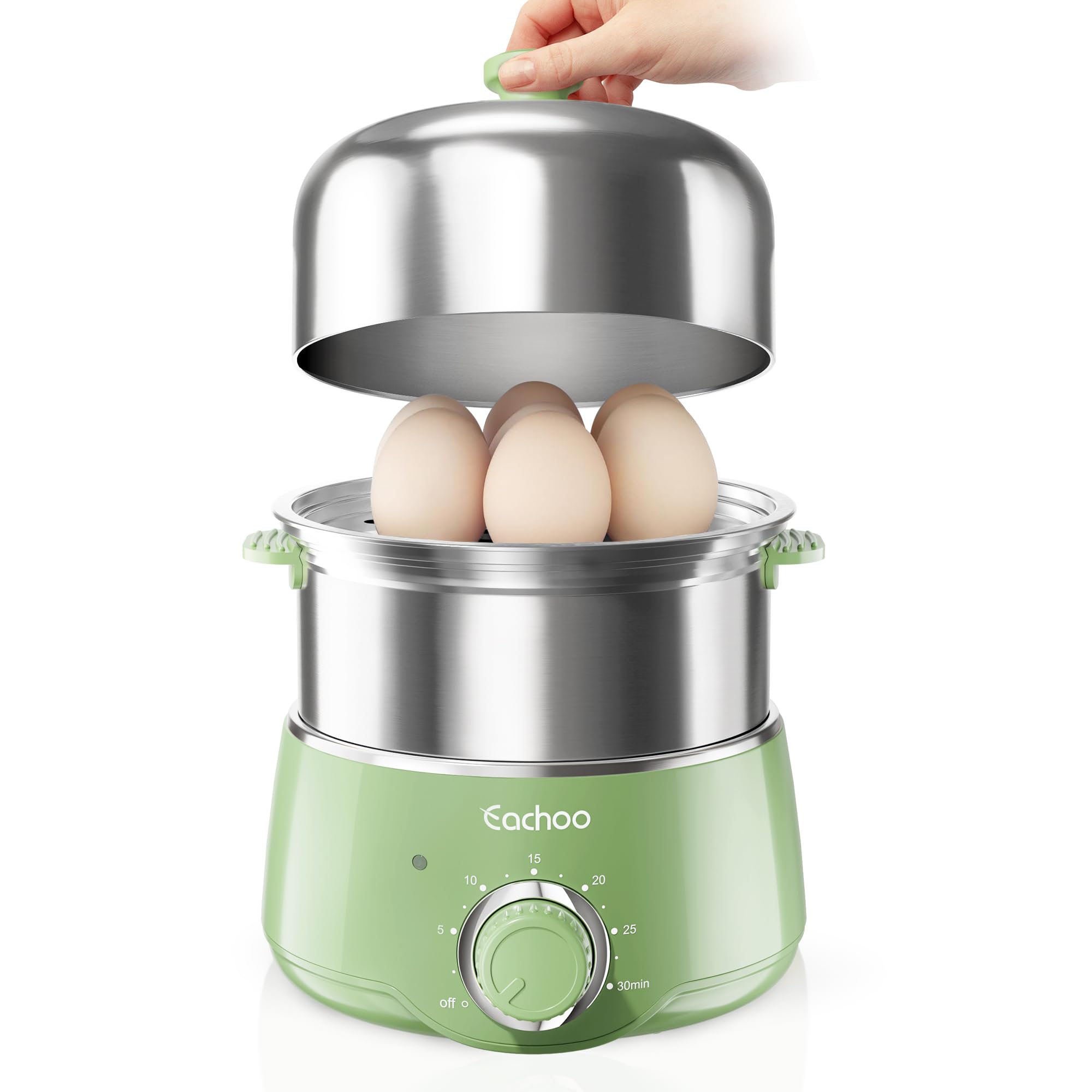
This is a high-capacity electric steamer built with stainless steel racks, but the styling and several components lean heavily on polypropylene plastic.
Pros
- Two-tier trays cook up to 14 eggs at once
- Stainless steel steamer racks handle eggs and vegetables
- Auto shut-off, boil-dry protection, and 30-minute timer
Cons
- Heat-resistant PP (plastic) components throughout the body
- Only top rack is dishwasher-safe
- Some reviewers report sharp edges on tray slots
The dual-tier system is genuinely useful for batch cooking eggs alongside vegetables or dumplings, and the stainless racks mean eggs sit in metal rather than plastic. The manufacturer describes the housing as “heat-resistant PP,” which is a plastic polymer, so this doesn’t qualify as low-plastic despite the stainless food-contact surfaces. One reviewer reported a cut from a sharp edge on the tray. Anyone prioritizing capacity over strict plastic avoidance will find this useful; strict plastic-free shoppers should look elsewhere.
Anyday Glass Microwave Egg Cooker
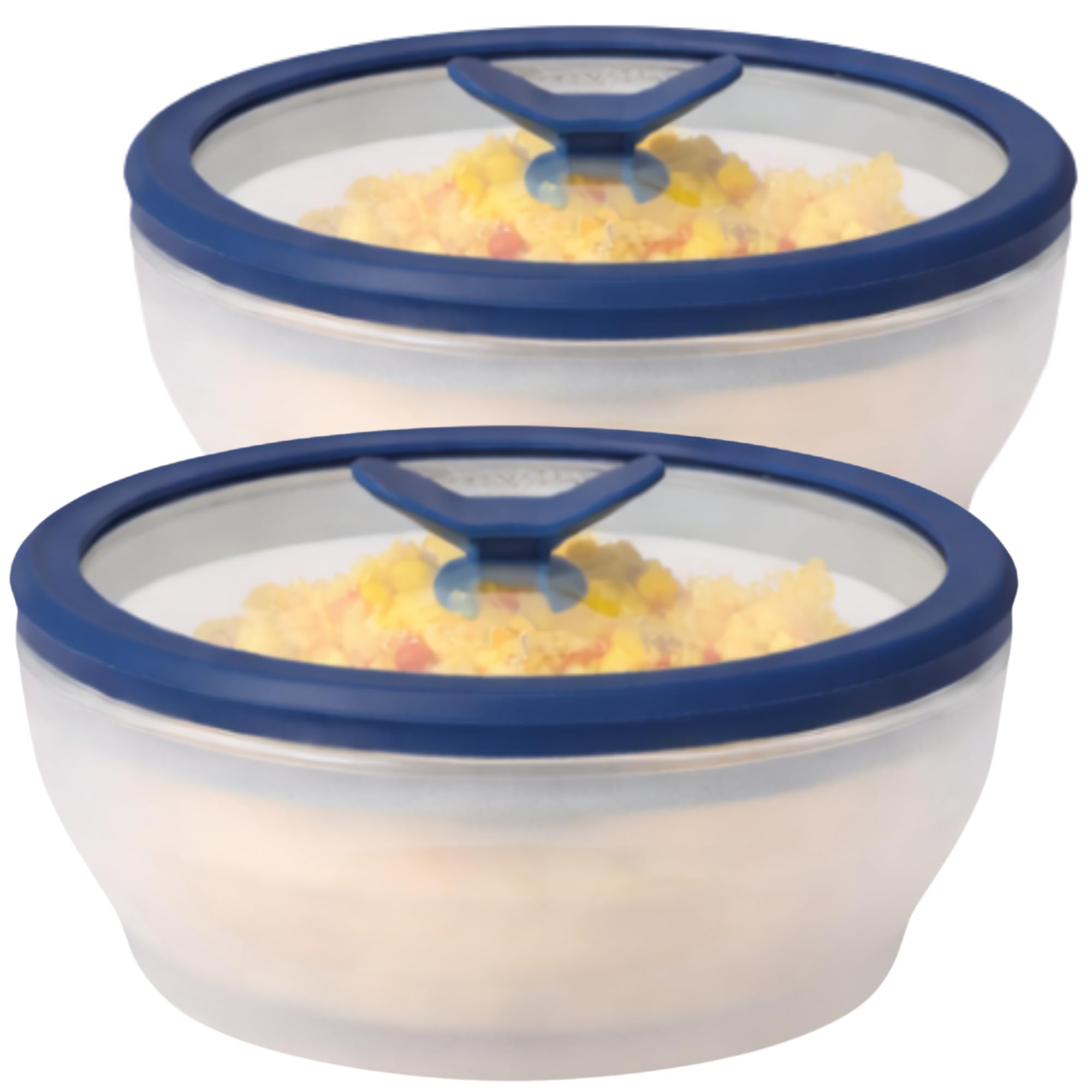
This is the closest thing to a fully plastic-free egg cooker in this roundup, built entirely from borosilicate glass with a silicone-rimmed glass lid.
Pros
- Bowl and lid are both glass, no plastic body or tray
- Microwave, oven (up to 500°F), freezer, and dishwasher safe
- Doubles as storage and reheating cookware
Cons
- Only one silicone gasket on the lid isn’t glass or metal
- 2-cup capacity limits batch size per dish
- Requires microwave access; no stovetop or electric option
Borosilicate glass means this dish doesn’t leach chemicals the way plastic containers can under heat, and it works for scrambled eggs, poached eggs, or small frittatas. The silicone rim on the lid is the only non-glass component, included specifically to trap steam. Reviewers who switched from plastic microwave containers describe it as sturdy and easy to clean. For someone eating eggs solo or cooking for two, the two-pack format covers a week of breakfasts without touching plastic cookware.
Pampered Chef Ceramic Egg Cooker

This ceramic microwave cooker works well for scrambled eggs and omelets, with only its silicone sleeve keeping it from being entirely plastic-free.
Pros
- Ceramic body, no plastic in food contact
- Silicone sleeve provides heat protection during handling
- Works in both microwave and oven
Cons
- Silicone handle sleeve is a non-ceramic component
- Lid fit is loose according to some reviewers
- Smaller capacity, best for one to three eggs
Ceramic construction handles microwave heat well and produces fluffy scrambled eggs in a couple of minutes, according to repeat users. The silicone sleeve wrapping the middle of the cooker is the only departure from ceramic, included purely for grip and heat protection rather than food contact. One reviewer noted the lid doesn’t seal tightly, which can matter when carrying it between rooms. For quick, single-serving microwave eggs with minimal plastic exposure, this remains a dependable option.
Pampered Chef Stoneware Egg Cooker
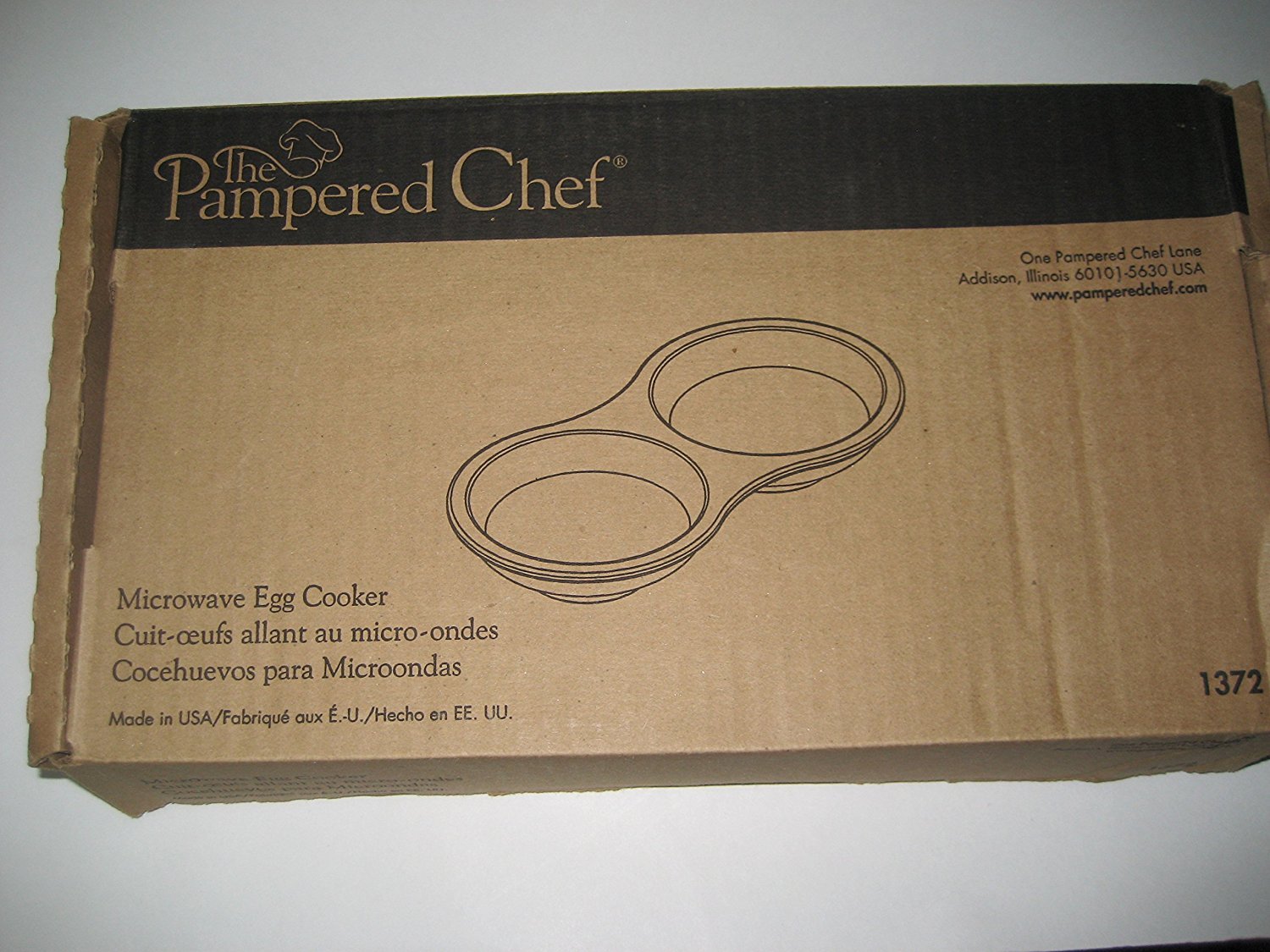
This stoneware dish is built for poached and scrambled eggs in the microwave, with a fully ceramic-stoneware body and no plastic parts.
Pros
- Stoneware body absorbs and retains heat evenly
- Microwave, oven, freezer, and convection-safe
- No plastic anywhere in the design
Cons
- Not dishwasher-safe, hand wash only
- Seasoning builds up over time, requiring care
- Poaching technique takes a few tries to master
Stoneware’s nonporous surface means it won’t hold onto odors or oils the way some plastics do, and it develops a natural release quality with repeated seasoning. Reviewers report perfectly poached eggs in under a minute once they learn their microwave’s timing. Hand-washing only is a real limitation for households used to tossing everything in the dishwasher. For anyone wanting a genuinely plastic-free poaching option that outlasts trendy plastic gadgets, this stoneware dish is a durable, low-maintenance pick once the learning curve passes.
Annie & Mia Design Stainless Steel Egg Cooker

This electric cooker uses stainless steel for its lid, tray, and poaching bowl, making it one of the better electric options for minimizing plastic contact.
Pros
- Lid, egg tray, and poaching bowl are all 304 stainless steel
- Cooks up to 7 eggs with auto shut-off, no timer needed
- Heat-resistant grips protect hands without plastic food contact
Cons
- Small plastic handles on the egg rack remain
- Lid reported as thin by some reviewers
- US/Canada voltage only, no international compatibility
Food-grade 304 stainless steel across the lid, tray, and omelet bowl puts this ahead of most electric competitors on plastic avoidance, with only two small plastic lift handles on the rack breaking the pattern. One long-term reviewer reported continued reliable use after eight months. Another flagged the lid as feeling thin compared to heavier-gauge stainless products. For households wanting electric convenience with stainless steel doing nearly all the food-contact work, this is the strongest automated option in the lineup.
Buying Guide
Material Comes First for a Plastic-Free Kitchen
Check every food-contact surface, not just the outer shell. Many “BPA-free” cookers still use plastic trays, poaching cups, or measuring devices; BPA-free plastic is still plastic, and it can still leach other chemicals under heat.
| Material | Plastic-Free Rating | Notes |
|---|---|---|
| Stainless steel | Highest | Durable, dishwasher-safe, no coating to wear off |
| Borosilicate glass | Highest | Nontoxic, microwave and oven safe, but breakable |
| Ceramic/stoneware | Highest | Nonporous, retains heat well, often hand-wash only |
| Silicone | Moderate | Used for grips and seals, generally considered food-safe |
| Non-stick coated metal | Moderate | Metal base with a thin coating, not bare metal |
| Plastic (any BPA-free) | Lowest | Common in trays, lids, and housings despite marketing |
Cooking Method Affects Material Options
Electric egg cookers almost always include plastic housings for the heating element and controls, even when the tray is stainless steel. Stovetop poachers and microwave dishes made from glass, ceramic, or stoneware can eliminate plastic entirely, since they carry no electronics.
Capacity and Household Size
Match the batch size to actual weekly egg consumption.
- 1-2 eggs: microwave glass or ceramic dishes suit singles or couples
- 4-6 eggs: stovetop poachers cover small families or brunch for a few guests
- 7-10 eggs: electric cookers work for larger households or meal-prep batches
- 14+ eggs: multi-tier electric steamers suit big families or entertaining
Cleanup and Controls
Dishwasher-safe stainless and glass components save time; stoneware and some ceramic pieces require hand washing to preserve their seasoning or coating. Auto shut-off features vary in reliability across electric models, so treat “auto shut-off” claims with some skepticism until confirmed by hands-on use or repeated reviewer reports.
Editor’s Choice
The Anyday 2-Pack Glass Microwave Egg Cooker earns top marks for anyone serious about eliminating plastic from egg cooking. Its borosilicate glass body and lid touch nothing but glass and a single silicone gasket, and it handles poached eggs, scrambled eggs, and reheating in one dish.
For households needing more capacity with less plastic, the Annie & Mia Design Electric Egg Cooker stands out among electric models. Its stainless steel lid, tray, and poaching bowl put it well ahead of plastic-bodied competitors, even with two small plastic rack handles remaining.
The EXCELSTEEL 6-Cup Egg Poacher rounds out the picks for anyone hosting brunch, combining a stainless body and glass lid with enough capacity for six guests at once.
Conclusion
Plastic-free egg cooking exists on a spectrum, and none of these products are perfect. Glass and ceramic microwave dishes come closest to eliminating plastic entirely, while electric cookers, even stainless-forward ones like the Annie & Mia Design model, tend to keep some plastic in the housing or small rack handles.
Shoppers focused on minimizing plastic contact should prioritize stainless steel, glass, or ceramic surfaces where eggs actually cook, and treat “BPA-free” labeling as a baseline rather than a guarantee of a plastic-free product. Checking the specific materials listed for trays, lids, and measuring cups before buying avoids surprises after the box arrives.
FAQS
Is “BPA-free” the same as plastic-free? No. BPA-free plastic is still plastic, and it can still contain other chemicals or degrade over time with heat exposure. A genuinely plastic-free product uses stainless steel, glass, or ceramic instead.
Can microwave egg cookers replace electric egg cookers? For one to four eggs, glass or ceramic microwave dishes work well and avoid plastic. Larger households needing 7 or more eggs at once benefit from electric cookers, though most include some plastic components.
Do stainless steel egg trays affect cooking time? Stainless steel conducts heat differently than plastic, but reviewers across multiple stainless-tray products report consistent results once water measurements are dialed in for a specific unit.
Are non-stick coated egg poacher cups considered plastic-free? Non-stick coatings sit on a metal base, so they’re not structural plastic, but they aren’t bare stainless steel either. Shoppers avoiding all coatings should look for uncoated stainless cups, which are less common.
Why do some electric cookers still use plastic despite eco-conscious marketing? Electric components like heating elements, circuit boards, and insulation typically require plastic housings for safety and cost reasons. Stainless steel trays and lids reduce plastic contact with food even when the base unit isn’t plastic-free.