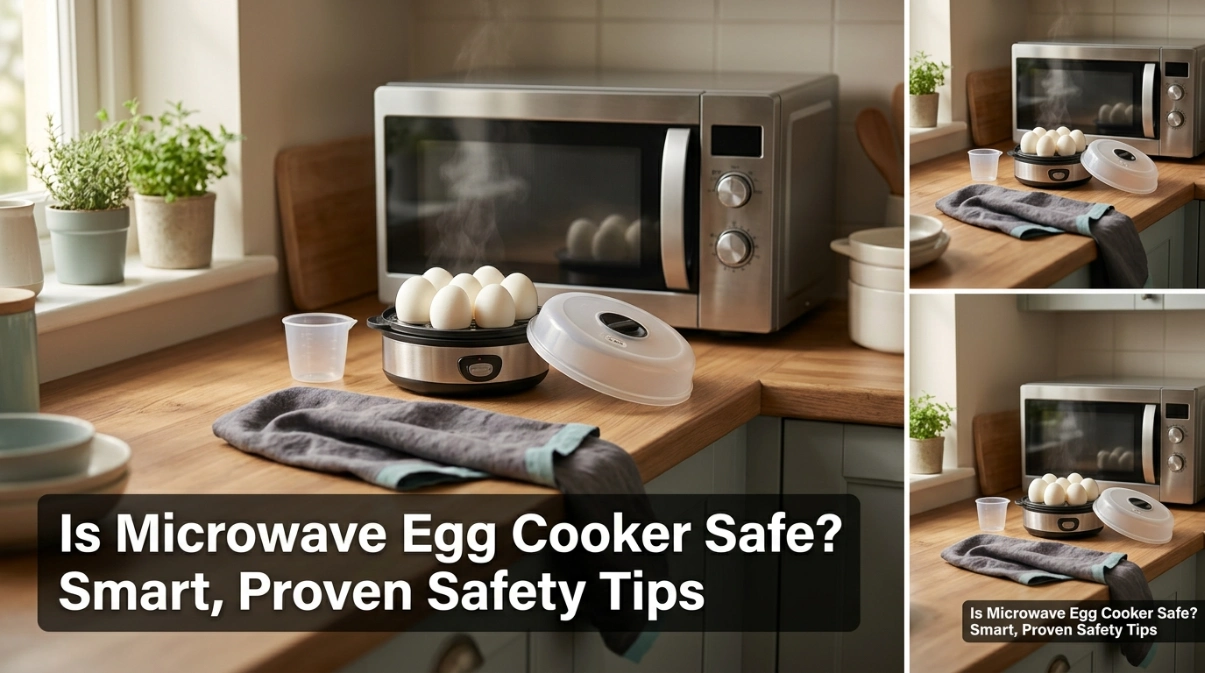
If you are asking, is microwave egg cooker safe, the short answer is yes in most cases. But the cooker must be made for microwave use, and you must use it the way its maker tells you to.
The part that confused me at first was that microwave egg cookers are not all the same. Some are made for cracked eggs. Others are special steam cookers that can cook eggs in their shells.
That difference matters a lot. I now check the design and directions before thinking about cooking time.
A normal microwave-safe egg poacher should not be treated like a shell-egg boiler. Likewise, a special shell-egg boiler may need water, an inner tray, and a tightly fitted outer lid.
Common Signs of a Microwave Egg Cooker Safety Problem
Most safety problems give you a warning sign before something goes badly wrong. I would stop the microwave and check the cooker if anything looks, smells, or sounds unusual.
| Symptom | Likely Cause | Quick Fix |
|---|---|---|
| Lid lifts or rattles | Steam cannot escape | Check the steam vent |
| Egg pops badly | Wrong cooking method | Stop and check instructions |
| Plastic warps | Too much heat | Replace the cooker |
| Burning smell | Cooker overheated | Stop use at once |
| Hot water leaks | Poor lid or base fit | Let it cool and inspect |
A little steam is normal in many egg cookers. Violent popping, a badly swollen lid, melted plastic, or a strong burning smell is not.
Steam is also easy to underestimate. I always treat the lid as if very hot steam is waiting below it, because opening it toward your face or hand can cause a burn.
Around this point, replacement parts can make sense if the maker sells them. A cracked replacement lid, damaged egg tray, or worn microwave-safe insert should be replaced rather than patched with glue or tape.
Possible Causes
The most common problem is not the microwave itself. It is usually a mismatch between the cooker design and the way it is being used.
A few causes come up again and again:
- The cooker is not labeled for microwave use.
- The steam vent is blocked.
- The lid is sitting unevenly.
- The wrong amount of water was added.
- Cooking time is too long for the microwave wattage.
- A cracked-egg cooker is being used for eggs in shells.
- A shell-egg boiler is missing its required tray or water.
- Plastic has already warped or cracked.
- The cooker is still very hot when the lid is opened.
USDA guidance says microwave cookware should be made or labeled for microwave use. It also warns that containers can become very hot from the food even when the microwave itself does not directly heat the container.
This is why I never judge safety by touch alone. A cooker that looks harmless may hold boiling water and very hot steam.
Is Microwave Egg Cooker Safe? How to Fix Common Safety Issues
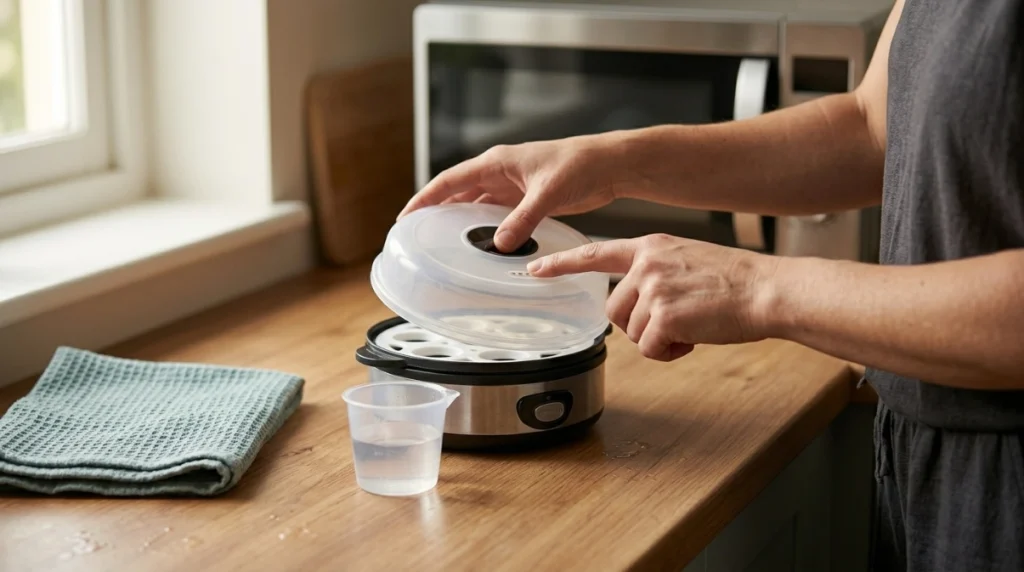
My troubleshooting process is simple. I check the cooker first, then the egg method, then the cooking time.
Check Whether the Cooker Is Microwave-Safe
Look under the cooker or read its instructions. It should clearly say that it is intended for microwave cooking.
Do not assume that any plastic bowl will work. Storage tubs, takeaway containers, and other plastics may not be designed for microwave cooking.
If the cooker is cloudy, deeply scratched, warped, cracked, or partly melted, I would replace it. I would not keep testing it with longer cooking times.
Identify Which Type of Egg Cooker You Have
This step is very important.
A basic egg poacher or omelet cooker normally uses eggs that have been removed from their shells. Some instructions also tell you to pierce the yolk or whisk the egg so pressure cannot build inside it.
A special microwave egg boiler works differently. For example, Nordic Ware’s microwave egg boiler uses water plus an aluminum insert that shields the eggs while steam cooks them, and its instructions specifically allow shell-on eggs.
So I do not use one universal shell-egg rule for every purpose-built cooker. I follow the instructions for that exact design.
Check the Lid and Steam Vent
A steam vent should never be blocked unless the manufacturer specifically designed the cooker without one.
Food, dried egg, or mineral residue can clog a small vent. That may trap more pressure and cause the lid to move during cooking.
I inspect the vent before each use. If the lid has warped and no longer sits as designed, replacement is safer than trying to force it closed.
Use the Correct Water Amount
Water matters mainly with steam-style microwave egg boilers. Too little water may let the unit run too hot, while too much can increase spilling when you move it.
I use the marked fill line or the exact amount in the instructions. I do not guess based on another cooker that looks similar.
| Problem | Recommended Solution | Difficulty |
|---|---|---|
| Wrong water level | Measure it again | Easy |
| Blocked vent | Clear after cooling | Easy |
| Warped lid | Replace lid or cooker | Easy |
| Wrong cook time | Adjust for wattage | Easy |
| Cracked body | Replace cooker | Easy |
Adjust for Microwave Wattage
One mistake I see often is copying a cooking time from another microwave.
A 1,200-watt microwave may cook an egg much faster than a 700-watt model. That extra power can lead to rubbery eggs, excess steam, or overheating.
I start with the manufacturer’s shortest safe time for my microwave range. I add small amounts of time only when needed.
Keep the Cooker Clean
Dried egg and mineral deposits can interfere with vents, lids, and water marks.
For cleaning, I let the cooker cool first. Then I use warm soapy water and a soft cloth or non-abrasive sponge unless the maker gives different care instructions.
I avoid metal scrubbers and deep scratches. Some manufacturers also recommend hand washing because dishwasher heat can warp certain microwave egg cookers.
Let Steam Escape Safely
When cooking ends, I do not open the lid at once.
I follow the stated standing time and keep my face away from the cooker. I also lift the lid so steam moves away from my hands.
This small habit has more value than people expect. Hot steam can burn skin very fast.
Mistakes to Avoid
The worst mistake is treating all microwave egg cookers as if they work the same way.
Do not put a whole shell egg into a basic microwave container unless that specific cooker is designed and instructed for shell-on cooking. Standard microwave guidance warns against heating ordinary eggs in their shells because pressure can make them burst.
I would also avoid these mistakes:
- Blocking the steam vent.
- Guessing the water level.
- Using a cracked lid.
- Cooking longer because the egg “looks close.”
- Touching hot water in the base.
- Using metal unless it is part of the manufacturer’s microwave-safe design.
- Using a cooker after plastic has melted.
- Trying to modify a damaged cooker yourself.
A microwave egg cooker has no user-serviceable heating element, power cord, safety switch, or control board of its own. The microwave supplies the energy, so opening or repairing the microwave itself is not a suitable egg-cooker troubleshooting step.
If your microwave sparks, smells electrically burnt, or behaves abnormally even without the egg cooker inside, stop using the microwave and have the appliance checked properly.
Food Safety Matters Too
A cooker can be physically safe yet still leave an egg undercooked.
Microwaves may heat food unevenly. FDA food-service guidance states that eggs and egg dishes cooked in a microwave should reach 165°F or 74°C throughout and then stand covered for two minutes.
At home, I especially avoid partly cooked eggs for anyone who needs extra protection from foodborne illness. Following the egg cooker’s directions and cooking eggs thoroughly is the simple approach.
When to Replace the Egg Cooker
Microwave egg cookers are simple products. That means there is usually very little worth repairing.
| Repair Issue | What I Would Do | Replace? |
|---|---|---|
| Light food stain | Wash normally | No |
| Mineral marks | Clean gently | Usually no |
| Broken lid | Replace if available | Maybe |
| Warped plastic | Stop using | Yes |
| Deep crack | Stop using | Yes |
| Melted area | Stop using | Yes |
I would replace the whole cooker if the body has warped, cracked, melted, or stopped fitting together as designed.
A replacement is also sensible when the instructions are missing and I cannot identify the product well enough to confirm how it should be used.
My Personal Experience
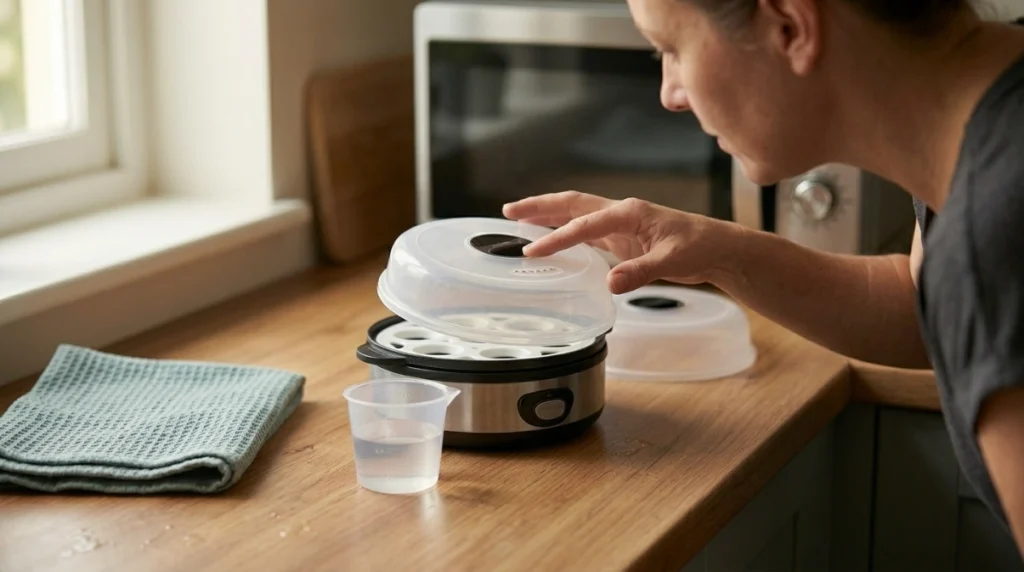
The biggest lesson from my troubleshooting process is that cooking time is rarely the first thing I check.
I first look at the cooker type. Then I check the lid, vent, tray, water level, and microwave wattage before changing the time.
I also pay close attention to steam. A cooker can finish normally yet still be hot enough to burn you when the lid comes off.
The approach that works best for me is simple: use the exact parts that belong with the cooker, follow its water level, start with the recommended time, and allow the stated cooling or standing time.
I would never try to make a damaged cooker “good enough” with tape, glue, or another lid. The small saving is not worth adding uncertainty around boiling water and steam.
Final Thoughts
So, is microwave egg cooker safe? Yes, a purpose-built microwave egg cooker can be a safe and useful way to cook eggs when it is undamaged and used exactly as directed.
The safest routine is to confirm that the product is microwave-safe, identify whether it is made for cracked or shell-on eggs, keep the steam path clear, use the correct water amount, and adjust cooking time for your microwave.
Stop using the cooker if you see warped plastic, cracks, leaking hot water, violent lid movement, or a burning smell. Those are signs to replace the product rather than keep experimenting.
Most problems are simple to prevent. A careful setup, short cooking time, proper cleaning, and a few moments of cooling before opening the lid make microwave egg cooking much safer.
6 thoughts on “Is Microwave Egg Cooker Safe? Smart, Proven Safety Tips”