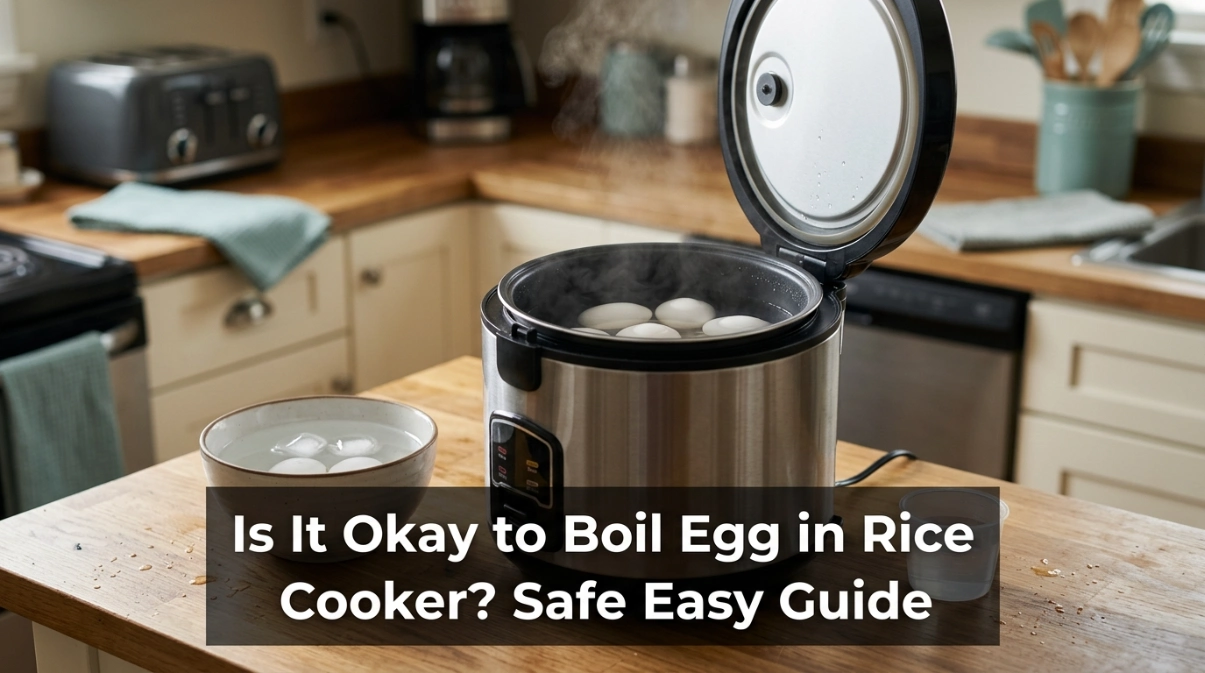
Yes, in most standard rice cookers, you can boil eggs safely. The key is to use the inner pot, enough water, and a clear steam vent.
I treat the rice cooker like a small heated pot. I do not block vents or change safety parts. Here is what can go wrong and how to fix it safely.
Common Signs of the Problem
Most problems are easy to spot. You may see cracked eggs, spitting water, early shutoff, or eggs that stay too soft.
| Symptom | Likely Cause | Quick Fix |
|---|---|---|
| Egg cracks | Egg is very cold or hits the pot | Place it gently and warm it a little |
| Water spits | Too much water or blocked vent | Use less water and clear the vent |
| Switches to warm early | Low water or cooker design | Add water and check the manual |
| Egg stays soft | Cooking time is too short | Cook a little longer |
| Burning smell | Dry pot or appliance fault | Stop and inspect safely |
A cracked shell is not always dangerous. It often happens when a cold egg heats fast.
If your rice cooker came with a steam basket, you can use it if the manual allows. If the lid, steam basket, or measuring cup is damaged, use a model-matched replacement instead of forcing a poor fit.
Is It Okay to Boil Egg in Rice Cooker? Possible Causes of Trouble
The egg itself is rarely the main problem. Most trouble comes from water, steam, heat, or the cooker changing from “cook” to “warm.”
Common causes include:
- Too little water in the inner pot
- Too much water, which can bubble over
- A blocked lid or steam vent
- Eggs dropped hard into the pot
- Dirt under the inner bowl
- Mineral scale from hard water
- A damaged cord or loose wall outlet
- A cooker that changes to “warm” very early
Many basic rice cookers sense heat at the bottom of the pot. When the water gets low, the base gets hotter and the cooker may switch to warm.
That is normal on many models. Digital rice cookers may work in a different way, so I use the steam or boil mode only when the manual says it is safe.
How to Fix Problems When Boiling Eggs in a Rice Cooker
Check the Power Source
Place the cooker on a dry, flat counter. Plug it into a sound wall outlet and keep the cord away from water.
If the cooker loses power, flickers, or shuts off at once, stop using it. Do not open the heating unit or try to repair live wires.
Add the Right Amount of Water
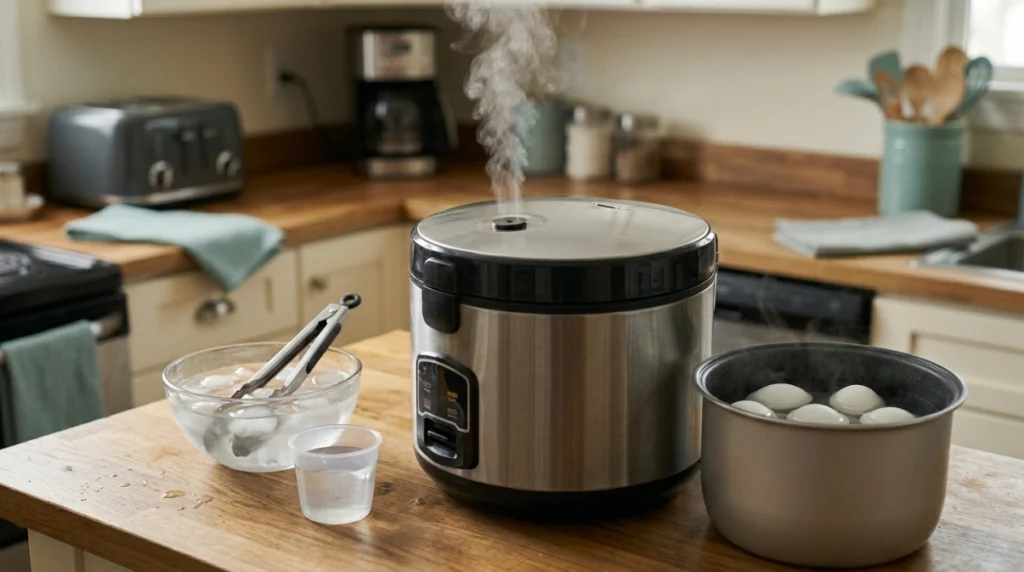
Put the eggs in the inner pot. Add enough water to cover them by about one inch, unless your manual gives a different limit.
Too little water can boil away fast. Too much water can splash from the vent or lid.
Use the Normal Cook Setting
For a simple one-switch rice cooker, use the normal Cook setting. Let the water come to a steady boil.
For hard-cooked eggs, about 10 to 12 minutes after the water reaches a steady boil is a useful starting point. Softer eggs need less time.
Rice cooker power and egg size can change the result. I prefer to treat the first batch as a test and adjust from there.
Keep the Lid and Steam Vent Clear
Steam must have a safe way out. Keep your hands and face away from the vent because hot steam can burn skin fast.
Never cover the vent with a towel, foil, plate, or another object. Blocking steam is not a safe way to make eggs cook faster.
Cool the Eggs After Cooking
Move the eggs into cold water when they are done. This slows the cooking and often makes peeling easier.
Use tongs or a spoon. The eggs, lid, pot, and water may all be very hot.
Check the Heating Plate
If the cooker heats poorly or switches early, unplug it and let it cool. Remove the inner pot and check the heating plate.
A grain of rice, dried water, or scale can stop the pot from sitting flat. A clean contact surface helps the cooker heat as designed.
Wipe the cool heating plate with a soft cloth. Do not pour water into the cooker body.
Remove Mineral Buildup
Hard water can leave white scale in the pot or steam area. Heavy buildup may affect heat and steam flow.
If the manual allows it, I use diluted white vinegar on removable, washable parts. A non-abrasive sponge is safer than steel wool because it is less likely to scratch the pot.
Problem and Recommended Solution
| Problem | Recommended Solution | Difficulty |
|---|---|---|
| Eggs crack often | Let eggs warm slightly before cooking | Easy |
| Eggs stay undercooked | Add a little more time | Easy |
| Water boils over | Reduce water and clear the vent | Easy |
| Cooker changes to warm early | Check water level and model behavior | Easy |
| Heating seems weak | Clean the pot base and heating plate | Easy |
| Electrical smell | Stop using the cooker | Do not DIY |
These are basic care issues. Wiring, a failed heating element, or a bad safety switch needs expert care.
Do not bypass a thermal fuse, safety switch, or overheat system. A repair shop or replacement cooker is safer.
Mistakes to Avoid
Do not use almost no water just because the cooker gets hot. A dry pot can overheat and may trigger safety protection.
Do not place eggs on the bare heating plate. Eggs belong inside the removable inner pot or an approved steam basket.
Do not pour water into the body under the inner bowl. Water belongs in the removable pot unless the maker says otherwise.
I also avoid metal tools on a nonstick pot. A soft spoon, silicone tool, or non-abrasive sponge is less likely to scratch it.
If you smell burning plastic, see sparks, hear electrical buzzing, or find a damaged cord, unplug the cooker if it is safe to do so. Do not open sealed electrical parts.
When to Replace the Rice Cooker
Boiling eggs should not require a major repair. If the cooker has a damaged cord, cracked body, failed heating element, repeated overheating, or a strong electrical smell, replacement may be the better choice.
A cooker that keeps heating after the pot is dry can also be unsafe. Stop using it and have it checked.
A worn inner pot, lid, or removable steam part may be replaceable. Match the exact model number so the new part fits and vents as designed.
My Personal Experience

The method I trust most is simple: eggs in the inner pot, enough water to cover them, normal cook mode, and a clear steam vent.
The biggest lesson is that timing is not exact across all rice cookers. A small cooker may boil fast, while a large digital model may take longer.
I also pay more attention to the water than the clock. If the cooker changes to warm early, I first check the water level and how that model is meant to work.
Cooling the eggs right away helps control doneness and stops extra cooking.
Final Thoughts
So, is it okay to boil egg in rice cooker? Yes, for most standard rice cookers, it is a safe and simple method when you use the inner pot, enough water, and a clear steam vent.
Start with a small batch and watch how your cooker behaves. If you notice an electrical smell, damaged cord, severe overheating, or a failed safety function, stop using the appliance rather than trying an unsafe repair.