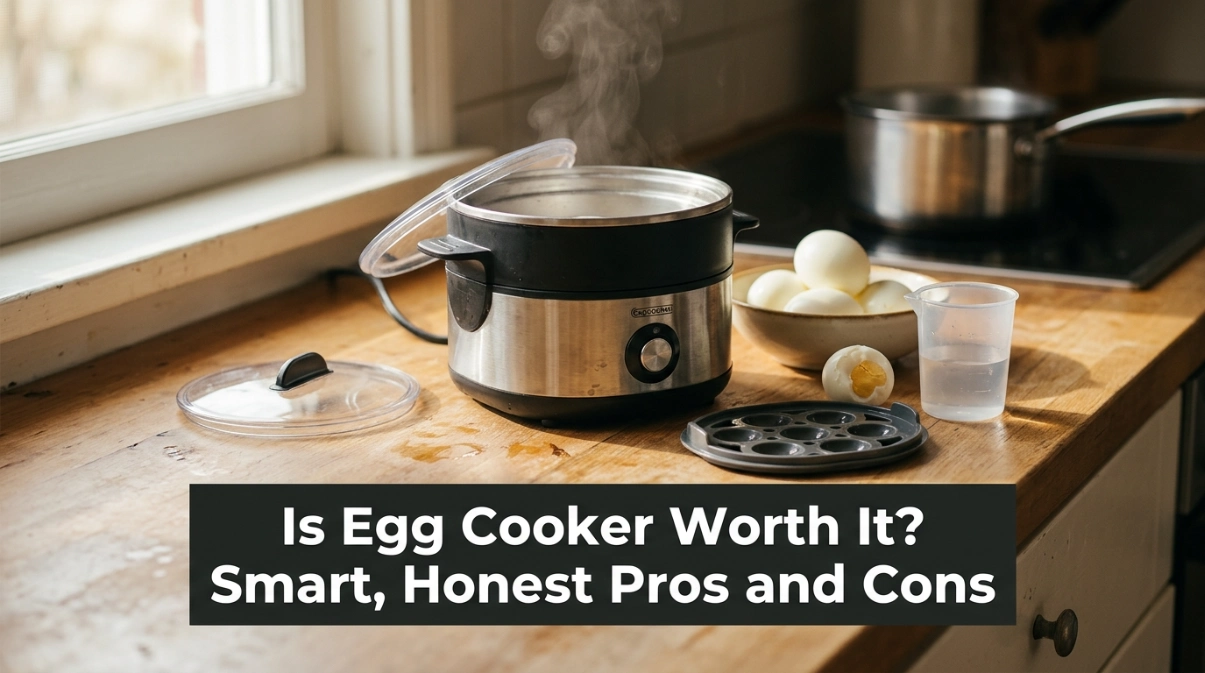
When I first asked, is egg cooker worth it, I was not sure. Boiling eggs in a pot already seemed simple. I did not want another small appliance taking up space.
After using an egg cooker, I saw why people like them. They can save time and reduce guesswork. But I also found a few small problems that can make a good cooker seem useless.
The key is knowing what the cooker can do and what can go wrong. In this guide, I will show you what I checked, what helped, and when I think an egg cooker is worth keeping.
Common Signs That an Egg Cooker May Not Feel Worth It
A new egg cooker can feel like a bad buy if the eggs do not come out as planned. I had this happen when my eggs were too soft even though I thought I had followed the steps.
Most value complaints come from a few simple signs.
| Symptom | Likely Cause | Quick Fix |
|---|---|---|
| Eggs are too soft | Too little water | Add the correct water amount |
| Eggs are overcooked | Too much water | Use the marked measuring cup |
| Water leaks out | Tray or lid is not seated | Refit the parts |
| Cooker takes too long | Scale on heating plate | Descale the plate |
| Unit stops too soon | Low water or heat protection | Cool it and test again |
| Strong burning smell | Electrical or heating fault | Unplug and stop using it |
One thing surprised me. Small accessories matter more than I expected. A lost water measuring cup made it harder for me to get the same result each time.
A replacement measuring cup can help if the old one is gone. A damaged egg tray or cracked lid may also be worth replacing if the cooker itself still works well.
I also keep a soft cloth and a non-abrasive sponge nearby. They help remove marks without scratching the heating plate.
Possible Causes
An egg cooker is a simple appliance, but several small errors can affect the final result. Before I blamed the cooker, I checked the basic setup.
The Water Amount Is Wrong
Most egg cookers use water to control cooking time. The water heats, turns to steam, and cooks the eggs.
Too little water may stop the cycle early. Too much water can cook the eggs longer than you want.
I get better results when I use the measuring cup that matches the cooker. Random cups and guessed amounts gave me less steady results.
The Egg Tray Is Not Sitting Flat
The egg tray needs to sit in the right place. If it tilts, steam may not move around the eggs in the same way.
I always check the tray before adding the lid. It only takes a few seconds.
The Lid or Steam Vent Is Blocked
Steam needs a safe way to escape. A blocked vent can cause too much heat or steam inside the cooker.
I check the vent after each few uses. Dried egg or mineral marks can sometimes build up near it.
Mineral Scale Covers the Heating Plate
Hard water can leave a white or brown layer on the heating plate. This is called mineral scale or limescale.
A thin layer may not seem important. Over time, though, it can slow heat transfer and make cooking less steady.
The Heating System Is Wearing Out
An older cooker may heat more slowly. It may also shut off at the wrong time.
If basic care no longer helps, the heating element or internal control may be failing. I do not try to open the base to repair these parts.
How to Fix the Problems Behind “Is Egg Cooker Worth It?”
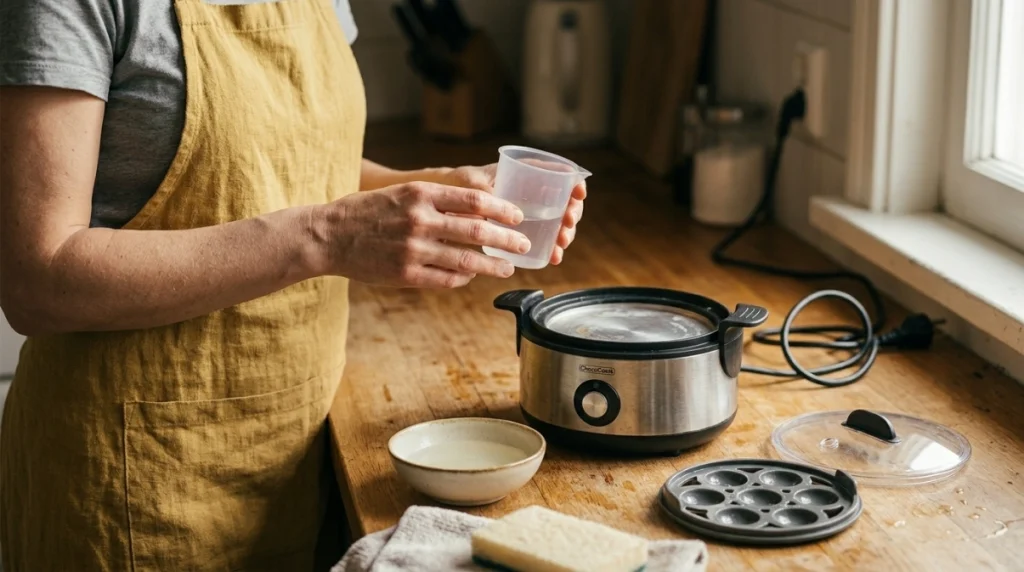
Before replacing an egg cooker, I use a short test routine. It helps me tell the difference between a bad appliance and a simple setup problem.
Check the Power Source
I start with the easy part. I make sure the plug sits firmly in the wall outlet and that the cord has no cuts, burns, or loose areas.
If the cooker does not turn on, I test the outlet with another safe appliance. I never keep using a damaged power cord.
Measure the Water Carefully
Water level made the biggest difference in my tests. I use the cooker guide or marked measuring cup instead of guessing.
If the eggs are too soft, I add a little more water next time. If they are too firm, I use slightly less.
I change only one thing at a time. This makes it easier to find the right amount.
Inspect the Egg Tray and Lid
I remove the tray and place it back into position. I also check the lid for cracks, warping, or a poor fit.
A badly damaged tray or lid can let steam escape in the wrong place. If the part is made to be replaced, a matching replacement may be cheaper than a new cooker.
Check the Steam Vent
I make sure the vent is open before each cooking cycle. Steam coming from the vent is normal.
I keep my hands and face away from it while the cooker runs. Hot steam can cause a burn very fast.
Remove Mineral Buildup
About halfway through my troubleshooting, cleaning is usually the next step. Scale on the plate can make a cooker seem slow or weak.
I unplug the cooker and let it cool first. Then I follow the maker’s care guide.
For many basic models, a small amount of white vinegar and water can help loosen mineral scale. I never pour liquid into switches, vents in the base, or electrical parts.
After the scale softens, I wipe the plate with a soft cloth or non-abrasive sponge. I avoid knives, metal pads, and other tools that may scratch it.
Let Overheat Protection Reset
Some egg cookers stop if they get too hot or run dry. This safety feature is useful, even if it can seem like a fault.
I unplug the unit and let it cool fully. Then I add the correct amount of water and try one normal cycle.
If it keeps shutting off early, I stop using it until I know the cause.
| Problem | Recommended Solution | Difficulty |
|---|---|---|
| Wrong egg texture | Adjust water amount | Easy |
| Loose tray | Refit the tray | Easy |
| Blocked vent | Clear after cooling | Easy |
| Mineral scale | Descale and wipe | Easy |
| Cracked lid | Replace correct lid | Easy |
| Repeated shutdown | Stop use and inspect | Moderate |
Mistakes to Avoid
My biggest early mistake was treating the water line like a rough guide. In many egg cookers, small changes in water can change the final egg texture.
I also learned not to open the lid while steam is pouring out. The inside may look harmless, but the steam is very hot.
Do not bypass an auto shut-off switch or other safety part. These systems are there to reduce the risk of overheating.
Never open a sealed heating unit unless the manufacturer specifically designed it for user service. Electrical repairs inside a small cooker are rarely worth the risk.
I would also stop using a cooker that has a melted plug, damaged cord, sparks, smoke, or a strong electrical burning smell.
When to Replace the Egg Cooker
A cheap fix can make sense when the problem is a measuring cup, lid, or removable tray. A major electrical problem is different.
I would replace the cooker if the base is cracked, the cord is damaged, it leaks into electrical areas, or it keeps overheating.
| Repair Issue | Typical Decision | Replace Instead? |
|---|---|---|
| Lost measuring cup | Replace the cup | Usually no |
| Damaged removable tray | Replace if available | Usually no |
| Cracked lid | Replace if available | Maybe |
| Heavy scale | Descale first | Usually no |
| Damaged cord | Stop using | Often yes |
| Heating fault | Do not open sealed base | Often yes |
There is also a value question. If a new basic cooker costs close to the price of a major repair, replacement often makes more sense.
My Personal Experience
The first few times I used an egg cooker, my results were not great. One batch was soft. The next batch went too far.
At first, I thought the machine was not worth keeping. Then I changed my test method.
I started with the correct measuring cup. I checked the tray, made sure the lid sat flat, and kept the steam vent clear.
I also removed mineral marks from the heating plate. After that, the cooking time became more steady.
The biggest lesson for me was simple. An egg cooker works best when I stop guessing.
It also helps most when I cook eggs often. If I only made one boiled egg once a month, I would probably use a pot instead.
For busy mornings, though, I like being able to add eggs and water, start the cooker, and work on the rest of breakfast.
Is Egg Cooker Worth It?

For many people, yes. An egg cooker is worth it if you eat boiled or steamed eggs often and want a simple, hands-off way to cook them.
It can also be useful if you often overcook eggs on the stove. The auto shut-off feature can remove some of that guesswork.
It may not be worth it if you cook eggs only once in a while. A saucepan can do the same basic job without using extra counter or cabinet space.
The cooker also loses value if it is hard to clean, uses parts that are hard to replace, or gives poor results even after you follow the correct water guide.
Final Thoughts
So, is egg cooker worth it? For me, the answer depends more on how often it gets used than on how complex the appliance is.
A good egg cooker should heat well, shut off safely, fit together with no leaks, and give steady results when the right amount of water is used.
Before giving up on one, check the water level, tray, lid, steam vent, and mineral buildup. Those simple steps solve many of the problems that make an egg cooker feel like a bad purchase.
If the cord, heating system, or safety controls seem damaged, replacement is the safer choice. A small kitchen appliance is never worth taking an electrical risk over.
2 thoughts on “Is Egg Cooker Worth It? Smart, Honest Pros and Cons”