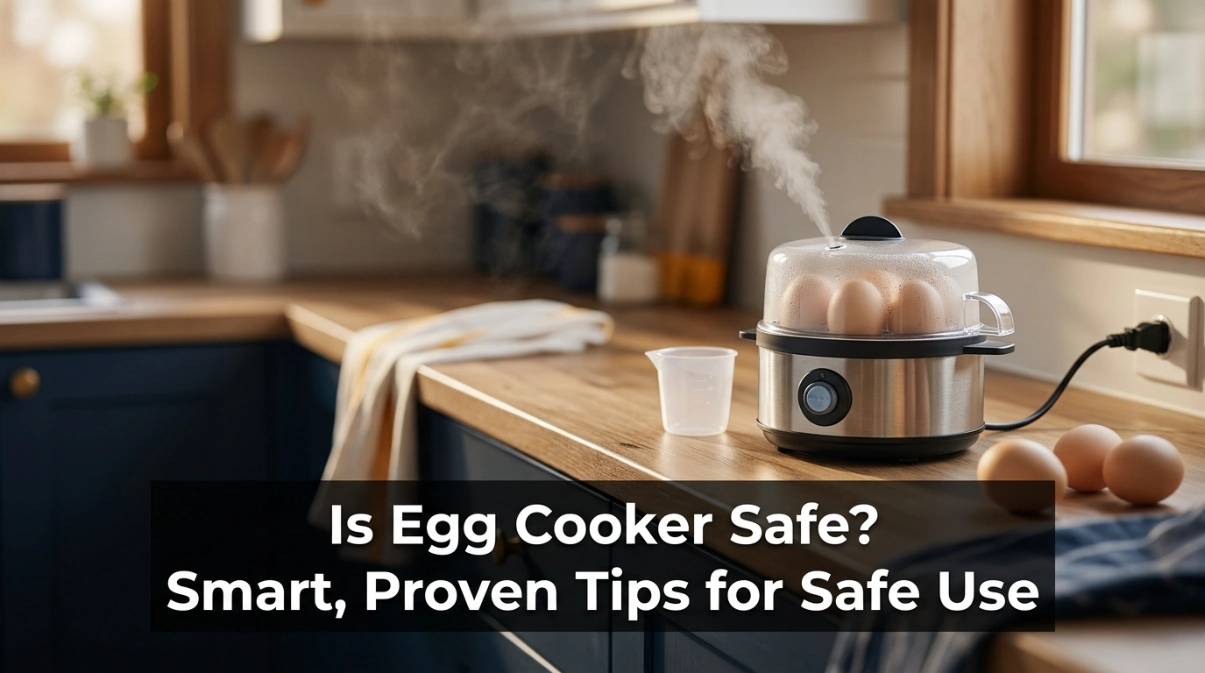
If you are asking is egg cooker safe, the short answer is yes when the appliance is in good condition and used as directed. Most problems I watch for come from steam, too much water, damaged parts, or poor cleaning.
I used to think an egg cooker was almost impossible to misuse. Add water, place the eggs inside, press a button, and wait. After a few messy cooking cycles, I learned that a few small details make a big difference.
In this guide, I will share the checks I use before cooking. I will also explain what I do if the cooker leaks, smells hot, makes strange sounds, or does not shut off as expected.
Common Signs of the Problem
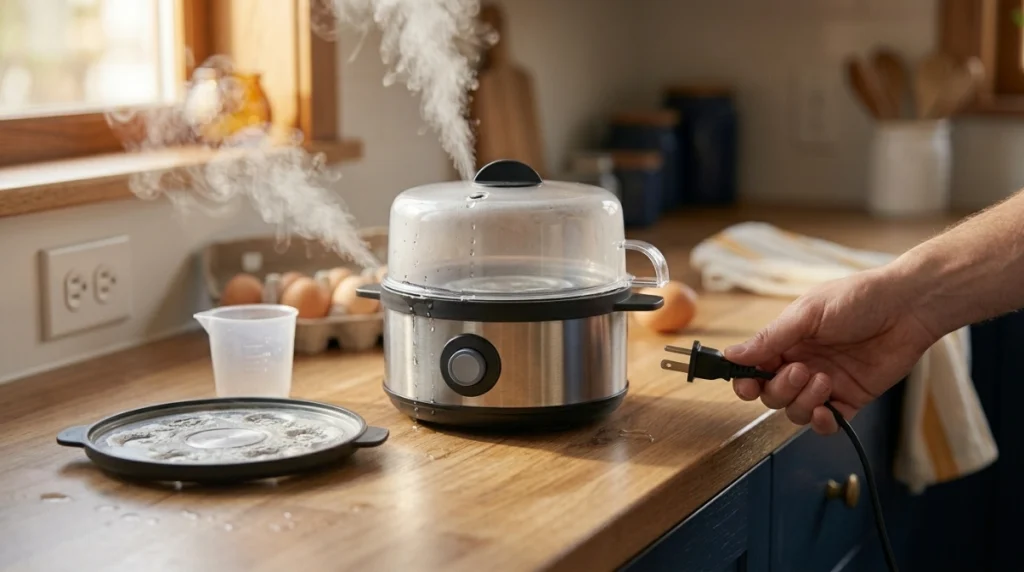
A normal egg cooker gets hot and releases steam. That alone is not a fault. The warning signs are usually changes from the way the cooker normally works.
Here are the signs that make me stop and check the appliance before starting another batch.
| Symptom | Likely Cause | Quick Fix |
|---|---|---|
| Water leaks from the cooker | Too much water or poor lid fit | Unplug and check water level |
| Strong burning smell | Food residue or electrical fault | Stop using and inspect |
| Excess steam from the sides | Lid or tray is not seated well | Refit the parts |
| Cooker stays hot too long | Shut-off problem or wrong water amount | Unplug and let it cool |
| Cord feels very hot | Cord, plug, or outlet problem | Stop using immediately |
| Eggs cook poorly | Wrong water amount or limescale | Measure water and descale |
One thing I learned quickly is that steam can look dramatic even when the cooker is working normally. Steam should usually leave through the vent provided by the maker.
Steam forcing its way from odd gaps is different. I treat that as a reason to check the lid, tray, and water level.
Around this point, I also inspect small removable parts. A cracked egg tray, damaged lid, or lost measuring cup can make normal use harder, so a model-compatible replacement part may be more sensible than trying to improvise.
I never use a random lid or tray just because it seems to fit. Parts should match the cooker because they affect spacing, steam flow, and water control.
Possible Causes
An egg cooker is simple, but several small problems can affect safe operation. These are the causes I check first.
- Too much water in the heating area
- A damaged power cord or loose plug
- A wet electrical base
- A cracked egg tray or lid
- A blocked steam vent
- Mineral buildup on the heating plate
- Food residue burning on the hot plate
- Incorrect assembly
- A failed auto shut-off feature
- A damaged switch or control button
The water amount matters more than I first expected. Many egg cookers use the amount of water to control cooking time.
Adding extra water does not always make the eggs better. It may keep the cooker producing steam for longer and can cause more condensation around the appliance.
Mineral buildup is another common issue. Hard water can leave a white or brown layer on the heating plate. That layer may cause uneven heating and strange smells.
How to Fix Safety Issues: Is Egg Cooker Safe?
When I am unsure whether the cooker is safe, I do not start by taking it apart. I begin with simple checks that do not expose electrical parts.
Check the Power Cord and Wall Outlet
I unplug the cooker and look closely at the cord. I check for cuts, melted areas, bent plug pins, or discoloration near the plug.
If the cord is damaged, I stop using the cooker. Tape is not a safe long-term repair for a damaged appliance cord.
I also check the wall outlet. A loose connection, sparks, smoke, or unusual heat from the outlet is a reason to stop and use a qualified electrician if needed.
I avoid extension cords when the manufacturer says the cooker should connect directly to a wall outlet. Small heating appliances can draw enough power to make a poor extension connection hot.
Inspect the Egg Tray and Lid
Next, I remove the egg tray and inspect it for cracks or warped areas. I also check that it sits flat in the cooker.
The lid should fit the way the maker intended. I never force it closed or cover the steam vent.
Hot steam needs a safe path out. Blocking that path can lead to excess pressure, hot water movement, or steam escaping from unexpected areas.
Measure the Water Correctly
This was one of my early mistakes. I used to pour water in by eye because the amount looked too small.
That gave me inconsistent results. I now use the supplied water measuring cup or the amount listed in the manual.
The correct amount can vary based on the number of eggs and whether I want soft, medium, or hard-cooked eggs.
If the original cup is lost, I use the manufacturer’s stated measurement rather than guessing. A compatible replacement measuring cup can also make daily use easier.
Check the Heating Plate
I wait until the cooker is unplugged and completely cool. Then I look at the heating plate.
Light mineral marks are common. Thick buildup or burnt food residue can cause poor heating and bad smells.
This is where regular cleaning made the biggest difference for me. I wipe the cool plate with a soft cloth or non-abrasive sponge instead of scraping it with metal.
For mineral buildup, white vinegar or a descaling method approved in the manual can help. I do not pour liquid into electrical openings.
Test the Auto Shut-Off
Many egg cookers stop heating when the water has boiled away. Some also beep or switch to a keep-warm mode.
I never treat auto shut-off as a reason to leave the appliance unattended for long periods. It is a backup feature, not something I want to test carelessly.
If my cooker keeps heating after the normal cycle should have ended, I unplug it. I do not bypass the switch or try to modify the thermostat.
Check Buttons and Warning Signals
Some models use a simple power switch. Others have buttons, lights, timers, or beeps.
If a button sticks, a light flashes in an unusual way, or the cooker gives a warning signal, I check the manual before running another cycle.
I do not keep pressing buttons hoping the problem will clear. A repeated error can point to overheating, a sensor problem, or another fault that needs attention.
Watch for Water Leaks
Small drops of condensation near the lid can be normal. Water running toward the electrical base is not something I ignore.
I unplug the cooker and let everything cool. Then I check the water amount, tray position, lid fit, and any gasket the model may use.
If a removable silicone gasket is torn, I replace it only with a compatible part. Not every egg cooker uses a gasket, so I do not add one unless the design calls for it.
| Problem | Recommended Solution | Difficulty |
|---|---|---|
| Mineral deposits | Descale the cool plate | Easy |
| Wrong water level | Measure water correctly | Easy |
| Poor lid fit | Reposition lid and tray | Easy |
| Cracked removable part | Replace matching part | Easy |
| Damaged power cord | Stop using the cooker | Do not DIY |
| Failed shut-off | Stop using and seek service | Do not DIY |
Mistakes to Avoid
My biggest mistake was assuming that a small appliance could not cause much trouble. An egg cooker uses both electricity and boiling water, so I now treat it with the same care as a kettle.
I do not overfill the water area. I also do not move the cooker while it contains boiling water or active steam.
Another mistake is lifting the lid toward the face. I open it away from my hands and face because trapped steam can burn quickly.
I never immerse the electrical base in water. I wipe it with a slightly damp cloth only after unplugging it and letting it cool.
I also avoid using knives, screwdrivers, or metal scrapers on the heating surface. They can damage the coating or nearby parts.
Most importantly, I never open a sealed heating unit, bypass a safety switch, or alter the wiring. Electrical repairs should be left to a qualified person or the manufacturer.
When to Replace the Egg Cooker
Not every problem deserves a repair. Egg cookers are fairly simple appliances, and some faults are clear signs that I should stop using one.
I would replace or professionally service a cooker if the power cord is damaged, the base has taken in water, the plastic has melted, or the unit repeatedly smells electrical or burnt.
A failed auto shut-off is another serious warning sign. I would not keep using a cooker that continues heating when it should stop.
I also replace the unit if internal parts appear loose or if the base has cracked after a fall. A cheap workaround is not worth taking a risk with electricity and boiling water.
A cracked removable tray or lid is different. If the electrical base still works correctly, replacing the exact compatible removable part may be enough.
My Personal Experience
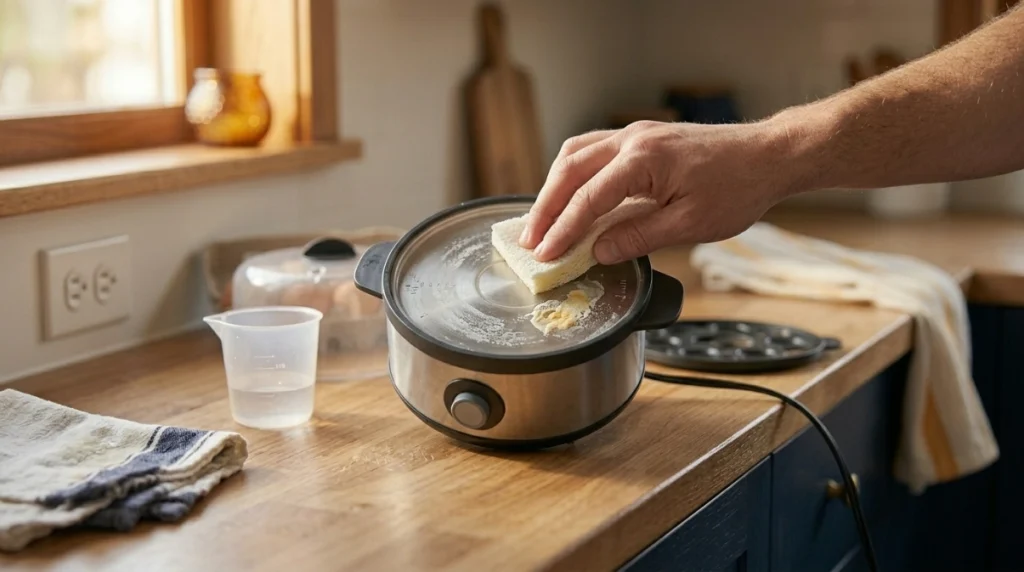
The issue that taught me the most was a strange burnt smell from the heating plate. At first, I assumed the cooker itself was failing.
I unplugged it, let it cool, and checked the cord and base. Both looked normal. The real problem was a mix of mineral buildup and dried egg residue on the plate.
After I cleaned the cool plate and used the correct amount of water, the smell disappeared. The cooker also finished its cycle more consistently.
I also learned not to guess the water level. Once I returned to the measuring cup, my eggs became more predictable and there was less excess steam.
My routine now takes less than a minute. I check the cord, make sure the heating area is dry, measure the water, seat the tray correctly, and confirm that the steam vent is clear.
Those simple checks have been far more useful than trying complicated fixes.
Final Thoughts
So, is egg cooker safe for normal home use? In good condition and used correctly, it can be a simple and safe way to cook eggs.
The main risks come from hot steam, boiling water, electrical damage, blocked vents, incorrect water amounts, and failed safety controls. Most everyday problems are easy to spot before they become serious.
I focus on simple habits: measure the water, keep the steam vent clear, keep the electrical base dry, descale the heating plate, and inspect the cord before use.
If I notice a burning electrical smell, damaged cord, melted plastic, water inside the base, or a failed shut-off system, I stop using the cooker. That is one problem I would rather replace than try to repair myself.