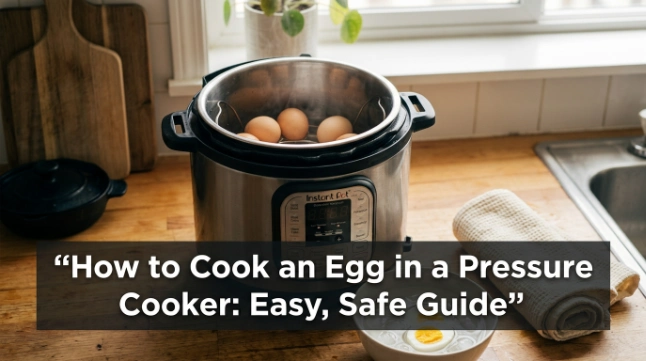
Learning how to cook an egg in a pressure cooker is simple. The hard part is choosing the right cooking time.
My first batch was not perfect. I used too much water and left the eggs under pressure for too long. The yolks became dry, and a few shells cracked.
After testing several batches, I found a method that works well. In this guide, I will show you how to cook soft, medium, and hard eggs safely.
Common Signs of the Problem
Pressure-cooked eggs can go wrong in a few ways. The shells may crack, the yolks may turn gray, or the whites may feel firm and rubbery.
You may also find that the eggs are too soft. This often happens when the cook time or pressure-release time is too short.
| Symptom | Likely cause | Quick fix |
|---|---|---|
| Cracked shells | Eggs touched the hot pot | Use a rack or egg insert |
| Runny whites | Cooking time was too short | Add one minute |
| Dry yolks | Eggs cooked too long | Reduce the cook or release time |
| Gray ring on yolk | Eggs stayed hot too long | Use an ice bath at once |
| Hard-to-peel shell | Eggs cooled too slowly | Chill them in ice water |
A small amount of white leaking from a cracked shell is usually not a safety concern. However, the egg may look uneven after cooking.
If you hear steam leaking around the lid, stop and inspect the cooker. It may not be sealed correctly.
Possible Causes
Most poor results come from timing, water, or egg placement. The cooker itself is rarely the problem.
Here are the most common causes:
- The eggs are sitting directly on the heating surface.
- There is not enough water to make steam.
- Too much water is slowing the cooking process.
- The pressure setting is wrong.
- The steam-release time is too long.
- The eggs are very cold or unusually large.
- The lid seal or steam valve is not fitted correctly.
- The eggs are not moved to cold water after cooking.
I use the rack that came with my pressure cooker. An egg insert or stackable egg tray also works well.
If your original rack is missing, a replacement egg tray can keep the eggs above the water. A silicone egg rack is another useful choice, but it must be approved for pressure cooking.
How to Cook an Egg in a Pressure Cooker
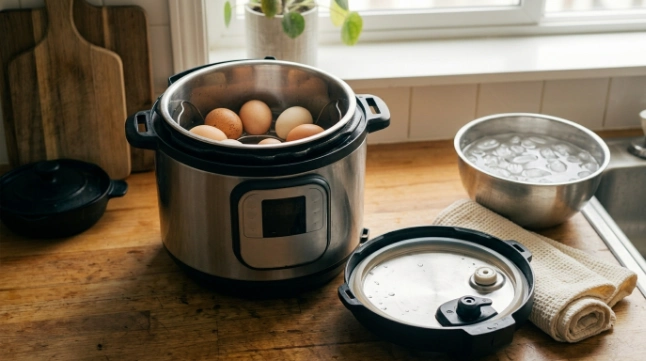
The basic method is easy. Add water, keep the eggs above it, cook under pressure, and cool the eggs fast.
Exact times can vary between cookers. Use the first batch as a test, then adjust the time by one minute if needed.
Check Your Pressure Cooker
Read the manual before starting. Make sure your model can steam food on a rack.
Check the lid seal, pressure valve, and inner pot. All parts should be clean and fitted in the correct position.
Never use a damaged gasket. Do not use the cooker if the lid will not lock or the valve looks blocked.
Add the Right Amount of Water
Place the inner pot inside the cooker. Add one cup of water unless your manual calls for a different minimum amount.
The water creates steam. It is not meant to cover the eggs.
Too little water can cause a burn warning. Too much water may increase the time it takes the cooker to reach pressure.
Place the Eggs on a Rack
Put a trivet, steam rack, or egg insert inside the pot. Arrange the eggs in a single layer when possible.
The eggs should sit above the water. Do not place them on the bare bottom of an electric pressure cooker.
I have cooked six eggs at once with good results. A larger batch can also work if the eggs are stable and do not block the lid.
Lock the Lid and Choose the Time
Close and lock the lid. Set the steam valve to its sealing position.
Choose high pressure. Then use the following times as a starting point.
| Egg result | Pressure time | Release and cooling |
|---|---|---|
| Soft yolk | 3 minutes | Quick release, then ice bath |
| Jammy yolk | 4 minutes | Quick release, then ice bath |
| Medium yolk | 5 minutes | 3-minute natural release |
| Firm yolk | 5 minutes | 5-minute natural release |
| Very firm yolk | 6 minutes | 5-minute natural release |
The timer usually begins after the cooker reaches full pressure. The heating stage may take five to ten minutes.
For my cooker, five minutes of pressure and five minutes of natural release produce firm eggs without dry yolks.
Release the Pressure Safely
A quick release stops the cooking sooner. It works well for soft eggs.
Keep your face and hands away from the steam valve. Use the safe release method shown in your cooker’s manual.
For firm eggs, I prefer a short natural release. I wait five minutes and then release the remaining pressure.
Do not force the lid open. Wait until the pressure pin drops and the lid unlocks easily.
Cool the Eggs in an Ice Bath
Prepare a bowl of ice and cold water while the eggs cook. Move the eggs into it as soon as the pressure is released.
Let them cool for at least five minutes. Ten minutes is better for firm eggs.
This stops the yolks from cooking further. It also helps prevent a gray or green ring.
Peel the Eggs
Tap each egg gently on the counter. Roll it under your palm to loosen the shell.
I start peeling at the wide end. There is often a small air pocket there, which makes it easier to get under the shell.
Peel the egg under cool running water if small shell pieces stick. The water can slide between the shell and the white.
Keep the Cooker Clean
After the inner pot has cooled, wash it with warm water and mild dish soap. Use a non-abrasive sponge to protect the surface.
It is important to clean the lid, steam vent, and removable gasket as directed by the maker. Dried egg white can block a small vent or cause an odor.
Mineral marks may appear on the inner pot. A little white vinegar and water can often remove them without hard scrubbing.
Troubleshooting Pressure-Cooked Eggs
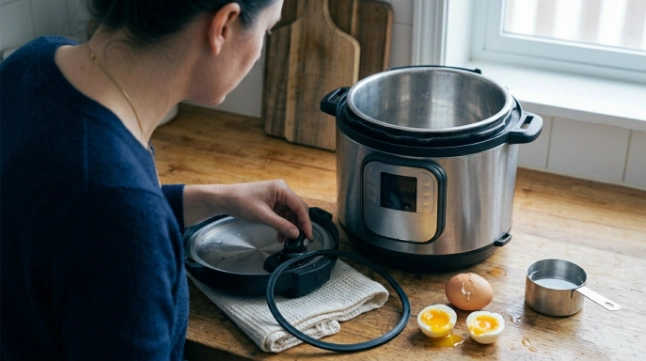
Small timing changes can make a big difference. If the first batch is not right, change only one thing at a time.
| Problem | Recommended solution | Difficulty |
|---|---|---|
| Eggs are too soft | Add one minute of pressure time | Easy |
| Eggs are rubbery | Shorten the natural release | Easy |
| Shells keep cracking | Use a rack and stable egg placement | Easy |
| Cooker shows burn alert | Check water and inner pot | Easy |
| Steam leaks near lid | Stop and inspect the gasket | Moderate |
| Cooker will not pressurize | Check lid, valve, water, and seal | Moderate |
If the cooker shows an error signal, cancel the cycle. Let the pressure fall before opening the lid.
Check the manual for the meaning of the error. Do not keep restarting a cooker that smells burnt or leaks steam from the lid.
Mistakes to Avoid
Do not cook eggs without water. A pressure cooker needs liquid to create steam and build pressure safely.
Avoid placing eggs directly on the heating plate or bare pot base. A trivet protects the eggs from direct heat and helps reduce cracks.
Do not fill the cooker past its marked limit. Eggs need very little space, but the cooker still needs room to work safely.
Never cover or block the steam vent. Do not hold the pressure pin down or bypass any safety switch.
Do not open the electrical base or sealed heating unit. If the power cord, control panel, or heating part is damaged, stop using the cooker.
I also avoid releasing steam beneath a cabinet. The hot moisture can damage the wood and drip back onto the cooker.
When to Replace the Pressure Cooker
Bad eggs do not always mean you need a new cooker. In most cases, a new gasket or a better cooking time solves the problem.
Replacement may be safer when the cooker has a damaged lid lock, cracked housing, bad power cord, or unreliable pressure control.
Stop using it if you notice smoke, sparks, melted plastic, or a strong electrical burning smell. Unplug it only when you can do so safely.
| Repair issue | Usual action | Replace instead? |
|---|---|---|
| Worn removable gasket | Fit an approved replacement | Usually no |
| Missing egg rack | Buy a suitable insert | No |
| Damaged power cord | Contact the maker | Often yes |
| Broken lid lock | Stop using the cooker | Yes |
| Heating failure | Professional service only | Often yes |
Use parts made or approved for your model. A gasket with the wrong size may prevent safe sealing.
My Personal Experience
My first mistake was treating the pressure cooker like a normal pot. I added too much water and let the eggs sit in the hot cooker after the timer ended.
The eggs were safe to eat, but the yolks were dry. A faint gray ring also formed around them.
On my next test, I used one cup of water and placed six cold eggs on the rack. I cooked them at high pressure for five minutes.
I then waited five minutes before releasing the rest of the steam. The eggs went straight into an ice bath.
That batch peeled much better. The whites were tender, and the yolks were firm without being chalky.
For soft eggs, three minutes worked better in my cooker. I used a quick release and cooled them right away.
The main lesson was simple: release time counts as cooking time. Leaving eggs inside a hot, sealed pot can turn a good egg into an overcooked one.
Final Thoughts
The best way to cook an egg in a pressure cooker is to keep it above the water, use high pressure, and cool it quickly.
Start with three minutes for soft eggs or five minutes for firm eggs. Adjust by one minute based on your cooker and preferred yolk texture.
Always follow the cooker manual. Check the lid, gasket, steam valve, and water level before every batch.
Once I found the right time, the method became quick and reliable. It is now one of my easiest ways to prepare several eggs at once.