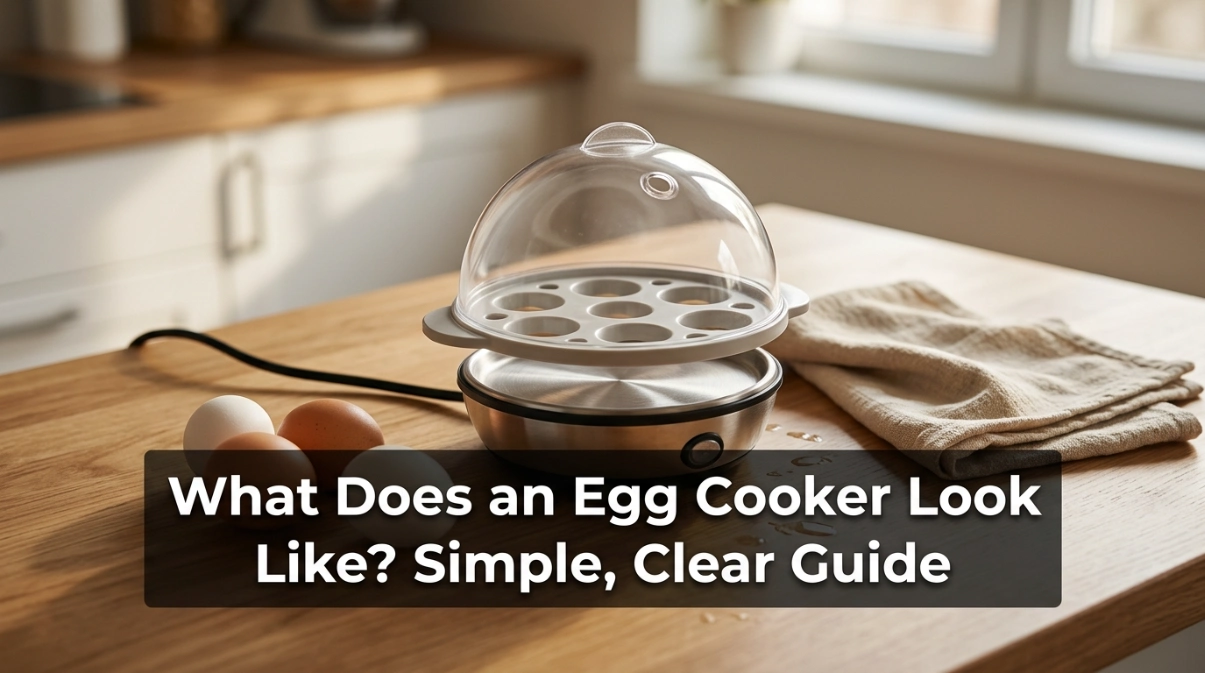
If you are asking what does an egg cooker look like, the short answer is simple. Most electric egg cookers are small countertop appliances with a round or oval base, a heating plate, an egg tray, and a clear or solid lid.
Some look a little like tiny food steamers. Others look like compact rice cookers. The exact shape changes by model, but the main parts are often very similar.
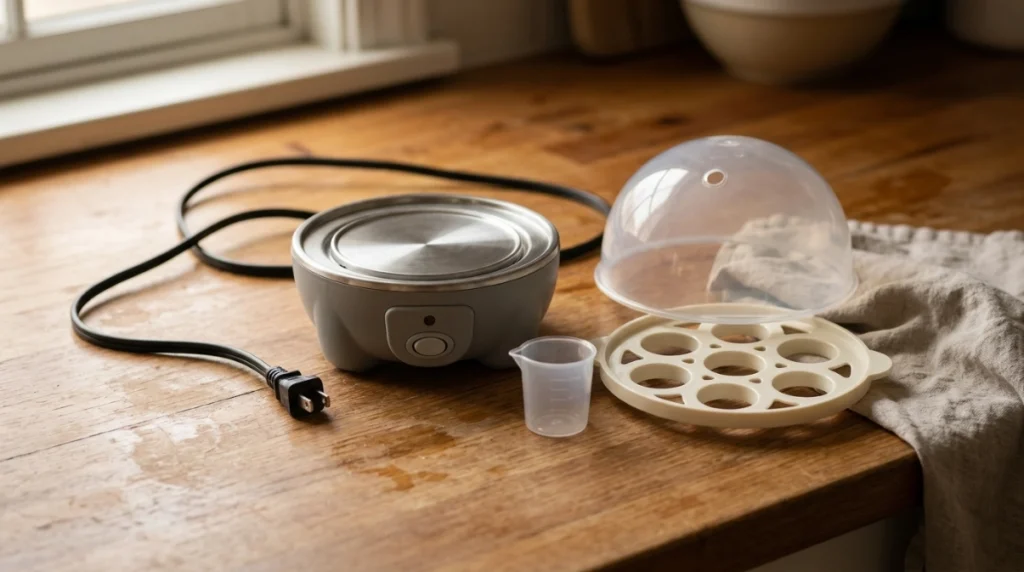
When I help identify an unfamiliar egg cooker, I look at the parts before I look at the brand name. The heating base, removable egg tray, measuring cup, and steam lid usually make the appliance easy to recognize.
This guide will show you what each part looks like, what may be missing, and what to check if the cooker does not seem to be assembled correctly.
Common Signs of the Problem
Most people searching this question do not have a broken egg cooker. They are often trying to work out whether an appliance they own is actually an egg cooker.
You may also have bought a used cooker without instructions. In that case, it can be hard to know whether every part is still there.
| What You Notice | Likely Explanation | Quick Check |
|---|---|---|
| Small base with metal plate | Main heating unit | Look for cord or power button |
| Plastic tray with round holes | Egg holding tray | Check that eggs sit upright |
| Dome-shaped lid | Steam cover | Look for a steam vent |
| Tiny marked cup | Water measuring cup | Check for level markings |
The base is normally the heaviest part. It contains the heating element and stays on the counter while the other pieces lift off.
The egg tray sits above the heating plate. It usually has six, seven, or more round openings that hold eggs during cooking.
A measuring cup may seem like an unimportant accessory, but it can matter a lot. If yours is missing, a compatible replacement measuring cup can make water measurement much easier.
Replacement egg trays and lids can also be useful if the original parts are cracked or lost. I would always check model compatibility before buying any replacement part.
Possible Causes of Confusion
Egg cookers come in several styles, which is why two models may look very different even though they do the same job.
A basic model often has only one button. A larger model may include several trays, settings, lights, or separate sections for poached eggs and omelets.
Common reasons an egg cooker may not look as expected include:
- The egg tray has been removed.
- The measuring cup is stored somewhere else.
- The lid is missing.
- The cooker is a multi-function model.
- The tray has been replaced with a poaching insert.
- The appliance is a microwave egg cooker rather than an electric one.
An electric egg cooker normally has a power cord. A microwave egg cooker does not.
Some models also have a control panel with buttons for soft, medium, or hard eggs. Simpler units may have only an on/off switch and an indicator light.
How to Fix Confusion About What an Egg Cooker Looks Like
The easiest way to identify an egg cooker is to check it part by part. You do not need to open the appliance or inspect any internal electrical parts.
Check the Heating Base
Start with the bottom section. Most electric egg cookers have a shallow base with a metal heating plate in the center.
This is where the water goes. When the cooker turns on, the plate heats the water and creates steam.
The plate may be stainless steel or another metal. Light mineral stains are common after repeated use and do not always mean the cooker is damaged.
Never pour water into openings around the electrical controls. Water should only go into the area designed for heating.
Look for the Egg Tray
Next, look for a removable plastic or metal tray with round holes.
The eggs normally sit in these holes in an upright position. The tray keeps the shells above the hot heating plate while steam cooks them.
If you only see the heating plate and lid, the egg tray may be missing. Do not balance eggs directly on the heating surface unless the manufacturer specifically designed the unit that way.
Identify the Lid and Steam Vent
The lid is usually one of the easiest parts to spot. Many models use a clear plastic dome so you can see the eggs inside.
Other lids may be solid plastic or metal. Most have one or more small steam vents near the top.
Do not block these vents. Hot steam needs a safe way to escape while the cooker is running.
A badly cracked or warped lid should usually be replaced. Steam can escape in the wrong direction if the lid no longer fits correctly.
Find the Water Measuring Cup
Many egg cookers come with a small plastic measuring cup.
It may have lines marked for soft, medium, and hard eggs. Some cups also have different markings based on the number of eggs being cooked.
The cup can look unusually small compared with a normal kitchen measuring cup. That is because an egg cooker often needs only a small amount of water.
Check the Button or Control Panel
A simple egg cooker may have one power button on the front. More advanced models may have several buttons or a small display.
You may also see an indicator light. Some units beep when the cooking cycle ends.
Automatic shut-off is another common feature. It may not be visible from the outside, but it helps stop heating when the water has evaporated.
| Part | What It Usually Looks Like | Main Purpose |
|---|---|---|
| Heating plate | Flat metal area | Turns water into steam |
| Egg tray | Insert with round holes | Holds eggs above water |
| Lid | Dome or fitted cover | Traps and directs steam |
| Measuring cup | Small marked cup | Measures cooking water |
| Button/control | Switch, light, or panel | Starts the cooker |
Check for Mineral Buildup
A used egg cooker may have white, brown, or chalky marks on the metal plate.
That is often mineral buildup from water. It can make the heating area look damaged even when it is still usable.
Regular cleaning helps you tell the difference between normal mineral deposits and real surface damage. White vinegar may help remove mild scale if the appliance instructions allow it.
Use a soft cloth or non-abrasive sponge. Harsh scrubbers can scratch the heating surface.
Mistakes to Avoid
One common mistake is assuming every loose plastic insert belongs underneath the eggs. Some models include separate poaching trays or omelet bowls.
Check how each insert sits before adding water or eggs. A tray that rocks badly or does not fit the base may be the wrong part.
Another mistake is filling the base like a cooking pot. Egg cookers normally use much less water than a saucepan.
Never immerse the electrical base in water. The removable tray and lid may be washable, but the powered base usually needs careful wiping instead.
Do not open a sealed heating unit to identify its parts. There are no user-serviceable components inside most small egg cookers.
You should also never bypass an automatic shut-off, safety switch, or overheat protection system.
If you smell burning plastic, see melted wiring, notice sparks, or find a badly damaged power cord, unplug the cooker and stop using it.
When to Replace the Egg Cooker
A missing lid or tray does not always mean you need a new appliance. Replacement parts may solve the problem if the correct pieces are still available.
Electrical damage is different. A damaged base is usually not worth a risky home repair.
| Repair Issue | Usual Action | Replace Instead? |
|---|---|---|
| Missing measuring cup | Use correct replacement | Usually no |
| Cracked removable tray | Replace tray | Usually no |
| Damaged lid | Replace compatible lid | Usually no |
| Frayed power cord | Stop using unit | Often yes |
| Melted or burned base | Stop using unit | Yes |
| Faulty sealed heater | Do not open it | Usually yes |
I would also replace the cooker if the heating base has severe corrosion, deep cracks, or signs that water has entered the electrical section.
A basic egg cooker is a small appliance, so unsafe electrical repairs rarely make sense.
My Personal Troubleshooting Approach
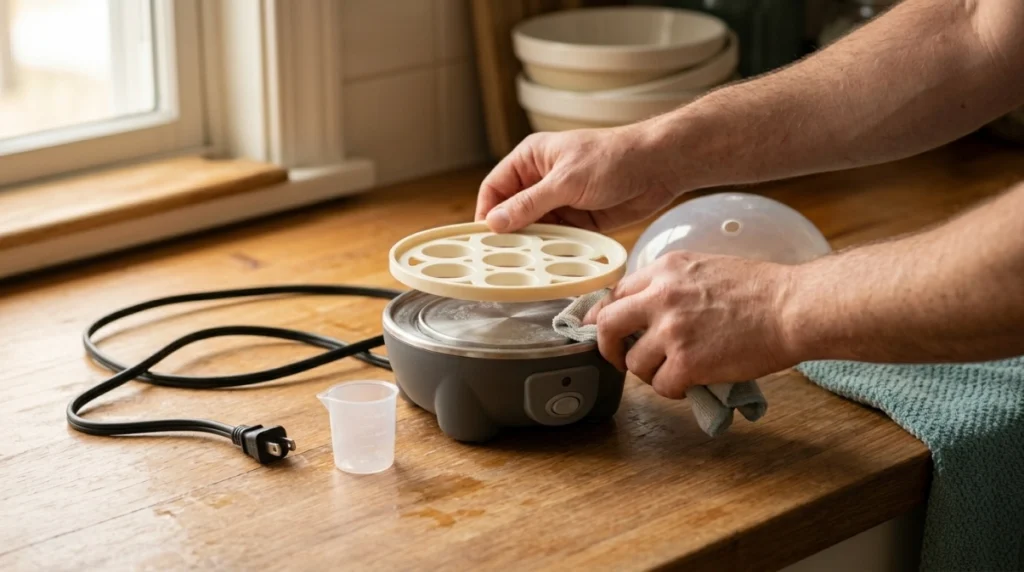
When I need to identify an egg cooker from its loose pieces, I start with the base. The metal heating plate and power cord tell me that I am dealing with a steam-heating appliance.
Then I match the tray to the base. A proper egg tray should sit securely and give each egg its own opening.
The lid comes next. I check that it sits evenly and that the steam vent is open.
The measuring cup is the part I would not overlook. Without the right water amount, even a perfectly assembled cooker may give poor results.
I also check the heating plate for scale before assuming it is damaged. Mineral marks can look worse than they really are, and gentle cleaning often makes the surface much easier to inspect.
The biggest lesson is that appearance alone does not tell the whole story. Looking at how the pieces fit together is the fastest way to understand the appliance.
Final Thoughts
So, what does an egg cooker look like? Most electric models have a compact heating base, a metal water plate, a removable egg tray with round holes, a fitted lid with a steam vent, and a small water measuring cup.
Some also include control buttons, lights, poaching trays, or omelet inserts. The style may change, but the basic steam-cooking layout stays much the same.
If you are trying to identify a used or unfamiliar cooker, inspect the base, tray, lid, and measuring cup first. Missing removable parts can often be replaced, but damaged electrical bases should not be opened or repaired at home.
Once you know what each part is supposed to look like, the appliance becomes much easier to assemble, use, clean, and inspect safely.
1 thought on “What Does an Egg Cooker Look Like? Simple, Clear Guide”