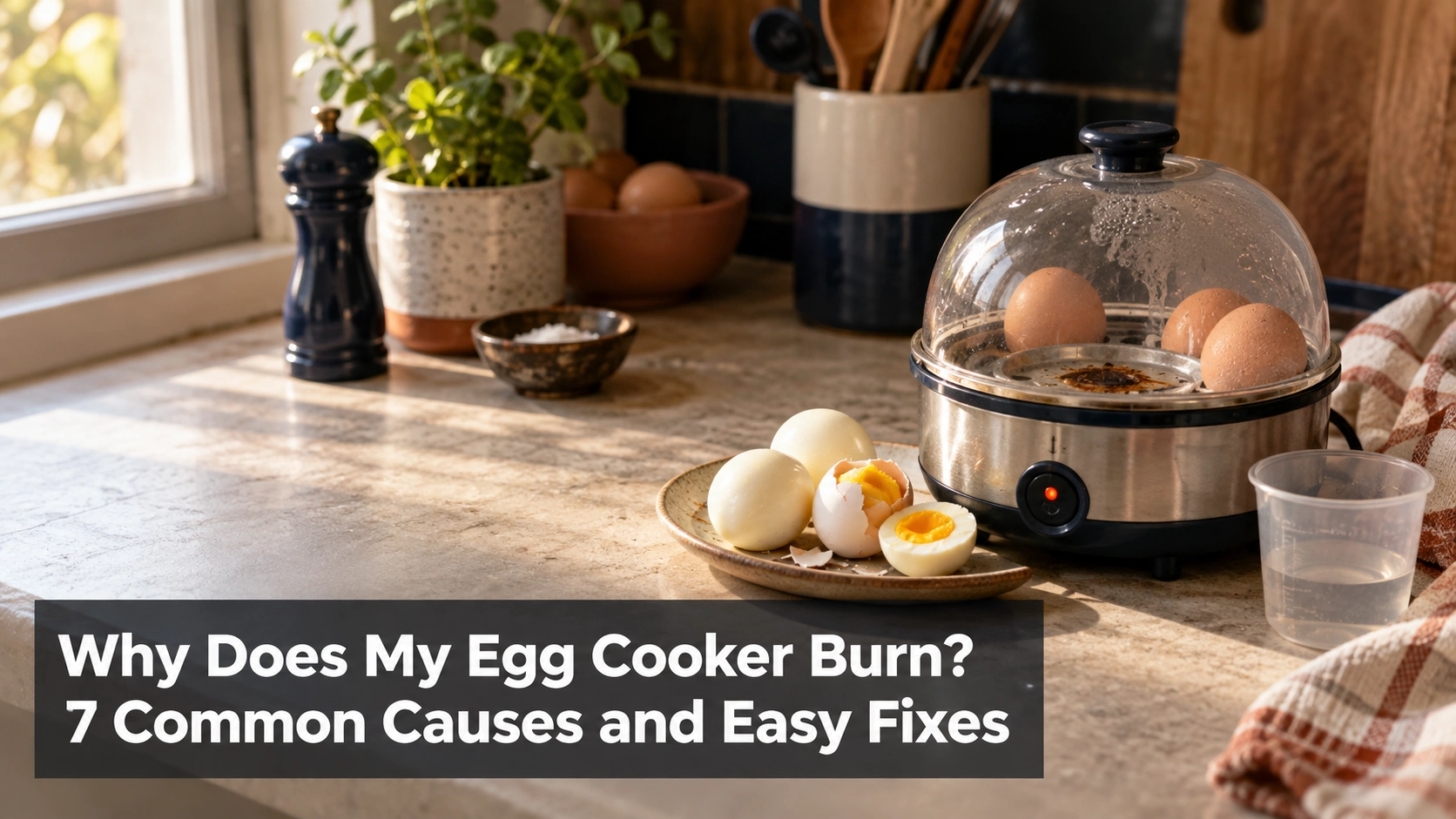
Quick Answer
If your egg cooker burns eggs, leaves brown residue, or produces a burnt smell, the usual causes are incorrect water measurement, mineral buildup, egg residue on the heating plate, cracked eggs, or leaving eggs in the cooker after the cycle ends. Start by unplugging and cooling the unit, then clean the heating plate and follow the water markings in your manual. For model-specific cooking guidance, check the manufacturer’s egg-cooking instructions.
What usually causes burning?
- Too little water: The heating plate can dry out sooner than intended, leaving excessive heat and residue behind.
- Dirty heating plate: Egg white, food residue, and mineral scale can scorch when the plate gets hot.
- Cracked eggs: Leaking egg white can reach the hot plate and create a burnt smell.
- Wrong water mark: Different egg quantities and doneness settings can require different water amounts.
- Residual heat: Eggs can continue cooking after the cooker switches off, especially if you leave them inside.
- Component fault: Persistent overheating after correct cleaning and water measurement may indicate a heating or control problem.
Quick verification
- Let the cooker cool completely, inspect the plate for baked-on residue or scale, and run the next batch using the exact water amount specified for your model.
I’ve found that an egg cooker can look almost foolproof until one batch comes out with a scorched smell and a brown heating plate.
If you’re wondering why does my egg cooker burn, the problem is usually easier to fix than it first appears.
In This Guide
Why is my egg cooker burning?
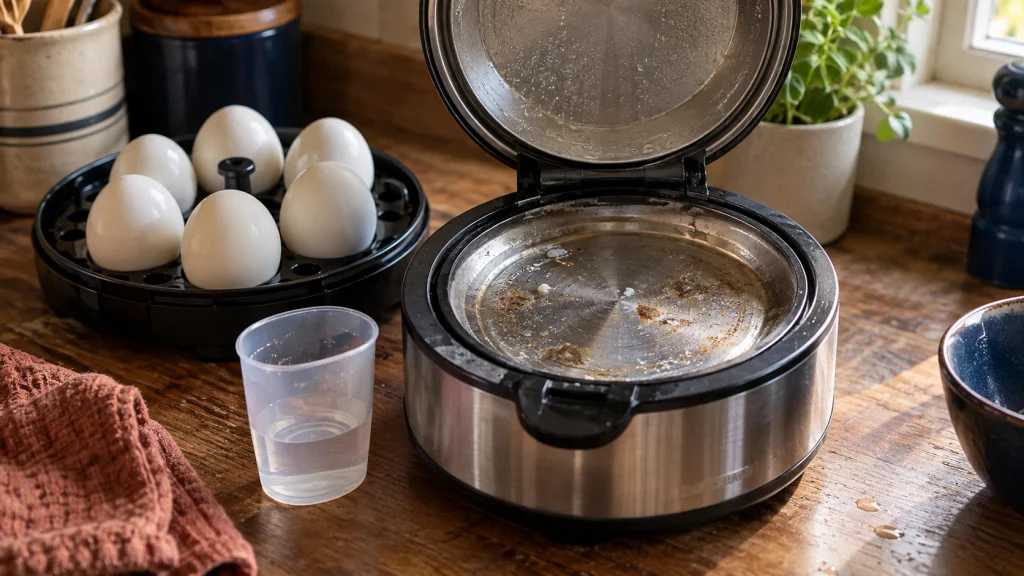
An egg cooker burns when the heating plate becomes hotter than the cooking process normally requires, or when residue on that plate scorches.
Most electric egg cookers use measured water to create steam, rather than keeping eggs submerged in boiling water. Once the water evaporates, many models use the temperature change to end the cooking cycle.
That means the water reservoir and heating plate deserve attention before assuming the appliance has failed.
What does an egg cooker actually do?
An egg cooker’s heating plate turns measured water into steam, which cooks the eggs inside the covered chamber.
The exact water amount varies by model and desired doneness. Manufacturer guidance also notes that egg size, freshness, starting temperature, and room conditions can affect the amount of water needed. Philips’ support guidance is one example of how small water adjustments can change results.
So, a little brown discoloration doesn’t automatically mean the heating element is defective.
| Symptom | Likely cause | First thing to check |
|---|---|---|
| Burnt smell | Food residue or scale | Heating plate |
| Brown plate | Mineral deposits or cooked-on residue | Clean and descale |
| Hard or rubbery eggs | Too much water or residual heat | Water level and removal time |
| Egg white on plate | Cracked shell or leakage | Eggs and shell condition |
| Burning every cycle | Incorrect setup or appliance fault | Manual, water amount, and heating plate |
Section Takeaway: A burning egg cooker is often reacting to water, residue, scale, or heat rather than failing outright.
Can too little water make an egg cooker burn?
Yes. Too little water can cause the cooking cycle to end prematurely and can leave the heating plate exposed to intense dry heat.
This is one of the first things I would check because egg cookers are designed around specific water measurements.
Why does water matter so much?
In many basic egg cookers, water quantity helps determine how long steam is produced. Once that water has evaporated, the cooker may switch off or signal that the cycle is finished.
Adding less water than the manufacturer’s mark can shorten that process. It may also leave the plate dry sooner than intended.
Breville’s troubleshooting instructions, for example, identify a waterless vessel as an overheating condition and advise switching off, unplugging, cooling the unit, and correcting the water supply before trying again. See the Breville troubleshooting manual.
Should you simply add more water?
No. Don’t guess at the amount.
Use the measuring cup and markings supplied with your particular egg cooker. The correct volume can vary between brands and cooking modes.
- Check the model: Make sure you’re following the instructions for your exact cooker.
- Check the egg setting: Soft, medium, and hard settings may use different water marks.
- Check the egg quantity: Some models calibrate water markings around a specific number of eggs.
- Check egg size: Large, extra-large, and jumbo eggs can behave differently.
More water isn’t always safer. Too much water can simply make eggs overcook or change the intended texture.
Section Takeaway: Measure water according to your specific model, rather than adding water until the plate looks wet.
Can a dirty heating plate cause a burnt smell?
Yes. A dirty heating plate is one of the clearest reasons an egg cooker can smell burnt even when the eggs themselves aren’t burning.
The heating plate sits directly under the water, so mineral deposits and food residue repeatedly experience heat during every cooking cycle.
What builds up on the plate?
Two common sources are mineral scale from water and egg residue from cracks or spills.
Scale can look white, chalky, tan, or brown. Egg residue can darken as it repeatedly heats and dries.
Philips specifically advises cleaning the heating element and descaling its egg cooker because dirt and scale can affect performance. Its support guidance also warns that egg white from a cracked egg can burn on the heating element. Read Philips’ burnt-smell troubleshooting advice.
How should you clean the heating plate?
First, unplug the cooker and let it cool completely.
- Remove loose parts: Take out the egg tray, lid, and other removable accessories.
- Wipe the plate: Use a soft, damp cloth to remove loose residue.
- Address scale: Follow your manufacturer’s descaling instructions.
- Dry everything: Make sure the heating area and removable parts are ready for the next cycle.
- Inspect the plate: Look for persistent discoloration, cracks, corrosion, or unusual damage.
Don’t scrape the plate aggressively with a knife or metal tool. Scratching the surface can make future cleaning harder and may damage the appliance.
For a model-specific example, Philips recommends a vinegar-and-water cleaning process for mineral deposits on some of its egg cookers. Always prioritize your own manual if it specifies a different cleaning method.
Section Takeaway: If the cooker smells burnt but the eggs look normal, inspect the heating plate first.
Can cracked eggs cause a burnt smell?
They can. A cracked shell may allow egg white to escape from the tray and reach the hot heating area.
Once that residue dries on a hot plate, it can smell distinctly burnt and leave a brown or dark spot.
Why do eggs crack in an egg cooker?
Eggs can crack because of temperature differences, handling, shell weakness, or the way a particular cooker creates steam.
Some egg cookers also instruct users to pierce the wider end of the shell before cooking. If your manual includes that step, follow it rather than skipping it.
Don’t automatically pierce eggs unless your cooker calls for it. Different models use different designs and instructions.
What should you do after an egg cracks?
- Stop the cycle safely: Switch off and unplug the appliance if necessary.
- Let it cool: Never wipe a hot heating plate with a wet cloth.
- Remove residue: Clean away egg white after the appliance has cooled.
- Inspect the tray: Check whether it is seated correctly and isn’t cracked.
- Check the next batch: Watch for recurring shell cracks or leakage.
Washing eggs before cooking can also reduce dirt reaching the cooker. Philips recommends washing eggs before placing them in the tray.
Section Takeaway: One cracked egg can create a surprising amount of burnt residue, so clean the plate after any leak.
How can I stop my egg cooker from burning?
The best prevention routine is simple: use the correct water, keep the heating plate clean, seat the tray properly, and remove the eggs when the cycle finishes.
Use this five-step routine
- Start with a clean plate: Remove mineral deposits and old egg residue before cooking.
- Measure the water: Use the supplied measuring cup and the correct marking.
- Prepare the eggs: Follow your model’s instructions for washing, piercing, and placement.
- Seat everything correctly: Make sure the tray and lid fit as designed.
- Remove eggs promptly: Transfer them out when the cooker signals the end of the cycle.
This routine matters because an egg cooker can continue holding heat after the electrical cycle ends.
Breville’s instructions, for example, recommend removing eggs after cooking and note that heated water can continue cooking them briefly. Other manufacturers likewise warn against leaving finished eggs inside too long.
Does the number of eggs change the result?
It can. Egg cookers are often designed around particular capacity and water measurements.
Don’t assume the water amount for one egg should simply be multiplied for six or seven eggs.
Follow the markings for the number of eggs and the desired doneness. Some models use dedicated markings that account for how steam circulates around multiple eggs.
| What you notice | Check first | Avoid doing this |
|---|---|---|
| Brown plate | Scale and residue | Scraping with metal tools |
| Burnt egg smell | Cracked egg or spilled white | Continuing to cook without cleaning |
| Eggs too hard | Water amount and removal time | Adding random water amounts |
| Cooker shuts off early | Water level and overheating | Repeatedly restarting while hot |
Section Takeaway: Consistent results come from consistent water measurement and routine cleaning, not from guessing at cooking times.
When should I stop using an egg cooker?
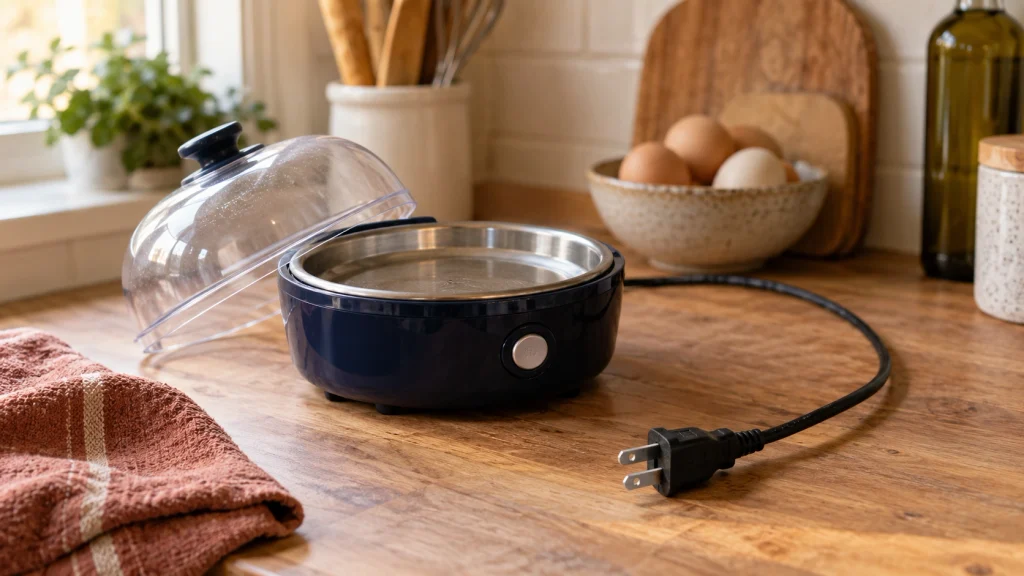
A cooker that burns once because of residue is different from a cooker that overheats repeatedly after correct cleaning and setup.
If you’ve eliminated the common causes and the appliance still smells electrically burnt, behaves unpredictably, or shows signs of damage, stop using it until the manufacturer or a qualified technician advises you otherwise.
Warning signs that deserve attention
- Electrical smell: The odor smells like melting insulation or overheated wiring rather than cooked food.
- Damaged cord: The power cord has cuts, exposed conductors, or heat damage.
- Repeated overheating: The unit overheats despite correct water and a clean plate.
- Erratic controls: Buttons, switches, lights, or automatic shutoff behave unexpectedly.
- Visible damage: The heating plate, housing, plug, or other electrical components appear damaged.
- Smoke: Smoke comes from the appliance itself rather than a small amount of food residue.
Electrical kitchen appliances should not be modified or repaired casually. Appliance safety standards address hazards including electrical, thermal, and fire risks.
For broader context, UL Solutions’ appliance safety resources explain how household and small appliances are evaluated for safety and performance.
Pro tip: Don’t open a sealed egg cooker, bypass its thermal protection, or attempt an electrical repair yourself. Check the manufacturer’s manual and contact an authorized service center or qualified appliance technician if the fault persists.
The U.S. Consumer Product Safety Commission also provides consumer-product safety and electrical hazard information through its official resources.
Section Takeaway: Persistent overheating or an electrical burning smell is a stop-and-check problem, not a cooking adjustment.
Egg Cooker Burning FAQs
Why does my egg cooker smell burnt but the eggs are fine?
A burnt smell with normal-looking eggs often points to residue or mineral scale on the heating plate. A small amount of egg white from a cracked shell can also scorch. Unplug the cooker, let it cool, and inspect and clean the heating area before using it again.
Why is my egg cooker heating plate turning brown?
A brown heating plate can develop from mineral deposits in water or repeated exposure to food residue. Clean and descale the plate according to the manufacturer’s instructions. Persistent discoloration accompanied by overheating or electrical odors deserves further inspection.
Can too much water make an egg cooker burn?
Too much water usually causes longer cooking rather than directly burning the eggs, but the correct amount depends on the model. Follow the manufacturer’s water markings instead of adjusting the volume by guesswork. Excess water can also change egg texture and cooking results.
Why are my eggs hard and my egg cooker smells burnt?
Hard eggs can result from too much water, leaving the eggs inside after the cycle, or using conditions different from those assumed by the manufacturer’s markings. A burnt smell adds another clue, so inspect the heating plate for dried egg residue or scale.
Should I use vinegar to clean an egg cooker?
Some manufacturers recommend diluted white vinegar for removing mineral deposits from the heating plate or water reservoir. Others may specify a different method. Check your manual first, then use only the concentration and cleaning procedure approved for your model.
Why does my egg cooker keep shutting off and smelling hot?
The cooker may be detecting an overheating condition, especially if the water has run out. Incorrect water measurement, scale, or a malfunctioning thermal control can contribute. Unplug the appliance, let it cool, and troubleshoot according to the manufacturer’s instructions before another cycle.
Is a burnt smell from an egg cooker dangerous?
A mild food or mineral-residue smell can come from a dirty heating plate, but an electrical burning smell, smoke, damaged cord, or repeated overheating is different. Stop using the appliance and seek manufacturer or qualified repair guidance if those warning signs appear.
Final Takeaway: Fix the Cause Before Replacing the Cooker
If your egg cooker burns, don’t assume the heating element is ruined right away.
Start with the basics: correct water measurement, a clean heating plate, intact eggs, proper tray placement, and prompt egg removal.
Those checks solve many everyday egg-cooker problems without replacing the appliance.
If the cooker still overheats after you’ve followed its manual and cleaned it properly, treat that as an appliance-safety issue rather than a cooking mistake.
As of 2026, the safest approach remains the simplest one: use the model-specific instructions, keep the heating surface clean, and don’t bypass built-in safety features.
With those habits, an egg cooker should make breakfast easier—not leave you scraping burnt residue from the counter.