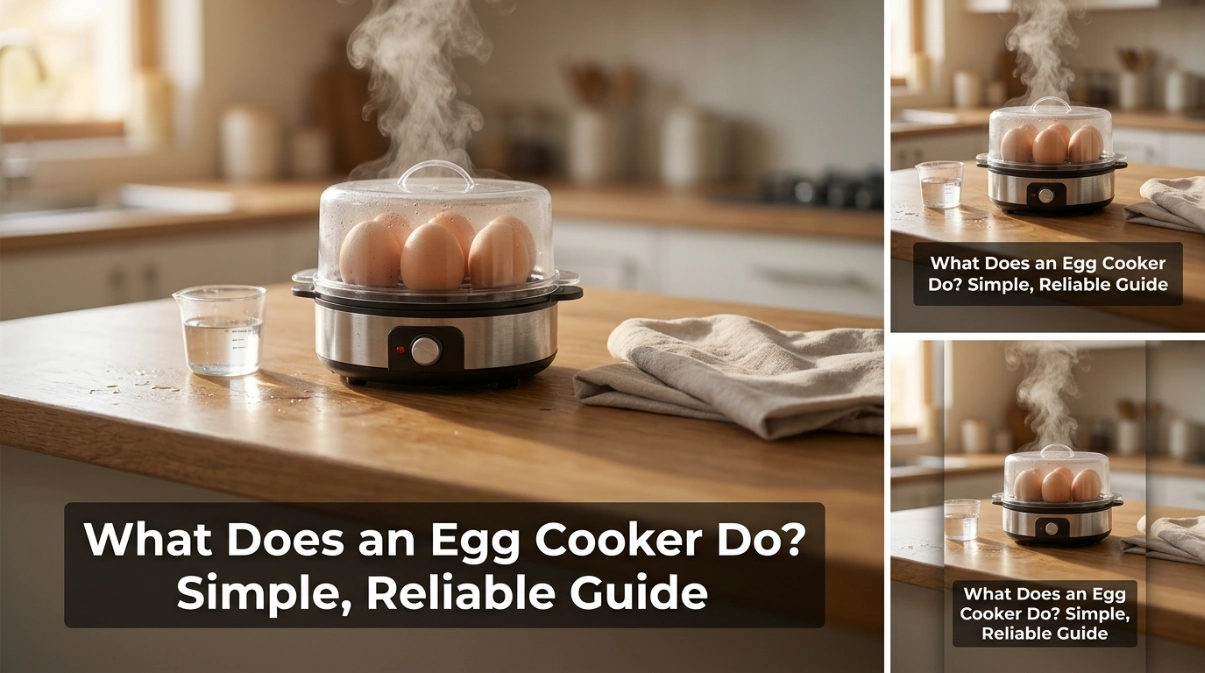
If you are asking what does an egg cooker do, the short answer is simple. It heats a small amount of water and turns it into steam, which cooks eggs inside a covered tray.
Most egg cookers make soft, medium, or hard-cooked eggs. Some also have inserts for poached eggs or small omelets. When I troubleshoot one, I start with water, steam, tray fit, and shut-off behavior.
What Does an Egg Cooker Do? Signs It Is Working Properly
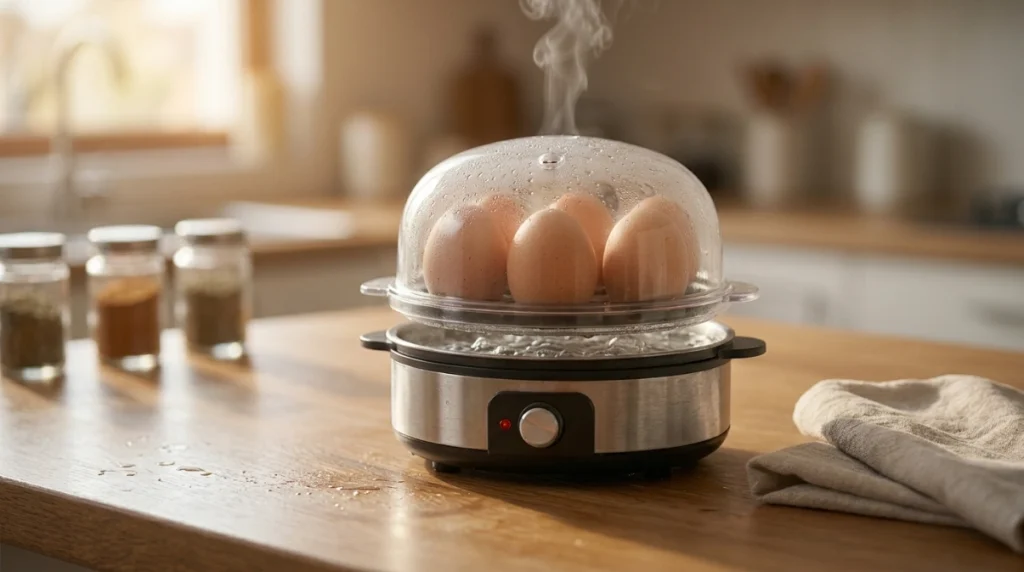
A normal egg cooker heats water on a metal plate. Steam rises around the eggs, while the lid keeps most of the heat inside.
You may hear light boiling, see steam leave the vent, or hear a beep when the cycle ends. Many basic models stop heating when the measured water has boiled away.
| Sign | Likely Meaning | Quick Check |
|---|---|---|
| Steam appears | Heater is working | Keep vent open |
| Eggs cook evenly | Setup is correct | Use similar egg sizes |
| Beep or shut-off | Cycle has ended | Follow model directions |
| No heat or steam | Power or heater issue | Check outlet and water |
It is easy to assume that a timer controls everything. On many simple units, the water amount matters more because it controls how long steam is produced.
That is why the measuring cup matters. If it is lost or cracked, a correct replacement measuring cup can make results easier to repeat.
The tray and lid matter too. A cracked tray or warped lid can disturb steam flow, so a matching replacement part is safer than using a random kitchen item.
Possible Causes
An egg cooker is simple, but small setup errors can cause undercooked eggs, cracked shells, water leaks, or uneven results.
Common causes include:
- Too much or too little water
- Very cold or extra-large eggs
- An egg tray sitting out of place
- A lid that is not seated correctly
- A steam vent blocked by food or scale
- Mineral buildup on the heating plate
- A loose wall plug or damaged power cord
- A failed control or safety system
Water level is the first thing I check. On many models, more water means a longer steam cycle, while too little water can end the cycle before the eggs are done.
A white or chalky layer on the plate is another clue. Mineral scale can slow heat transfer and make cooking less predictable.
How to Fix Common Egg Cooker Problems
Check the Power Source
Start with the wall outlet. Test it with another small appliance, then inspect the egg cooker cord and plug.
If you see melted plastic, cuts, exposed wire, or smell burning, stop using the cooker. Do not open the base to repair wiring yourself.
Check the Water Amount
Use the measuring cup or water marks made for your model. Do not guess if the cooker uses water quantity to control cooking time.
If eggs are too soft, check that you used enough water. If they are too firm, see whether you added too much.
Let the unit cool before repeating a test. A second cycle on a hot plate can change the result and make diagnosis harder.
Inspect the Egg Tray and Lid
Set the tray flat. The eggs should stay stable while steam moves around them.
Make sure the lid sits correctly and the steam vent stays open. Never cover the vent or place your hand over it.
When lifting the lid, tilt it away from your face. Steam can burn skin very quickly.
Check for Mineral Buildup and Descale
A dull white film on the heating plate is usually mineral scale from water. It may make heating slower or uneven.
For cleaning, unplug the cooker and let it cool. Wipe the plate with a soft cloth or non-abrasive sponge, then follow the maker’s descaling directions.
Diluted white vinegar can help on many removable, non-electrical surfaces. Never soak the electrical base or pour liquid into it unless the manual clearly allows that.
Watch the Auto Shut-Off
Some cookers beep and stop. Others switch to a warm mode, so normal behavior depends on the model.
If the cooker keeps heating after the water is gone, unplug it and stop using it. A failed temperature control or shut-off system should not be bypassed.
Overheat protection and safety switches are there for a reason. Never tape, bridge, or defeat them to keep the cooker running.
Check Buttons and Settings
On digital models, make sure the selected program matches the tray. Poaching, omelet, and shell-egg modes may use different cycles.
If buttons flash, beep strangely, or stop responding, unplug the cooker for a few minutes and restart it. If the same fault returns, check the manual for that signal.
Mistakes to Avoid
Do not treat every egg cooker like a timer. Many simple units depend on water evaporation, so using another model’s water amount can give poor results.
Do not overfill the heating plate. Extra water may splash, leak, or keep the heater active longer than expected.
Avoid scraping scale with a knife or metal tool. It can damage the heating surface and leave rough areas that collect more residue.
Never block the vent, touch the hot plate right after cooking, open a sealed heating unit, or bypass a safety switch. Electrical faults are not a safe beginner repair.
When to Replace the Egg Cooker
Simple setup problems are worth fixing. Serious electrical or temperature-control problems often are not.
Consider replacement if the cord is damaged, the base leaks, the plate is badly corroded, the unit smells burnt, or the automatic shut-off fails.
| Repair Issue | Best Action | Replace? |
|---|---|---|
| Lost measuring cup | Replace the cup | No |
| Cracked tray or lid | Use matching part | Usually no |
| Heavy scale | Descale safely | No |
| Damaged cord | Stop using | Often |
| Failed shut-off | Stop using | Usually |
| Leaking base | Stop using | Yes |
I would also replace a cooker when the right parts are hard to find or cost close to a new unit. A cheap fix is not worthwhile if it reduces safety.
My Personal Experience
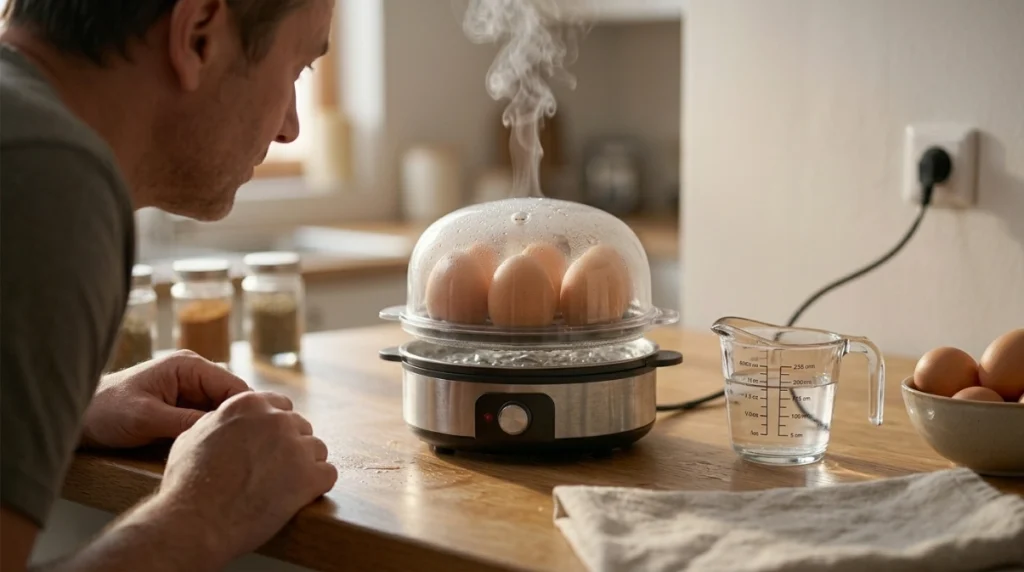
When I work through egg cooker problems, I use the same order each time. I check the outlet, measure the water, seat the tray, fit the lid, then watch the steam and shut-off behavior.
The main lesson is that small details matter. A little extra water, a poor lid fit, or scale on the plate can change the final egg.
What does not help is changing several things at once. If I change the water, egg count, and setting together, I cannot tell what fixed the problem.
I get clearer results by testing one change at a time. That also helps me avoid blaming the heating element too early.
Final Thoughts
So, what does an egg cooker do? It turns a measured amount of water into steam and uses that steam to cook eggs with less hands-on work than a pot on the stove.
If results are poor, check the power, water amount, tray, lid, vent, and mineral buildup first. These are the safest and most common places to find a problem.
Stop using the cooker if you notice damaged wiring, leaks from the electrical base, a burning smell, or a heater that will not shut off. Troubleshooting is useful, but safety comes first.
7 thoughts on “What Does an Egg Cooker Do? Simple, Reliable Guide”