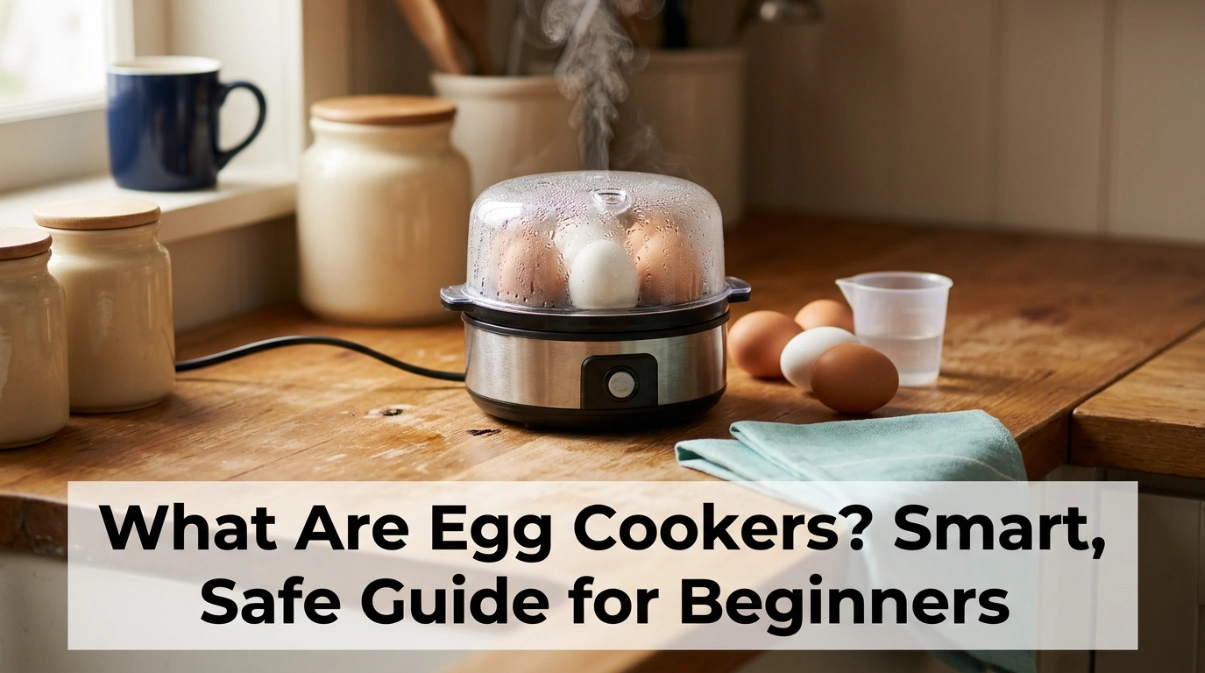
If you are asking what are egg cookers, the simple answer is that they are small kitchen appliances made to cook eggs with steam. Most models use a heating plate, a measured amount of water, an egg tray, and a lid.
I first found egg cookers a little confusing because they looked almost too simple. Add water, place the eggs inside, press a button, and wait. Yet small mistakes with the water level or lid can change the result.
Egg cookers can make hard-boiled, medium-boiled, or soft-boiled eggs. Some models also include trays for poached eggs or small omelets.
In this guide, I will explain how egg cookers work, what normal operation looks like, what can go wrong, and the simple checks I use when results are not right.
What Are Egg Cookers and How Do They Work?
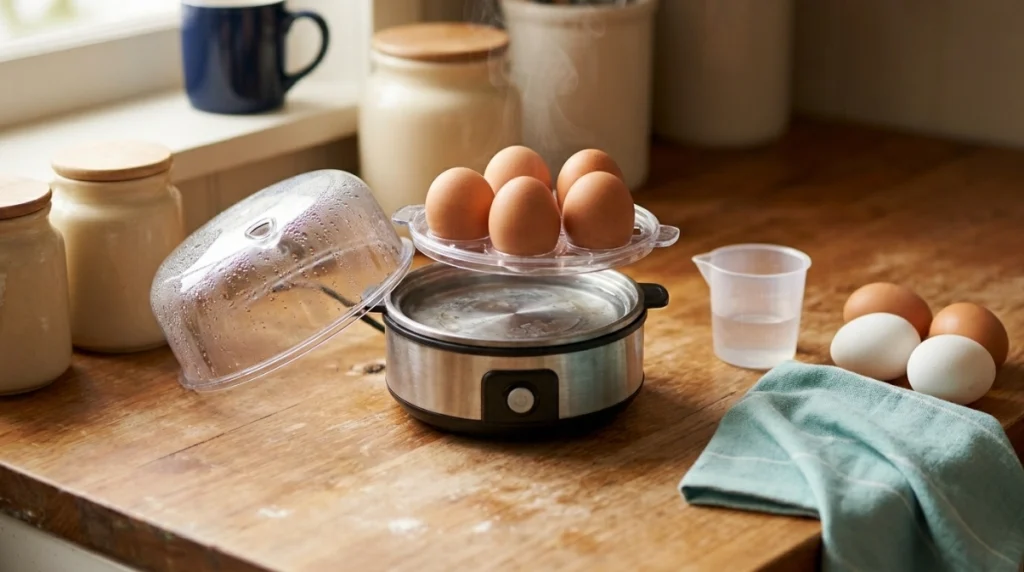
An egg cooker heats a small amount of water until it turns into steam. The steam surrounds the eggs and cooks them inside the covered chamber.
Most basic electric egg cookers have five main parts: a heating plate, egg tray, measuring cup, lid, and power control. Many also have an auto shut-off feature or alarm.
The measuring cup is more important than it first appears. The amount of water often decides how long the cooker produces steam and, therefore, how firm the eggs become.
Some models use marks for soft, medium, and hard eggs. Others tell you how much water to add based on the number of eggs.
When I compare accessories, I focus on fit rather than price. A replacement measuring cup, egg tray, or lid can be useful if the original part is lost or cracked, but it should match the cooker model.
| Part | What It Does | Common Issue |
|---|---|---|
| Heating plate | Boils the water | Limescale buildup |
| Egg tray | Holds eggs above water | Poor fit or cracks |
| Lid and vent | Holds and releases steam | Blocked vent |
| Measuring cup | Controls water amount | Wrong water level |
Common Signs of an Egg Cooker Problem
Egg cookers are simple, but you can still notice signs that something is wrong. The most common problem is eggs coming out softer or harder than expected.
You may also notice that the cooker takes too long, stops early, does not heat, leaks water, or produces more steam than usual.
A little steam is normal. Water bubbling on the heating plate is also normal. Strong burning smells, damaged cords, sparks, or melted plastic are not normal.
Some cookers beep or switch off when the water has boiled away. That usually means the cooking cycle is finished rather than that the machine has failed.
| Symptom | Likely Cause | Quick Fix |
|---|---|---|
| Eggs too soft | Too little water | Measure water again |
| Eggs too hard | Too much water | Reduce water |
| Cooker will not heat | Power issue | Check plug and outlet |
| Water leaks | Lid or tray misplaced | Refit removable parts |
| White crust on plate | Mineral buildup | Descale the plate |
Possible Causes of Egg Cooker Problems
The first thing I check is the water amount. It causes more disappointing batches than most mechanical problems.
Too little water may stop the steam cycle too soon. Too much water can cook the eggs longer than planned.
Other common causes include:
- The egg tray is sitting at an angle.
- The lid is not seated correctly.
- The steam vent is blocked.
- The heating plate has mineral deposits.
- The wall outlet is not supplying power.
- The power cord is damaged.
- The wrong cooking setting was selected.
- Eggs are unusually large or very cold.
- The measuring cup markings were read incorrectly.
Hard water can leave a white or brown layer on the heating plate. That layer may slow heat transfer and make cooking less consistent.
I also check the cooker when it is completely cool. Handling the lid or heating plate during or just after cooking can cause a steam or contact burn.
How to Use and Troubleshoot What Are Egg Cookers
For an informational keyword like what are egg cookers, troubleshooting starts with understanding how the appliance should work. I use the following checks whenever a cooker gives poor results.
Check the Power Source
If the cooker does nothing, I start with the wall outlet. I unplug the cooker and test the outlet with another small appliance that I know works.
I also look at the power cord. If I see cuts, melted areas, exposed wire, or a loose connection, I stop using the appliance.
I never open the sealed heating base to repair electrical parts. A damaged heating unit is usually a job for the manufacturer or a qualified repair person.
Measure the Water Carefully
Water amount is the heart of most basic egg cookers. I use the supplied measuring cup whenever possible.
If the original cup is missing, I check the appliance manual before guessing. Different models can use very different amounts of water.
I once assumed that adding more water would simply make the cooker work better. In practice, extra water often means extra cooking time and firmer eggs.
Inspect the Egg Tray and Lid
The egg tray should sit flat and stable. Eggs should not block the lid or push it upward.
I also make sure the steam vent is open. I never seal or cover a steam vent because pressure and hot steam need a safe path out.
If the lid is cracked, badly warped, or no longer fits, replacing it with the correct part is safer than trying to tape or glue it.
Look for Mineral Buildup
Mineral deposits can form after many cooking cycles. They often appear as a chalky white film on the heating plate.
This is where regular cleaning makes a real difference. I unplug the cooker, let it cool, and wipe removable parts with a soft cloth or non-abrasive sponge.
For the heating plate, many manufacturers allow diluted white vinegar for descaling. I always check the model instructions first because cleaning methods can vary.
Never immerse the electric base in water. Water around internal electrical parts can create a shock risk.
Check Auto Shut-Off and Beeping
Many egg cookers stop heating when the water has evaporated. Some beep, buzz, or turn off automatically.
If the cooker stops very early, I check whether enough water was added. I also check for heavy mineral deposits that may affect heating.
Repeated overheating, unusual flashing lights, or a burning smell should not be ignored. I unplug the cooker and stop testing it until the cause is known.
Mistakes to Avoid
One common mistake is treating every egg cooker the same. Water levels, tray capacity, controls, and shut-off systems vary between models.
Another mistake is filling the base with water without measuring it. A small difference can noticeably change egg texture.
I also avoid these unsafe habits:
- Touching the lid vent while steam is escaping.
- Opening the lid toward my face.
- Blocking the steam vent.
- Running the cooker with a damaged cord.
- Immersing the powered base in water.
- Scraping the heating plate with metal tools.
- Bypassing an auto shut-off or safety switch.
- Opening a sealed heating unit for DIY electrical repair.
Steam burns can happen fast. I lift the lid away from my hands and face and allow the unit to cool before wiping the heating plate.
Quick Troubleshooting Guide
| Problem | Recommended Solution | Difficulty |
|---|---|---|
| Uneven egg texture | Recheck water amount | Easy |
| Slow heating | Descale heating plate | Easy |
| Lid leaks steam | Refit lid and tray | Easy |
| No power | Test wall outlet | Easy |
| Damaged power cord | Stop using cooker | Professional help |
| Burning smell | Unplug immediately | Replace or service |
When to Replace the Egg Cooker
I would not replace an egg cooker just because eggs came out too soft once. Water measurement, egg size, and starting temperature can easily change the result.
Replacement makes more sense when there is electrical damage. A cracked housing near electrical parts, a melted cord, sparks, repeated overheating, or a strong electrical smell are serious warning signs.
A badly damaged heating plate can also be a reason to replace the appliance. Deep corrosion or loose internal parts are very different from normal mineral stains.
If a cheap replacement tray or measuring cup solves the issue, keeping the cooker may be reasonable. If the powered base itself has failed, repair often makes less sense for a small appliance.
My Personal Testing Approach
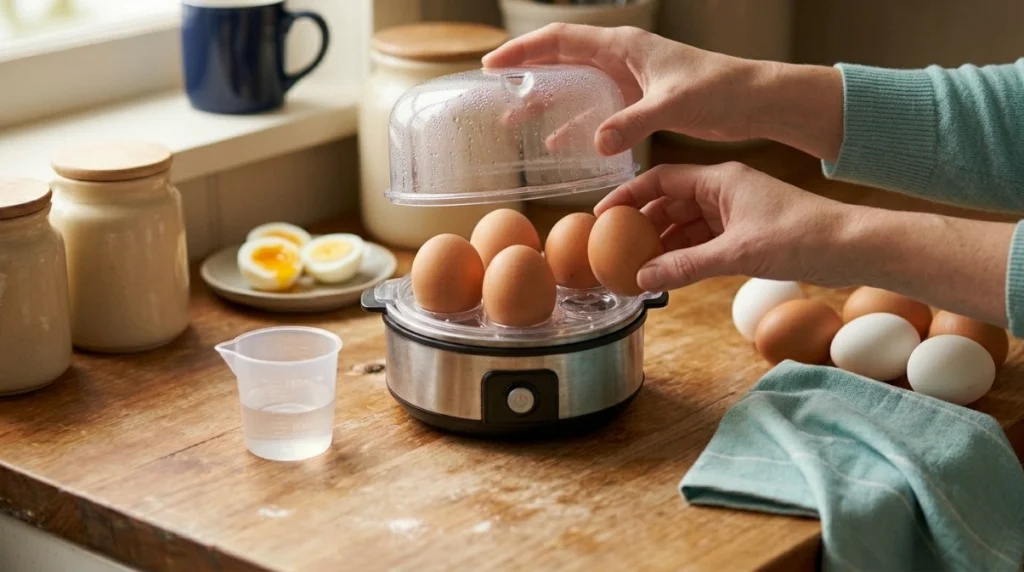
When checking an egg cooker, I use a simple process instead of changing several things at once. That makes it easier to see what caused the problem.
I start with eggs of similar size. I check the tray, measure the water carefully, fit the lid, and watch how the normal cycle behaves.
If the eggs are too soft, I adjust the water slightly based on the manual. If they are too firm, I go the other way.
The biggest lesson from this kind of testing is that small details matter. The cooker itself may be working perfectly even when the result seems wrong.
I also pay close attention to mineral buildup. After descaling a dirty heating plate, steam production can become more even and predictable.
Final Thoughts
So, what are egg cookers? They are compact appliances that use heated water and steam to cook eggs with very little hands-on work.
They are easy to use once you understand the role of the heating plate, water measuring cup, egg tray, lid, and automatic shut-off system.
When results are poor, I check the water level first. Then I inspect the tray, lid, steam vent, heating plate, and power source.
Most small problems come from measurement, mineral buildup, or incorrect assembly rather than a failed appliance. Simple checks can often solve them.
The key is to use the cooker as designed. Never bypass safety parts, open sealed electrical sections, or keep using a unit with a damaged cord or burning smell.
With the right amount of water and basic care, an egg cooker can be a simple and consistent way to prepare eggs without watching a pot on the stove.
9 thoughts on “What Are Egg Cookers? Smart, Safe Guide for Beginners”