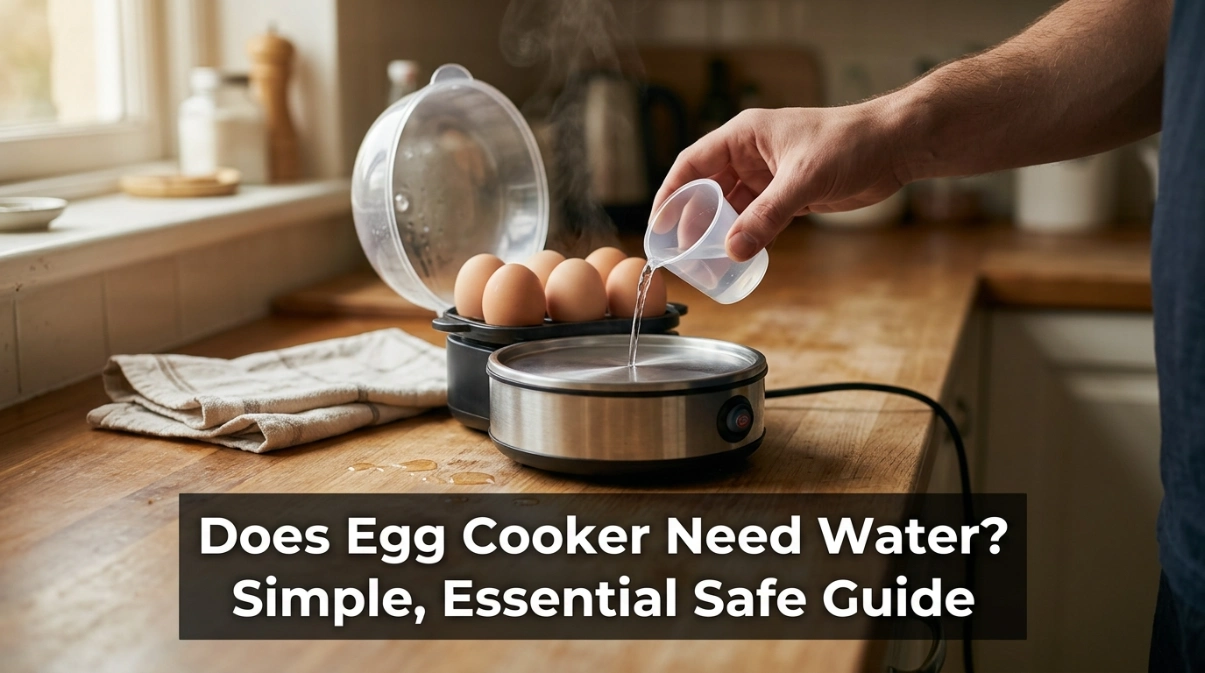
Yes, an egg cooker needs water in most cases. The cooker heats the water and turns it into steam. That steam cooks the eggs.
I once forgot to add water before switching mine on. The heating plate became hot fast, but the eggs did not cook. I also noticed a warm metal smell and turned it off at once.
The right amount of water depends on the egg style, egg count, and cooker model. In this guide, I will show you how I measure the water and fix common water-related problems.
Common Signs of the Problem
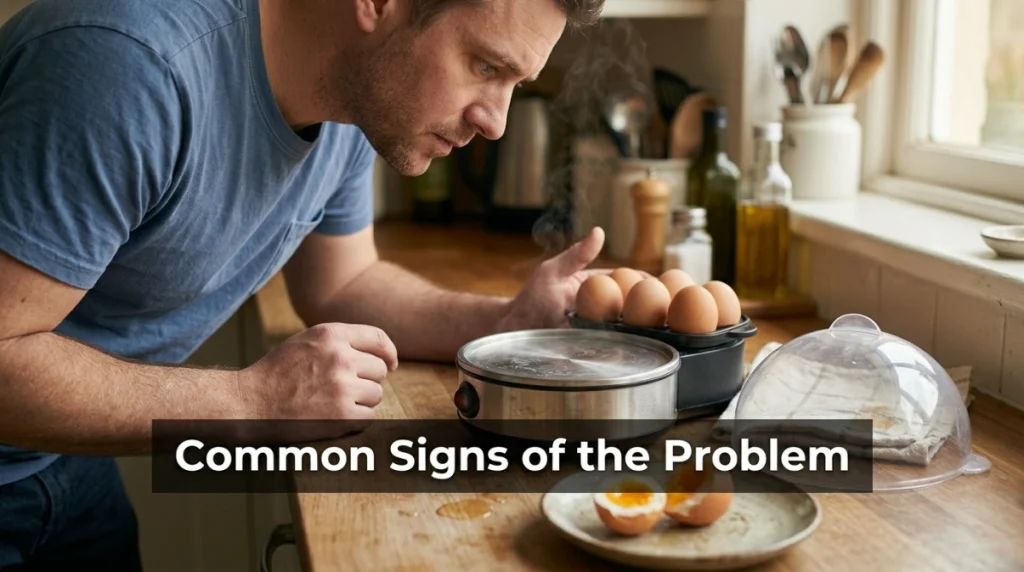
A lack of water does not always cause a clear error. Some egg cookers beep, switch off, or flash a light. Basic models may just heat the dry plate.
You may also notice eggs that are raw, soft, cracked, or uneven. Water may remain on the plate if the cooker shuts off too soon.
| Symptom | Likely Cause | Quick Fix |
|---|---|---|
| Eggs stay raw | No water or too little water | Add the correct amount |
| Cooker stops early | Low water or limescale | Refill and descale |
| Water leaks out | Tray or lid is not seated | Refit all parts |
| Eggs are too firm | Too much water | Use less next time |
| Plate smells hot | Cooker ran dry | Unplug and let it cool |
The water measuring cup is important here. I keep mine beside the cooker so I do not guess.
If the original cup is lost, a replacement measuring cup can help. Yet its printed levels may not match your model. Check the cooker manual and measure the stated amount in millilitres.
Possible Causes
The main cause is simple: egg cookers use steam, and steam needs water. Still, several smaller issues can affect how that water works.
Common causes include:
- No water on the heating plate
- Too little or too much water
- The wrong mark on the measuring cup
- A loose egg tray or tilted cooker
- A blocked lid steam vent
- Mineral buildup on the heating plate
- Water leaking through a damaged lid seal
- An active overheat protection switch
- A weak or faulty heating element
Some people think the eggs sit in boiling water. In most electric egg cookers, they do not. The eggs sit above the plate in an egg tray while steam moves around them.
The water also controls cooking time in many basic models. More water often means a longer steam cycle and firmer eggs. Less water often gives a softer yolk.
However, this rule is not the same for every cooker. Some models use buttons and timed settings instead. Their manuals may ask for one fixed amount of water.
How to Fix “Does Egg Cooker Need Water”
The short answer is yes, unless the maker clearly says otherwise. These steps will help you use the water correctly and solve poor cooking results.
Check the Instructions First
Read the water chart in your manual. Look for separate amounts for soft, medium, and hard-boiled eggs.
Also check whether the chart changes with the number of eggs. Some cookers need less water for more eggs because the larger egg surface traps and uses steam in a different way.
Do not copy the amount used by another brand. Egg cooker plates, trays, timers, and cups vary.
Measure the Right Amount of Water
Place the cooker on a flat and dry counter. Remove the lid and egg tray, then pour the measured water onto the cool heating plate.
Use the supplied cup if you still have it. Read the mark at eye level so you do not add too much.
| Egg Result | General Water Use | What to Expect |
|---|---|---|
| Soft-boiled | Lower marked level | Soft or runny yolk |
| Medium-boiled | Middle marked level | Jammy or partly set yolk |
| Hard-boiled | Higher marked level | Fully set yolk |
This is a general guide, not a fixed measurement. Your cooker’s chart should always come first.
I found that guessing with a drinking glass gave poor results. A small change in water made a clear change in the yolk.
Inspect the Egg Tray and Lid
Set the egg tray firmly on the base. A tilted tray can let water collect on one side and cause uneven heating.
Fit the lid as the manual shows. Never block the steam vent. The vent releases hot steam and keeps pressure from building inside.
If steam escapes around the edge, check for dirt or damage. Some models have a silicone lid gasket, while others do not use a seal at all.
Replace a split gasket only with a part made for that model. Do not seal the lid with tape, foil, or cloth.
Check for Water Leaks
Pour water onto the cool, unplugged heating plate. Watch for water running under the cooker or around the power cord area.
A small amount of steam or moisture near the lid may be normal. Water flowing from the base is not.
Unplug the cooker if the base leaks. Do not use it again until the cause is known. Water near live electrical parts can cause shock or a short circuit.
Let Overheat Protection Reset
Running the cooker without water may activate its overheat protection. Unplug it and let it cool fully for at least 20 to 30 minutes.
Add the correct amount of water before testing it again. Make sure the tray and lid are fitted before turning it on.
Do not bypass a safety switch or hold down a button to force the unit to run. That safety part helps prevent heat damage and fire.
Remove Mineral Buildup
A white, brown, or chalky layer on the plate is often limescale. It can slow heat transfer and make the cooker stop at the wrong time.
For safe cleaning, unplug the cooker and let it become cold. Use the descaling method stated in its manual.
Many models can be treated with diluted white vinegar. Let the liquid sit on the plate for a short time, then wipe it with a soft cloth or non-abrasive sponge.
Do not immerse the base in water. Avoid steel wool, knives, or harsh powder because they can scratch the heating plate.
| Problem | Recommended Solution | Difficulty |
|---|---|---|
| Wrong egg texture | Adjust measured water | Easy |
| Light limescale | Descale the plate | Easy |
| Blocked steam vent | Clear it after cooling | Easy |
| Damaged lid or tray | Fit a matching replacement | Easy |
| Water leaking from base | Stop using the cooker | Professional check |
Test the Cooker Safely
After the cooker is cool and dry, add the stated amount of water. Fit the empty tray and lid if your manual allows an empty test.
Stay near the unit. Listen for normal heating sounds and watch for steam at the lid vent.
Unplug it if you see smoke, sparks, base leaks, or a strong burning smell. A repeated fault is not something to ignore.
Mistakes to Avoid
The most common mistake is running the cooker dry. Water is not an optional extra in a normal steam egg cooker.
Do not pour water into a hot cooker. Cold water on a very hot plate may spit, produce sudden steam, or harm the plate.
Avoid these errors:
- Guessing the water amount
- Filling above the recommended level
- Blocking the steam vent
- Using the cooker on a sloped surface
- Touching the lid during cooking
- Lifting the lid toward your face
- Washing the powered base under a tap
- Scraping limescale with metal tools
- Opening the sealed heating unit
- Bypassing auto shut-off or heat protection
Steam can burn skin in seconds. When I remove the lid, I tilt it away from my hands and face.
I also unplug the cooker before adding water or wiping the plate. This simple habit lowers the risk of spills near a powered unit.
When to Replace the Egg Cooker

Replacement makes sense if the cooker leaks from its base, smells burned, or has a damaged power cord. Stop using it if the heating plate stays on after all water is gone.
A cracked lid, lost cup, or broken egg tray may not require a new cooker. Check whether the maker offers a matching replacement part.
| Repair Issue | Likely Cost | Replace Instead? |
|---|---|---|
| Measuring cup | Low | No |
| Egg tray or lid | Low to moderate | Usually no |
| Lid gasket | Low | No, if available |
| Damaged power cord | Moderate | Often yes |
| Failed heating unit | Moderate to high | Usually yes |
| Base water leak | Moderate to high | Usually yes |
Do not open the base to repair wires or the heating element yourself. Many small egg cookers are sealed and are not made for home electrical repair.
A new cooker is often the safer choice when the base has an internal fault. This is especially true for low-cost or older units.
My Personal Experience
My first water mistake was adding too little for hard-boiled eggs. The cooker beeped as usual, but the yolks were soft in the centre.
On the next batch, I used the hard-boil line on the cup. I also used eggs of the same size and seated the tray with care. That batch cooked much more evenly.
Later, the cooker started taking longer to make steam. I found a pale mineral layer on the heating plate. A gentle descale restored normal heating.
The biggest lesson was to stop guessing. The water level acts like a cooking control on my basic model, so even a small change affects the result.
I now check three things before every batch: the correct water level, a flat tray, and a clear steam vent. That routine takes less than a minute.
Final Thoughts
So, does egg cooker need water? Yes, almost every electric steam egg cooker needs a measured amount of water to cook eggs safely and evenly.
Use the chart for your model. Measure the water, fit the tray and lid, keep the vent open, and descale the heating plate when needed.
Never run the cooker dry on purpose. If it leaks from the base, gives off a burning smell, or fails to shut off, unplug it and replace or professionally inspect it.
2 thoughts on “Does Egg Cooker Need Water? Simple, Essential Safe Guide”