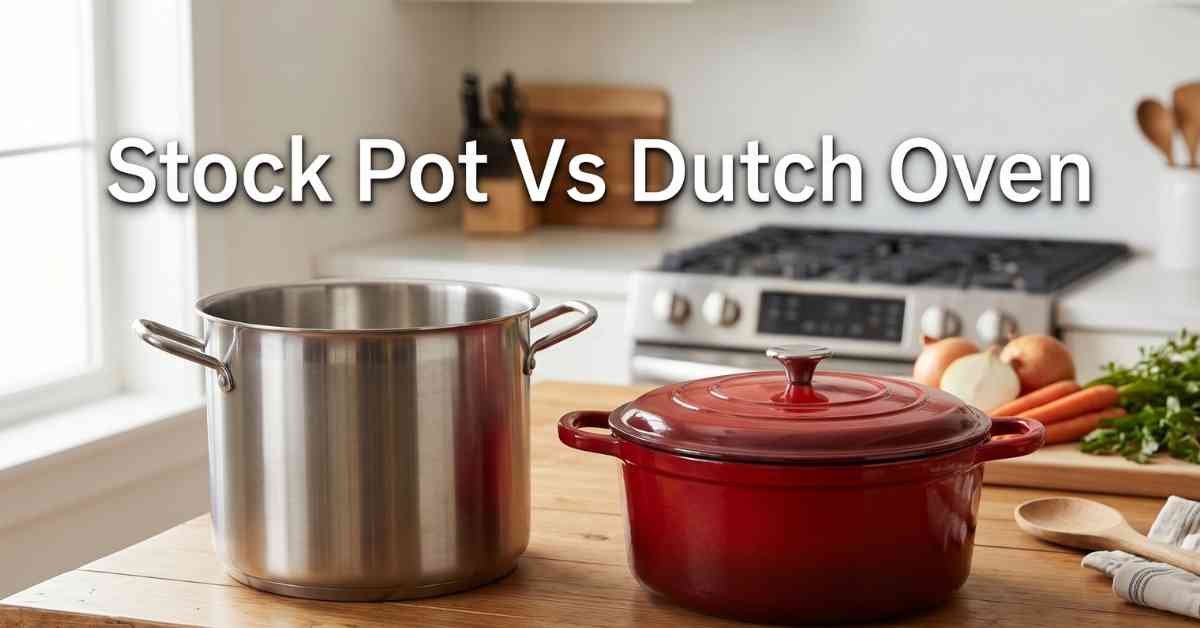
I stood in my kitchen last Sunday, staring at a giant pile of vegetables. I wanted to make a huge batch of winter soup. Suddenly, I felt stuck choosing between my two biggest pots. Figuring out the Stock Pot Vs Dutch Oven debate is tricky for any home cook. Both look big, but they cook food very differently.
Stock Pot Review
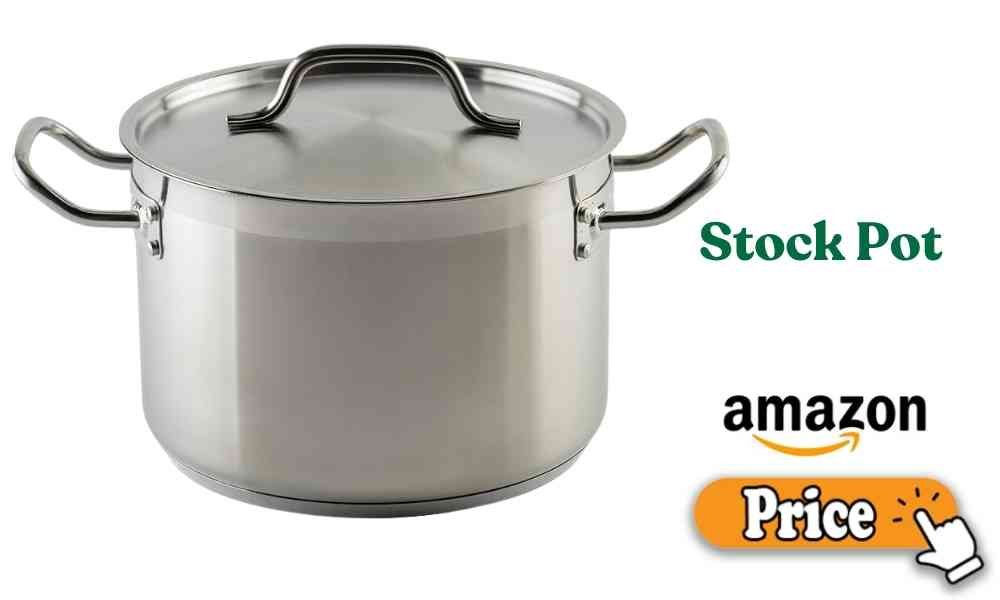
My stainless steel stock pot is my tall, shiny friend. It is huge, lightweight, and boils water super fast. I grab it whenever I need to make pasta for a crowd or boil fresh corn.
Pros and Cons
Every pot has good and bad sides. Here is what I noticed.
| Pros | Cons |
| Very lightweight to lift | Thin bottom can burn food |
| Holds a massive amount of liquid | Heat escapes quickly |
| Heats up water very fast | Not good for baking bread |
My Long-Term Experience
After using it for a few months, I truly love how easy it is to carry. Even when it is full of hot chicken broth, my wrists do not ache. The tall sides keep hot splashes off my stove, which saves me so much cleaning time.
But, I learned a hard lesson while making chili. I walked away for ten minutes, and the bottom burned badly. It smells awful when that happens! You really have to stir often because the thin metal gets hot spots very quickly.
Recommendation
This pot is perfect if you love making bone broth, boiling pasta, or making huge batches of thin soup. It is not good for thick stews, slow roasting, or anything that needs a gentle, even heat.
Dutch Oven Review
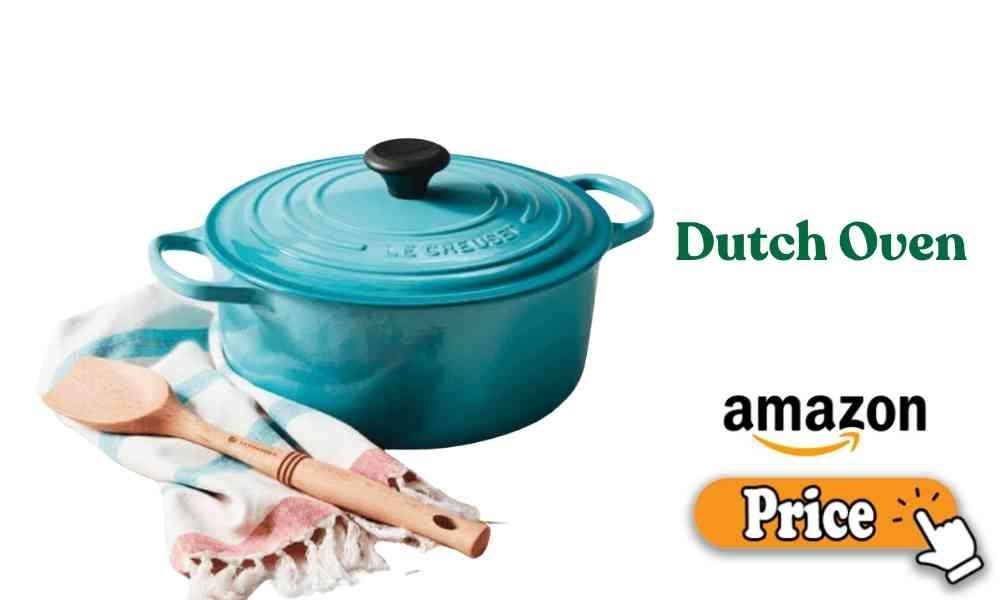
My enameled cast iron Dutch oven is a heavy beast. It feels incredibly solid and looks beautiful sitting on the stove. I remember the wonderful smell of baking bread the very first day I bought it. It traps heat like a dream and cooks food slowly and evenly.
Pros and Cons
Let us look at the highs and lows of this heavy pot.
| Pros | Cons |
| Amazing heat retention | Very heavy and hard to lift |
| Great for baking and braising | Takes a long time to heat up |
| Goes straight into the oven | Can chip if you drop it |
Life With Cast Iron
Over the last couple of months, this pot became my weekend favorite. I love searing a big beef roast on the stove and then sliding the whole pot right into the oven. The thick walls keep my kitchen warm, and the meat comes out meltingly tender.
The biggest downside is simply washing it. Trying to scrub this heavy beast in a small sink is a real workout. I actually dropped the lid once and chipped the green enamel, which made me want to cry!
Recommendation
This is perfect for home cooks who love braising meat, baking sourdough bread, or slow-cooking thick chili. It is not good if you have weak wrists or just want to boil water quickly.
Detail Comparison for Stock Pot Vs Dutch Oven
Choosing the right tool comes down to how you cook. Let us break down exactly how these two pots compare in daily use.
Material & Construction: Stock Pot Vs Dutch Oven
Stock pots use thin, light metals like aluminum or steel. Dutch ovens use thick, heavy cast iron, often coated in smooth enamel.
| Feature | Stock Pot | Dutch Oven |
| Material | Stainless steel or aluminum | Enameled cast iron |
| Wall Thickness | Very thin | Very thick |
Final Rating: Stock Pot 7/10, Dutch Oven 9/10
Heat Distribution: Stock Pot Vs Dutch Oven
The thin walls of a stock pot heat up fast but unevenly. The cast iron pot takes forever to get hot, but it glows with perfect, even warmth.
| Feature | Stock Pot | Dutch Oven |
| Heating Speed | Very fast | Very slow |
| Even Cooking | Poor (hot spots) | Excellent (no hot spots) |
Final Rating: Stock Pot 6/10, Dutch Oven 10/10
Weight & Handling: Stock Pot Vs Dutch Oven
I can easily lift my biggest stock pot with one hand. The cast iron pot requires both hands, a strong back, and a deep breath!
| Feature | Stock Pot | Dutch Oven |
| Empty Weight | Around 3 to 5 pounds | Around 12 to 15 pounds |
| Ease of Lifting | Very easy | Very difficult |
Final Rating: Stock Pot 10/10, Dutch Oven 4/10
Cooking Versatility: Stock Pot Vs Dutch Oven
The stock pot is a one-trick pony for liquids. The heavy cast iron pot can bake, fry, roast, and simmer almost anything.
| Feature | Stock Pot | Dutch Oven |
| Oven Safe | Usually up to 400°F | Up to 500°F (great for baking) |
| Best Foods | Soups, broths, pasta water | Bread, stews, roasts, chili |
Final Rating: Stock Pot 6/10, Dutch Oven 10/10
Cleaning & Maintenance: Stock Pot Vs Dutch Oven
Steel pots are tough and go right into the dishwasher without fear. Enameled iron needs gentle hand washing to avoid terrible chips or cracks.
| Feature | Stock Pot | Dutch Oven |
| Dishwasher Safe | Usually yes | No (hand wash only) |
| Toughness | Hard to break | Enamel can chip if banged |
Final Rating: Stock Pot 9/10, Dutch Oven 6/10
Conclusion
The Stock Pot Vs Dutch Oven debate really comes down to what you like to eat. Grab the tall, light pot for big batches of broth and pasta. Choose the heavy, iron pot for slow roasting and baking fresh bread. Both deserve a spot in a busy kitchen!