Quick Answer
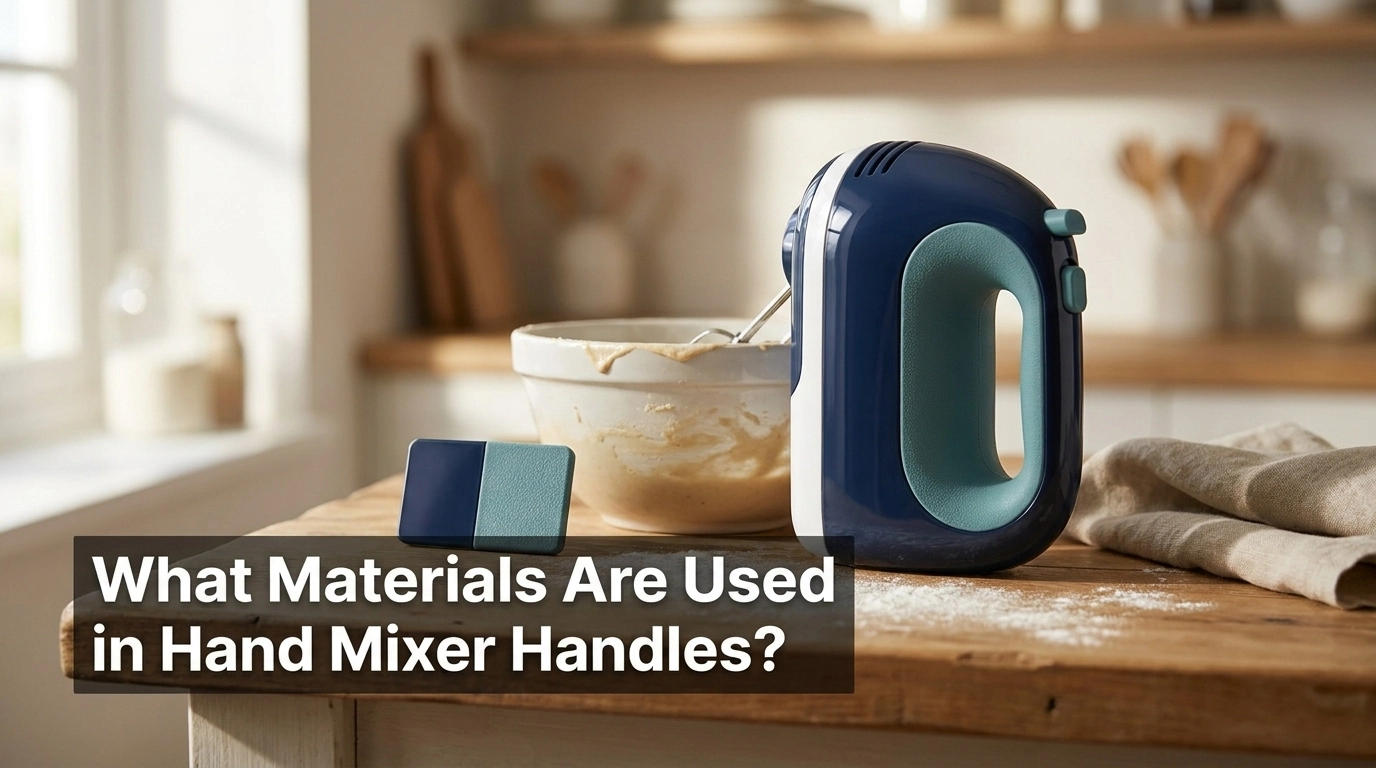
Hand mixer handles are usually made from rigid plastic, such as ABS or polypropylene, with some models featuring rubberized or silicone-like grip surfaces for better comfort. The exact material depends on the manufacturer and model. When choosing a mixer, consider grip texture, handle shape, weight, and cleaning requirements alongside the material itself.
Common Handle Materials
- ABS plastic: A rigid, moldable material suitable for appliance housings and shaped handles.
- Polypropylene: A lightweight plastic used in some consumer-product components.
- Rubber: A flexible material that can provide a softer, less slippery grip.
- Silicone: A flexible material that may appear in soft-touch grips or other selected components.
- Mixed materials: A rigid plastic handle may have a separate elastomeric coating or grip insert.
What Should You Check?
- Look for a secure, comfortable grip that fits your hand without forcing your wrist into an awkward position.
- Check the manufacturer’s specifications for the exact material instead of assuming every black or soft-touch surface is rubber or silicone.
- Review the cleaning instructions and appliance safety information before using water or cleaning products near the handle.
When comparing hand mixers, I would look beyond the finish and ask what makes the handle comfortable, easy to clean, and practical for regular baking. The material matters, but the shape, surface texture, and overall balance also influence how confidently you can control the appliance.
This guide explains the materials commonly used in hand mixer handles, how they differ, and what to inspect before buying a new mixer in 2026.
In This Guide
- What materials are commonly used in hand mixer handles?
- Which plastics are used, and how do they differ?
- Why do some hand mixers have rubber or silicone grips?
- How do hand mixer handle materials compare?
- How do materials affect comfort, durability, and cleaning?
- How can you choose a hand mixer with a good handle?
- Frequently asked questions
What Materials Are Commonly Used in Hand Mixer Handles?
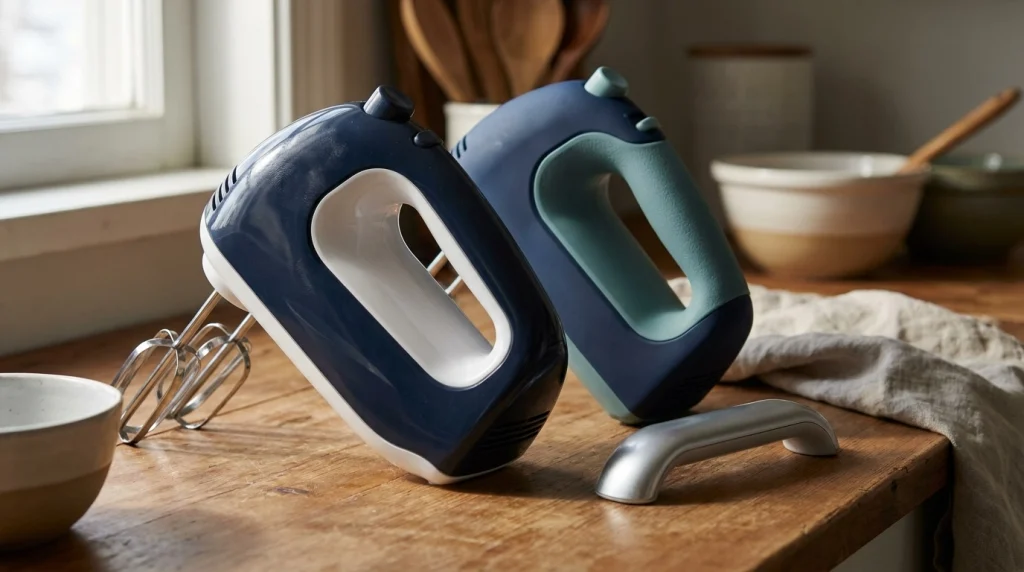
Most hand mixer handles use rigid plastic, sometimes combined with softer materials where your fingers and palm make contact. Manufacturers choose materials that can be molded into comfortable shapes while keeping the appliance manageable to hold.
Rigid plastic for the main handle
Plastic is common because it is relatively lightweight, easy to mold, and suitable for the outer casing of an electric appliance. Its shape can incorporate curves, finger contours, control buttons, and textured sections without requiring multiple separate parts.
The precise polymer varies by model. ABS, polypropylene, and polycarbonate are examples of plastics used in consumer products, but you should not assume that a particular hand mixer uses any one of them unless its manufacturer confirms the material.
Soft materials for improved grip
Some handles have a rubberized surface or a separate elastomeric insert. An elastomer is a flexible material that can bend under pressure and recover its shape.
These softer surfaces can make a rigid handle feel less harsh against the hand. They may also provide more friction than a smooth plastic surface, helping you maintain a comfortable hold during mixing.
What about metal handles?
Metal is more commonly associated with a hand mixer’s internal components, decorative details, or other structural parts than with the entire grip. A metallic-looking finish does not necessarily mean the handle itself is made from aluminum or stainless steel.
For example, a silver-colored housing could be coated plastic. Check the product specifications before treating appearance as proof of material composition.
Section takeaway: Rigid plastic is a common handle material, while rubber-like or silicone-based elements may improve grip. The exact construction is model-specific.
Which Plastics Are Used in Hand Mixer Handles, and How Do They Differ?
ABS, polypropylene, and polycarbonate have different properties, but a product listing may simply say “plastic” without identifying the polymer. Knowing the differences helps explain why manufacturers may choose different materials for appliance housings and grips.
ABS plastic
ABS stands for acrylonitrile butadiene styrene. It is a rigid thermoplastic known for its ability to be molded into detailed shapes and its useful impact resistance in many consumer-product applications.
For a hand mixer, ABS can support a smooth outer casing with shaped contours and spaces for speed controls. Its suitability for a specific appliance still depends on the grade, design, manufacturing process, and applicable safety requirements.
Polypropylene
Polypropylene, often shortened to PP, is a lightweight thermoplastic used in many household products. It offers useful chemical resistance and can be molded into functional components.
Its stiffness and impact behavior differ from those of ABS, and the final properties depend on the formulation and part design. It may be suitable for selected handle or housing components, but the material cannot be identified reliably by touch alone.
Polycarbonate
Polycarbonate is an engineering plastic valued for its impact resistance and transparency in suitable grades. It is used in various consumer products where those properties are useful.
Polycarbonate is not automatically better than ABS or polypropylene for every mixer handle. Cost, surface finish, molding needs, chemical compatibility, and the manufacturer’s design requirements all influence material selection.
Can you tell which plastic a handle uses?
Usually, you cannot identify the exact polymer with confidence just by looking at the handle. Color, gloss, texture, and perceived hardness can vary substantially with coatings, additives, and surface treatments.
For a reliable answer, use these checks:
- Read the manufacturer’s product specifications or official support documentation.
- Check the packaging or user manual for material information.
- Contact the manufacturer if the polymer type matters for a particular reason, such as a sensitivity to a surface treatment.
A retailer’s phrase such as “premium plastic” is not a precise material specification. It may describe appearance or perceived quality rather than a named polymer grade.
Section takeaway: ABS, polypropylene, and polycarbonate have different characteristics, but no single plastic is best for every handle. Confirm the actual material rather than guessing from its finish.
Why Do Some Hand Mixers Have Rubber or Silicone Grips?
Rubber-like and silicone-based surfaces can improve the feel and traction of a handle. They are often used alongside a rigid plastic structure rather than replacing the entire handle.
Rubberized surfaces
Rubberized grips are designed to feel softer or provide additional friction compared with a smooth, hard surface. Depending on the design, the grip may use natural rubber, synthetic rubber, or a thermoplastic elastomer that behaves like rubber.
The term “rubberized” does not identify a specific chemical composition. It may describe a coating, a molded insert, or the tactile finish of a different material.
Silicone grips
Silicone is a flexible, rubber-like material that can retain its flexibility across a range of temperatures. In consumer appliances, it may be used for selected grip surfaces, feet, seals, or other components.
However, a silicone accessory or seal does not prove that the handle is silicone. A manufacturer should explicitly identify the handle material if that detail matters to your purchase.
Overmolded handles
An overmolded handle combines materials by forming a softer layer over a more rigid base. In a hand mixer, this type of construction can pair a structural plastic core with a flexible outer grip.
The softer layer may improve comfort, while the underlying structure maintains the handle’s shape. The quality of the bond between materials, the surface finish, and resistance to wear all affect how well the grip holds up.
When examining an overmolded handle, check for:
- A consistent surface without peeling or lifting edges.
- A texture that feels secure without irritating your palm.
- Easy-to-reach speed controls that remain comfortable to operate.
- Cleaning instructions that explain how to care for the grip.
Does a soft grip always mean better control?
No. A soft surface can feel comfortable, but grip performance also depends on handle shape, hand size, texture, and the mixer’s weight distribution.
A smooth handle with a well-designed contour may suit one person better than a heavily rubberized handle. If possible, hold the mixer before buying and consider how its shape positions your wrist and fingers.
Section takeaway: Rubberized, silicone-based, and overmolded grips can improve comfort, but their value depends on the overall design. A soft finish alone does not guarantee better ergonomics.
How Do Hand Mixer Handle Materials Compare?
Plastic, rubberized surfaces, silicone, and mixed-material construction serve different purposes in a hand mixer handle. Comparing them by grip, maintenance, and likely use is more useful than treating one material as universally superior.
The table below describes typical material characteristics, not guaranteed specifications for every hand mixer.
| Material or construction | Main advantages | Possible drawbacks | Best reason to choose it |
|---|---|---|---|
| Rigid plastic | Lightweight, easy to shape, generally simple to wipe | May feel hard or slippery | Everyday use and straightforward maintenance |
| ABS plastic | Rigid construction and useful impact resistance in suitable grades | Performance depends on grade and design | A molded, shaped handle or housing |
| Rubberized grip | Can improve friction and provide a softer feel | May collect residue or wear at the edges | A more secure-feeling hold |
| Silicone grip | Flexible and potentially comfortable to touch | Not present on every model; cleaning needs vary | A flexible, soft-touch contact surface |
| Overmolded construction | Combines a rigid core with a softer outer layer | Quality depends on bonding and surface durability | A balance of structure and grip comfort |
Which material is the most durable?
There is no universal winner because durability depends on the polymer grade, handle design, manufacturing quality, and how the mixer is used. A well-made rigid plastic handle can last longer than a poorly bonded soft-touch grip.
Look for secure seams, an even finish, and a handle that does not flex excessively under ordinary handling. These visible details are useful clues, although they cannot replace material specifications or long-term durability testing.
Does a more expensive handle use better materials?
Not necessarily. A higher price may reflect motor design, speed controls, included attachments, branding, or other features rather than a superior handle polymer.
Compare the full appliance. If you bake occasionally, a comfortable and well-constructed standard plastic handle may meet your needs without paying extra for a premium finish.
Section takeaway: Judge handle materials by their intended function and the quality of the complete construction. Price and softness alone are not reliable measures of durability.
How Do Handle Materials Affect Comfort, Durability, and Cleaning?
The handle is the part of a hand mixer you interact with throughout the mixing process. Its material influences how it feels, but its shape and the appliance’s balance can matter just as much.
Grip comfort and hand fatigue
A comfortable handle allows your fingers to wrap around it without excessive stretching or pressure. A surface with useful texture may also feel more secure when your hands are slightly damp.
Weight distribution matters, too. A soft grip cannot compensate for a mixer that feels front-heavy or requires you to bend your wrist awkwardly to reach the bowl.
When comparing models, pay attention to these features:
- Handle diameter: It should feel natural for your hand size.
- Contour: Curves should support a relaxed grip rather than force your fingers into one position.
- Surface texture: It should provide useful traction without feeling abrasive.
- Control placement: Speed and eject controls should be reachable without changing your grip unnecessarily.
- Balance: The mixer should feel manageable when held above a bowl.
For more detail about the outer body and its role in handling, see our guide to what a hand mixer housing is and why it matters.
Cleaning and food residue
The handle does not normally touch ingredients directly, but flour, butter, oil, and batter can splash onto its surface. A smooth, compatible exterior is often easier to wipe than a deeply textured grip.
Soft surfaces can still be easy to maintain when they have a suitable finish. The important considerations are whether the surface traps residue, whether its coating stays intact, and what the manufacturer permits during cleaning.
For routine care, follow these steps:
- Unplug the mixer before cleaning the exterior.
- Wipe the handle with a soft, slightly damp cloth.
- Use only cleaning products approved by the manufacturer.
- Keep liquid out of the control openings, ventilation slots, and attachment sockets.
- Dry the exterior before storing the appliance.
Never immerse an electric hand mixer in water unless its manufacturer explicitly provides a suitable procedure for that particular component. Most motorized bodies need to remain dry.
Cracking, peeling, and surface wear
Over time, a handle may develop scratches, discoloration, cracks, or peeling grip material. These signs do not all indicate the same problem, so consider their location and severity.
- Light surface scratches: May be cosmetic if the structure remains intact.
- Peeling grip material: May indicate wear or a failing bond between layers.
- Cracks near controls: Deserve particular attention because electrical components may be nearby.
- Warping or unusual heat: Can indicate a problem that requires the appliance to be taken out of service.
If the handle cracks near a switch, the cord entry, or a housing seam, stop using the mixer until it has been assessed. Do not glue a damaged electrical housing or open a sealed unit as a do-it-yourself repair.
For general background on household appliance safety and relevant standards, consult UL Solutions’ small-appliance testing and certification information.
Section takeaway: A good handle should feel comfortable, remain intact, and be easy to clean according to the manufacturer’s instructions. Stop using a mixer with structural damage or signs of electrical trouble.
How Can You Choose a Hand Mixer With a Good Handle?

Choose a hand mixer based on how it feels in your hand, how easy its controls are to reach, and whether the manufacturer provides clear care instructions. A particular polymer is useful information, but it should not be your only buying criterion.
Check the specifications before buying
Product listings sometimes mention a soft-touch grip without explaining its composition. If the exact material matters, look for a manufacturer’s specification rather than relying on a retailer’s description.
Check these details before making a decision:
- Handle material: Is the housing plastic, or does the manufacturer identify a separate grip material?
- Construction: Does the grip appear to be a separate insert, coating, or molded layer?
- Cleaning: Can you wipe the handle with ordinary mild cleaning methods?
- Controls: Can you operate the speed selector and eject button comfortably?
- Warranty: What coverage applies to the appliance and its components?
- Safety information: Does the manufacturer provide a manual and clear instructions for proper use?
Match the handle to your mixing habits
If you mostly mix pancake batter, eggs, or occasional cake mixtures, a straightforward plastic handle may be all you need. For longer baking sessions, grip texture, handle contours, and weight distribution deserve more attention.
Think about the tasks you perform most often. A handle that feels comfortable during a brief test may feel different when you are holding the mixer through several minutes of whipping or creaming.
Consider the whole appliance, not just the grip
The handle works together with the motor, housing, controls, and attachments. Understanding the main parts of a hand mixer can help you compare those features more effectively.
Weight is another useful consideration because you hold the appliance throughout mixing. Our guide to typical hand mixer weight explains why the motor, housing, and other components can influence how heavy a model feels.
Finally, choose a mixer with attachments and speed settings suited to your recipes. A comfortable handle is valuable, but it will not make an unsuitable appliance better at a task it was not designed to handle.
Section takeaway: Prioritize comfort, balance, easy cleaning, accessible controls, and verified product information. The best handle is the one that suits your hands and your usual kitchen tasks.
Frequently Asked Questions
Are hand mixer handles made of plastic?
Yes, many electric hand mixer handles use rigid plastic as part of the outer housing. Some models add rubberized or other elastomeric surfaces for grip, but the exact material varies by manufacturer and model.
Is ABS plastic good for a hand mixer handle?
ABS is a rigid thermoplastic used in many consumer products because it can be molded into detailed shapes and offers useful impact resistance in suitable grades. Whether it is appropriate for a particular mixer depends on its formulation, construction, and intended use.
Are silicone hand mixer handles better than plastic ones?
Not necessarily. Silicone can provide a flexible, soft-touch surface, while rigid plastic provides structure and is often easy to wipe clean. Handle shape, texture, overall balance, and construction quality are equally important when comparing comfort and usability.
How can I tell whether a hand mixer grip is real rubber or silicone?
You generally cannot identify the exact material reliably from appearance or touch alone. Check the manufacturer’s product specifications or contact its support team if the distinction matters for cleaning, material sensitivity, or another specific requirement.
Can I wash a hand mixer handle under running water?
Do not run water over or immerse an electric hand mixer unless the manufacturer explicitly permits that cleaning method. Unplug the appliance and wipe its exterior with a suitable damp cloth, keeping liquid away from controls, vents, and electrical openings.
What should I do if the handle coating starts peeling?
Stop and inspect the affected area while the appliance is unplugged. If the coating is separating near controls, exposing the underlying structure, or accompanied by cracks or unusual heat, discontinue use and contact the manufacturer about repair or replacement.
Does a metal-looking hand mixer handle mean it is made of metal?
No. A metallic appearance can come from a decorative finish or coating over plastic. Check the official specifications to establish whether a component is genuinely metal and, if so, which metal the manufacturer uses.
Final Takeaway: Focus on Comfort and Construction
Hand mixer handles are commonly built from rigid plastic, with some models adding rubberized, silicone-based, or other soft-touch grip materials. Each option can work well when its properties match the handle’s design and intended use.
When shopping, look beyond material names. Choose a mixer with a comfortable shape, secure grip, manageable weight, easy-to-reach controls, and clear cleaning instructions.
Before buying, verify the manufacturer’s material specifications if you need to know exactly what the handle contains. That is more reliable than judging its composition by color, texture, or price.