Quick Answer
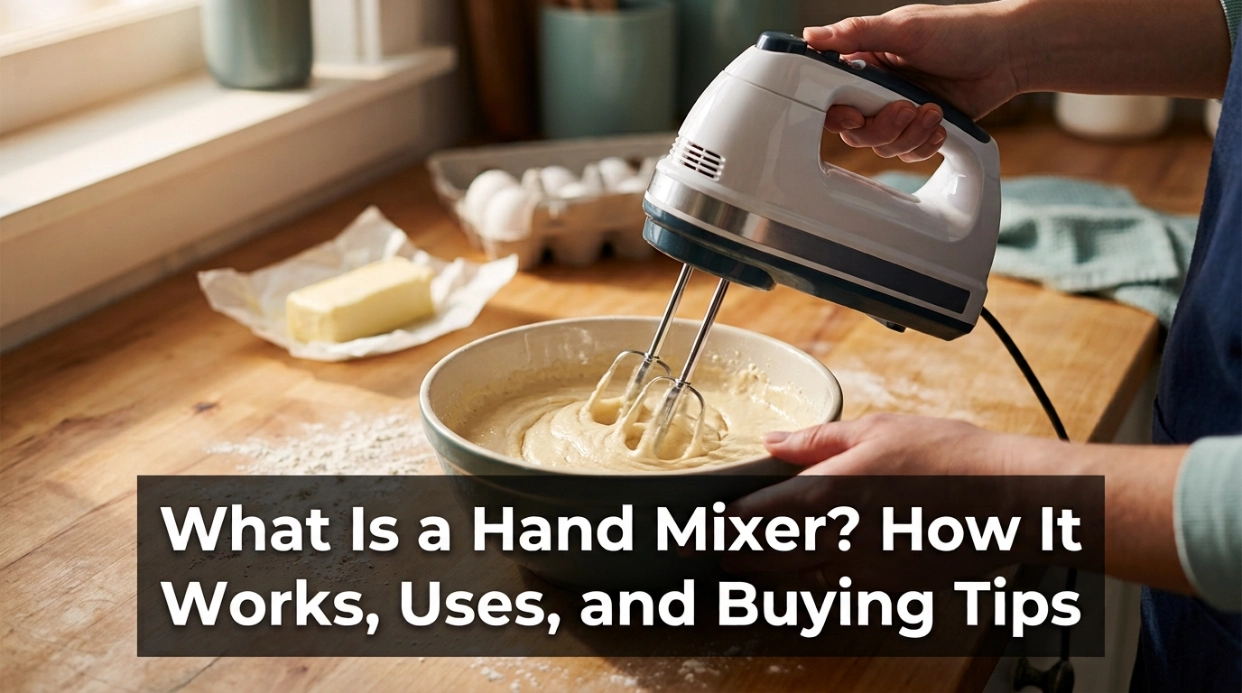
A hand mixer is a small electric kitchen appliance with removable rotating beaters or other attachments. You hold it over a bowl while the motor spins the attachments to mix, beat, whip, or sometimes knead ingredients. Different speeds suit different jobs, as shown in this hand mixer usage guide.
What a hand mixer can do
- Mix batters: Combine cake, brownie, pancake, and muffin mixtures quickly.
- Beat ingredients: Cream butter and sugar or blend soft ingredients evenly.
- Whip air: Whip cream, egg whites, mousse, and similar mixtures.
- Mash foods: Mix cooked potatoes and other soft foods when the recipe allows.
- Knead some dough: Models supplied with dough hooks can handle certain dough recipes within the manufacturer’s limits.
Simple rule to remember
- Start slowly, increase speed only when needed, and use the attachment designed for the job.
If you’ve wondered, “What is a hand mixer?” the simplest answer is a portable electric mixer you control by hand. It sits between a manual whisk and a larger stand mixer in both power and convenience.
I like explaining hand mixers this way because their value is easy to understand. They remove much of the arm work from everyday mixing without permanently occupying a large section of the counter.
In This Guide
What Is a Hand Mixer?
A hand mixer, also called an electric hand mixer, is a portable motorized appliance used to mix food in a separate bowl. Its rotating attachments replace much of the repetitive beating and whisking you would otherwise do manually.
Definition: A hand mixer is an electric handheld kitchen appliance that turns removable beaters, whisks, or dough hooks to mix, beat, whip, and sometimes knead ingredients.
The motor and controls sit inside a compact housing with a handle. One or two attachment sockets underneath hold the beaters or other tools.
Unlike a stand mixer, a hand mixer doesn’t have its own fixed bowl. You move the mixer through the ingredients while holding its handle.
Why do people use hand mixers?
The biggest advantage is convenience. You can take one from a cabinet, insert the beaters, mix a recipe, clean the attachments, and put everything away.
They’re especially useful in smaller kitchens. Many current hand mixers also offer storage cases, multiple attachments, and several speed settings.
- Compact storage: They require much less cabinet or counter space than most stand mixers.
- Flexible bowls: You can use different mixing bowls rather than a dedicated mixer bowl.
- Fast setup: There are fewer large parts to assemble.
- Simple cleanup: Usually only the attachments and mixing bowl contact the food.
- Portable design: Moving the appliance between storage and the worktop is easy.
How Does a Hand Mixer Work?
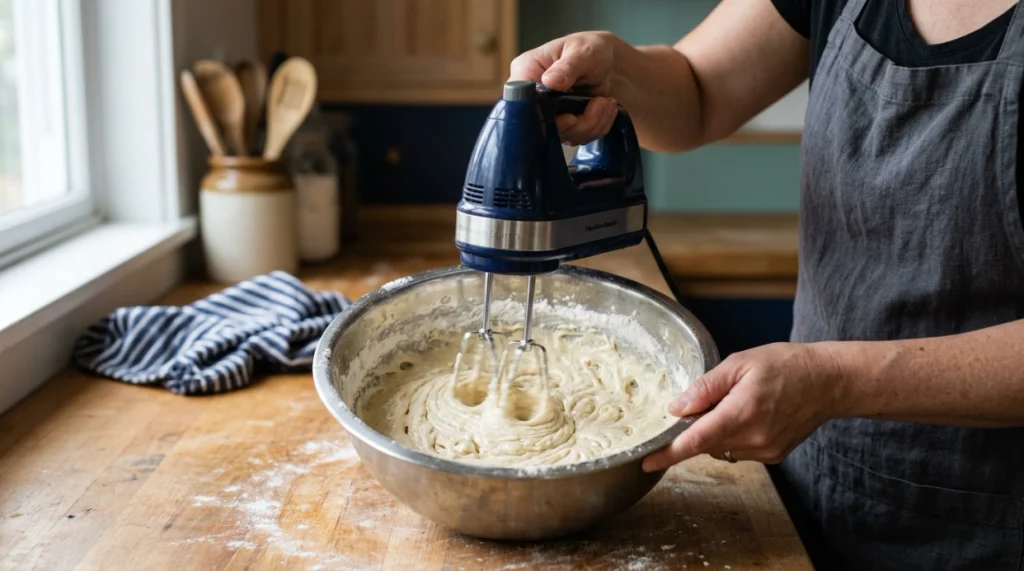
A hand mixer uses an electric motor to rotate its attachments. Internal gearing transfers that motor movement to the beater shafts at a controlled speed.
When the beaters move through a mixture, they push, pull, and redistribute ingredients. Faster movement can also introduce air into foods such as cream or egg whites.
What happens when you change the speed?
The speed control changes how quickly the attachments rotate. Low settings provide greater control, while higher settings work well when a recipe needs vigorous beating or aeration.
I recommend starting at the lowest practical setting. Beginning too fast is one of the easiest ways to throw flour, sugar, or liquid around the kitchen.
- Low speed: Start mixing, combine dry and wet ingredients, or fold in additions.
- Medium speed: Mix batters, cream softened ingredients, and handle many general mixing jobs.
- High speed: Whip cream or egg whites when the recipe calls for more aeration.
Speed numbers aren’t universal. A setting marked “3” on one mixer doesn’t necessarily match speed 3 on another, so the owner’s manual should take priority.
What Can You Use a Hand Mixer For?
A hand mixer works best for mixtures that need repeated beating, stirring, whipping, or blending. Everyday baking is where it usually earns its cabinet space.
The attachment and motor capacity still matter. Thick mixtures should never be forced through a light-duty mixer just because the beaters continue turning.
Common hand mixer jobs
- Cake batter: Mix wet and dry ingredients into a consistent batter.
- Cookie mixtures: Cream butter and sugar or mix softer cookie doughs when the mixer supports them.
- Whipped cream: Add air to cold heavy cream until it reaches the required consistency.
- Egg whites: Beat whites for meringues, soufflés, and other aerated recipes.
- Frosting: Blend butter, sugar, cream cheese, or other frosting ingredients.
- Mashed potatoes: Mix cooked potatoes carefully without excessively working the starch.
- Pancake or waffle batter: Combine ingredients quickly while avoiding unnecessary overmixing.
What should you not use a hand mixer for?
A hand mixer isn’t a substitute for every kitchen appliance. It doesn’t chop like a food processor or purée ingredients like a blender.
Heavy bread dough can also demand more torque than some handheld models provide. Only use dough hooks when the manufacturer specifically supplies or approves them for your model.
As of 2026, available hand mixers vary widely in motor ratings and attachments. Some mainstream models advertise roughly 275–300 watts of peak power, but wattage alone isn’t a reliable cross-brand performance score.
Section Takeaway: Match the mixer to the texture, not just the recipe name. Light and medium mixtures suit most hand mixers, while dense dough requires a model designed for the extra load.
Hand Mixer vs. Stand Mixer: What’s the Difference?
A hand mixer is lighter, smaller, and manually guided. A stand mixer sits on the counter, holds its own bowl, and operates without you holding the motor body.
Neither format is automatically better. The practical choice depends on batch size, recipe type, storage space, and how often you mix heavy foods.
| Feature | Hand Mixer | Stand Mixer |
|---|---|---|
| Operation | Held and guided by hand | Runs on a fixed base |
| Mixing bowl | Use a separate compatible bowl | Dedicated bowl normally included |
| Storage | Compact | Requires more space |
| Heavy mixtures | Model-dependent | Generally better suited to frequent heavy-duty work |
| Hands-free mixing | No | Yes |
| Best fit | Quick everyday mixing and small kitchens | Frequent baking, larger batches, and longer mixing jobs |
If I were choosing for occasional cakes, frosting, whipped cream, and pancake batter, a hand mixer would cover those jobs without much storage commitment.
For frequent bread making or large batches of stiff dough, a capable stand mixer often makes more sense because you don’t need to support and guide it throughout the job.
What Do Hand Mixer Attachments and Speeds Do?
Most hand mixers start with a pair of beaters. Better-equipped models may include a wire whisk, dough hooks, blending rods, or other specialized accessories.
Attachments aren’t automatically interchangeable between models. Use only parts designed or approved for your mixer.
Common attachments explained
- Traditional beaters: General-purpose tools for batters, frosting, creaming, and routine mixing.
- Wire beaters: Often designed to mix while reducing food buildup on the attachment.
- Whisk: Useful when you want to incorporate air into cream or egg whites.
- Dough hooks: Intended for kneading compatible dough recipes on models designed to support them.
- Specialty attachments: Some mixers include blending or milkshake-style accessories.
How many speeds does a hand mixer need?
You don’t need the highest speed count available. Good control at the low end is often more useful than having many settings you rarely use.
For context, current manufacturer ranges include mixers with five or more speeds. The important part is having enough control to start gently and increase speed as the mixture changes.
I also look for controls that can be changed without awkwardly shifting your grip. An attachment-release button should be easy to reach but difficult to trigger accidentally during mixing.
How Do You Use a Hand Mixer Safely?
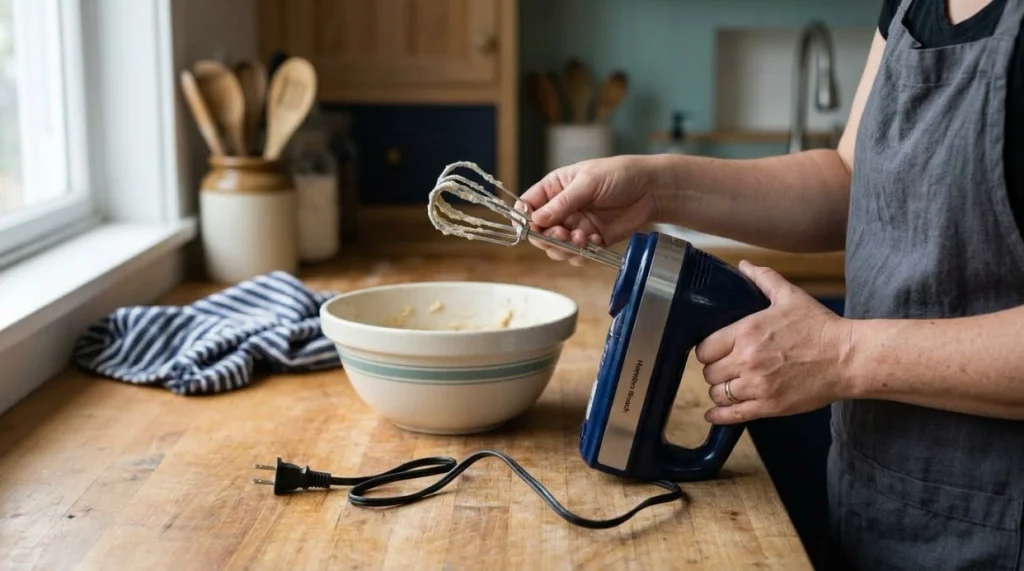
Safe hand mixer use starts before the beaters move. Check the cord, attachments, bowl, and controls before plugging the appliance into an outlet.
The U.S. Consumer Product Safety Commission provides a broader home electrical safety checklist covering countertop appliance risks such as damaged cords, water, and heat exposure.
- Unplug the mixer first. Insert the correct clean attachments while the appliance has no power.
- Place ingredients in a stable bowl. Leave enough space to reduce splashing.
- Put the attachments into the mixture. Starting inside the bowl helps contain dry ingredients.
- Begin at low speed. Increase gradually as the ingredients combine.
- Move smoothly through the bowl. Let the rotating tools do the work instead of forcing them.
- Switch the mixer off before lifting it out. Wait for the attachments to stop rotating.
- Unplug before removing attachments. Eject and clean them according to the manual.
Keep the motor housing away from water and don’t operate a mixer with a visibly damaged cord or plug. The UL Solutions appliance guidance also illustrates the role of appliance safety testing and certification.
Pro tip: Don’t open the motor housing, bypass a safety mechanism, or attempt internal electrical repairs unless you’re qualified. Consult the manufacturer’s manual or a qualified appliance repair technician.
If a mixer develops a burning smell, sparks, repeated electrical faults, or unusual heat, stop using it. Don’t keep running the appliance simply to see whether the problem disappears.
Section Takeaway: Insert and remove attachments only while the mixer is unplugged, start slowly, keep electricity away from water, and stop using a unit showing electrical damage.
Hand Mixer FAQ
Is a hand mixer the same as a blender?
No. A hand mixer uses beaters or whisks mainly to combine and aerate ingredients, while a blender uses sharp blades to chop and purée foods into a smoother mixture.
Can a hand mixer make cake batter?
Yes. Cake batter is one of the most common hand mixer jobs. Start slowly when adding flour, then use the speed recommended by the recipe and mixer manual to avoid splashing and overmixing.
Can a hand mixer whip cream?
Yes. A hand mixer with beaters or a whisk can whip heavy cream by incorporating air. Use an appropriate speed and stop once the cream reaches the texture your recipe requires.
Can you knead bread with a hand mixer?
Some hand mixers can knead certain bread doughs when used with manufacturer-approved dough hooks. Don’t use standard beaters for kneading unless the manual specifically permits it, and respect the mixer’s stated capacity.
How many watts should a hand mixer have?
There is no single wattage that defines a good hand mixer. Motor design, gearing, attachment shape, speed control, and manufacturer rating methods also affect performance, so compare the complete design rather than wattage alone.
Should I buy a hand mixer or a stand mixer?
Choose a hand mixer if you mainly make smaller batches and want compact storage. Consider a stand mixer if you regularly prepare large quantities, dense dough, or recipes requiring long hands-free mixing.
How should I clean a hand mixer?
Unplug it first and remove the attachments. Wash accessories according to their care instructions, wipe the motor housing with a suitable damp cloth, and never immerse the electrical motor body in water unless the manufacturer specifically says otherwise.
A hand mixer is simple, but it can handle a surprising amount of everyday kitchen work. For cakes, frosting, cream, eggs, and many lighter mixtures, its combination of speed and compact size is hard to beat.
Choose a model with useful low-speed control, comfortable handling, suitable attachments, and clear safety instructions. Then match the speed and tool to each recipe instead of relying on maximum power for every task.
