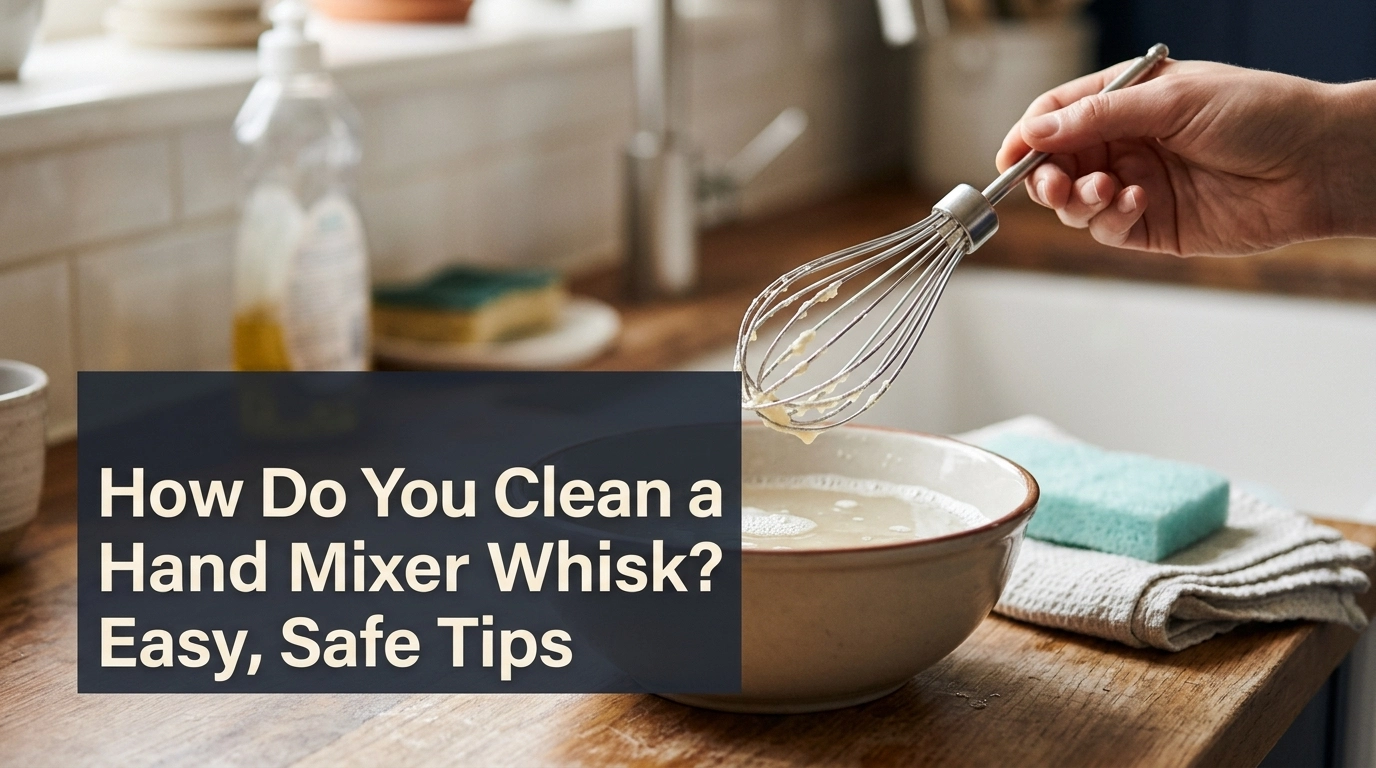
Cleaning a hand mixer whisk is easy once you know what to do. The tricky part is removing sticky batter from between the wires without bending them or damaging the finish.
When I clean a whisk, I start by removing loose food with warm water. I then use a little dish soap and a soft sponge to remove the rest.
In this guide, I will explain how do you clean a hand mixer whisk, what to do with dried batter, and which cleaning mistakes to avoid. You will also learn how to dry and store your whisk so it stays in good shape.
Common Signs Your Hand Mixer Whisk Needs Cleaning
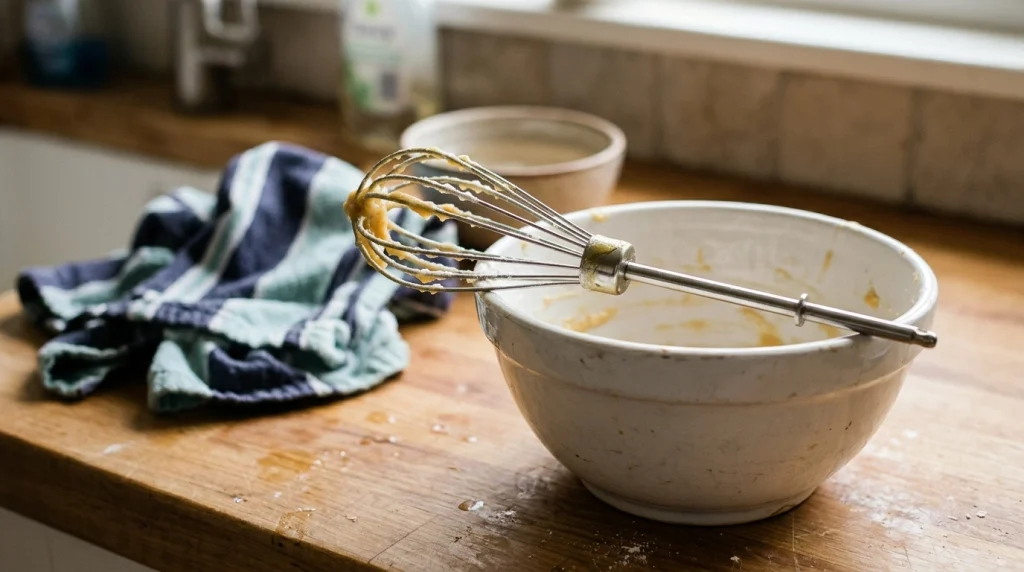
Food can hide between whisk wires. A quick rinse may not remove it all.
Here are some signs that your whisk needs more care:
| Sign | Likely Cause | Quick Fix |
|---|---|---|
| Sticky wires | Wet batter or egg residue | Soak in warm, soapy water |
| Dried white patches | Dried cream or egg white | Soak, then brush gently |
| Greasy surface | Butter, oil, or cream | Wash with dish soap |
| Dark spots | Stains, wear, or corrosion | Check the surface closely |
| Bad smell | Trapped food or poor drying | Wash and dry thoroughly |
Do not ignore food stuck near the point where the wires join the handle. This area can be hard to reach, so use a soft brush rather than a sharp tool.
If the metal has rust, peeling, or deep damage, stop using the whisk until you check whether it is safe to use. Cleaning cannot fix damaged metal.
Possible Causes of Dirty Hand Mixer Whisks
Whisks collect food because their thin wires create many small spaces. Batter, cream, and egg whites can stick there during mixing.
Common causes include:
- Dried batter: Food hardens when left on the whisk for too long.
- Grease: Butter and oil can leave a slippery film.
- Poor rinsing: Soap and food may remain between the wires.
- Wrong cleaning tools: Steel wool and rough pads may scratch the surface.
- Poor drying: Water left on some metal parts can lead to rust.
- Dishwasher damage: Some whisk attachments are not dishwasher-safe.
The best cleaning method depends on the food and the maker’s care instructions. Most routine messes need only warm water, mild dish soap, and gentle scrubbing.
How Do You Clean a Hand Mixer Whisk?
You do not need special cleaners for most hand mixer whisks. Follow these steps to remove food without harming the attachment.
1. Remove the Whisk Safely
Turn off the mixer and unplug it before removing the whisk. Never clean an attachment while it is connected to a powered mixer.
Use the release button if your model has one. Pull the whisk out gently, following the instructions in the user manual.
If the attachment feels stuck, do not force it. Check how your mixer releases its attachments before trying again.
2. Check Whether It Is Dishwasher-Safe
Look at the manual or the maker’s care guide. Some stainless steel whisks are dishwasher-safe, while other attachments may have coatings or parts that need hand washing.
If you cannot confirm that yours is dishwasher-safe, hand washing is the safer choice. It also lets you focus on food trapped between the wires.
Avoid putting the mixer body, power cord, or electrical parts in water. Only wash the removable attachment according to its care instructions.
3. Soak the Whisk in Warm, Soapy Water
Fill a bowl with warm water and add a few drops of mild dish soap. Place the whisk in the water for about 5 to 10 minutes.
This helps soften dried batter and loosen grease. For stubborn food, allow a little more soaking time rather than scraping hard.
Do not use boiling water unless the maker says it is safe. Excessive heat may damage some coatings or attached parts.
4. Brush Between the Wires
Use a soft sponge or a small, soft-bristled brush to clean around each wire. Move gently from the handle end toward the tips.
Pay extra attention to the spaces where wires meet. Food often collects there and may not come away with a quick rinse.
Avoid knives, needles, and other sharp objects. They can scratch the metal, damage coatings, or cause injury if they slip.
5. Remove Grease and Stubborn Food
If the whisk still feels greasy, apply a little dish soap directly to the sponge. Rub the wires gently, then rinse with clean running water.
For dried cream or egg white, soak the attachment again before brushing. Repeated gentle cleaning is better than bending the wires to reach a stubborn patch.
You can use a soft cleaning brush if your fingers cannot reach between the wires. Choose one that will not scratch the finish.
6. Rinse Away All Soap
Hold the whisk under clean running water and turn it slowly. Check both sides and the joint where the wires connect to the handle.
Soap left behind can affect the next batch of food. Rinse until the surface feels clean and no suds remain.
At this stage, clean means removing both visible food and the soap used to loosen it. A quick rinse alone may not be enough after mixing sticky batter.
7. Dry the Whisk Completely
Shake off excess water, then pat the whisk dry with a clean, soft cloth. Leave it in a well-ventilated place until all areas are dry.
Do not put a damp whisk straight into a closed drawer. Trapped moisture may cause problems with some metal finishes.
Once dry, store it in a clean drawer or utensil holder. Avoid placing heavy items on top, as they may bend the wires.
Mistakes to Avoid When Cleaning a Hand Mixer Whisk
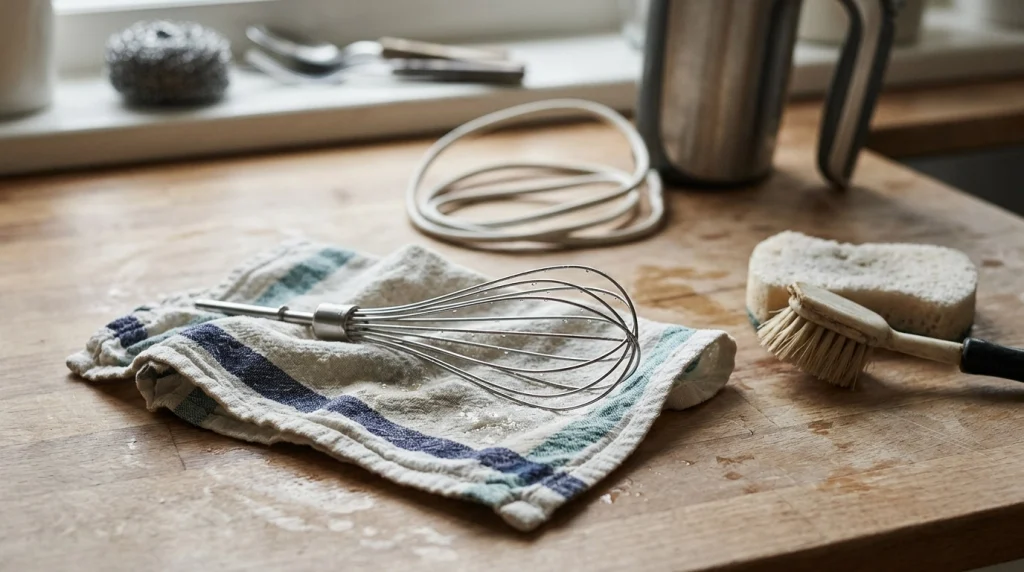
A few common mistakes can make cleaning harder or shorten the life of your attachment.
- Do not soak the whole mixer. Water can damage its electrical parts.
- Do not scrape with metal tools. Sharp edges may scratch or bend the wires.
- Do not use harsh cleaners. Strong chemicals may damage some finishes.
- Do not leave food to dry overnight. Dried batter usually takes longer to remove.
- Do not store the whisk while wet. Dry it fully before putting it away.
- Do not assume every whisk is dishwasher-safe. Check the manual first.
Replacement parts are worth considering if the whisk is bent, rusted, or has a damaged coating. Check your mixer model before ordering a replacement whisk, since attachments may not fit across different models.
A soft brush and a non-abrasive sponge are usually enough for regular care. There is no need to buy a special cleaner for ordinary food residue.
Recommended Solutions for Common Cleaning Problems
Use this table to choose a method based on the mess you find.
| Problem | Recommended Solution | Difficulty |
|---|---|---|
| Fresh cake batter | Warm water and dish soap | Easy |
| Dried dough or batter | Soak, then brush gently | Moderate |
| Greasy cream residue | Dish soap and a soft sponge | Easy |
| Food near the wire joint | Small, soft cleaning brush | Moderate |
| Rust or peeling finish | Stop using and inspect | Requires care |
If a stain remains after washing, check whether it is food residue or damage to the metal. Do not keep scrubbing aggressively in an attempt to remove corrosion.
When to Replace a Hand Mixer Whisk
A dirty whisk usually does not need replacing. Most food residue can be removed with a good soak and gentle cleaning.
Replacement may be the better choice if you notice:
- Rust that returns after cleaning.
- Peeling or flaking coating.
- Cracked or loose joints.
- Wires that are badly bent or broken.
- Damage that makes the attachment hard to clean safely.
Before buying a new whisk, check the mixer brand and model number. A whisk that looks similar may not lock into your mixer correctly.
Do not try to repair a broken wire with glue or household tools. The attachment spins at high speed, so a damaged part may become unsafe during use.
My Personal Experience
When dealing with dried batter, I find it tempting to scrub the whisk right away. However, hard scrubbing can make the wires bend and still leave food near the handle.
A short soak works better. I let the warm, soapy water loosen the residue, then brush between the wires with gentle strokes.
Greasy residue needs a little more dish soap, while dried egg white usually needs more soaking time. I also check the joint before rinsing because it is easy to miss food in that small area.
The biggest lesson is to clean the whisk soon after mixing. It takes less effort to wash fresh batter than to remove food that has dried hard.
I also avoid assuming that every attachment can go in the dishwasher. Checking the care instructions first helps prevent damage and saves time.
Final Thoughts
So, how do you clean a hand mixer whisk? Unplug the mixer, remove the whisk, soak it in warm soapy water, brush gently between the wires, rinse well, and dry it completely.
For dried batter, give the attachment more time to soak instead of scraping it. For grease, use mild dish soap and a soft sponge.
With quick cleaning after each use and proper storage, your whisk can stay clean and ready for your next recipe. If you notice rust, peeling, or broken wires, replace the attachment rather than risking its use.