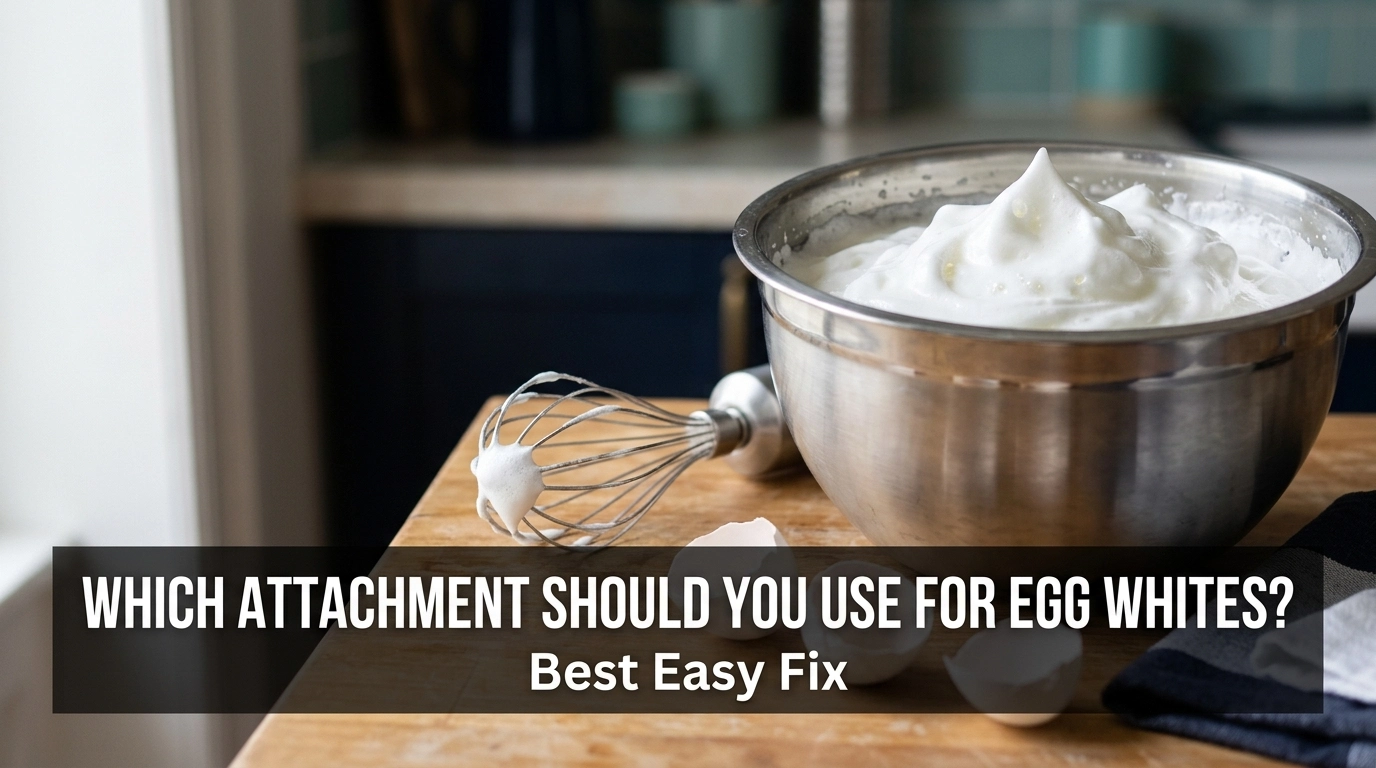
Which attachment should you use for egg whites? The best choice is a whisk attachment. It adds air to the whites and helps them turn light, thick, and fluffy.
I learned that the right tool makes a big difference when whipping egg whites. A flat beater may mix them, but it usually takes longer to add enough air.
In this guide, I will explain which attachment to use, how to get firm peaks, and what to check when your egg whites refuse to whip. I will also cover simple ways to avoid common mistakes.
Common Signs of the Problem
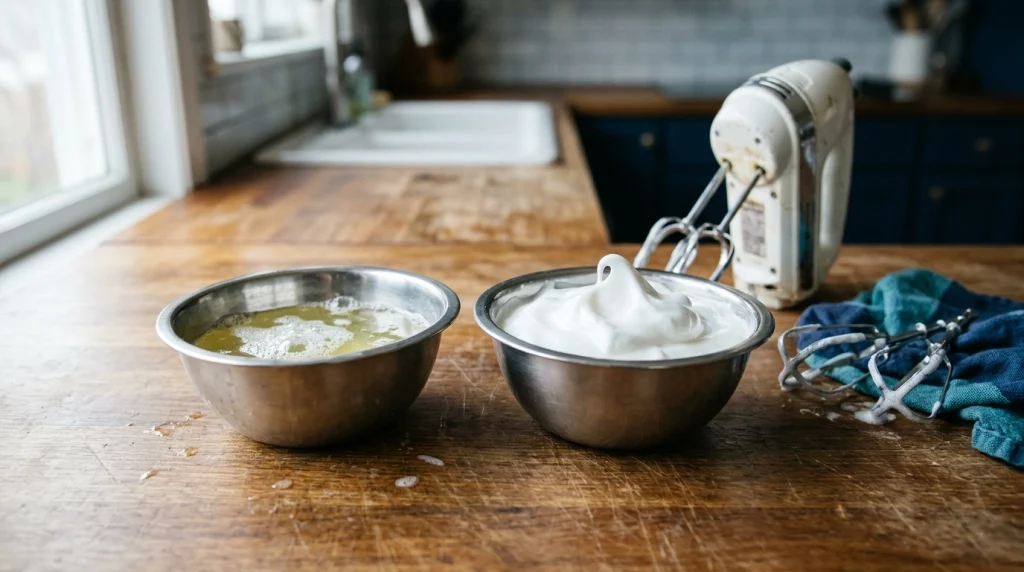
When you use the wrong attachment, egg whites may stay thin or take too long to become fluffy. You may also see large bubbles instead of a smooth, fine foam.
Here are some signs to watch for:
- Egg whites stay runny: They have not trapped enough air.
- Foam looks coarse: The bubbles may be large and uneven.
- Peaks fall over: The whites may need more whipping.
- Whites will not thicken: Fat, yolk, or moisture may be getting in the way.
- The mixer struggles: You may be using a tool that is not suited to whipping.
These signs do not always mean your mixer is faulty. The attachment, bowl, and eggs can all affect the result.
Possible Causes
Egg whites need air to form a stable foam. The right attachment helps spread air through the liquid as you whip.
Several things can prevent this process from working well.
- Wrong attachment: A whisk is designed to add air. A dough hook is not.
- Greasy bowl: Even a little oil can stop the whites from forming good peaks.
- Yolk in the whites: Yolk contains fat, which can weaken the foam.
- Whipping too slowly: Very low speed may take longer to build foam.
- Stopping too soon: Soft foam needs more time to become firm.
- Whipping too long: Overwhipped whites can look dry and grainy.
Cold eggs are often easier to separate, but egg whites can whip more easily when they are closer to room temperature.
How to Fix Which Attachment Should You Use for Egg Whites
Start by choosing the correct tool. Then check your bowl and whipping method before assuming your mixer has a problem.
1. Choose a Whisk Attachment
A wire whisk is the best tool for whipping egg whites with a stand mixer or a hand mixer that supports whisk attachments. Its thin wires help pull air into the whites.
If your mixer has only standard beaters, you can still whip egg whites with them. The process may take longer, and the result can vary by mixer design.
Do not use a dough hook. It is made for kneading dough, not building a light egg-white foam.
2. Check Your Mixer Attachments
Before starting, make sure the whisk fits your mixer model. Not every attachment is universal, even when two mixers look similar.
If your whisk is missing or damaged, check the manufacturer’s parts list for a compatible replacement. A replacement whisk is more useful here than a new egg tray or a cooker measuring cup.
Never force an attachment into its slot. Unplug the mixer before fitting or removing any part.
3. Use a Clean, Dry Bowl
The bowl must be free of oil, butter, and leftover food. Even a small amount of grease can stop egg whites from forming stable peaks.
I would start with a glass or stainless-steel bowl. These are easy to inspect and prepare before whipping.
Cleaning the bowl and whisk well is one of the simplest ways to improve your results. Dry both fully before adding the egg whites.
4. Separate the Eggs With Care
Crack each egg into a small bowl first. This makes it easier to remove any yolk before adding the white to your main mixing bowl.
If yolk gets into the whites, start again with a fresh egg if you need firm peaks. Removing visible yolk may not remove all the fat.
For best results, separate the eggs while cold, then let the whites sit briefly to warm toward room temperature.
5. Start Slowly, Then Increase Speed
Fit the whisk and begin at a low speed. Once the whites become foamy, raise the speed gradually.
Watch the texture instead of relying only on a timer. Different mixers and amounts of egg whites need different whipping times.
Stop when the whites reach the peak stage your recipe needs.
6. Learn the Three Peak Stages
The peak stage tells you when the whites are ready.
| Stage | What You See | Best Use |
|---|---|---|
| Soft peaks | Tips bend over | Folding into some batters |
| Firm peaks | Tips hold their shape with a slight bend | Many cakes and soufflés |
| Stiff peaks | Tips stand upright | Meringues and recipes that need firm foam |
Check the recipe before deciding when to stop. Some recipes need soft peaks, while others call for stiff peaks.
7. Check the Results Before Whipping Longer
If the whites remain runny, check for grease, yolk, or a poor attachment fit. If they are foamy but not thick, continue whipping and watch their texture.
If they become dry, clumpy, or grainy, you may have whipped them too long. Stop and assess whether they can still be used for your recipe.
Do not keep running the mixer if it smells burnt, sparks, or makes unusual noises. Turn it off and unplug it.
Quick Troubleshooting Table
Use this table to find the likely cause and the next step.
| Problem | Likely Cause | Quick Fix |
|---|---|---|
| Whites stay runny | Grease or yolk | Use a clean bowl and fresh whites |
| Foam takes too long | Wrong attachment or low speed | Fit the whisk and increase speed gradually |
| Peaks collapse | Whites are not ready | Continue whipping and check again |
| Whites look grainy | Overwhipping | Stop and assess the texture |
| Mixer makes odd noises | Possible mechanical fault | Unplug and inspect only accessible parts |
Mistakes to Avoid
A common mistake is choosing a flat beater simply because it is already attached. It may work in some cases, but a whisk is usually better for adding air to egg whites.
Avoid these other errors:
- Do not use a wet or greasy bowl.
- Do not add butter or oil before whipping.
- Do not pour sugar in too early unless your recipe directs you to do so.
- Do not scrape the whisk with your fingers while the mixer is running.
- Do not wash or remove attachments while the mixer is plugged in.
Never open the mixer’s motor housing or attempt electrical repairs unless you are qualified to do so. Stop using it if the cord is damaged, the motor overheats, or you notice a burning smell.
When to Replace the Egg Cooker or Mixer
If you are using a separate electric mixer, you usually do not need an egg cooker to whip egg whites. An egg cooker is designed to cook eggs, while a mixer is designed to beat and aerate ingredients.
Replace a missing or bent whisk only if the manufacturer confirms that a compatible part is available. A damaged attachment that no longer locks into place should not be used.
If the mixer repeatedly overheats, sparks, or fails to run properly with the correct attachment, have it checked by a qualified repair service. Replacing the appliance may make more sense if repair costs are high or safe operation cannot be restored.
| Repair Issue | Recommended Action | Replace Instead? |
|---|---|---|
| Missing whisk | Find a model-compatible part | Usually no |
| Bent whisk wires | Replace the attachment | Usually no |
| Damaged power cord | Stop use and seek qualified repair | Possibly |
| Repeated motor failure | Get a repair estimate | Often worth considering |
My Personal Experience
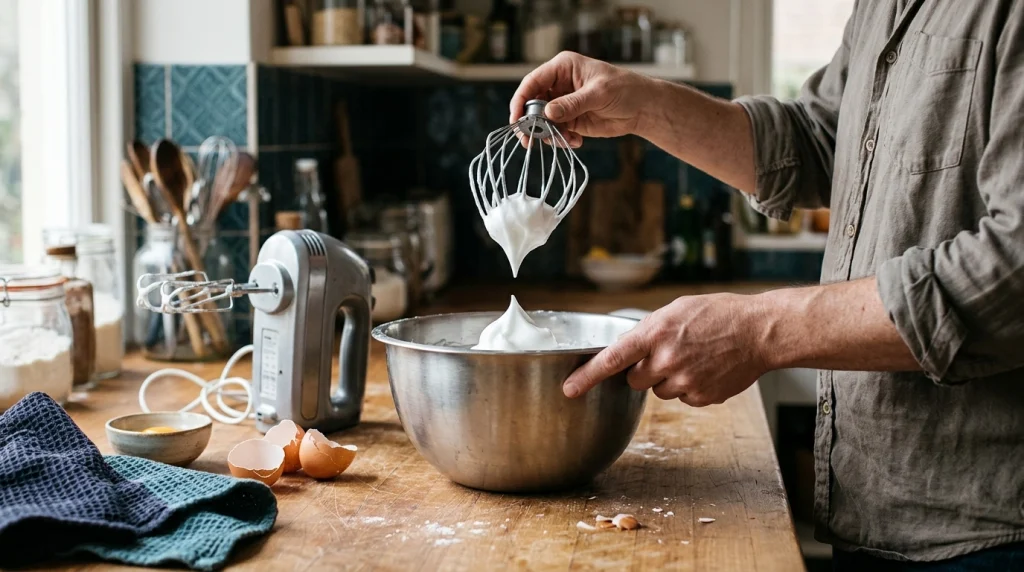
When troubleshooting egg-white whipping, I would test one variable at a time rather than change everything at once. First, I would fit the whisk, prepare a clean and dry bowl, and use whites with no visible yolk.
I would begin at low speed and increase it as the foam formed. Then I would pause briefly to check whether the whites had reached soft, firm, or stiff peaks.
The most useful lesson is that more speed is not always the answer. If the bowl is greasy or the attachment is wrong, whipping for longer may not solve the problem.
I would also check the mixer manual before buying replacement parts. A whisk made for another model may look right but fail to fit securely.
Final Thoughts
The best attachment for egg whites is usually a wire whisk. It helps add air, build foam, and create the peaks your recipe needs.
For the best result, use a clean, dry bowl, keep egg yolk out of the whites, and increase mixer speed gradually. Stop when the whites reach the stage your recipe calls for.
If the whites still refuse to whip, check the attachment and bowl before blaming the mixer. These simple steps can help you get a lighter, more reliable result without buying a new appliance.