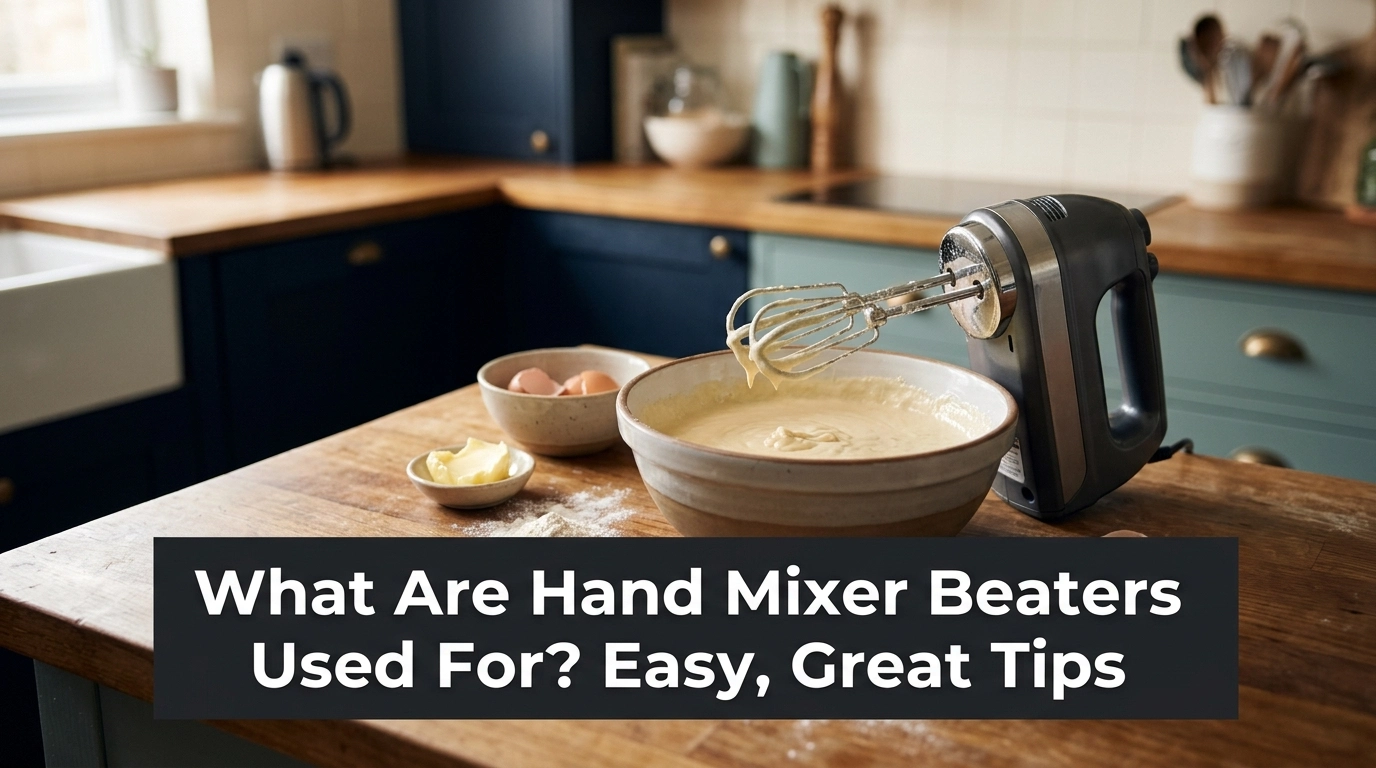
Hand mixer beaters help mix foods with less effort. They are the metal tools that spin when you turn on a hand mixer. They can beat eggs, mix cake batter, whip cream, and blend soft foods.
When I first learned about hand mixer parts, I found it easy to mix up beaters with other attachments. Each tool has a different job. Using the right one can save time and help you get better results.
This guide explains what hand mixer beaters are used for, which foods they work best with, and how to use and care for them safely. It also covers common mistakes and signs that your beaters may need replacing.
Common Signs You Are Using the Wrong Beaters
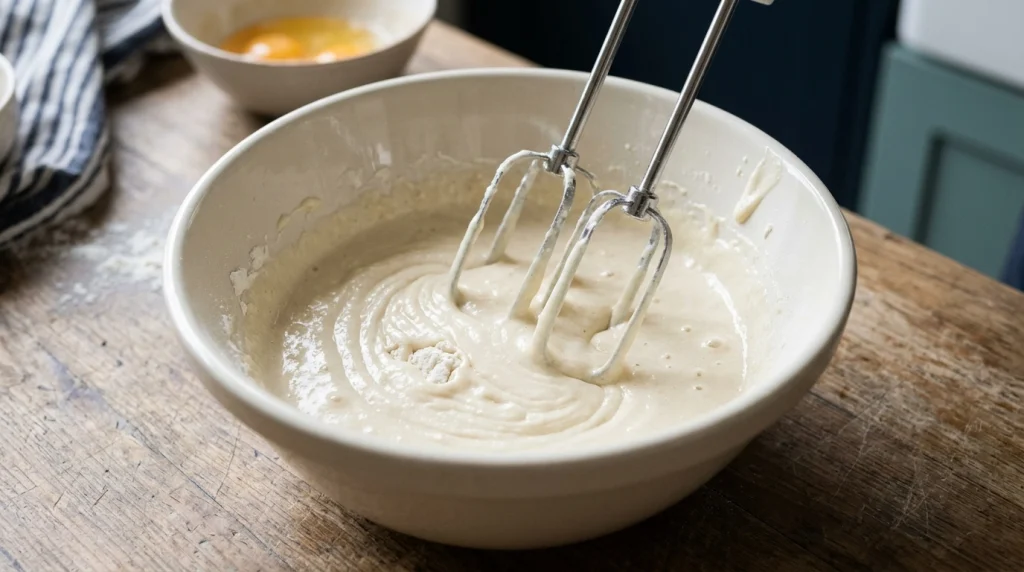
Hand mixer beaters work well for many everyday kitchen tasks. Still, the wrong attachment or speed can make mixing harder.
Here are a few signs to watch for:
- Lumpy batter: You may need to mix a little longer or scrape the bowl.
- Flat whipped cream: The cream may be too warm, or the beaters may not whip it well.
- Uneven egg mixing: You may need to move the beaters around the bowl.
- Splashes on the counter: The speed may be too high for the amount of food.
- A struggling motor: The mixture may be too thick for standard beaters.
These signs do not always mean the beaters are faulty. The food, bowl, speed, and mixer power can all affect the result.
Possible Causes of Poor Mixing
Most mixing problems have a simple cause. Before buying new parts, check how you use the mixer.
- Wrong attachment: Standard beaters are made for mixing and beating, not every heavy dough.
- Wrong speed: High speed can splash thin mixtures. Low speed may take too long for thicker foods.
- Cold or hard ingredients: Cold butter can be hard to beat until soft.
- Overfilled bowl: The beaters need room to move through the food.
- Worn or bent beaters: Damaged metal parts may not turn smoothly or mix evenly.
- Poor cleaning: Dried food can stick to the beaters and affect later use.
If your mixer has several attachments, check the user guide. Not every attachment fits every model.
What Are Hand Mixer Beaters Used For?
Hand mixer beaters are mainly used to mix, beat, and combine soft or liquid foods. Their shape helps move food around the bowl as they spin.
1. Beating Eggs
Beaters are useful for mixing whole eggs, egg whites, and egg yolks. They help combine the whites and yolks for scrambled eggs, omelets, and baking.
Start on low speed to avoid splashes. Increase the speed as needed until the eggs look even.
For egg whites, standard beaters can add air and create foam. However, a whisk attachment may work better if your mixer includes one.
2. Mixing Cake Batter
Standard beaters can mix many cake batters. They combine ingredients such as sugar, eggs, milk, and flour.
I find it helpful to add ingredients in stages rather than all at once. Start slowly, then increase the speed once the dry ingredients are mixed in.
Avoid beating for too long after adding flour. Too much mixing can make some cakes tough.
3. Creaming Butter and Sugar
Beaters can help mix softened butter with sugar. This process is called creaming.
It adds air to the mixture and helps create a light texture in many cakes and cookies. Use butter that is soft enough to press with a finger, but not melted.
Stop now and then to scrape the sides of the bowl with a spatula. This helps the mixture blend evenly.
4. Whipping Cream
Hand mixer beaters can whip cold heavy cream into a soft or firm texture. Use a deep bowl and start at a low speed.
As the cream thickens, increase the speed if needed. Watch it closely near the end because overwhipped cream can turn grainy.
A whisk attachment can also work well for this task, depending on your mixer.
5. Mixing Frosting and Icing
Beaters are useful for combining butter, icing sugar, and other frosting ingredients. They help make many frostings smooth and easy to spread.
Start slowly when adding icing sugar. This helps prevent a cloud of sugar from spreading across the kitchen.
Add small amounts of liquid if your recipe calls for it. Do not add too much at once, as the frosting may become runny.
6. Mixing Pancake and Muffin Batter
Standard beaters can combine wet ingredients for pancakes and muffins. They can also help mix the wet and dry ingredients together.
For these foods, gentle mixing is often best. Stop once the ingredients come together, even if a few small lumps remain.
Overmixing can make pancakes and muffins dense instead of tender.
7. Mashing Soft Foods
Some hand mixers can mash soft foods such as cooked potatoes or ripe bananas. However, standard beaters are not always the best choice for potatoes.
They can make potatoes sticky if you beat them too much. For a better texture, use a potato masher or a suitable mixer attachment when the recipe calls for one.
Common Uses at a Glance
| Food or Task | How Beaters Help | Useful Tip |
|---|---|---|
| Eggs | Mix whites and yolks | Start on low |
| Cake batter | Combine ingredients | Avoid overmixing |
| Butter and sugar | Add air to the mix | Use softened butter |
| Whipped cream | Add air and thicken cream | Keep cream cold |
| Frosting | Blend sugar and butter | Add sugar slowly |
| Pancake batter | Combine wet and dry ingredients | Stop early |
| Soft foods | Mix or mash some foods | Avoid overworking |
How to Use Hand Mixer Beaters Correctly
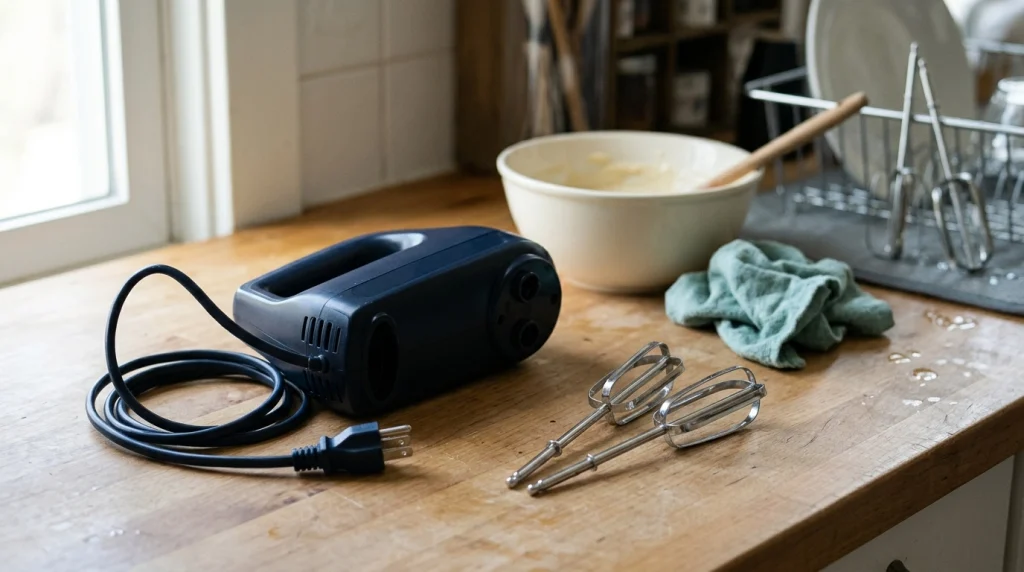
Good results often depend on a few simple steps. These methods can help you mix food more evenly and keep your mixer in good shape.
1. Check the Beaters Before Use
Look for bends, cracks, rust, or loose parts. Make sure the beaters match your mixer model.
If a beater looks damaged, do not use it. A damaged part may wobble or fail while spinning.
2. Fit the Beaters Securely
Unplug the mixer before inserting or removing attachments. Push each beater into its correct slot until it locks in place, if your model uses a locking system.
Check the manual if you are unsure which beater goes where. Some models use different slots or attachment designs.
3. Choose the Right Speed
Start at the lowest speed when mixing liquids or dry ingredients. Raise the speed slowly as the mixture thickens.
This simple habit helps prevent splashes and keeps ingredients in the bowl. It can also reduce strain on the motor.
4. Move Around the Bowl
Keep the beaters inside the food while the mixer runs. Move them slowly around the bowl to reach the sides and bottom.
Do not press the beaters hard against the bowl. Use a spatula to scrape the sides only after turning off and unplugging the mixer.
5. Clean the Beaters After Each Use
Good cleaning helps prevent dried food from sticking to the metal. Unplug the mixer, remove the beaters, and wash them according to the manufacturer’s instructions.
Many metal beaters are dishwasher-safe, but this varies by model. Dry them well before storing them to help prevent rust.
If food has dried on, soak the beaters in warm, soapy water before washing. Never place the mixer body or power cord in water.
Recommended Fixes for Common Problems
| Problem | Recommended Solution | Difficulty |
|---|---|---|
| Food splashes out | Start at a lower speed | Easy |
| Batter stays lumpy | Scrape the bowl and mix briefly | Easy |
| Beaters wobble | Stop and check attachment fit | Easy |
| Food sticks to beaters | Soak and wash after unplugging | Easy |
| Beaters show rust | Stop using damaged parts | Easy |
| Motor struggles | Stop and check the mixture thickness | Easy |
Mistakes to Avoid
Hand mixer beaters are simple to use, but a few mistakes can affect your food or damage your equipment.
Do not use standard beaters for every task. Thick bread dough may need dough hooks and a mixer designed for that load. Check the manual before mixing heavy foods.
Do not touch moving beaters. Keep fingers, spoons, and spatulas away while the mixer runs. Always switch it off and unplug it before changing attachments or clearing stuck food.
Do not run the mixer for too long without a break. Follow the maker’s guidance for use time, especially when mixing thick foods. Stop if the motor smells burnt, becomes unusually hot, or makes a new grinding sound.
Do not pull the beaters out while they are spinning. Turn off the mixer first and wait until the beaters stop completely.
When to Replace Hand Mixer Beaters
You may need new beaters if the old ones are bent, badly rusted, cracked, or no longer fit securely. A damaged attachment can affect mixing and may be unsafe to use.
Check the replacement part against your exact mixer model. Beaters that look similar may have different fitting shapes or lengths.
If the mixer itself makes a burning smell or the motor struggles even with a light mixture, stop using it. A new set of beaters may not solve a motor or electrical fault.
Do not open the motor housing or try to repair internal wiring yourself. Ask a qualified repair service if the fault continues.
My Personal Experience
When comparing the main uses of hand mixer beaters, I found that the task matters as much as the attachment. Eggs and light batters are usually easy to mix, while thick mixtures need more care.
Starting on low speed is a useful habit. It helps keep ingredients in the bowl and gives you more control as the mixture changes.
I also learned that more mixing is not always better. Pancake batter needs only gentle mixing, while butter and sugar often need more time to become light.
The most useful routine is simple: check the beaters, fit them securely, choose the right speed, and wash them after use. These steps help avoid many common problems.
Final Thoughts
Hand mixer beaters are used to beat eggs, mix cake batter, cream butter and sugar, whip cream, and prepare frosting. They can also handle many other light kitchen tasks.
For the best results, choose the right attachment, start slowly, and avoid overmixing. Check the beaters for damage and clean them after every use.
If your beaters wobble, rust, or no longer fit, replace them with parts made for your model. Safe use and basic care can help your hand mixer work well for years.