
Is an egg cooker a steamer? Yes, in most cases, it is a small electric steamer made mainly for cooking eggs.
I learned this after watching my cooker heat a small amount of water. The water turned into steam, rose through the egg tray, and cooked the eggs under the lid.
Still, an egg cooker is not the same as a full-size food steamer. Its small heating plate, egg insert, and limited water space affect what it can cook.
In this guide, I will explain how it works. I will also share safe ways to use it and fix weak steam, leaks, raw eggs, and other common issues.
Is an Egg Cooker a Steamer? Common Signs to Notice
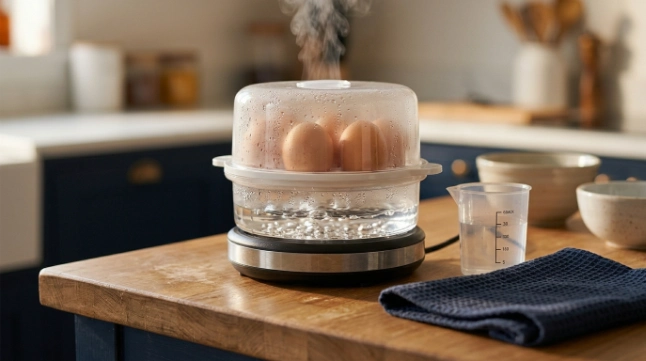
A working egg cooker makes steam within a few minutes. You may see drops of water form inside the clear lid.
The lid may also feel hot. A little steam should leave through the steam vent. This is normal and helps control heat and pressure.
The unit may beep or switch off when the water is gone. Some basic models stop heating without making a sound.
Here are the main signs that the steaming process is working:
- Water on the heating plate starts to bubble.
- Steam forms under the lid.
- The egg tray becomes warm.
- The eggs cook as the water dries up.
- The cooker beeps or shuts off at the end.
| Symptom | Likely Cause | Quick Fix |
|---|---|---|
| Eggs stay raw | Too little water | Use the marked measuring cup |
| Very little steam | Mineral buildup | Descale the heating plate |
| Steam escapes at the side | Lid or tray is not seated | Refit both parts |
| Water leaks below the unit | Crack or internal fault | Unplug and stop using it |
When I lost the original cup, my results became less steady. A replacement measuring cup made it much easier to add the right amount of water.
A damaged egg tray or cracked lid can also affect the steam. I would replace these parts only with pieces made for the same model.
Possible Causes of Egg Cooker Steaming Problems
An egg cooker needs water, heat, and a covered cooking space. If one part of that process fails, the eggs may cook too slowly or not cook at all.
The most common cause is the wrong amount of water. Too little water can leave the eggs soft or raw. Too much can extend the cooking time.
Hard water can also leave a white or brown layer on the heating plate. This layer is called limescale. It can slow the transfer of heat.
Other likely causes include:
- The egg tray is sitting at an angle.
- The lid is not fitted well.
- The steam vent is blocked.
- The heating plate is dirty.
- The wall outlet has no power.
- The power cord is damaged.
- The cooker has overheated.
- The safety switch has not been pressed by the tray.
- The control button is stuck or faulty.
A little water under the lid is normal. Water running from the base is not normal and may point to a crack or an internal leak.
A burning smell is also a warning sign. Unplug the cooker if the smell is strong, new, or seems to come from the power cord or base.
How to Fix Egg Cooker Steaming Problems

Start with simple checks. Do not open the base or try to repair the heating wires yourself.
Check the Water Amount
Use the cup that came with the cooker. Most cups have marks for soft, medium, and hard eggs.
The correct amount can seem odd. On some models, fewer eggs need more water because steam reaches them in a different way. Follow the marks in your manual.
I once added water by eye. Some eggs came out firm, while others were still wet in the center. The marked cup fixed that issue at once.
Inspect the Egg Tray and Lid
Remove the egg tray and place it back in the correct position. It should sit flat and stable above the heating plate.
Then check the lid. It should rest evenly without forcing it down. Keep the steam vent open and facing away from your hands.
Do not cover the vent with a towel. An egg cooker is not meant to hold pressure like a pressure cooker.
Check the Heating Plate
Unplug the cooker and let it cool. Look for dry spots, stains, or a rough white layer on the plate.
For safe cleaning, wipe the cool plate with a soft cloth or non-abrasive sponge. Do not pour water into the electric base or place the base in a sink.
If scale remains, add a small amount of white vinegar and water to the plate. Let it sit for the time stated in the manual, then wipe it away.
| Problem | Recommended Solution | Difficulty |
|---|---|---|
| Light water marks | Wipe with a damp cloth | Easy |
| Thick limescale | Descale with diluted vinegar | Easy |
| Blocked steam vent | Wash the removable lid | Easy |
| No heat from the plate | Test the outlet, then stop use | Moderate |
| Cracked electric base | Replace the cooker | Do not repair |
Test the Power Source
Plug the cooker into a known working wall outlet. Avoid a loose adapter or damaged extension lead.
Check the cord for cuts, melted spots, or bent pins. Do not use the unit if the cord feels hot or looks damaged.
Press the power button once. If the light does not turn on, unplug it and try another safe outlet.
Let Overheat Protection Reset
Some egg cookers stop heating when they become too hot. This may happen if the unit runs with no water.
Unplug it and let it cool for at least 20 to 30 minutes. Add the correct amount of water before testing it again.
Never bypass an overheat switch or safety switch. Those parts help prevent fire and damage.
Check the Buttons and Signals
A flashing light or repeated beep may mean the cycle has ended. On some models, it may show that the tray or lid is not in place.
Turn the unit off and unplug it. Refit the removable parts, add water, and start a fresh cycle.
If the control panel keeps flashing, check the model’s manual. Error signals are not the same on every brand.
Use It for Other Foods Only When Allowed
Some egg cookers include a small bowl for poached eggs or omelets. A few can steam vegetables, dumplings, or other small foods.
Do not place food straight on the heating plate. Use the approved bowl or steaming tray and stay within the maker’s limits.
Meat, frozen food, and thick vegetables may not cook evenly in a basic egg cooker. A normal food steamer is safer for larger portions.
Mistakes to Avoid
The biggest mistake is treating an egg cooker like a sealed pressure cooker. It creates steam, but it is not designed to build high pressure.
Never block the steam vent. Hot steam can cause a burn, even when the amount of water looks small.
Avoid these common errors:
- Adding water without measuring it.
- Lifting the lid toward your face.
- Touching the hot heating plate.
- Placing the base under running water.
- Using steel wool on the plate.
- Running the cooker while empty.
- Using a cracked lid or tray.
- Opening the sealed heating unit.
- Bypassing the auto shut-off feature.
- Cooking foods not approved in the manual.
I now lift the lid from the side farthest from me. That sends the first burst of steam away from my face and fingers.
Let the cooker cool before moving or wiping it. Steam, hot water, and the metal plate can remain hot after the beep.
When to Replace the Egg Cooker
Small issues such as a lost cup or damaged removable lid are often easy to solve. Electrical or base damage is different.
Replacement is usually safer if water enters the base, the cord melts, or the cooker keeps overheating.
| Repair Issue | Likely Cost | Replace Instead? |
|---|---|---|
| Lost measuring cup | Low | No |
| Cracked removable lid | Low to moderate | Only if no part fits |
| Damaged egg tray | Low to moderate | Only if unavailable |
| Failed heating element | Moderate to high | Usually yes |
| Burnt cord or leaking base | High safety risk | Yes |
I would also replace a unit that no longer shuts off. The auto shut-off is a key safety feature, not just a handy extra.
Stop using the cooker if it sparks, trips the power, gives off smoke, or has a lasting burning smell. Do not test it again.
My Personal Experience
During my first few tests, I thought the hot plate cooked the eggs through direct heat. I then noticed that the eggs never touched the plate.
The plate heated the water instead. Steam rose through the holes in the tray and stayed around the eggs under the lid.
My first poor result came from using too little water. The cooker stopped early, and the egg white near the center was still soft.
I also had slow cooking after white scale formed on the plate. A gentle descale helped the plate heat water faster and more evenly.
The best results came from four simple steps. I used the marked cup, seated the tray flat, kept the vent clear, and waited for the full cycle.
I tested a small amount of vegetables in the approved bowl as well. They steamed, but the space was tight and the results were less even than in a full food steamer.
That taught me the main difference. An egg cooker uses steaming as its cooking method, but its size and shape are made for eggs.
Final Thoughts
So, is an egg cooker a steamer? Yes. It heats water and uses the steam to cook eggs inside a covered chamber.
However, it is a small egg-focused steamer. It should not replace a large food steamer unless the manual says it can cook other foods.
For the best result, measure the water, fit the tray and lid well, keep the vent open, and descale the heating plate when needed.
If you see a base leak, damaged cord, smoke, or a failed shut-off system, stop using the cooker. Replacing it is safer than opening or repairing the sealed base yourself.