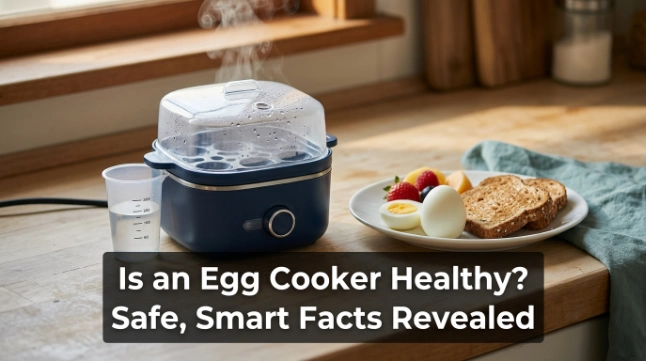
Is an egg cooker healthy? In most cases, yes. It cooks eggs with water and steam. You do not need oil, butter, or cooking spray.
I had the same concern when I first used one. The hot plate looked stained after a few uses. I also saw water near the base once. That made me question its safety.
I checked the tray, water level, lid, and heating plate. I found that most health concerns came from poor use or poor care—not the cooking method itself.
This guide explains what to check. It also shows how to cook eggs in a safe and healthy way.
Common Signs of a Health or Safety Problem
A working egg cooker should heat water, make steam, and turn off when the water is gone. It may beep when the eggs are ready.
Some signs may point to a problem:
- A strong plastic or burning smell
- Water leaking near the power cord
- A cracked egg tray or lid
- Dark marks on the heating plate
- Steam coming from the wrong area
- Eggs that stay raw or turn rubbery
- The unit failing to shut off
- Flashing lights or odd beeping sounds
A light smell can occur during the first use. It should fade fast. A strong smell that returns is not normal.
| Sign | Likely cause | Quick action |
|---|---|---|
| Burning smell | Food or scale on the plate | Unplug and inspect |
| Water near the base | Too much water or a leak | Dry and test carefully |
| Raw egg center | Too little water | Use the marked cup |
| Cracked tray | Heat or impact damage | Replace the tray |
| Unit stays on | Shut-off fault | Stop using it |
I also check any part that touches the eggs. A cracked tray is hard to wash well. A replacement egg tray or lid can be useful if the maker sells the correct part.
I keep the original water measuring cup too. It gives more repeatable results than a random kitchen cup.
Possible Causes of Egg Cooker Health Concerns
The egg cooker itself is not often the main concern. The way it is used matters far more.
Too Much or Too Little Water
Egg cookers use a set amount of water. The amount may change based on the number of eggs and the desired firmness.
Too little water may leave the eggs undercooked. Too much water may cause long cooking, leaks, or excess steam.
Dirty Food-Contact Parts
Bits of egg can stay on the tray or poaching bowl. Warm and wet parts can smell bad if they are stored before they dry.
This does not mean the cooker is unhealthy. It means the removable parts need better care.
Mineral Buildup on the Heating Plate
Tap water can leave white, brown, or chalky marks. This is called mineral scale.
The scale is often harmless. Yet a thick layer can affect heat and create an odd smell.
Cracked or Warped Plastic
A tray or lid may crack after a fall. It may also warp if placed near a hot stove or washed in a very hot cycle.
Damaged parts may leak steam. Small cracks can also trap bits of food.
Faulty Electrical Parts
A worn cord, loose plug, or broken safety switch can create a real risk. A cooker that will not shut off may also overheat.
Never open a sealed heating base. It can hold live electrical parts.
Is an Egg Cooker Healthy for Daily Use?

Yes, an egg cooker can be a healthy way to make eggs. It uses steam instead of frying fat.
One large egg has protein, fat, vitamins, and minerals. The cooker does not add salt or oil unless you add them later.
The final meal still matters. Eggs with fruit and whole-grain toast are different from eggs served with a large amount of processed meat.
The table below shows how common methods compare.
| Cooking method | Added fat needed? | Main concern |
|---|---|---|
| Egg cooker | No | Correct water and safe heat |
| Boiling in a pot | No | Cracked eggs or hot water |
| Frying | Often | Added oil or butter |
| Poaching | No | Full cooking and safe handling |
Steam does not make eggs unhealthy. In fact, it can make portion control easy. The main goal is to cook the egg to a safe level and keep the unit in good shape.
How to Address “Is an Egg Cooker Healthy?” Concerns
Read the Manual First
I start with the maker’s guide. Each unit uses a different cup, tray, and cooking time.
Do not assume that all measuring cups have the same marks. The “hard” line on one cup may not suit another model.
Inspect the Power Cord and Base
Unplug the unit before you look at it. Check the cord for cuts, crushed spots, or exposed wire.
Place the cooker on a dry and level counter. Keep it away from the sink and the edge.
Do not use it if water has entered the electrical base. Let the outside dry, then contact the maker if you suspect an internal leak.
Check the Egg Tray and Lid
Make sure the egg tray sits flat. The lid should rest in its normal position without force.
Keep the steam vent open. Do not cover it with a cloth, plate, or hand. Hot steam must be able to escape.
Replace a tray or lid if it has a large crack or has lost its shape. Use parts made for your exact model.
Measure the Water Correctly
Use the supplied water cup when possible. Match the water line to the egg count and desired result.
I once added extra water because I thought it would make the eggs softer. It did the reverse. The longer steam time made them firm and dry.
If your cup is lost, check the manual before buying a replacement measuring cup. Do not guess if the unit depends on exact marks.
Cook Eggs to a Safe Level
People who face a higher risk from foodborne illness should avoid raw or lightly cooked eggs. This can include young children, older adults, pregnant people, and those with weak immune systems.
Cook until both the white and yolk are firm when extra care is needed. You can also use pasteurized eggs for recipes that need a soft yolk.
Place cooked eggs in the fridge within two hours. Do not leave them in the warm cooker all day.
Clean the Cooker After Use
Good cleaning made the biggest difference in my tests. I unplugged the unit, let it cool, and washed each removable part.
Use warm water, mild dish soap, and a non-abrasive sponge. A soft cloth works well on the main body.
Never place the powered base in water. Wipe it with a damp cloth, then dry it fully.
Remove Mineral Scale
For light scale, wipe the cool plate with diluted white vinegar. Let it sit only as long as the manual allows.
Then wipe the plate with clean water. Do not pour liquid into switches, vents, or seams.
Use a maker-approved descaling solution if vinegar is not allowed. Avoid steel wool because it can scratch the heating plate.
Test the Auto Shut-Off
Stay near the cooker during a test cycle. The unit should stop heating or signal when the water is gone.
Unplug it if it keeps heating, smells burnt, or makes unusual sounds. Do not reset it again and again.
An auto shut-off fault is not a safe home repair. The safest choice is maker service or replacement.
| Problem | Recommended solution | Difficulty |
|---|---|---|
| Light mineral scale | Descale the plate | Easy |
| Lost water cup | Get the correct marked cup | Easy |
| Cracked tray or lid | Replace the damaged part | Easy |
| Frayed power cord | Stop using the cooker | Do not repair |
| Failed auto shut-off | Replace or seek service | Do not repair |
Mistakes to Avoid
Do not pierce an egg while holding it in your hand. Many cups have a sharp pin on the base. Place the egg on a stable surface and use light pressure.
Do not touch the steam vent during use. Lift the lid away from your face so the steam moves in the other direction.
Avoid these common errors:
- Adding water without using the correct marks
- Running the cooker with no water
- Blocking the steam vent
- Using a cracked egg tray
- Washing the electric base in a sink
- Scraping the plate with a knife
- Leaving cooked eggs at room heat for hours
- Bypassing a safety switch
- Opening the sealed heating unit
Do not try to repair wires inside the cooker. A small unit is not worth the risk of shock, fire, or burns.
When to Replace the Egg Cooker
Replace the cooker if the cord is damaged or the base leaks. The same applies if it gives off smoke or a strong electrical smell.
A failed shut-off system is another clear reason to stop. Unplug the unit and do not test it while unattended.
Minor parts may be worth replacing. A new tray, lid, or measuring cup can restore safe use if the powered base still works well.
| Repair issue | Likely cost level | Replace instead? |
|---|---|---|
| Lost measuring cup | Low | Usually no |
| Cracked removable tray | Low | Usually no |
| Damaged lid | Low to medium | Compare part cost |
| Cord damage | Medium | Usually yes |
| Heating or shut-off fault | Medium to high | Yes |
If several parts are worn, a new cooker may make more sense. Choose one with clear water marks, a stable tray, a steam vent, and auto shut-off.
My Personal Experience
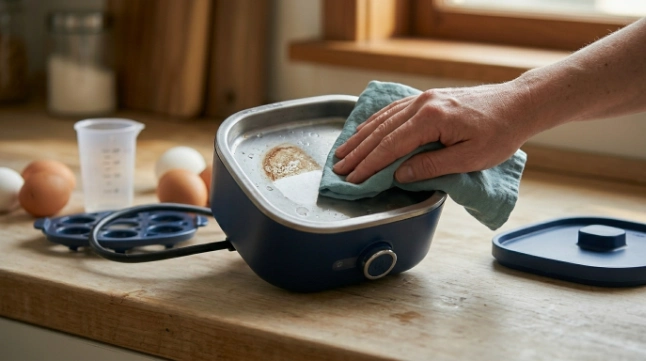
My first concern was the brown mark on the heating plate. I thought the cooker was burning the eggs.
After the plate cooled, I wiped it with diluted white vinegar. Most of the mark came off. It was mineral scale from tap water, not burnt plastic.
My second mistake was using a normal cup. The eggs came out too hard, and water collected under the lid.
The original marked cup fixed that issue. I also began lifting the lid away from my face and drying every part before storage.
The cooker worked best when I kept the steps simple. I used the right water amount, kept the vent clear, and stayed close during each cycle.
Final Thoughts
So, is an egg cooker healthy? Yes, it can be a healthy and simple cooking tool. It makes eggs with steam and does not require added fat.
Safe use is the key. Measure the water, cook eggs well, wash food-contact parts, and keep the electrical base dry.
Stop using the cooker if it leaks, smokes, smells burnt, or fails to shut off. Never open the heating unit or bypass its safety parts.