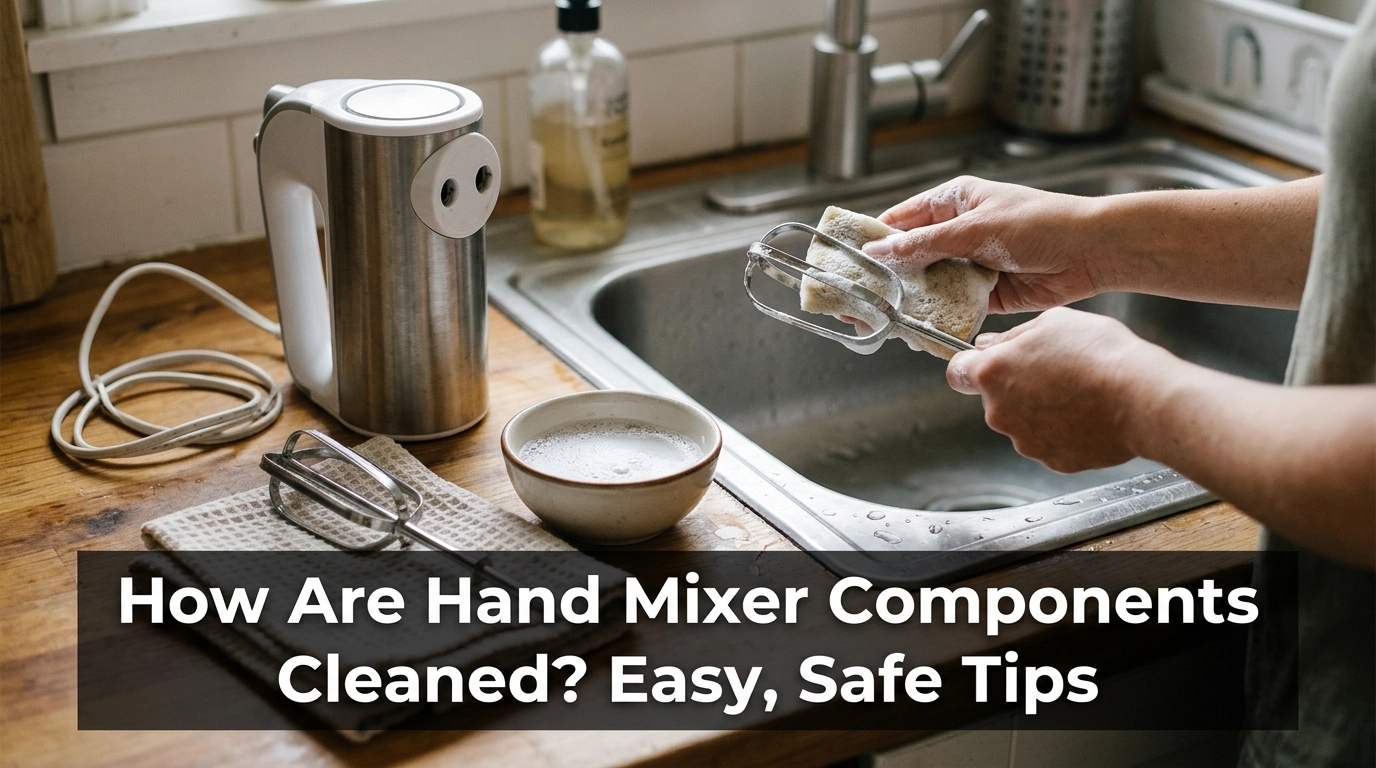
Cleaning a hand mixer is simple once you know which parts can get wet and which must stay dry. I find that the key is to clean the beaters soon after use and wipe the mixer body with care.
Food can stick around the beaters, cling to the eject button, or collect near the vents. If you leave it there, the mess can become harder to remove.
In this guide, I explain how are hand mixer components cleaned, which parts you can wash, and how to care for your mixer without harming its motor or electrical parts.
Common Signs of a Hand Mixer That Needs Cleaning
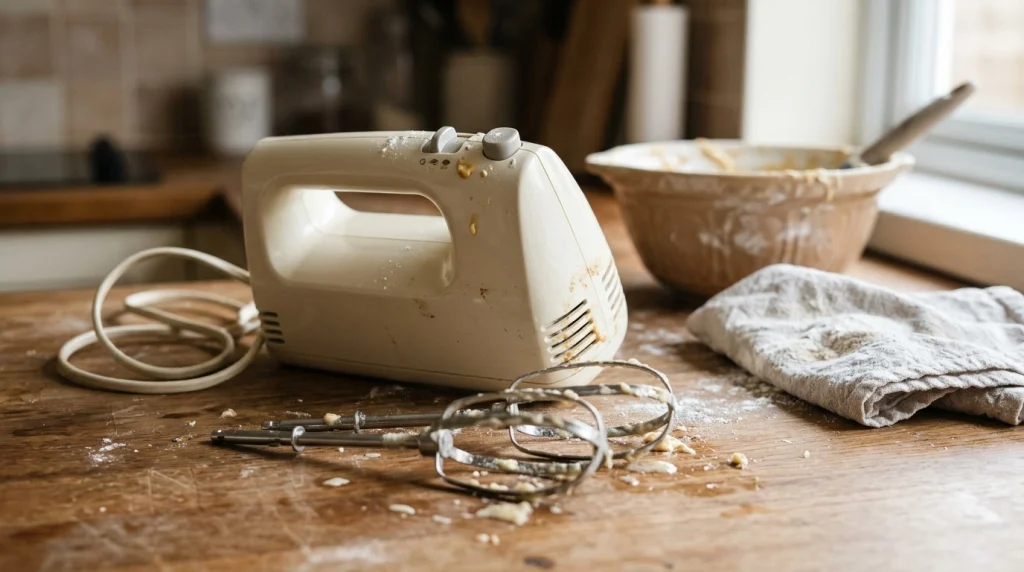
A dirty hand mixer may show a few clear signs. Checking for these after each use helps keep the appliance in good shape.
- Stuck-on food: Egg, cream, dough, or batter dries on the beaters.
- Sticky buttons: Food or grease collects around the speed controls.
- Bad smells: Old food remains on the beaters or mixer body.
- Visible stains: Batter splashes dry on the plastic or metal case.
- Blocked vents: Dust or food bits collect near the air openings.
These signs do not always mean the mixer is damaged. In most cases, a careful clean is enough to remove the mess.
Possible Causes of Dirt and Food Buildup
Hand mixers get dirty during normal use. Some tasks leave more residue than others, so the right cleaning method depends on the type of mess.
- Dried batter: Waiting too long lets food harden on the beaters.
- Thick dough: Sticky mixtures can cling to metal loops and beaters.
- Cream and eggs: These foods may leave a thin film if not washed well.
- Food near buttons: Splashes can settle around switches and seams.
- Poor storage: Damp beaters or a wet mixer body may collect dirt and odors.
The most useful habit is to clean each part soon after mixing. You will need less scrubbing, and you are less likely to damage the finish.
How Are Hand Mixer Components Cleaned?
The safest way to clean a hand mixer is to unplug it first, remove the beaters, and clean each part based on its material. Never place the motor body in water.
1. Unplug the Mixer and Remove the Beaters
First, switch off the mixer and unplug it from the wall. Make sure the beaters have stopped moving before you handle them.
Press the eject button to remove the beaters. If your model uses a different release method, check its manual rather than forcing the parts out.
Set the unplugged mixer on a dry surface. Keep the plug and cord away from the sink while you wash the removable parts.
2. Wash the Beaters in Warm, Soapy Water
Most removable metal beaters can be washed in warm water with a little dish soap. Check your manual first, as some parts have special coatings or cleaning rules.
Let the beaters soak briefly if batter has dried on them. Use a soft sponge or a small brush to reach between the wires.
Rinse away all soap and food bits. Dry the beaters fully with a clean towel or let them air-dry before storing them.
Some beaters are dishwasher-safe, but not all are. Only use a dishwasher if the maker says the parts are safe for it.
3. Wipe the Mixer Body With a Damp Cloth
The motor body needs a different approach. Never immerse it in water or hold it under a running tap.
Dampen a soft cloth with water and add a small drop of mild dish soap if needed. Wring the cloth well so it is not dripping.
Wipe the outside, handle, and smooth surfaces. Then use another cloth dampened with clean water to remove soap residue.
Dry the body with a soft towel. Keep water away from the vents, sockets, and openings where the beaters fit.
4. Clean Around the Buttons and Eject Slot
Food can build up around the speed buttons and beater release. This is easy to miss when you only wipe the large surfaces.
Unplug the mixer before cleaning these areas. Use a barely damp cloth to wipe around the controls without pressing water into the gaps.
For tight spaces, use a dry, soft brush to loosen crumbs. Do not pour water into the seams or use sharp metal tools to scrape away food.
If a button remains sticky after surface cleaning, check the manual or contact the maker. Do not open the motor housing to reach hidden parts.
5. Clean the Power Cord Carefully
Look over the cord for food splashes, grease, or other dirt. Wipe it with a soft, slightly damp cloth while the mixer remains unplugged.
Do not pull the cord sharply or scrub it with rough materials. Keep moisture away from the plug and the point where the cord enters the mixer.
Let the cord dry fully before plugging the appliance in again. If you see cracks, exposed wires, or burn marks, stop using the mixer and seek qualified service.
6. Dry and Store Every Part Properly
Before putting the mixer away, check that the beaters and body are fully dry. Trapped moisture can lead to odors and may affect metal parts over time.
Store the beaters in a clean, dry drawer or in the holder supplied with your mixer. Keep the power cord loosely coiled rather than wrapping it tightly around the body.
Good cleaning habits help prevent stuck-on food and reduce the need for hard scrubbing. A quick wipe after each use is often all the mixer needs.
Quick Cleaning Guide
| Component | Recommended Method | Key Caution |
|---|---|---|
| Removable beaters | Warm, soapy water | Check dishwasher guidance |
| Mixer body | Soft, damp cloth | Never immerse in water |
| Buttons and seams | Barely damp cloth or dry brush | Keep water out of gaps |
| Power cord | Slightly damp cloth | Keep plug dry |
| Beater sockets | Dry, soft brush | Do not pour water inside |
Cleaning Problems and Simple Fixes
| Problem | Recommended Solution | Difficulty |
|---|---|---|
| Dried batter | Brief soak and soft brush | Easy |
| Sticky buttons | Wipe with a barely damp cloth | Easy |
| Greasy outer case | Mild soapy cloth, then wipe clean | Easy |
| Food in narrow gaps | Dry, soft brush | Easy |
| Damaged cord or plug | Stop use and seek service | Professional |
Mistakes to Avoid
A few common mistakes can harm a hand mixer or make cleaning less effective. Avoid these shortcuts, even when the appliance looks sturdy.
- Do not immerse the motor body. Water can damage electrical parts and create a shock risk.
- Do not clean it while plugged in. Unplugging reduces the risk of accidental starting and electric shock.
- Do not use steel wool or harsh cleaners. They may scratch plastic or damage protective finishes.
- Do not spray cleaner into the vents. Liquid may reach the motor or internal wiring.
- Do not force out stuck beaters. Check the release method in the manual.
- Do not store damp parts. Allow all removable parts to dry fully before storage.
Never open a sealed motor housing or attempt electrical repairs unless you are qualified to do so. If the mixer smells burnt, sparks, or makes unusual noises, stop using it.
When to Replace the Hand Mixer
A hand mixer does not need replacing just because food has dried on its beaters. Most everyday mess can be removed with warm water, mild soap, and a soft cloth.
Replacement may be worth considering if the motor repeatedly overheats, the housing cracks, or the controls stop working. A damaged power cord or signs of electrical failure also need attention.
Some models have replacement beaters available from the manufacturer. If a beater is bent, rusty, or badly worn, check whether a suitable replacement is available before buying a new mixer.
Do not keep using a mixer with damaged electrical parts. Cleaning cannot fix a faulty motor, broken insulation, or a loose internal connection.
My Personal Experience
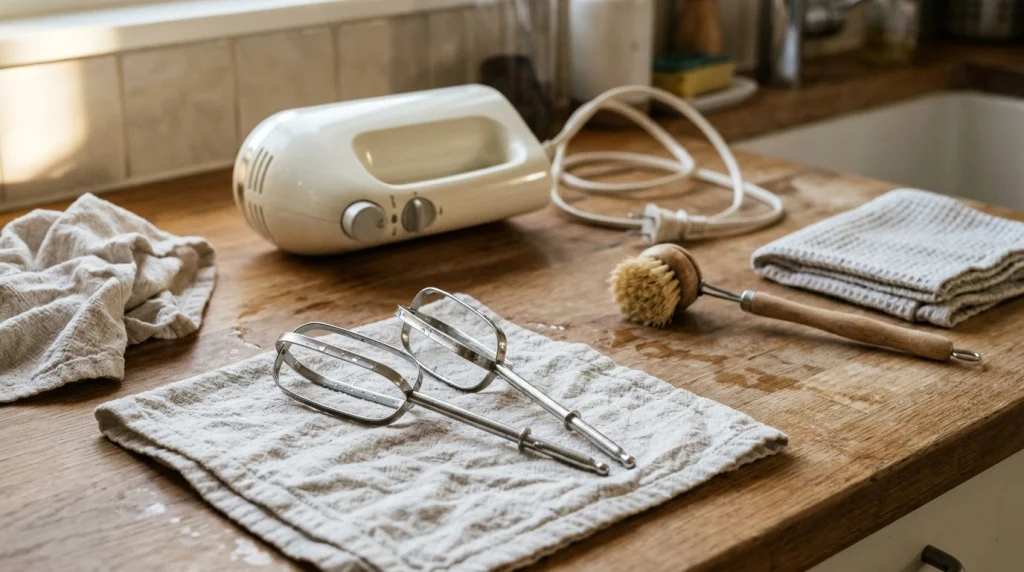
When cleaning a hand mixer, I would start with the beaters because they collect the most food. Removing them first also makes it easier to wipe the body without spreading batter across the handle.
For dried residue, a short soak in warm, soapy water is usually a better first step than hard scrubbing. A soft brush can help loosen food caught between the wires.
I would then wipe the body with a well-wrung cloth and use a dry brush around narrow gaps. I would never run the body under a tap, even if the outside looked waterproof.
The main lesson is to avoid rushing the drying step. Clean beaters are not ready for storage until they are dry, and the motor body should remain free of excess moisture.
Final Thoughts
So, how are hand mixer components cleaned safely? Unplug the mixer, remove and wash the beaters if the manual allows it, and wipe the motor body with a soft, damp cloth.
Use a dry brush for small gaps, keep water away from electrical openings, and let every part dry before storing it. These simple steps help remove food residue without putting the appliance at risk.
With a little care after each use, your hand mixer should stay cleaner and be easier to maintain over time.