Quick Answer
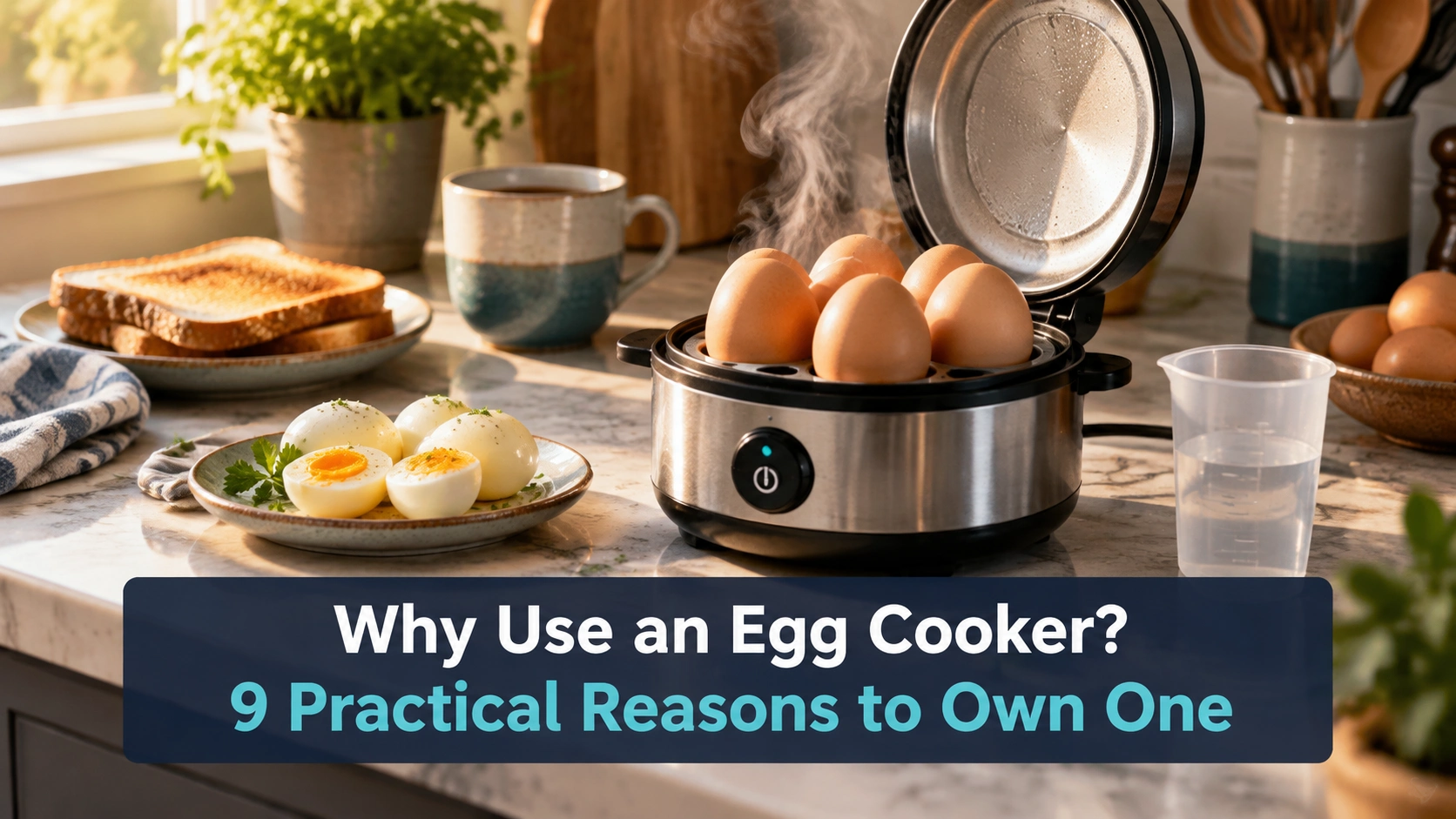
You use an egg cooker because it makes boiled, poached, and sometimes omelet-style eggs easier and more repeatable than cooking them in a saucepan. It uses measured water and steam, and many models stop heating or sound an alert when the water has evaporated. For a closer look at how the appliance works, see what an egg cooker does.
Why people use egg cookers
- Less guesswork: Measured water helps produce a repeatable level of doneness.
- Hands-off cooking: You don’t need to watch a boiling pot throughout the cycle.
- Consistent results: The same water level and method make repeat batches easier.
- Small footprint: Most countertop models take less space than larger cooking appliances.
- Multiple uses: Some models include trays for poached eggs, omelets, or egg bites.
- Easy cleanup: Removable trays and lids are often simpler to wash than a large saucepan.
Quick buying check
- Choose a capacity that matches how many eggs you normally cook, and look for clear water markings, automatic shut-off or an end-of-cycle alert, removable parts, and appropriate electrical certification.
If you’ve ever stood over a saucepan waiting for eggs to reach the right texture, you already understand the appeal of an egg cooker. I like these appliances most when breakfast needs to be predictable rather than fancy.
I’ve also learned that an egg cooker isn’t automatically better than a saucepan for everyone. The real benefit comes from repeatability, convenience, and how often you eat eggs, so this guide looks at where the little appliance earns its counter space.
In This Guide
- What is an egg cooker and how does it work?
- Why use an egg cooker instead of a pot?
- Who benefits most from using an egg cooker?
- Is an egg cooker better than boiling eggs in a pot?
- Which egg cooker features actually matter?
- What mistakes should you avoid with an egg cooker?
- Is an egg cooker worth buying in 2026?
- Egg cooker FAQ
What Is an Egg Cooker and How Does It Work?
An egg cooker is a compact appliance that cooks eggs using heated water and steam. Instead of submerging eggs in a saucepan, you place them on a rack above a heating plate and add a measured amount of water.
As the water heats, steam surrounds the eggs and cooks them. On many basic models, the amount of water controls the cooking cycle, while a thermal sensor detects when the water has evaporated and stops heating.
A simple definition
An egg cooker is a countertop appliance that uses measured water, heat, and steam to cook eggs to a chosen level of doneness. Typical designs include a heating plate, egg rack, lid, measuring cup, and power control.
Some models add poaching trays, omelet trays, egg-bite accessories, or larger cooking racks. The exact functions vary by model, so the instruction manual matters more than a generic timing chart.
For example, NESCO’s EC-10 uses a 400-watt heating base and can hold up to eight eggs, while its manufacturer lists an automatic shut-off alarm and dishwasher-safe non-electrical components.
Why measured water matters
Water measurement is one of the biggest differences between an egg cooker and a saucepan. Instead of watching a clock, many models use a specified water quantity to create the intended cooking cycle.
That doesn’t mean every egg cooker cooks every egg identically. Egg size, starting temperature, altitude, and the manufacturer’s design can affect the result, so use the supplied measuring cup and model-specific guide.
I’ve found this is where beginners often make their first mistake. They treat the measuring cup as optional, then wonder why the second batch is noticeably different from the first.
Section Takeaway: An egg cooker works by turning measured water into steam. Its main advantage is controlled, repeatable cooking rather than a fundamentally different way of preparing eggs.
Why Use an Egg Cooker Instead of a Pot?
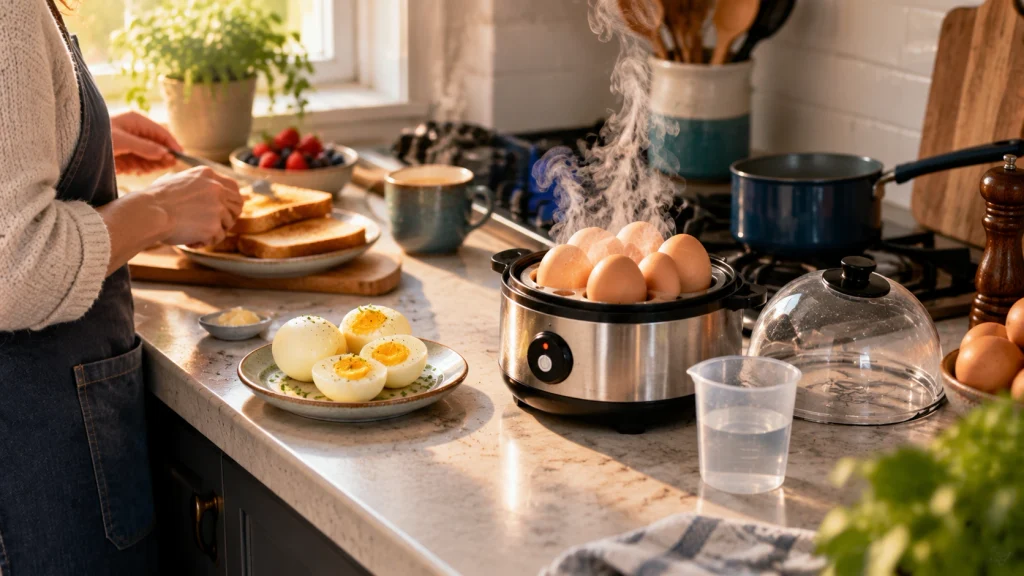
The main reason to use an egg cooker is convenience. You measure the water, load the eggs, close the lid, and let the appliance handle the heating cycle.
That simple routine removes several small decisions from breakfast. You don’t have to judge when a saucepan has reached a full boil or keep checking a timer while preparing the rest of your meal.
1. It reduces cooking guesswork
Consistent water measurements make repeat batches easier. Once you find the setting that produces your preferred soft, medium, or hard egg, you can repeat that setup.
This is especially useful if you make eggs several times each week. The appliance turns a variable stovetop routine into a more standardized one.
2. It lets you step away from the cooking cycle
Many electric egg cookers include automatic shut-off or an audible signal when the cycle finishes. Manufacturer instructions commonly describe the shut-off as occurring after the measured water has evaporated.
That doesn’t mean you should ignore the appliance completely. You still need to follow the manufacturer’s instructions and handle the hot lid and steam carefully.
3. It can simplify breakfast meal prep
A larger egg cooker can prepare several eggs in one batch. NESCO, for example, specifies a capacity of up to eight eggs for its EC-10 model.
That can be useful for packed lunches, egg salad, deviled eggs, breakfast sandwiches, or quick snacks throughout the week.
- Breakfast: Cook eggs while preparing toast, fruit, or coffee.
- Meal prep: Prepare several eggs in one cycle for later meals.
- Snacks: Keep cooked eggs ready for a quick protein-rich option.
- Recipes: Prepare eggs for salads, sandwiches, deviled eggs, and similar dishes.
4. It can offer more than boiled eggs
Some egg cookers include separate accessories for poaching or making omelets. That makes the appliance more useful than a basic egg boiler, although you should check exactly what comes with your chosen model.
The versatility varies widely. A simple six-egg cooker may be excellent at boiling eggs but offer little reason to buy it for other recipes.
Section Takeaway: The strongest reasons to use an egg cooker are repeatability, reduced attention, batch cooking, and convenient accessories.
Who Benefits Most From Using an Egg Cooker?
An egg cooker makes the most sense for people who eat eggs regularly. If you cook eggs once every few months, a saucepan is probably enough.
If eggs appear on your breakfast plate several times a week, the convenience starts becoming more meaningful.
Busy weekday cooks
A cooker can simplify the part of breakfast that normally requires active attention. You can start the eggs, then prepare the rest of the meal.
This is particularly handy when several breakfast tasks compete for your attention. The appliance doesn’t make breakfast instant, but it makes the egg portion more predictable.
Beginners who struggle with doneness
Getting soft, medium, and hard-boiled eggs right can take practice. An egg cooker provides a repeatable starting point using the manufacturer’s water markings.
Once you find your preferred result, you can adjust slightly if needed. That is easier than rebuilding the entire cooking process each time.
People cooking for several family members
Capacity matters when multiple people want eggs. A small four- or six-egg cooker may work for one or two people, while larger models make more sense for bigger households.
Don’t automatically choose the biggest model, though. A larger appliance takes more storage and counter space, which can defeat the convenience advantage in a small kitchen.
Meal preppers
Egg cookers can be useful when you want several eggs prepared in a single session. This is one of the strongest practical reasons to own one.
Still, cooked eggs should be cooled and refrigerated promptly using safe food-handling practices. The cooker itself doesn’t make eggs shelf-stable.
People with limited stovetop space
A countertop egg cooker can free a burner for another task. That’s useful when you’re cooking a larger breakfast and need the stove for something else.
The tradeoff is storage. If the cooker spends most of its life inside a cabinet, its convenience may not justify the extra appliance.
Section Takeaway: Frequent egg eaters, busy cooks, meal preppers, and people who value consistent doneness usually get the most from an egg cooker.
Is an Egg Cooker Better Than Boiling Eggs in a Pot?
Neither method is universally better. A saucepan wins on versatility, while an egg cooker wins when you want a repeatable, dedicated egg routine.
| Factor | Egg Cooker | Saucepan |
|---|---|---|
| Primary method | Steam | Boiling water |
| Water control | Usually measured | User controlled |
| Attention required | Usually low after setup | More active monitoring |
| Capacity | Model-dependent | Pot-dependent |
| Poaching | Available on some models | Possible with suitable technique |
| Other cooking jobs | Limited | Highly versatile |
| Best reason to choose it | Repeatable egg cooking | One pan does many jobs |
When the saucepan still makes more sense
If you already cook pasta, vegetables, grains, soups, and eggs in the same saucepan, buying another appliance may add clutter without solving a real problem.
A saucepan also gives you more control over the cooking process. You can change the water volume, cooking method, temperature, and timing without being limited by a manufacturer’s program.
When the egg cooker wins
The dedicated appliance makes more sense when eggs are a regular part of your routine and you value simplicity. It’s especially attractive when several people want eggs at the same time.
Independent product testing also tends to emphasize convenience features such as intuitive water measurement, audible alerts, cleaning, and capacity when comparing egg cookers.
Section Takeaway: Choose an egg cooker for convenience and repeatability. Choose a saucepan if versatility matters more than dedicated egg cooking.
Which Egg Cooker Features Actually Matter?
The best features are the ones that remove frustration from your normal routine. Fancy controls aren’t useful if the cooker is difficult to clean or confusing to measure.
Capacity
Start with the number of eggs you normally cook. Common household models can hold several eggs, while larger designs are intended for bigger batches.
Don’t buy based on maximum capacity alone. A compact model may be easier to store and more practical for a one- or two-person household.
Clear water markings
A good measuring cup is one of the most useful accessories. Look for clearly marked levels that correspond to soft, medium, and hard eggs.
Some cups also include an egg-piercing pin. Manufacturer instructions for several models recommend piercing the larger end when needed to reduce shell cracking.
Automatic shut-off or end-of-cycle alert
This is one of my favorite practical features. It means the appliance can stop heating or alert you when the intended water cycle is complete.
Just remember that an automatic shut-off isn’t permission to ignore basic appliance safety. Steam and the lid can remain hot after the cycle ends.
Easy-to-clean removable parts
Look for a removable egg tray and lid that can be washed easily. Some manufacturers specify dishwasher-safe non-electrical components, but this varies by model.
The heating base itself should never be treated like a washable pot. Follow the manufacturer’s cleaning instructions and keep electrical components away from water.
Materials and construction
Stainless-steel heating plates are common because they tolerate repeated heating, but the surrounding housing and accessories can use different materials.
Pay attention to lid stability, tray fit, measuring-cup quality, cord storage, and the overall footprint. These details affect everyday use more than decorative finishes.
Electrical safety information
For an electric appliance, look for clear manufacturer information about voltage, electrical ratings, and applicable safety certification. UL Solutions describes IEC 60335-1 as a core safety standard for household and similar electrical appliances.
In Bangladesh, buyers should also pay attention to applicable local electrical-product requirements and labeling rather than assuming a foreign certification automatically covers every local requirement. UL Solutions has reported recent updates to Bangladesh’s mandatory electrical-product standards.
Section Takeaway: Prioritize capacity, clear water measurement, automatic shut-off, easy cleaning, solid construction, and appropriate electrical safety information over flashy extras.
What Mistakes Should You Avoid With an Egg Cooker?
Most egg-cooker problems aren’t complicated. They usually come from incorrect water measurement, poor placement, mineral buildup, or ignoring the instructions for a particular model.
Using the wrong amount of water
This is the biggest mistake to avoid. Don’t estimate the water with a random measuring spoon or fill the reservoir by eye.
Use the supplied cup and the markings intended for your egg quantity and desired doneness. Some models are specifically designed around this method.
Ignoring egg size
Cooking guides often assume a particular egg size. Elite Gourmet, for example, notes that its timing guidance is based on medium-to-large eggs and that jumbo or extra-large eggs can require different results.
If your eggs are consistently softer or firmer than expected, egg size may be part of the explanation.
Opening the lid carelessly
Steam can cause a nasty burn, especially when you lift the lid directly toward your face or hand. Tilt the lid so hot steam moves away from you.
Manufacturer instructions commonly warn users to handle the lid carefully because steam remains hot at the end of cooking.
Letting mineral buildup accumulate
Hard-water minerals can discolor or build up on a heating plate. That buildup can make the appliance look dirty even when you clean the removable parts regularly.
Follow the manufacturer’s descaling or cleaning instructions rather than scraping the plate aggressively. The correct cleaning method depends on the model and its materials.
Putting the electrical base in water
This is a serious cleaning mistake. The electrical base should be cleaned according to the manufacturer’s instructions, usually with a controlled wipe rather than immersion.
The CPSC’s kitchen electrical-safety guidance also recommends keeping countertop appliances away from sinks and water sources and using appropriate GFCI protection where applicable.
Continuing to use a damaged appliance
Stop using an egg cooker if its cord, plug, housing, or electrical components show damage. A small countertop appliance isn’t worth risking an electrical shock or fire.
Pro tip: Never open the sealed electrical base, bypass a safety feature, or attempt an internal electrical repair yourself. Check the manufacturer’s manual or use a qualified appliance repair technician.
Section Takeaway: Correct water measurement and safe steam handling prevent many everyday problems. Keep the electrical base dry and follow the model-specific manual.
Is an Egg Cooker Worth Buying in 2026?
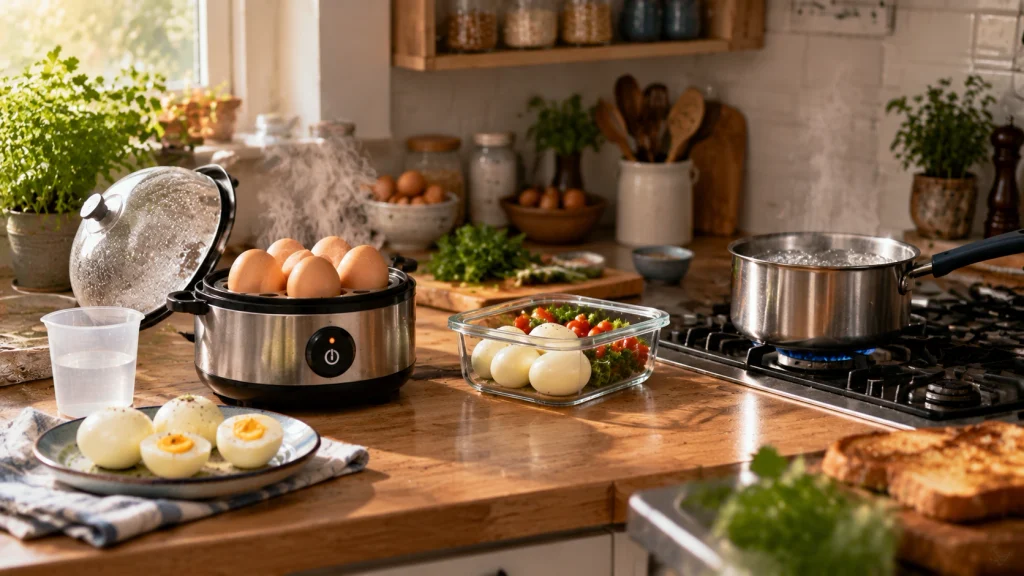
As of 2026, I would still recommend an egg cooker to a household that eats eggs frequently. I wouldn’t recommend one simply because it looks convenient on a kitchen counter.
The deciding question is simple: How often will you use it? If the answer is several times a week, the convenience can justify the extra appliance.
Buy one if these situations sound familiar
- You eat eggs frequently: Repeated use gives the appliance a clear purpose.
- You dislike timing eggs: Measured water and automatic cycles reduce guesswork.
- You meal prep: A larger capacity can make batch cooking easier.
- You want simple cleanup: Removable trays can be easier to manage than a full saucepan routine.
- You want poaching or omelet options: Choose a model that includes the accessories you will actually use.
Skip it if these situations fit better
- You rarely eat eggs: A saucepan already handles the job.
- Your kitchen is extremely compact: Storage space may be more valuable.
- You want one appliance for many foods: An egg cooker is still a specialized appliance.
- You already have a reliable routine: There’s little reason to replace a method that works.
One of the biggest mistakes when buying small kitchen appliances is confusing convenience with necessity. An egg cooker doesn’t transform eggs into a better food; it makes the process easier to repeat.
That distinction matters. If you cook eggs often, simplicity becomes valuable. If you don’t, the appliance can become another object competing for cabinet space.
Section Takeaway: An egg cooker is worth buying when frequent egg cooking makes its convenience meaningful. For occasional egg eaters, a saucepan remains the more versatile choice.
Egg Cooker FAQ
Why should I use an egg cooker?
You should use an egg cooker if you want a simpler, more repeatable way to prepare eggs. Most models use measured water and steam, while many include automatic shut-off or an alert when the cooking cycle finishes.
Are egg cookers better than boiling eggs?
Egg cookers aren’t universally better than boiling eggs in a saucepan. They are better for convenience and repeatability, while a saucepan offers greater versatility for other cooking tasks.
Do egg cookers use steam?
Yes, most electric egg cookers use steam. A heating plate warms a measured amount of water, and the resulting steam cooks eggs held above the water rather than fully submerged.
Can an egg cooker make hard-boiled eggs?
Yes, many egg cookers are designed for soft-, medium-, and hard-boiled eggs. The exact water level and cooking process vary by model, so use the manufacturer’s measuring guide rather than a generic chart.
Can an egg cooker cook other foods?
Some egg cookers can poach eggs, make omelets, or prepare egg bites when the appropriate accessory is included. Certain models also support limited steaming functions, but you should only use accessories and foods approved by the manufacturer.
Is an egg cooker safe to leave unattended?
An automatic shut-off feature can reduce the need for active monitoring, but you should still operate the appliance according to its manual. Keep it on a stable surface, keep the electrical base away from water, and handle hot steam carefully.
How do I choose the right egg cooker?
Choose based on capacity, water-measuring clarity, automatic shut-off, cleaning ease, included accessories, electrical requirements, and available counter space. For frequent use, simple controls and easy cleanup are usually more valuable than extra features.
Final Takeaway: Why Use an Egg Cooker?
The best reason to use an egg cooker is consistency without constant attention. You measure the water, load the eggs, start the cycle, and let the appliance handle the repetitive part.
It’s especially useful for busy mornings, frequent egg eaters, meal prep, and anyone who struggles to reproduce the same doneness in a saucepan.
But don’t buy one just because it’s a dedicated gadget. If you rarely cook eggs or already have a reliable saucepan routine, you may not gain enough to justify another appliance.
If you do decide to buy one, focus on the boring details first: accurate water markings, appropriate capacity, easy cleaning, automatic shut-off, stable construction, and clear safety information. Those are the features you’ll appreciate long after the novelty wears off.
For any electric egg cooker, use the manufacturer’s instructions as your final authority. Appliance designs differ, and small details such as water quantity, egg size, cleaning method, and voltage requirements can change from one model to another.
For broader electrical-appliance safety guidance, consult the Consumer Product Safety Commission, and for household appliance safety standards, see UL Solutions’ household appliance information. For model-specific operation, always use the manufacturer’s manual or support documentation.
1 thought on “Why Use an Egg Cooker? 9 Practical Reasons to Own One”