Quick Answer
An egg cooker usually bubbles because the water on its heating plate is reaching a boil, but excessive bubbling can come from too much water, spilled egg, mineral buildup, or an egg that has cracked during cooking. Most bubbling is harmless when it stays on the heating plate and stops when the water evaporates, but bubbling combined with overflowing water, smoke, a burning smell, electrical issues, or unusual overheating means you should stop using the appliance. For safe appliance-use guidance, see the CPSC electrical safety guidance.
Common causes of bubbling
- Normal boiling: Water naturally bubbles as the heating plate brings it to a boil.
- Too much water: Excess water can create more steam and bubbling than the cooker is designed to handle.
- Cracked egg: Egg white can leak into the hot water and make the surface look foamy or frothy.
- Mineral buildup: Hard-water deposits on the heating plate can interfere with normal heating and cleaning.
- Incorrect setup: A tray, lid, or accessory sitting incorrectly can cause steam and water to behave differently.
- Blocked vent: A lid vent covered by food residue can allow steam to collect and escape irregularly.
Quick safety check
- Unplug the cooker if water reaches the electrical base, you smell burning, see smoke, or notice damaged wiring.
- Let the appliance cool before cleaning the heating plate or investigating a cracked egg.
When I troubleshoot an egg cooker, bubbling is one of the first things I check because it can be completely normal or a sign of a setup problem.
The key is where the bubbles appear, what the water looks like, and whether anything else happens at the same time.
In This Guide
- Is bubbling normal in an egg cooker?
- Why is my egg cooker bubbling too much?
- Can too much water cause an egg cooker to bubble?
- Why is my egg cooker making foam?
- How do I fix an egg cooker that bubbles and overflows?
- When should I stop using my egg cooker?
- How do I prevent egg cooker bubbling?
- Egg cooker bubbling FAQ
Is bubbling normal in an egg cooker?
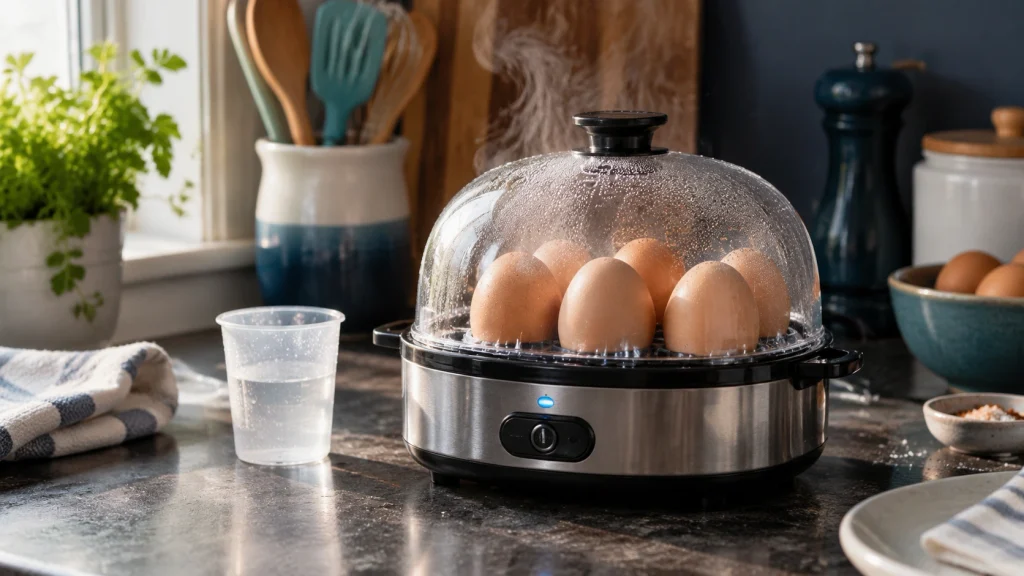
Yes, some bubbling is normal because an electric egg cooker heats a measured amount of water until it becomes hot enough to cook the eggs.
As the water gets close to boiling, bubbles form around the heating plate and produce steam.
What normal bubbling looks like
Normal bubbling usually stays around the heating plate and gradually changes as the water evaporates.
You may also hear gentle sizzling, steaming, or boiling sounds during this stage.
- Small bubbles: Usually indicate that the water is heating.
- Steady boiling: Common as the heating plate reaches its operating temperature.
- Steam: Expected when hot water is converted into vapor.
- Automatic shutoff: Many egg cookers stop heating when the cooking cycle finishes or the water has evaporated.
Manufacturer instructions commonly specify adding measured water directly to the heating plate, then placing the egg tray above it.
For example, egg cooker manuals from brands such as Chefman, Dash, and Elite Gourmet specify measured water and a heating-plate cooking method. :contentReference[oaicite:0]{index=0}
When bubbling is not normal
Bubbling deserves attention when it becomes violent, pushes water over the edge, creates thick foam, or happens alongside smoke or a burning odor.
That’s when I stop treating the bubbling as ordinary boiling and start checking the water level, egg condition, heating plate, and accessories.
Section Takeaway: Gentle bubbling on the heating plate is usually part of normal cooking. Bubbling becomes concerning when it causes overflow, unusual odors, smoke, or electrical symptoms.
Why is my egg cooker bubbling too much?
An egg cooker can bubble excessively when the water quantity, egg condition, heating surface, or appliance setup is wrong.
The fastest way to diagnose it is to compare what you’re seeing with the patterns below.
| What you see | Most likely cause | First check |
|---|---|---|
| Small bubbles around the plate | Normal heating | Continue watching the cycle |
| Water spills over the edge | Too much water or excessive foaming | Check the measuring cup and fill line |
| White or cloudy foam | Egg white leaking into water | Inspect eggs for cracks |
| Bubbles with chalky residue | Mineral buildup | Inspect the heating plate |
| Bubbling plus burning smell | Possible overheating or electrical problem | Unplug and stop using it |
1. The cooker is simply boiling the water
The simplest explanation is often the correct one: the heating element is doing its job.
Egg cookers rely on a relatively small amount of water, so the transition from quiet heating to visible boiling can happen quickly.
2. You added more water than required
Adding extra water may extend the cooking cycle and produce more steam before the appliance shuts off.
Don’t assume more water will make harder eggs better.
Use the measuring cup supplied with your specific model and follow its soft, medium, or hard-boiled markings.
3. The egg has cracked
A cracked egg can release albumen, or egg white, into the hot water around the heating plate.
That protein can make the water look cloudy or foamy instead of simply producing clear bubbles.
4. Mineral deposits are covering the heating plate
Hard water leaves minerals behind when water repeatedly evaporates from a hot metal surface.
Over time, those deposits can appear as white, gray, or chalky spots on the heating plate.
Several egg cooker manuals recommend distilled water because minerals in tap water can discolor the heating plate. :contentReference[oaicite:1]{index=1}
Section Takeaway: Excessive bubbling usually has a simple cause. Check water quantity, cracked eggs, and mineral deposits before assuming the heating element has failed.
Can too much water cause an egg cooker to bubble?
Yes, too much water can increase boiling, steam production, and the chance of water escaping from the cooking area.
Egg cookers are designed around specific water measurements rather than a large open pot of water.
Why the measuring cup matters
The supplied measuring cup isn’t just a convenience accessory.
Its markings are designed around the cooking method of that particular egg cooker, including egg quantity and desired doneness.
- Use the correct cup: Don’t substitute a random kitchen measuring spoon.
- Follow your model’s markings: Soft, medium, and hard settings aren’t universal across brands.
- Use the correct water temperature: Many models specify cold water at the beginning of the cycle.
- Don’t guess: A slightly different water volume can change the cooking cycle.
For example, manufacturer instructions for several common egg cookers explicitly tell users to fill the supplied measuring cup to the desired cooking line before pouring water onto the heating plate. :contentReference[oaicite:2]{index=2}
What if the cooker still bubbles after you use the right amount?
Check whether the eggs are cracked and whether the heating plate has a heavy mineral coating.
Also make sure the egg tray sits correctly and isn’t allowing an egg to contact the heating surface where the design doesn’t call for it.
Some models specifically instruct users to keep eggs away from the heating plate and position pierced ends upward.
That setup helps keep the cooking process predictable and reduces the chance of shells cracking during cooking. :contentReference[oaicite:3]{index=3}
Why is my egg cooker making foam?
Foam usually points to something different from ordinary water bubbling, especially when the foam is white or cloudy.
The most common explanation is egg white leaking from a cracked shell or escaping through the small hole made during preparation.
Check the eggs first
Turn the cooker off and let it cool before handling the eggs.
Look for visible cracks, hairline fractures, or dried egg white around the shells and tray.
Egg cookers commonly include an egg-piercing step because piercing the larger end can help manage pressure during cooking.
Some manufacturer instructions specifically note that a small amount of egg white may escape through the pierced shell and harden on the shell surface. :contentReference[oaicite:4]{index=4}
Don’t confuse steam with foam
Steam is invisible until it condenses into water droplets, while foam remains as bubbles or froth on the liquid surface.
If the water stays mostly clear and you only see active bubbles around the heating plate, you’re probably seeing ordinary boiling.
If the surface becomes cloudy and frothy, inspect the eggs and tray instead.
Clean the heating plate after an egg leak
Egg residue should not be left on a hot heating plate for repeated cooking cycles.
Once the cooker is unplugged and completely cool, follow the manufacturer’s cleaning instructions for removing residue without flooding the electrical base.
Never immerse the electrical base unless your specific manufacturer explicitly says it is designed for that treatment.
Section Takeaway: Foam usually means something besides plain water is involved. Check for cracked eggs, egg-white residue, and a dirty heating plate before the next cooking cycle.
How do I fix an egg cooker that bubbles and overflows?
Start by stopping the cooking cycle safely, letting the appliance cool, and identifying whether the overflow came from water or egg residue.
Don’t wipe a hot electrical appliance while it’s still powered.
Follow this troubleshooting sequence
- Unplug the cooker: Disconnect power before cleaning or inspecting it.
- Let it cool: Hot steam, water, shells, and metal surfaces can cause burns.
- Check the water amount: Compare your measurement with the exact marking in the manual.
- Inspect the eggs: Look for cracks or leaking egg white.
- Inspect the heating plate: Look for dried egg, chalky mineral deposits, or unusual discoloration.
- Check the tray: Make sure it sits flat and correctly on the base.
- Clean according to the manual: Avoid soaking the electrical base.
- Test cautiously: If the appliance shows no damage, follow the manufacturer’s normal operating procedure on the next cycle.
What if water got onto the electrical base?
Don’t immediately plug the cooker back in to see whether it still works.
Water and electricity create a serious shock risk, particularly if moisture reaches internal electrical components.
CPSC guidance specifically advises keeping countertop electrical appliances away from sinks and water sources and using appropriate protection where necessary. :contentReference[oaicite:5]{index=5}
Allow the appliance to be handled according to the manufacturer’s instructions, and replace or professionally inspect it if water has entered areas that aren’t designed to get wet.
Pro tip: Never open a sealed egg cooker, bypass an overheat switch, or modify its electrical components to stop bubbling. If the problem appears electrical, use the manufacturer’s support service or a qualified appliance repair technician.
What if cleaning doesn’t solve it?
If the cooker repeatedly boils over with the manufacturer’s specified water amount, the problem may involve the thermostat, heating control, temperature sensor, or another internal component.
Those parts aren’t worth experimenting with at home.
Section Takeaway: Correct the simple variables first: water, eggs, tray position, and cleaning. Persistent overflow after those checks is a reason to stop troubleshooting internally.
When should I stop using my egg cooker?
You should stop using an egg cooker when bubbling is accompanied by signs that suggest an electrical, thermal, or mechanical safety problem.
Normal boiling shouldn’t produce smoke, burning odors, exposed wiring, or repeated electrical interruptions.
Stop immediately if you notice these signs
- Burning smell: A persistent electrical or melted-plastic odor is not normal boiling.
- Smoke: Switch off and unplug the appliance if it produces smoke.
- Damaged cord: Frayed, cut, melted, or exposed wiring should not be used.
- Electrical shock: Any shock from an appliance requires immediate attention.
- Water entering the base: Don’t continue operating an appliance after liquid reaches electrical components.
- Uncontrolled overheating: Stop using the unit if it continues heating abnormally.
- Repeated failure: A cooker that behaves differently after cleaning and correct setup may need service or replacement.
CPSC identifies damaged wiring, electrical shock, and contact between electricity and water as important household electrical hazards. :contentReference[oaicite:6]{index=6}
What does a safety certification tell you?
When buying a replacement, look for recognized safety certification appropriate to your market rather than relying only on marketing claims.
UL Solutions explains that its safety marks indicate certification against applicable safety requirements, while its household-appliance work covers recognized UL and IEC-based requirements. :contentReference[oaicite:7]{index=7}
Certification doesn’t mean an appliance can never fail.
It does give you another useful factor to consider when comparing an inexpensive replacement with a better-established appliance.
How do I prevent egg cooker bubbling?
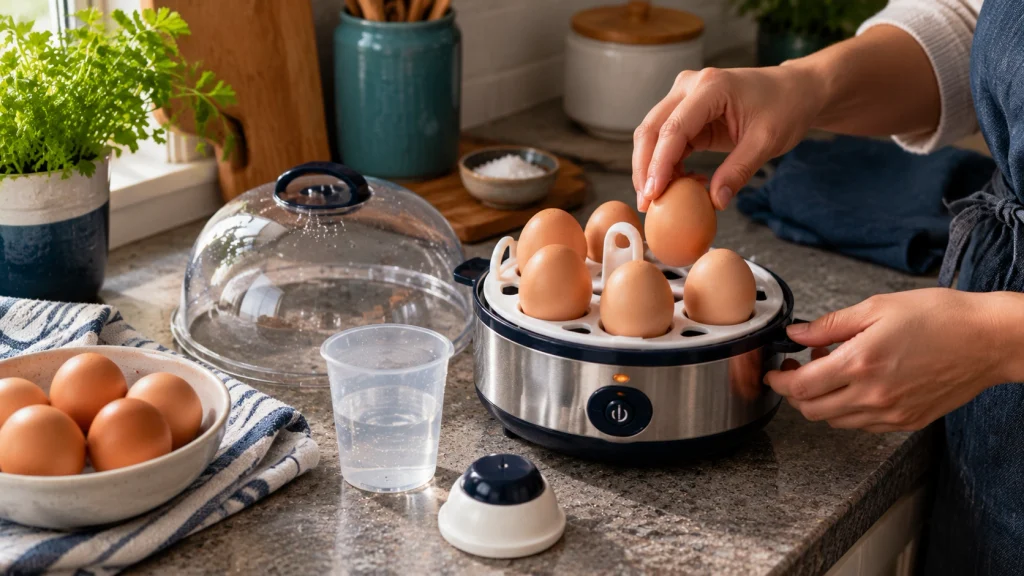
You can’t prevent normal boiling, but you can reduce excessive bubbling, foaming, and messy overflow by keeping the cooking setup consistent.
Use these habits every time
- Measure water carefully: Use the supplied measuring cup and your model’s markings.
- Inspect eggs: Don’t start with visibly cracked eggs.
- Pierce correctly: If your manual calls for piercing, use the supplied egg piercer as instructed.
- Keep eggs positioned correctly: Follow the tray orientation shown in the manual.
- Keep the heating plate clean: Remove egg residue and mineral deposits using approved cleaning methods.
- Use suitable water: If your manual recommends distilled water, following that advice can reduce mineral deposits.
- Don’t overfill: More water isn’t automatically better.
- Keep vents clear: Check the lid and steam openings for food residue.
- Use a stable surface: Keep the cooker level while operating.
As of 2026, these basic habits remain useful across many conventional electric egg cookers because the core design is simple: measured water heats on a plate while the eggs cook above it.
How often should you clean the heating plate?
Clean visible residue after each use rather than allowing egg or mineral deposits to accumulate over many cycles.
The exact descaling method depends on the manufacturer, so don’t automatically use vinegar, abrasive pads, or commercial descalers unless your manual permits them.
Some manuals specifically recommend wiping the base and heating plate rather than immersing the electrical unit in water. :contentReference[oaicite:8]{index=8}
My practical troubleshooting rule
When I work through an egg-cooker problem, I separate normal cooking behavior from warning signs before touching anything.
If it’s only clear water bubbling on the heating plate, I check the water level and let the cycle finish.
If there’s foam, I check the eggs.
If there’s smoke, a burning smell, or electrical trouble, I stop using the appliance.
That simple distinction prevents you from treating harmless boiling like a serious failure while also avoiding risky electrical troubleshooting.
Section Takeaway: Good setup prevents most messy bubbling problems. Measure accurately, inspect the eggs, clean the heating plate, and treat smoke or electrical symptoms as a stop signal.
Egg Cooker Bubbling FAQ
Is it normal for an egg cooker to bubble?
Yes. An egg cooker heats water on a heating plate, so bubbling can occur as the water reaches a boil. Gentle bubbling is generally normal when the water stays contained and the appliance operates without smoke, burning odors, electrical problems, or uncontrolled overflow.
Why is my egg cooker bubbling over?
An egg cooker may bubble over because too much water was added, a cracked egg released protein into the water, the heating plate has residue, or the appliance is not assembled correctly. Start by checking the manufacturer’s water measurement and inspecting the eggs and tray.
Why is my egg cooker making white foam?
White foam often indicates that egg white has entered the hot water. Check for cracked shells or leakage around the pierced end of the eggs. Unplug the cooker, let it cool, then clean the heating plate according to the manufacturer’s instructions.
Can hard water make an egg cooker bubble more?
Hard water can leave mineral deposits on the heating plate as water repeatedly evaporates. Those deposits may affect the appearance and performance of the cooking surface. If your manufacturer recommends distilled water, following that recommendation can help limit mineral buildup.
Should I put less water in my egg cooker if it bubbles?
Don’t automatically reduce the water amount. Egg cookers are designed around specific water measurements for different levels of doneness. Use the measuring cup and markings supplied with your model instead of changing the amount by guesswork.
Why does my egg cooker bubble but not shut off?
If the cooker continues heating after the expected cycle, first verify that you used the correct water amount and operating procedure. If it repeatedly fails to stop, unplug it and consult the manufacturer’s manual or support service rather than attempting to repair the internal thermostat or electrical controls yourself.
Is an egg cooker dangerous if it bubbles?
Normal water bubbling is not, by itself, a sign that an egg cooker is dangerous. Stop using the appliance if bubbling is accompanied by smoke, burning smells, damaged wiring, electrical shocks, water entering the electrical base, or abnormal overheating.
Final Takeaway: Don’t Panic Over Normal Bubbling
If your egg cooker is bubbling, start by asking what exactly is bubbling and what else is happening.
Clear water bubbling around the heating plate is usually part of the cooking process.
Foam points you toward a cracked or leaking egg, while overflow often suggests incorrect water quantity or excessive foaming.
Mineral buildup is another common maintenance issue, especially when the cooker is used frequently with hard tap water.
The important line is safety.
Smoke, burning odors, damaged cords, electrical shocks, or water reaching the electrical base are reasons to stop using the cooker rather than trying to force it through another cycle.
With accurate water measurements, correctly positioned eggs, regular cleaning, and the manufacturer’s operating instructions, most bubbling questions are easy to diagnose.
If your cooker has started bubbling differently from its usual behavior, troubleshoot the simple causes first. If the unusual behavior continues, replacement or professional service is safer than opening the appliance yourself.
1 thought on “Why Is My Egg Cooker Bubbling? 7 Causes and Fixes”