Quick Answer
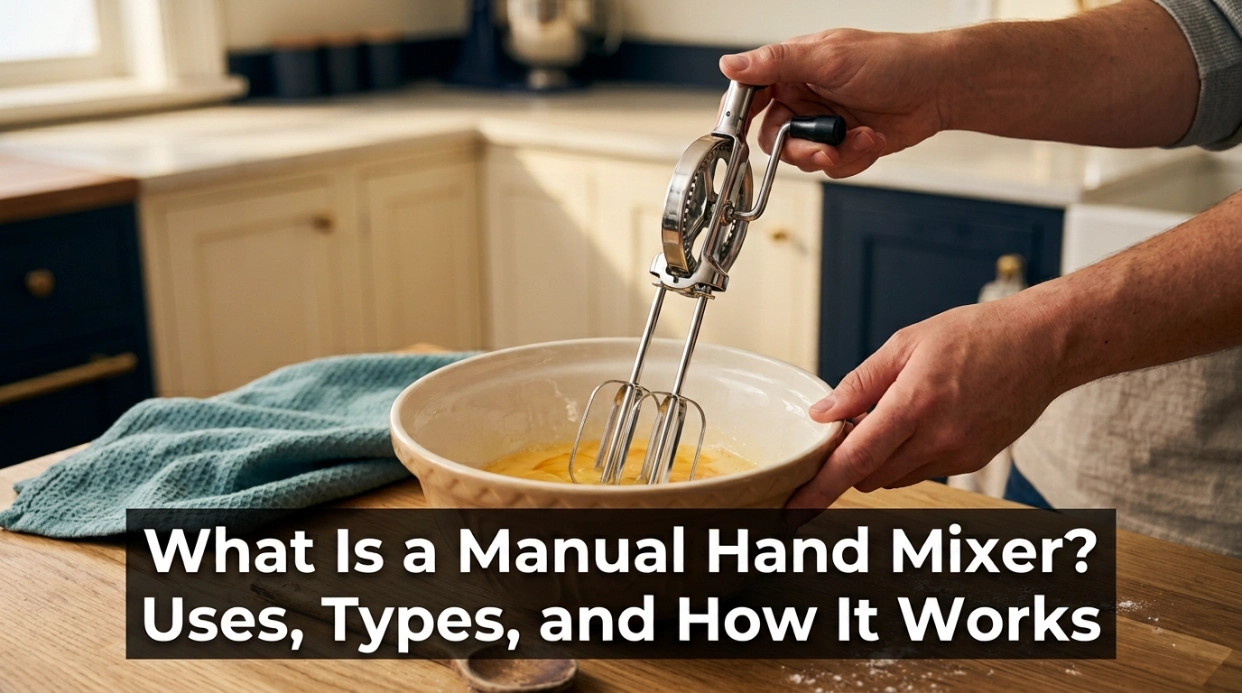
A manual hand mixer is a non-electric kitchen tool that uses hand power to rotate beaters or a whisk. Most versions use a hand crank, gears, or a push-down mechanism to mix eggs, cream, thin batter, sauces, and other light ingredients. Unlike an electric hand mixer, it needs no outlet, battery, or motor.
What to know at a glance
- Power source: Your hand provides all the energy needed for mixing.
- Main mechanism: A crank, gears, or push-and-spin shaft rotates the mixing attachment.
- Best uses: Eggs, cream, dressings, sauces, light batters, and other soft mixtures.
- Main advantage: It is compact, quiet, portable, and requires no electricity.
- Main limitation: Dense doughs and large batches require more effort and may overwhelm the tool.
If you are wondering what a manual hand mixer is, the name can be slightly confusing. Many people hear “hand mixer” and immediately picture the familiar electric appliance with two spinning beaters.
A manual hand mixer is different. It creates the same basic mixing motion using mechanical hand power instead of an electric motor.
As of 2026, you will see several designs sold under names such as manual egg beater, rotary hand mixer, hand-crank mixer, and manual rotary whisk. I will explain how these tools work, where they perform well, and when an electric mixer makes more sense.
In This Guide
What Is a Manual Hand Mixer?
A manual hand mixer is a handheld mixing tool that turns one or more beaters without electricity. Your hand operates the mechanism while gears or a rotating shaft transfer that movement to the attachment.
Definition: A manual hand mixer is a non-electric kitchen utensil that uses a crank, gear system, spring, or push mechanism to rotate beaters or whisks for mixing, beating, and aerating food.
The classic version is the rotary egg beater. It normally has one or two metal beaters connected to a gear wheel and a small hand crank.
What types of manual hand mixers are available?
Several different tools can fall under the manual hand mixer name. Their basic goal is similar, but their mechanisms differ.
- Hand-crank rotary beater: Turning a side crank rotates one or two beaters through a gear mechanism.
- Push-down rotary whisk: Pressing the handle causes a whisk or beater to spin rapidly.
- Spring whisk: Repeated downward pressure flexes the whisk and creates rapid mixing movement.
- Simple handheld whisk: Your wrist provides the entire whisking motion without gears.
When I assess these designs, I pay particular attention to the gears and handle. A smooth mechanism matters more than a complicated-looking design.
Materials vary too. Many rotary mixers combine stainless-steel beaters with plastic, stainless-steel, or coated metal handles and gear housings.
Section Takeaway: A manual hand mixer is essentially a mechanical alternative to powered mixing. The rotary hand-crank egg beater is the most traditional example.
How Does a Manual Hand Mixer Work?
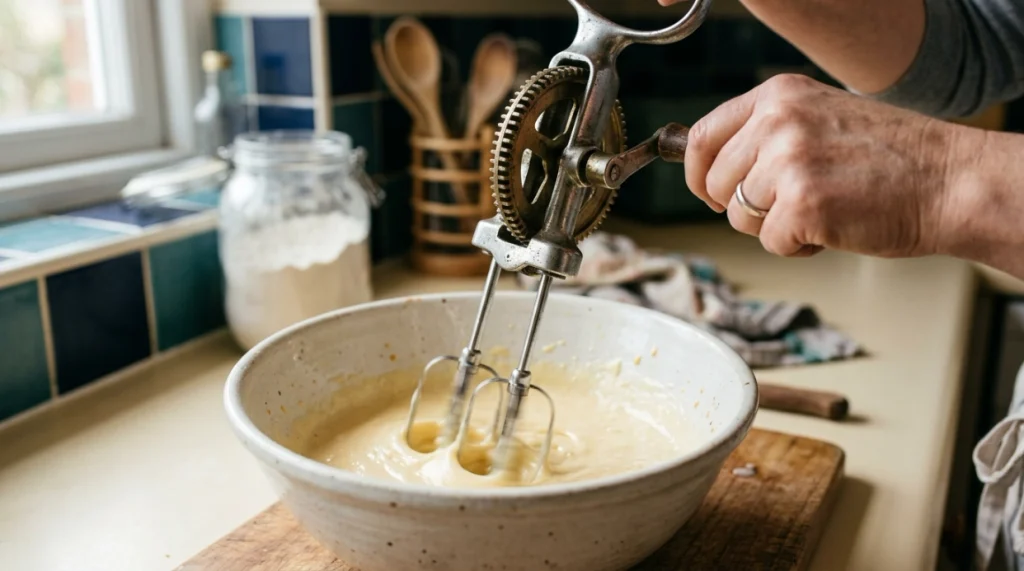
A manual hand mixer converts movement from your hand into faster rotational movement at the beaters. A geared model does this by transferring the motion of the crank through interlocking gears.
The mechanism is simple, but it can multiply how much mixing action you create with each turn of your wrist.
What happens when you turn the crank?
- You rotate the handle: Your hand supplies the mixer’s energy.
- The main gear turns: The crank moves a larger gear inside or beside the frame.
- Smaller gears respond: These gears transfer the movement to the beater shafts.
- The beaters rotate: Their movement pulls ingredients through the active mixing area.
- Food circulates: Moving the mixer around the bowl brings fresh ingredients into contact with the beaters.
Some models use a vertical push mechanism instead. Each downward press rotates the whisk through a spiral shaft or similar mechanical system.
How does mixing change food?
Rotating beaters do more than stir ingredients in circles. They create circulation and shear, which help break up lumps and distribute ingredients throughout a mixture.
Faster beating can also introduce air. That is useful when beating eggs or whipping cream, although a manual tool normally requires more time and physical effort than a powered mixer.
- Mixing: Distributes separate ingredients throughout the bowl.
- Beating: Works ingredients more aggressively to create a smoother mixture.
- Whisking: Can introduce air into eggs, cream, and similar foods.
- Blending: Combines liquids or soft foods without chopping them.
A manual mixer does not work like a blender. It has no cutting blade designed to purée fruit, crush ice, or process hard ingredients.
Section Takeaway: The mechanism turns slow hand movement into repeated rotary beater movement. It saves wrist motion, but your hand still supplies all the power.
What Can You Use a Manual Hand Mixer For?
A manual hand mixer is best for light mixtures that benefit from repeated whisking or beating. Eggs are the classic example, but the tool can do much more.
- Whole eggs: Beat eggs evenly for omelets, scrambled eggs, and baking.
- Egg whites: Introduce air for foamy or whipped preparations.
- Whipping cream: Whip small amounts when you do not want an electric appliance.
- Pancake batter: Combine wet and dry ingredients with good control.
- Thin cake batter: Mix lighter batters when the tool moves freely.
- Salad dressings: Combine oil, vinegar, seasonings, and other ingredients.
- Sauces: Smooth light mixtures and help break up small lumps.
- Hot chocolate or drink mixes: Disperse powdered ingredients into liquids.
King Arthur Baking notes that mixing and whisking can often be done by hand with a sturdy spoon or whisk. Its recipe success guide also distinguishes ordinary hand mixing from jobs where powered beating works better.
What should you not mix with one?
Thick resistance is the main warning sign. If the crank becomes difficult to move, forcing it can strain both your hand and the mixer mechanism.
- Stiff bread dough: Use your hands, a dough tool, or a suitable stand mixer instead.
- Dense cookie dough: Heavy dough can overload small gears and beaters.
- Cold butter: Hard butter can stop lightweight beaters from moving freely.
- Large batches: Manual mixing becomes tiring as volume and resistance increase.
- Hard foods: Nuts, ice, raw vegetables, and similar foods require chopping or blending equipment.
Creaming butter and sugar is possible by hand, but it can require substantial effort. King Arthur Baking’s creaming guide explains why proper aeration and butter consistency matter.
My practical rule is simple: watch the resistance. A manual rotary mixer is happiest when the beaters can travel through the food without needing excessive force.
Section Takeaway: Manual hand mixers excel at eggs, cream, dressings, sauces, and light batters. Dense dough and hard ingredients belong with stronger tools.
Manual Hand Mixer vs. Electric Mixer vs. Whisk: What Is the Difference?
A manual mixer sits between a basic whisk and an electric hand mixer. It adds mechanical assistance without adding a motor.
| Feature | Manual Hand Mixer | Electric Hand Mixer | Balloon Whisk |
|---|---|---|---|
| Power source | Hand power | Electric motor | Hand power |
| Mechanism | Gears, crank, or push mechanism | Motor-driven attachments | Direct wrist movement |
| Speed control | Controlled by your hand | Multiple settings on many models | Controlled by your hand |
| Effort | Moderate | Low | Moderate to high |
| Noise | Low mechanical noise | Motor and attachment noise | Minimal |
| Best fit | Small, light mixing jobs | Faster beating and frequent baking | Tiny quantities and precise control |
When does a manual mixer make more sense?
A manual model is useful when you want powered-style rotary movement without plugging anything in. It also suits camping, small kitchens, emergency cooking setups, and occasional baking.
The lack of a motor also means fewer electrical components. Storage is generally simple because most rotary beaters are relatively compact.
When is an electric hand mixer better?
An electric model becomes more practical when a recipe needs prolonged beating or whipping. It can also reduce fatigue during regular baking.
For example, repeatedly whipping egg whites or cream is easier with motor power. Electric models also commonly provide selectable speeds and different attachments.
When is an ordinary whisk better?
A basic whisk gives exceptionally direct control. I prefer that simplicity for tiny quantities, quick sauces, and mixtures requiring only a few seconds of agitation.
A whisk also has almost nothing mechanical to maintain. There are no gears that can become sticky or misaligned.
Section Takeaway: Choose a manual mixer for compact mechanical assistance, an electric mixer for speed and sustained power, and a whisk for simple, precise hand mixing.
How Do You Use a Manual Hand Mixer Correctly?
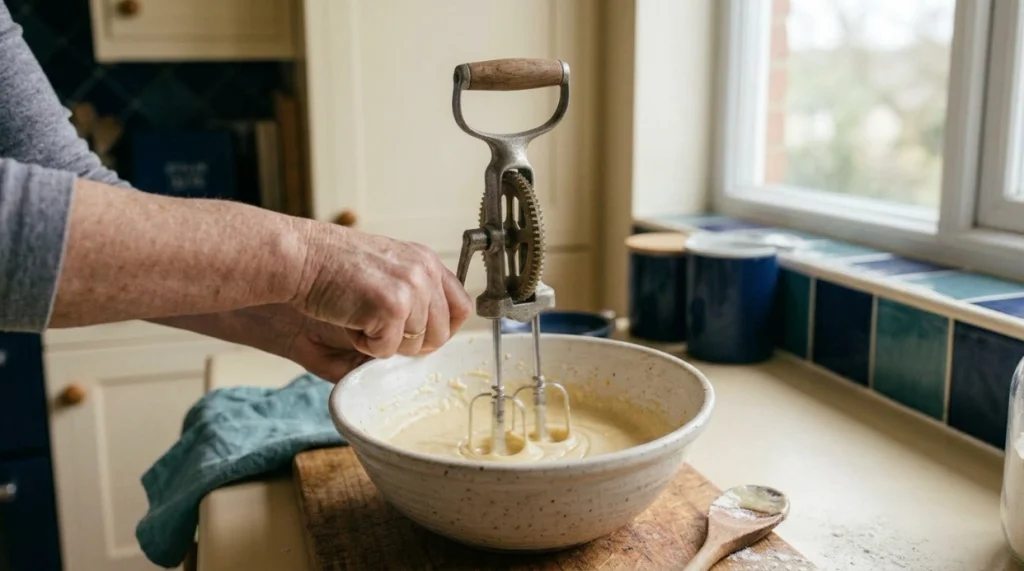
Using a manual hand mixer is straightforward, but bowl choice and technique make a noticeable difference. A stable, appropriately sized bowl helps the beaters stay immersed in the ingredients.
- Choose the right bowl: Use one deep enough to contain splashes while keeping the food around the beaters.
- Inspect the mechanism: Check that the crank, gears, shaft, and beaters move smoothly.
- Add your ingredients: Avoid filling the bowl so high that the beaters throw liquid over the rim.
- Place the beaters in the food: Start with them properly submerged.
- Begin slowly: Turn or press gently until loose ingredients start combining.
- Increase your pace: Use faster movement when whipping or aerating is required.
- Move around the bowl: Guide the mixer through the center and around the sides.
- Stop at the right texture: Do not keep beating simply because the mechanism turns easily.
How do you keep ingredients from splashing?
Start slowly. Rapid movement at the beginning can throw thin liquids or dry ingredients outside the bowl.
A deeper bowl also helps. For a small amount of cream or egg, a narrower bowl may keep the food in better contact with the beaters.
How should you clean a manual hand mixer?
Clean food from the beaters soon after use so it does not dry around the shafts. Follow the manufacturer’s instructions before putting any geared component or handle in a dishwasher.
- Wash food-contact surfaces with warm water and dish soap unless the manufacturer gives different instructions.
- Pay attention to food trapped near beater shafts and joints.
- Dry metal components well before storage.
- Do not assume the entire mechanism is dishwasher-safe.
- Keep gears moving freely and check for bending, looseness, or corrosion.
If you use the mixer with raw eggs, clean the tool and nearby surfaces carefully. The FDA’s egg safety guidance recommends washing utensils, equipment, hands, and work surfaces after contact with raw eggs.
What should you look for when choosing one?
The smoothness of the mechanism is one of my first checks. A crank that catches or wobbles will become irritating long before the tool wears out completely.
- Comfortable handle: It should remain easy to grip while turning repeatedly.
- Smooth gears: Rotation should feel consistent without sticking.
- Sturdy beaters: Look for attachments that resist bending under normal mixing loads.
- Useful size: Beaters need enough reach for your usual mixing bowls.
- Easy cleaning: Simpler shapes leave fewer places for food to collect.
- Replaceable or removable parts: These can make maintenance easier when offered.
Do not judge one by claimed speed alone. With a manual mixer, comfort, gearing, beater shape, and build quality matter more than an impressive marketing number.
Section Takeaway: Start gently, use an appropriate bowl, and never force the crank through a mixture that is too thick. Smooth operation is the best sign that the tool is being used within its limits.
Frequently Asked Questions About Manual Hand Mixers
Is a manual hand mixer the same as a hand mixer?
Not always. “Hand mixer” usually refers to a handheld electric appliance, while “manual hand mixer” generally describes a non-electric rotary beater, hand-crank mixer, or similar tool. Check whether the product has a motor, cord, battery, crank, or push mechanism before buying.
Can a manual hand mixer whip cream?
Yes, many manual rotary beaters can whip small amounts of cream. It takes more time and hand effort than an electric mixer. For better results, use cold cream, an appropriate bowl, and keep the beaters moving consistently through the mixture.
Can you beat egg whites with a manual hand mixer?
Yes. A rotary egg beater can introduce air into egg whites and is well suited to that traditional task. However, reaching soft or stiff peaks may take longer than with an electric hand mixer, especially when preparing a larger quantity.
Can a manual hand mixer make cake batter?
It can handle many light and medium cake batters if the beaters move freely. Dense mixtures can require excessive force. Stop if the crank becomes difficult to turn, and switch to a sturdier utensil or powered mixer when necessary.
Can a manual hand mixer knead bread dough?
A typical manual rotary hand mixer is not designed for stiff bread dough. Dense dough produces far more resistance than eggs, cream, or batter. Hand kneading or a suitable stand mixer with a dough hook is a better choice for most yeast doughs.
Does a manual hand mixer need electricity?
No. That is its defining advantage. A traditional manual mixer receives all of its power from your hand through a crank, gear system, spring, or push mechanism, so it can work anywhere without an outlet, battery, or charging cable.
Is a manual hand mixer worth having?
It can be useful if you prepare small batches, want a quiet non-electric tool, or have limited storage space. Frequent bakers who regularly whip cream, cream butter, or prepare larger batches may find an electric hand mixer more convenient.
Bottom line: A manual hand mixer is a simple mechanical tool for beating, whisking, and mixing light ingredients without electricity. It works best when you value control, portability, quiet operation, and compact storage more than maximum speed.
If you are deciding whether to keep one in your kitchen, think about what you mix most often. For eggs, cream, sauces, and occasional light batter, a well-made rotary hand mixer can still be a practical tool in 2026.
