Quick Answer
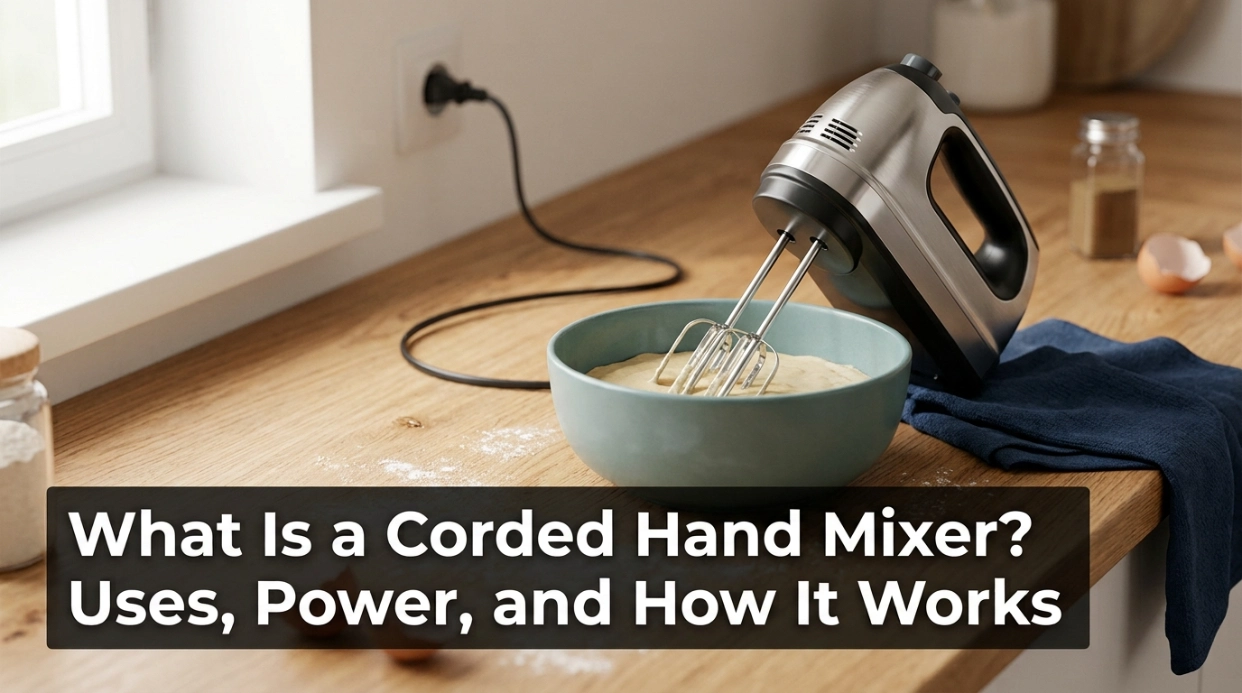
A corded hand mixer is a handheld electric kitchen appliance that receives continuous power from a wall outlet. Its motor spins removable beaters or other attachments for mixing, beating, whipping, and creaming ingredients. Current hand mixer buying guidance from KitchenAid also shows why motor design matters alongside wattage.
What makes a hand mixer corded?
- Wall-outlet power: Electricity reaches the mixer continuously through its power cord.
- Motor-driven mixing: An internal motor turns the beaters through a compact drive system.
- Multiple speeds: Most models let you adjust mixing speed for different ingredients.
- Removable attachments: Beaters are standard, while some models include whisks or dough hooks.
- No battery charging: You can keep mixing while the appliance remains connected to a suitable outlet.
Simple rule to remember
- Choose a corded hand mixer when dependable outlet power matters more than cordless freedom.
If you’re asking, what is a corded hand mixer, think of the familiar electric mixer with a cable running to the wall. You hold the appliance while its spinning attachments do most of the repetitive mixing work.
I find the easiest way to understand one is to compare it with both a whisk and a stand mixer. It gives you powered mixing without requiring a large countertop machine.
In This Guide
What Is a Corded Hand Mixer?
A corded hand mixer is a portable electric mixer powered directly from a wall outlet. You guide its rotating attachments through ingredients inside a separate bowl.
Definition: A corded hand mixer is a handheld motorized kitchen appliance that uses mains electricity to rotate removable beaters, whisks, or compatible attachments.
The word corded describes its power source. Unlike a cordless hand mixer, it doesn’t depend on a rechargeable battery while mixing.
The word hand describes how you control it. You move the appliance around the bowl instead of locking it onto a stationary stand.
- Motor housing: Contains the electric motor and internal drive components.
- Handle: Gives you control while moving the mixer through ingredients.
- Speed selector: Changes how quickly the attachments rotate.
- Attachment sockets: Hold the removable beaters or other tools.
- Eject control: Releases attachments after the mixer has stopped.
- Power cord: Connects the appliance to a compatible electrical outlet.
Current corded models vary widely in design. Some have simple beaters, while others add whisks, dough hooks, storage cases, or cord-positioning features.
A corded design also removes one concern from your routine: battery level. As long as electricity is available, you don’t need to pause for charging.
Section Takeaway: A corded hand mixer combines compact size with continuous electrical power. You control the appliance by hand while the motor powers the attachments.
How Does a Corded Hand Mixer Work?
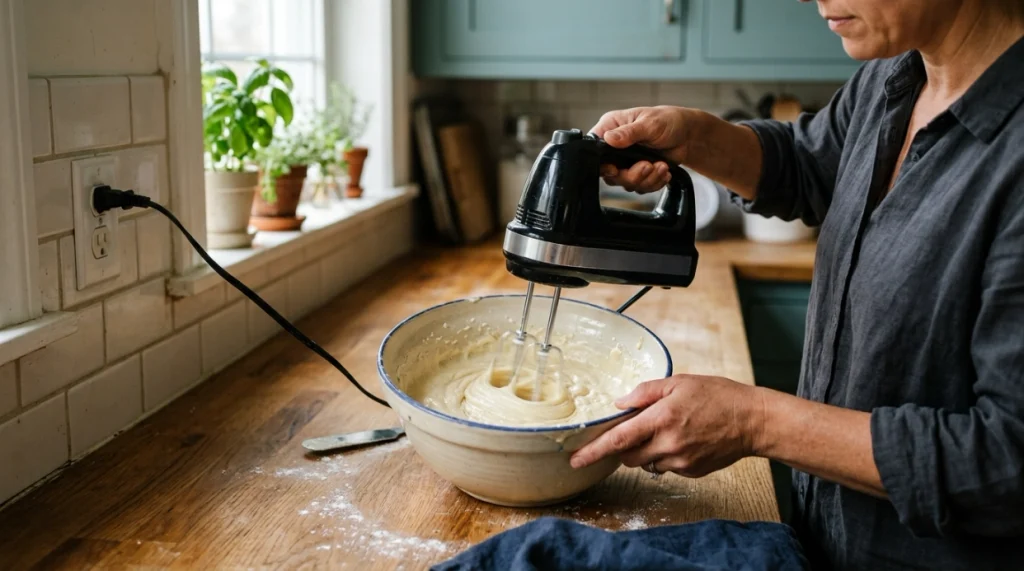
A corded hand mixer converts electrical energy from an outlet into rotating mechanical motion. Internal components then transfer that motion to the removable attachments.
The basic power path is easy to follow.
- Electricity enters: Power travels through the cord when the mixer is connected and switched on.
- The motor rotates: The internal electric motor creates high-speed rotary motion.
- The drive system transfers motion: Internal gears or similar components send rotation toward the attachment sockets.
- The attachments spin: Beaters or whisks move through the ingredients.
- You guide the mixer: Moving it around the bowl helps ingredients reach the active mixing area.
Speed control changes how aggressively the attachments work. A low setting is useful when dry flour could scatter across the counter.
Higher speeds suit jobs such as whipping cream or aerating egg whites. The correct setting still depends on your mixer and recipe.
Wattage deserves some caution when comparing models. A higher number doesn’t automatically guarantee better mixing performance.
Motor type, gearing, attachment design, and speed control also matter. KitchenAid, for example, explains that its DC-motor hand mixers can’t be judged fairly by wattage alone.
You can review corded-specific operation and maintenance information through KitchenAid’s corded hand mixer support section.
Section Takeaway: Outlet power runs the motor, while the internal drive system turns electrical energy into useful attachment movement.
What Can You Use a Corded Hand Mixer For?
A corded hand mixer works best for light-to-moderate mixing jobs. It is especially convenient when manual whisking feels tiring but a stand mixer feels excessive.
Common jobs include:
- Cake batter: Mix wet and dry ingredients without using a large mixer.
- Whipped cream: A whisk or suitable beaters can incorporate air into chilled cream.
- Egg whites: Faster settings help build foam for meringues and similar recipes.
- Butter and sugar: Beaters can cream softened butter with sugar for many baked goods.
- Frosting: Hand mixers work well for buttercream and other soft frostings.
- Mashed potatoes: They can blend cooked potatoes, although overmixing may affect texture.
- Soft cookie dough: Suitable models can handle many moderate dough mixtures.
Some corded mixers include dough hooks. That doesn’t make every hand mixer suitable for heavy bread dough.
Always follow the attachment and batch limits in the manufacturer’s manual. Thick dough can place much more load on the motor than cake batter.
What should you avoid mixing?
Don’t treat a hand mixer like a blender or food processor. Its beaters mix and aerate instead of chopping hard ingredients with blades.
- Hard ice cubes
- Whole nuts that need chopping
- Frozen solid ingredients
- Large batches of stiff bread dough
- Mixtures outside the manufacturer’s stated limits
I use a simple rule when judging the job: if the mixture becomes difficult to move through by hand, I check the manual before pushing the mixer harder.
Section Takeaway: Corded hand mixers shine at everyday baking, whipping, beating, and moderate mixing. Heavy kneading and chopping belong to other tools.
Corded vs. Cordless vs. Stand Mixer: What’s Different?
The biggest difference is how each mixer receives power and how you control it. The best format depends on your recipes, storage space, and mixing workload.
| Feature | Corded Hand Mixer | Cordless Hand Mixer | Stand Mixer |
|---|---|---|---|
| Power source | Wall outlet | Rechargeable battery | Wall outlet |
| How you use it | Held and guided by hand | Held and guided by hand | Stationary, usually hands-free |
| Mobility | Limited by cord and outlet position | Easy to move away from outlets | Normally remains on a counter |
| Charging needed | No | Yes | No |
| Storage space | Low | Low | Higher |
| Typical fit | Routine small-to-medium jobs | Portable, short mixing jobs | Large or demanding mixing jobs |
The cord is both an advantage and a limitation. It supplies continuous power, but you need an outlet positioned conveniently near your work area.
A cordless model offers greater movement around the kitchen. Its battery charge becomes another factor to manage.
A stand mixer takes more space but can handle longer sessions without requiring you to hold the motor housing. It also suits recipes where hands-free mixing is useful.
Current product ranges show that both corded and cordless hand mixers remain available. You can see examples in the Hamilton Beach hand mixer range.
Section Takeaway: Corded hand mixers prioritize continuous outlet power and compact storage. Cordless mixers prioritize mobility, while stand mixers prioritize capacity and hands-free operation.
What Should You Look for in a Corded Hand Mixer?
Don’t choose a hand mixer from wattage alone. Start with control, comfort, attachments, and the kinds of food you plan to mix.
1. Useful low-speed control
A gentle first speed can matter more than an impressive top speed. Starting slowly reduces flour clouds and liquid splatter.
2. Comfortable weight and grip
You hold a hand mixer throughout the job. A balanced body and comfortable handle become noticeable during longer mixing sessions.
3. Attachments you’ll use
- Traditional beaters: Useful for general mixing and creaming.
- Wire whisk: Helpful for whipped cream and egg whites.
- Dough hooks: Intended only for suitable dough and approved mixer loads.
- Storage case: Helps keep loose attachments together.
4. Cord design
Look at cord length and how the cable exits the housing. Some designs position or swivel the cord to reduce interference while mixing.
5. Easy cleaning
Removable dishwasher-safe attachments can simplify cleanup when the manufacturer allows it. Wipe the motor housing according to its manual instead of immersing it.
6. Safe operation
Stop and unplug a corded mixer before inserting, touching, or removing beaters. Manufacturer instructions commonly emphasize this because the attachments are moving parts.
Inspect the power cord and plug before use. Don’t operate a damaged appliance until it has been properly assessed or repaired.
If an extension cord is unavoidable, its electrical rating should suit the appliance. The U.S. Consumer Product Safety Commission’s extension-cord guidance explains important electrical safety characteristics.
Pro tip: Never bypass a safety feature or open a sealed mixer for electrical repair unless the manufacturer specifically authorizes the procedure. Consult the manual or a qualified appliance repair technician.
Section Takeaway: Good speed control, comfort, useful attachments, easy cleanup, and safe cord design matter more than chasing one impressive specification.
Is a Corded Hand Mixer Right for You?
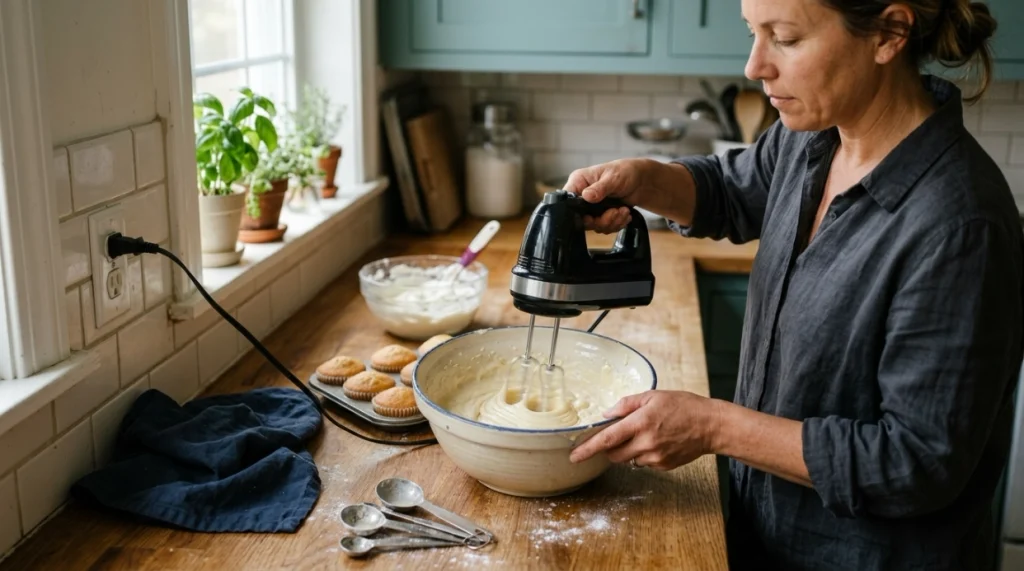
A corded hand mixer makes sense when you want compact powered mixing and usually work near an outlet. It fits many everyday home-baking routines.
It may suit you if:
- You bake cakes, brownies, cookies, or cupcakes regularly.
- You whip cream, frosting, or eggs several times a month.
- You don’t want a large stand mixer occupying the counter.
- You prefer continuous power over managing battery charge.
- You want a mixer that stores easily in a cabinet or drawer area.
A different appliance may make more sense for frequent bread baking. Large quantities of stiff dough can benefit from a suitable stand mixer.
Cordless models are worth considering when outlet access is awkward. They’re also useful when unrestricted movement matters more than continuous mains power.
As of 2026, the basic corded design remains practical because it solves a simple problem. It provides powered mixing without the size of a full stand mixer or the charging needs of a cordless model.
Section Takeaway: Pick a corded hand mixer for straightforward, compact, outlet-powered mixing. Match the tool to your recipes instead of choosing by specifications alone.
Corded Hand Mixer FAQ
Does a corded hand mixer need batteries?
No. A corded hand mixer normally receives power directly from a compatible wall outlet through its electrical cable. That means you don’t need to charge a battery before mixing.
Is a corded hand mixer more powerful than a cordless mixer?
Not automatically. Performance depends on motor design, gearing, attachments, speed control, and the food being mixed. The power source alone doesn’t prove which mixer will perform better.
How many watts should a corded hand mixer have?
There isn’t one ideal wattage for every hand mixer. Current consumer models vary considerably, and wattage alone doesn’t measure useful mixing performance. Compare speed control, motor design, attachments, and manufacturer guidance as well.
Can a corded hand mixer knead bread dough?
Some models include dough hooks and allow certain dough recipes. Check the manufacturer’s instructions for batch and dough limits because dense mixtures can put substantial load on a small hand mixer.
Can I use a corded hand mixer for whipped cream?
Yes. Whipping cream is a common hand-mixer job. Use the recommended attachment and speed, and stop when the cream reaches the texture required by your recipe.
Should I unplug a hand mixer before removing the beaters?
Yes. Stop the mixer and disconnect it from the outlet before touching, inserting, or removing attachments. This prevents accidental movement while your hands are near the beaters.
Is a corded hand mixer better than a stand mixer?
They serve different needs. A corded hand mixer is compact and convenient for many small-to-medium jobs, while a stand mixer is better suited to hands-free mixing, larger batches, and many demanding dough recipes.
Final Takeaway: A corded hand mixer is one of the simplest ways to add electric mixing power without giving up much kitchen space. Focus on usable speeds, comfort, attachments, and safe operation, then choose a model suited to the foods you prepare most often.