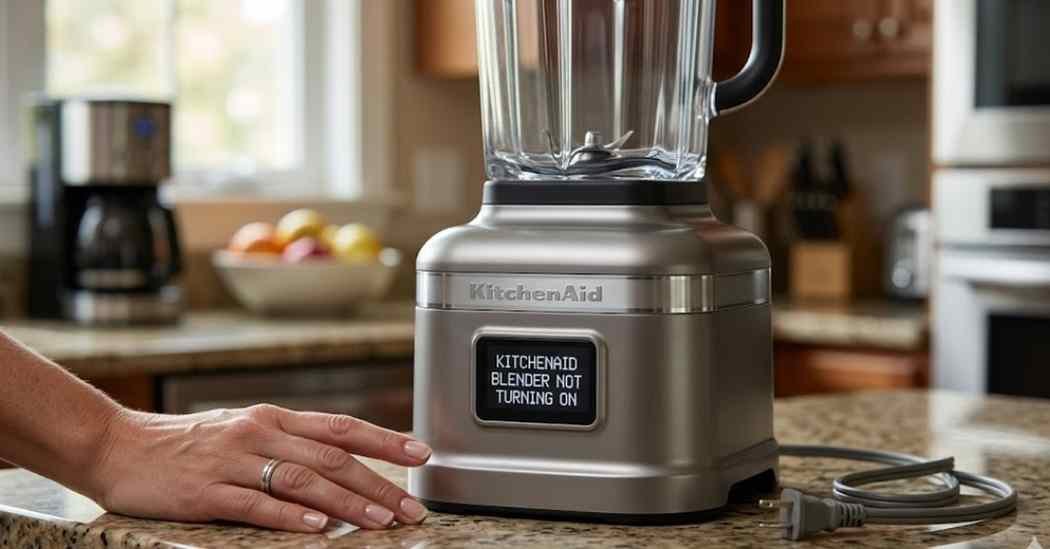
I was making my morning smoothie when it happened. I pressed the button, and my KitchenAid blender sat there completely dead.
Having a KitchenAid blender not turning on is a frustrating way to start the day. I totally get the panic you might feel right now.
But before you rush to buy a new one, take a breath. I fixed mine in just a few minutes, and you probably can too.
In this guide, I will show you exactly what to check. You will learn the exact steps I used to bring my dead blender back to life.
Sometimes, the issue is not the heavy motor at all. It could be worn-out parts stopping the safety switch from working properly.
You might just need a new replacement blender jar or a fresh drive coupling. These small parts are cheap and easy to swap out at home.
Let us look at the common signs first. This will help you figure out what went wrong with your machine.
Common Signs of the Problem
When your blender refuses to start, it usually gives you a few clues. You just need to know what to look for before taking action.
Sometimes, there are no lights on the control panel at all. This means electrical power is not reaching the machine at all.
Other times, the lights might flash, but the motor stays quiet. You might even hear a quiet, strange humming sound from the base.
If you pushed the machine hard the day before, you might have noticed a burning smell. This is a huge clue for what to fix next.
Some modern models even flash specific error codes on the screen. If you see a weird code, write it down right away.
These codes are like a map to the real problem. They tell you exactly why the motor is refusing to start up.
| Symptom | Likely Cause | Quick Fix |
| No lights, completely dead | Wall outlet or cord issue | Try a different plug |
| Flashing lights | Jar not locked in place | Re-seat the jar tightly |
| Humming but no spinning | Jammed blender blades | Clear food from blades |
Possible Causes
Why does this happen suddenly? The causes are usually simple and easy to fix yourself.
- Power supply issues: The wall outlet might be dead. The kitchen breaker might have tripped.
- Tripped overload protection: The motor got too hot. It shut itself off to stay safe from fire.
- Broken power cord: The wire might have a hidden cut. A damaged plug can also stop power.
- Safety switch problem: The jar is not pushing the safety lock down. The blender thinks the jar is missing.
- Jammed blender blades: Frozen fruit or ice is stuck. The motor cannot spin the frozen chunks.
- Worn seals and gaskets: Water might have leaked inside the motor base. This causes bad short circuits.
How to Fix KitchenAid Blender Not Turning On
Let us get to the fun part. Here is how you can test and fix your machine safely today.
Always unplug the machine before you touch the blades or base. Safety must always come first when doing any home repair.
Follow these steps in order. I start with the easiest fixes first to save you time.
Check the Power Source
This sounds silly, but check the plug first. A loose plug is the most common reason for a dead machine.
Push the plug firmly into the wall. Sometimes, the heavy cord pulls itself out just enough to lose power.
Next, test the wall outlet by plugging in a small lamp. If the lamp works perfectly, the outlet is totally fine.
If the lamp is dead, check your home breaker box. You might just need to flip a switch in your kitchen to restore power.
Many kitchens also have GFCI outlets with little reset buttons. Push the reset button on the outlet and try the blender again.
| Problem | Recommended Solution | Difficulty Level |
| Dead wall outlet | Reset GFCI switch or breaker | Very Easy |
| Overheated motor | Unplug and wait 45 minutes | Very Easy |
| Broken cord | Hire a pro to replace cord | Hard |
Reset the Overload Protection
KitchenAid blenders have a smart safety feature built right in. They will shut off if the motor gets too hot during heavy use.
If you were blending thick ice or hard nuts, the motor likely tripped this safety switch. Do not panic if this happens to you.
Just unplug the base and leave it alone on the counter. Let it rest for about 45 minutes to let the motor cool down completely.
Once the base feels cool to the touch, plug it back in. It will often turn right back on like absolute magic.
To prevent this later, always add more liquid to thick recipes. A wet mix is much easier for the motor to spin.
Check the Safety Lock and Jar Assembly
Many blenders will not start if the jar is loose. This feature protects your fingers from the sharp spinning blades.
Take the jar off the heavy base. Put it back on and make sure it clicks firmly into place.
If the bottom of the jar is dirty, the sensor might not feel it. Make sure you keep the base area free of sticky spills.
Regular cleaning helps prevent these sticky buildup issues. Grab a soft cloth and wipe the base well after every single use.
If the jar feels wobbly, the locking tabs might be broken. You can easily buy a replacement blender jar online to fix this.
Inspect the Drive Coupling
Look at the little rubber gear on top of the base. This is called the drive coupling, and it turns the blades.
If this piece is melted or chewed up, the safety switch might fail. It can also cause loud, scary grinding noises when you blend.
Inspect the rubber teeth closely. If they look flat or damaged, the coupling cannot grip the bottom of the jar properly.
Replacing it is surprisingly easy to do at home. You usually just need a flathead screwdriver to pop the old one off the metal shaft.
Once it is off, you simply screw the new rubber piece on. It takes two minutes and saves you from buying a whole new blender.
Examine the Blade Assembly
Sometimes the motor wants to turn, but the blades are stuck fast. This happens if food dries like hard glue under the sharp blades.
Unplug the machine and carefully look inside the empty jar. Use a wooden spoon to see if the blades spin freely.
If they are stuck hard, do not force them. Pour warm soapy water into the jar and let it soak for ten minutes.
Use long cleaning brushes to scrub safely around the sharp edges. Never use your bare hands to clear stuck food from the bottom.
If the blades still will not turn after soaking, the metal bearings might be shot. Rusted bearings happen if you put the assembly in the dishwasher.
Mistakes to Avoid
When fixing your machine, you must be careful. Rushing the repair can break the blender forever.
Do not try to force the buttons if they feel stuck. Hitting the control panel harder will only crack the cheap plastic.
Never bypass the safety switch with a tool or a pen. That switch is there to keep your hands safe from sharp blades.
Do not open the motor base if you are not trained in electronics. There are live wires inside that can shock you badly.
Another mistake is using cheap, fake parts from unknown brands. Fake replacement lids or bad seals will cause messy leaks eventually.
| Repair Issue | Estimated Cost | Replace Instead? |
| Broken drive coupling | $10 – $15 | No, easy fix |
| Damaged power cord | $30 – $50 | Maybe, if old |
| Burned out motor | $100+ | Yes, buy new |
When to Replace the Blender
Sometimes, a dead blender is truly dead for good. You need to know when to let it go and buy a new one.
If you smell a strong, awful burning smell that stays for days, the motor is likely fried. A fried motor is very hard to fix.
If fixing the machine costs more than half the price of a new one, stop right there. Just buy a new one instead.
It is not worth the stress to fix an old, tired machine. A new unit will come with a fresh warranty and sharp blades.
A good machine should last you many years. If yours keeps breaking down every month, an upgrade will save you time and money.
My Personal Experience
When my machine died last month, I felt so defeated. I thought I had broken a very expensive kitchen tool.
I started by checking the wall outlet, but that was totally fine. Then I looked at the bottom of the heavy glass jar.
It turned out that a sticky smoothie spill was blocking the safety sensor. I grabbed a food-safe degreaser and wiped it away gently.
After a quick scrub with a non-abrasive sponge, I locked the jar back in. The machine fired right up, and I felt so happy.
I also realized I was overloading the jar with too much hard ice. The poor motor was working way too hard every single morning.
Now, I always use my tamper tool to push food down safely. This helps the blades catch the food without straining the heavy motor.
I also add my liquid first, then my soft fruits, and finally the hard ice. This simple order makes blending so much easier on the machine.
Final Thoughts
Finding your KitchenAid blender not turning on is annoying, but usually easy to solve. Most fixes take less than five minutes to do yourself.
Check your plug, let the motor cool down, and check the jar switch first. These three steps fix the issue almost every single time.
Do not panic and throw away a good machine. With a little patience, you can usually get it working perfectly again.