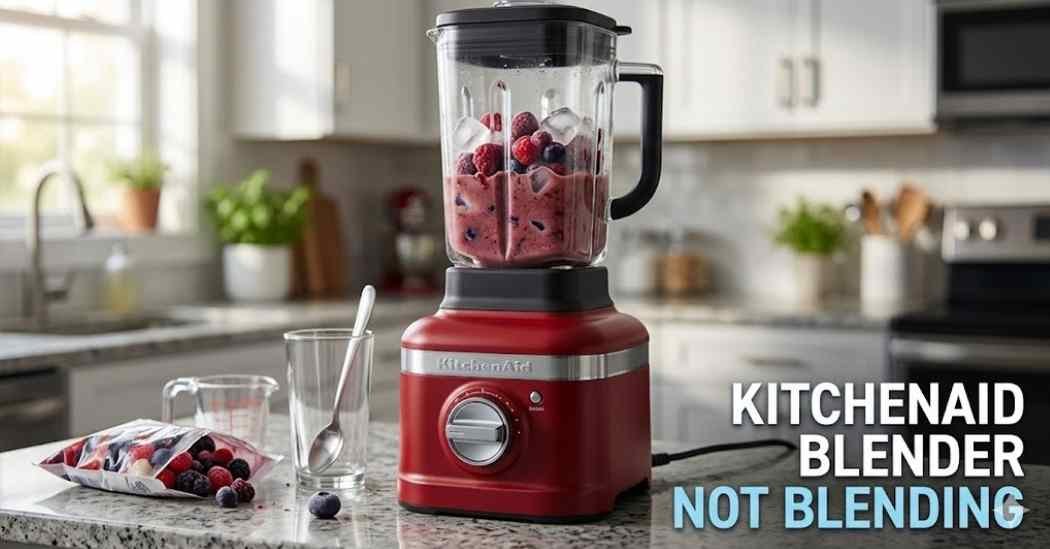
I love making healthy smoothies every single morning. But last week, I hit a really annoying snag in my kitchen. I confidently pressed the start button, and absolutely nothing happened.
Seeing your KitchenAid blender not blending is super frustrating. You just want your morning drink, but instead, you get a huge headache. I felt totally stuck and quite hungry at the time.
I decided to figure out exactly what went wrong. I took my blender apart and tested a few different things safely. I quickly learned that you can fix most of these issues right at home.
In this easy guide, I will share exactly what I discovered. I will gently show you how to find the root problem quickly. You will have your blender happily running again in no time at all.
Common Signs of the Problem
Blenders usually give us small hints before they completely fail. You might hear a very loud humming noise from the base. The motor turns on, but the blades just sit entirely still.
Sometimes, the blender is completely dead and silent. You press the soft buttons on the control panel, but no lights turn on. It feels like the main power cord is entirely broken.
Other times, the blades spin but very weakly. You might even smell a bad burning odor coming from the bottom. This overheating is a clear sign that the motor is working way too hard.
You might also see flashing lights on the display panel. These error codes mean the machine knows something is mechanically wrong. Paying close attention to these clues saves you a lot of guessing time.
If your blades are badly jammed, you might need a few simple parts. Sometimes you just need fresh replacement blades or a new drive coupling. Having extra replacement blender jars can also help if yours is badly cracked. You can also grab a handy tamper tool to push food down safely.
Possible Causes
Why does this extremely annoying problem happen to us? The most common reason is a totally stripped drive coupling. This small rubber part perfectly connects the motor to the metal blades.
Another big issue could be the actual power supply itself. A loose power cord or a bad wall outlet will stop your machine fast. Always check the wall plug before you start to panic.
Your blender might also have totally jammed blender blades. Hard frozen fruit or thick ice can easily trap the sharp blades. The smart overload protection then quickly shuts the motor off completely.
Sometimes, hidden leaks cause major mechanical problems over time. Worn seals and gaskets let sticky liquid drip down into the motor base. This sticky mess can freeze the moving parts and stop the blending.
| Symptom | Likely Cause | Quick Fix |
| Motor runs but no blending | Broken drive coupling | Replace the coupling |
| No power or missing lights | Bad wall outlet | Check the power supply |
| Loud buzzing base sound | Jammed blade assembly | Remove trapped hard food |
How to Fix KitchenAid blender not blending
Let us fix this stressful home issue together right now. I will carefully walk you through the absolute safest testing steps. Grab a clean soft cloth and a bright flashlight to start.
Always unplug your machine before doing anything at all. Safety is the most important thing when fixing any kitchen appliances. Never try to touch or fix a plugged-in or wet machine.
Check the Power Supply
Start with the absolute easiest fix first today. Check your kitchen wall outlet by plugging in a small lamp. If the lamp works perfectly, your wall outlet is totally fine.
Next, look closely at the blender’s main power cord. Check for any deep cuts, exposed wires, or bent metal prongs. If the cord looks bad, do not use the blender at all.
Reset the Overload Protection
KitchenAid blenders have a very smart built-in safety switch. This hidden switch stops the motor if it gets way too hot. It safely prevents the heavy machine from catching fire on your counter.
If your blender stops suddenly, unplug it right away. Let the hot motor fully cool down for at least thirty minutes. Plug it back in and try pushing the start button again.
Inspect the Drive Coupling
Take the heavy jar assembly right off the blender base. Look at the black rubber gear sitting on top of the base. This specific spinning part is called the drive coupling.
Are the small rubber teeth worn down, flat, or totally missing? If they are broken, the motor cannot possibly spin the blades. You will definitely need to buy a brand new coupling.
Replacing it is actually very easy and extremely quick. You just need a simple flathead screwdriver to gently pry it off. Then, you simply twist the new rubber part right into place.
Examine the Blender Blades
Now, look closely inside the glass or clear plastic pitcher. Turn the sharp blade base carefully by hand to see if it moves freely. It should spin very smoothly with just a little push.
If the metal blades are stuck solid, you need to do a deep clean right now. Take a non-abrasive sponge and some very warm soapy water. Gently scrub away any dried sticky food blocking the metal blades.
Sometimes, tiny fruit seeds get stuck under the blade assembly. A tiny cleaning brush can really help sweep them out nicely. Always keep the blade area totally spotless to prevent future jams.
| Problem | Recommended Solution | Difficulty Level |
| Tripped overload switch | Let motor cool for 30 minutes | Very Easy |
| Jammed blade assembly | Soak and wash blades safely | Easy |
| Worn drive coupling | Install a new coupling part | Medium |
Mistakes to Avoid
Many people actually make the mechanical problem much worse by forcing it. Do not keep pressing the soft buttons if the blades will not spin. This bad habit will easily burn out the expensive internal motor.
Never try to bypass the safety lock on the lid locking system. These smart lid locks keep you very safe from sharp moving parts. Opening the sealed motor housing is also a genuinely terrible idea.
Avoid using way too much soapy liquid near the main control panel. Water can instantly ruin the delicate electronic buttons and settings. Always wipe wet spills right away with a dry, soft cloth.
Also, never use highly harsh chemicals to wash the heavy base. Stick to mild dish soap and simple food-safe degreasers for routine cleaning and maintenance. This keeps the plastic looking perfectly nice and prevents serious internal damage.
When to Replace the Blender
Some complex mechanical problems are just too big to fix at home. If you ever see dark smoke or bright sparks, stop using the blender forever. It is a very serious fire hazard in your busy kitchen.
If the internal motor is completely dead, fast repairs can be very costly. Buying a whole new motor usually costs way more than a brand new blender. You must carefully weigh your household spending options.
Listen to the machine every time you try to blend food. If it always smells exactly like melting burning plastic, its days are fully numbered. Sometimes, upgrading to a fresh, new unit is the smartest choice.
If your machine is very old, replacement parts might be hard to find. At that sad point, fixing it takes way too much time and effort. A modern new blender will blend your food much better anyway.
| Repair Issue | Estimated Cost | Replace Instead? |
| Broken Drive Coupling | Under $20 | No, fix it easily |
| Rusty New Blade Set | $20 to $40 | No, fix it easily |
| Fully Burned Motor | Over $100 | Yes, replace blender |
My Personal Experience
I had to fix my very own blender just last month. I put way too many hard frozen strawberries in the jar at once. The machine made a truly sad humming noise and completely stopped.
I totally panicked and wrongly thought I broke it forever. But then I quickly remembered the handy overload protection feature. I unplugged the long cord and went to read a book in the living room.
Thirty long minutes later, I confidently tried blending my drink again. I also added much more warm liquid to the thick fruit mix. It happily started up perfectly and made a truly great breakfast smoothie.
I learned a very valuable cooking lesson that stressful day. Never overload the glass jar assembly with big rock-hard ice cubes. Always add just enough water or milk to easily help the blades turn.
Final Thoughts
Having a broken household blender is an incredibly frustrating feeling. But now you definitely know exactly what to look for next time. Most of these simple kitchen fixes are cheap and take only a few minutes.
Always thoughtfully start with the most simple electrical checks first. Look closely at the kitchen wall outlet and check the black drive coupling. Keep the machine nice and tidy to completely avoid bad jams.
You can truly handle this easy repair all by yourself. Just take your precious time and stay very safe while working. Soon, you will be right back to making your absolute favorite tasty drinks!