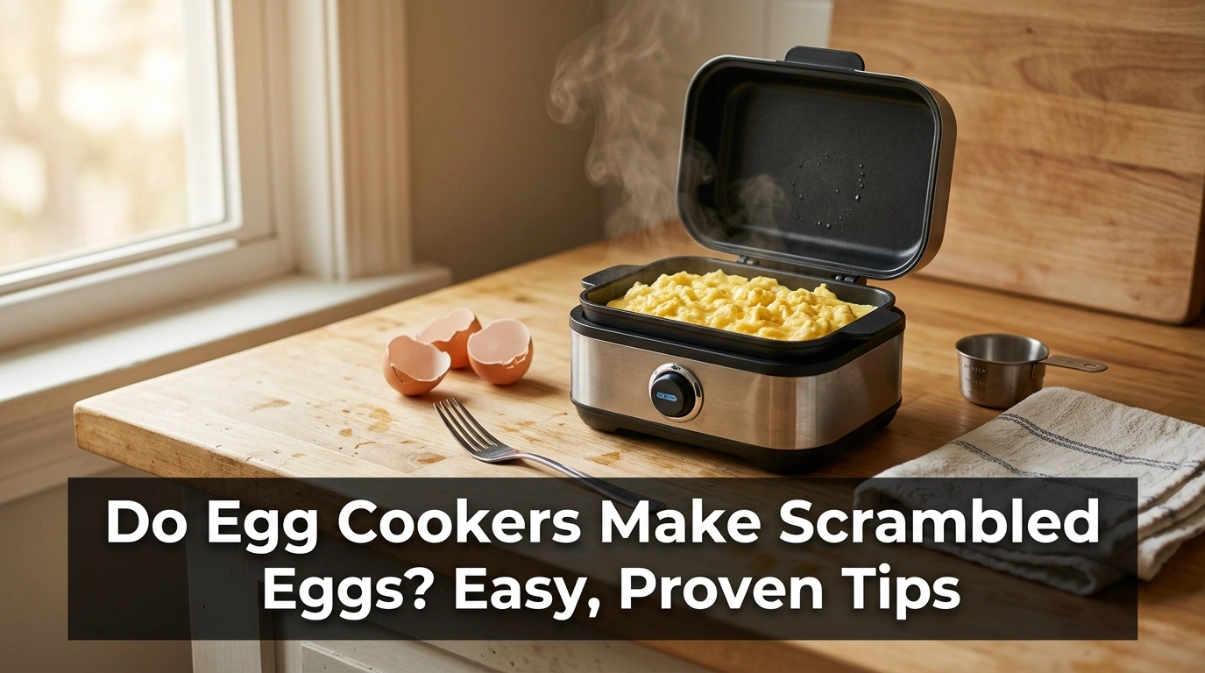
Do egg cookers make scrambled eggs? Yes, many models can. You need an omelet bowl or poaching tray that is safe for your machine.
I learned this after making a wet, uneven batch on my first try. I had used too much water and placed the eggs in the wrong insert.
The next batch came out soft and fully cooked. The key was using less water, lightly greasing the cooking bowl, and whisking the eggs well.
Not every egg cooker supports this method. Some basic models only cook eggs in their shells. Check your manual before adding beaten eggs.
This guide explains which tray to use, how much water you may need, and how to fix common cooking problems.
Common Signs of the Problem
Scrambled eggs made in an egg cooker should be soft and evenly set. They may look more like a steamed omelet than eggs cooked in a frying pan.
The process has gone wrong if the center stays runny while the edges turn firm. Watery eggs, sticking, and rubbery texture are also common signs.
I also noticed that too much steam made water drip from the lid. A small amount of water entered the egg bowl and made the eggs thin.
| Symptom | Likely cause | Quick fix |
|---|---|---|
| Eggs stay runny | Too little water or early shut-off | Add a little more water |
| Eggs feel rubbery | Too much water or cooking time | Use less water |
| Eggs stick to the tray | Tray was not greased | Add a thin coat of oil |
| Water enters the eggs | Steam vent blocked or bowl overfilled | Clear the vent and use fewer eggs |
| Cooker does not start | Poor tray fit or power issue | Refit the parts and check the outlet |
Some machines beep when the water has boiled away. This does not always mean the eggs are ready. A deep bowl of beaten eggs can take longer to set.
Never eat eggs that are still cold or very runny in the center. Cook them again until the liquid egg has set.
If you need an extra cooking dish, use only a replacement omelet or poaching tray made for your model. A matching water measuring cup also makes repeat batches much easier.
Do not use a random plastic bowl. It may bend, melt, block steam, or stop the lid from fitting safely.
Possible Causes
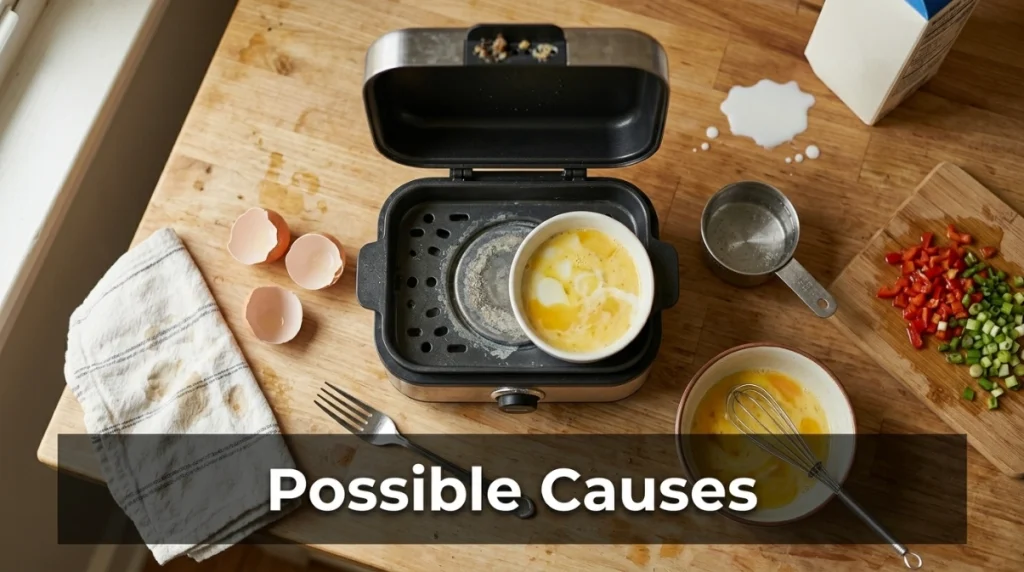
The machine is rarely broken when scrambled eggs turn out poorly. In most cases, the tray, water amount, or batch size is the real cause.
These are the issues I found during my tests:
- The model is not designed for beaten eggs.
- The shell egg insert is being used instead of an omelet bowl.
- Too many eggs are packed into a small tray.
- Too much or too little water is on the heating plate.
- The eggs were not whisked before cooking.
- The cooking bowl was not lightly greased.
- Cheese, milk, or vegetables added too much moisture.
- The steam vent is blocked.
- Mineral buildup is slowing heat transfer.
A large amount of milk can make the eggs watery. I now use only a small splash, or I leave it out.
Wet vegetables can cause the same issue. I cook firm vegetables first and drain off any liquid before adding them.
A loose lid can also change the result. Steam escapes too fast, so the cooker may run out of water before the center is done.
How to Fix Do Egg Cookers Make Scrambled Eggs Results
Start by checking whether your egg cooker includes an omelet bowl or poaching tray. The instructions may call it a cooking bowl, steaming dish, or omelet insert.
If the manual says the unit only cooks eggs in their shells, do not pour beaten eggs into it. Use a pan or another safe cooking tool instead.
Use the Correct Egg Tray
Remove the shell egg holder if the instructions tell you to do so. Place the omelet bowl in the position shown in the manual.
The bowl should sit flat. It must not cover the steam vent, press against the lid, or rest in an unstable position.
Never pour raw eggs onto the bare heating plate. The plate is meant to heat water, not hold food.
Measure the Water Carefully
Water creates the steam that cooks the eggs. The ideal amount changes by model, tray size, and number of eggs.
Start with the omelet mark on the supplied measuring cup. If there is no mark, follow the amount stated in the manual.
When my eggs stayed runny, I added water in very small steps during later tests. Adding a lot at once made the next batch dry and firm.
| Result | Recommended change | Difficulty |
|---|---|---|
| Soft, cold center | Add slightly more water | Easy |
| Dry or rubbery eggs | Use slightly less water | Easy |
| Watery surface | Reduce milk and wet fillings | Easy |
| Uneven cooking | Make a smaller batch | Easy |
| Slow cooking | Descale the heating plate | Easy |
Whisk the Eggs Before Cooking
Crack the eggs into a separate cup or bowl. This makes it easier to spot shell pieces and bad eggs.
Whisk until the yolks and whites are mixed. Add a small pinch of salt if desired.
I found that one or two eggs cooked more evenly than a deep three-egg batch. Check the tray’s fill limit before increasing the amount.
Grease the Cooking Bowl
Apply a very thin layer of butter or cooking oil to the omelet bowl. This keeps the egg from bonding to the surface.
Too much oil can collect around the edges. A light film is enough.
At about the halfway point of my tests, cleaning the tray became important. Old egg residue made each new batch stick more than the last.
Wash removable parts after they cool. I use warm water, mild dish soap, a soft cloth, or a non-abrasive sponge.
Keep Fillings Small and Dry
Cheese, herbs, and cooked vegetables can work well. Cut all fillings into small pieces so the eggs can cook around them.
Avoid raw meat in the egg bowl. It may not reach a safe temperature before the eggs look done.
Do not overload the tray with cheese or vegetables. Heavy fillings can leave a cold, wet area in the middle.
Check the Lid and Steam Vent
Fit the lid as directed by the maker. The steam vent must remain open.
A blocked vent can trap too much pressure and cause hot water to spit. Clean it only after the cooker is unplugged and cool.
Keep your hands and face away from the vent during use. Escaping steam can cause a painful burn.
Descale the Heating Plate
White marks on the heating plate are often mineral deposits. This buildup can slow heating and cause uneven results.
Unplug the cooker and let it cool. Follow the maker’s descaling steps using white vinegar or an approved descaling solution.
Do not soak the electrical base. Wipe it with a soft, damp cloth unless the manual gives different directions.
Mistakes to Avoid
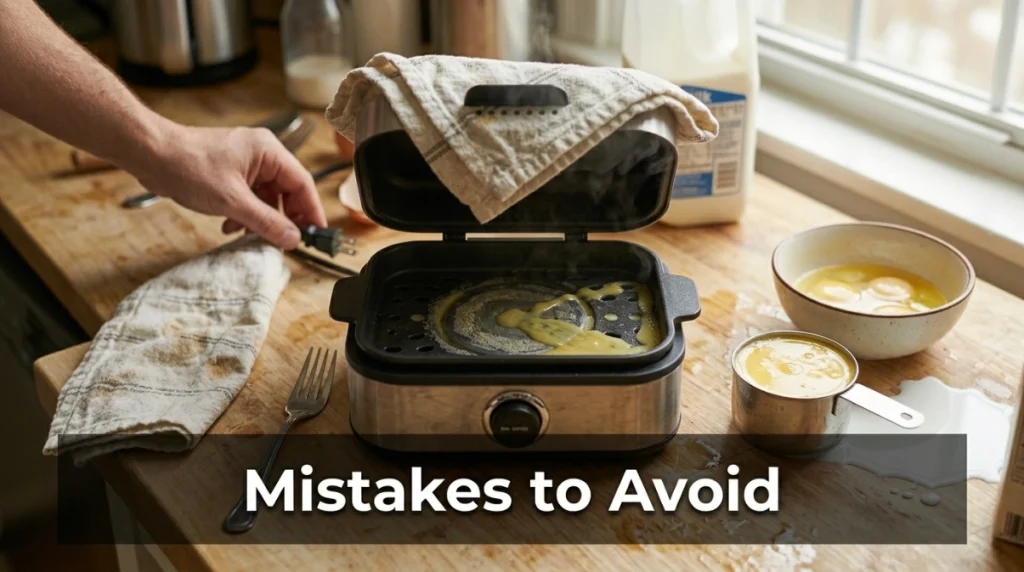
My first mistake was using the shell egg insert as a bowl. The holes let raw egg leak toward the heating plate.
I also added too much milk. The eggs looked done near the edge, but the middle stayed thin and cool.
Avoid these common errors:
- Do not cook beaten eggs on the bare heating element.
- Do not exceed the tray’s fill line.
- Do not seal or cover the steam vent.
- Do not touch the lid or plate while hot.
- Do not lift the lid toward your face.
- Do not rinse or immerse the powered base.
- Do not bypass the safety switch or auto shut-off.
- Do not open a sealed heating unit for repair.
If the power cord is split, melted, or hot, unplug the unit. Stop using it rather than trying a home electrical repair.
A burning smell is another serious warning. A faint smell from first use may be noted in the manual, but smoke or a lasting burnt odor is not normal.
When to Replace the Egg Cooker
Poor scrambled eggs alone do not mean you need a new cooker. Try a smaller batch, the correct tray, and careful water changes first.
Replacement makes sense when the heating plate fails, the cord is damaged, or the machine no longer shuts off. Stop using it if water leaks into the electrical base.
| Repair issue | Likely cost level | Replace instead? |
|---|---|---|
| Missing measuring cup | Low | No |
| Damaged removable tray | Low to moderate | Only if no matching tray exists |
| Cracked lid | Low to moderate | Yes, if a safe replacement is unavailable |
| Failed heating element | High | Usually |
| Burnt cord or electrical smell | Unsafe for home repair | Yes |
A missing cup or tray may be easy to replace. Confirm the model number so the new part fits and does not block the lid or safety switch.
Do not keep using a cracked lid. Hot steam may escape from an unexpected spot.
My Personal Experience
I tested two eggs in the omelet tray first. I whisked them with a fork, added a little salt, and greased the tray.
My first batch had too much water. The eggs were firm around the edge and almost rubbery at the bottom.
For the second test, I used less water and skipped the milk. The result was softer, but the center still needed a short second cycle.
The best batch used two eggs, a small amount of cheese, and no wet vegetables. I let the cooker finish, then waited one minute before opening the lid.
That short rest helped the center set. It also let some steam settle before I removed the lid.
I learned that an egg cooker does not copy pan-scrambled eggs. It makes a soft steamed egg that can be broken into curds with a fork.
Final Thoughts
So, do egg cookers make scrambled eggs? They can, as long as the model has a suitable omelet bowl or poaching tray.
Use the correct insert, measure the water, and keep the batch small. Lightly grease the bowl and avoid adding too much milk or wet filling.
The texture will be closer to a steamed omelet than classic pan-scrambled eggs. Still, it is an easy hands-off option when the cooker is used as directed.
If you notice smoke, a burning smell, cord damage, or leaks near the base, stop using the machine. Safe cooking matters more than saving one batch of eggs.