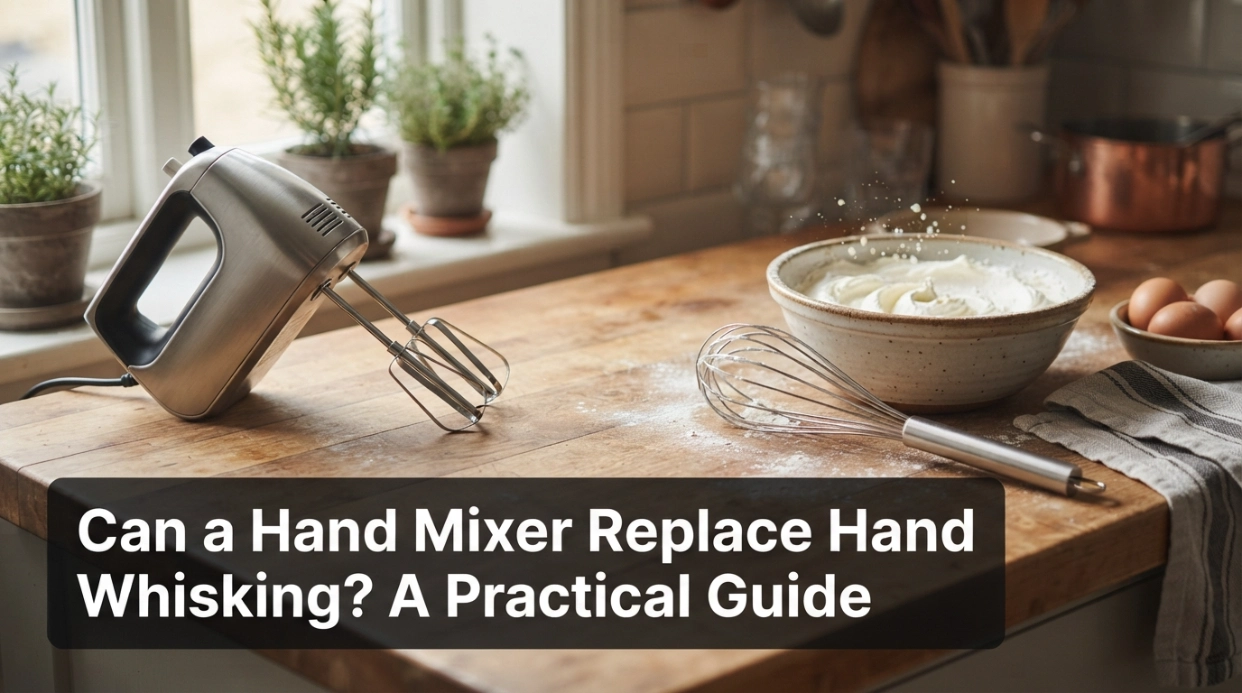
Quick Answer
Yes, a hand mixer can replace hand whisking for most jobs that involve beating, whipping, creaming, or aerating ingredients. It is especially useful for whipped cream, egg whites, frosting, and cake mixtures. However, a manual whisk still gives better control for delicate sauces, tiny quantities, and mixtures that can be overworked quickly. When using an electric mixer, start at a low speed and increase gradually.
Use a hand mixer when:
- Whipping cream: Powered whisking introduces air with much less arm effort.
- Beating egg whites: Consistent movement makes reaching soft or stiff peaks easier.
- Making frosting: Electric beaters combine butter, sugar, and soft ingredients efficiently.
- Creaming ingredients: Butter and sugar usually benefit from sustained mechanical beating.
- Larger batches: A motor saves effort when manual whisking becomes tiring.
Keep the manual whisk when:
- You need precise control: Small sauces, thin batters, and delicate emulsions can change quickly.
- The quantity is tiny: Large beaters may not contact enough of the mixture.
- Gentle mixing matters: A whisk can combine ingredients without aggressively working the mixture.
If you are wondering whether a hand mixer can replace hand whisking, the practical answer depends on what is in the bowl. A powered mixer can save considerable effort, but faster mixing is not always better.
I use one simple rule: choose the tool based on the texture you need, not just convenience. This guide explains where a hand mixer works well, where a manual whisk still wins, and how to switch between them without ruining the recipe.
In This Guide
- Can a Hand Mixer Replace Hand Whisking for Most Recipes?
- When Is a Hand Mixer Better Than Hand Whisking?
- When Should You Still Whisk by Hand?
- Does a Hand Mixer Change Texture or Aeration?
- How Do You Switch From Hand Whisking to a Hand Mixer?
- Frequently Asked Questions
- Final Takeaway: Which Tool Should You Use?
Can a Hand Mixer Replace Hand Whisking for Most Recipes?
Yes. A hand mixer can take over many jobs normally done with a balloon whisk, especially when the goal is repeated beating or aeration.
The important difference is speed. Your hand controls a manual whisk directly, while an electric motor turns mixer attachments much faster and more consistently.
Definition: Hand whisking means manually moving a whisk through ingredients to combine them or introduce air. A hand mixer performs a similar repetitive action using motor-driven beaters or whisk attachments.
A hand mixer therefore replaces the physical effort rather than changing the basic purpose of whisking. The ingredients are still being moved, combined, and sometimes aerated.
These jobs usually transfer well to a hand mixer:
- Whipping heavy cream
- Beating egg whites
- Preparing meringue
- Mixing buttercream frosting
- Beating eggs for baking
- Creaming softened butter and sugar
- Mixing many cake batters
- Combining cheesecake fillings
A mixer is less useful when the recipe requires slow, careful movement. It may also struggle when the quantity is too shallow for its attachments to reach properly.
As of 2026, hand mixers vary considerably in attachment design and speed control. Current KitchenAid models, for example, include multiple-speed designs, so the appropriate setting depends on the model and recipe.
Section Takeaway: A hand mixer can replace manual whisking when the job needs sustained beating or whipping, but it should not automatically replace the whisk in every recipe.
When Is a Hand Mixer Better Than Hand Whisking?
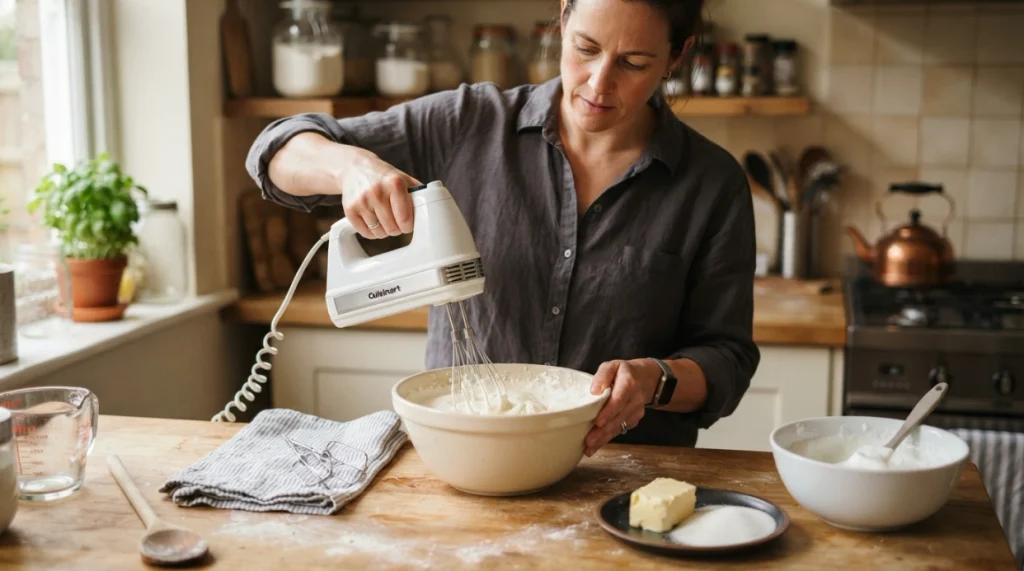
A hand mixer is better when the recipe requires repetitive motion for more than a brief stir. It reduces arm fatigue and maintains a more consistent mixing action.
Whipping cream
Whipped cream is one of the clearest examples. You need to introduce air while continuing to move the cream until its structure thickens enough to hold peaks.
A hand mixer can maintain that action without your wrist slowing down. Start gently to control splashing, then increase the speed as the cream thickens.
Beating egg whites
Egg whites also benefit from sustained whisking. Mechanical agitation unfolds proteins while air becomes trapped throughout the liquid.
Rutgers University describes how whipping egg whites both changes their proteins and incorporates air bubbles into the foam. You can read its explanation of the science of whipped egg-white foam.
The speed of a hand mixer makes the job easier, but you still need to watch the peaks. More beating after the desired stage can damage the texture.
Frosting and creamed mixtures
Buttercream, cream cheese frosting, and creamed butter-and-sugar mixtures usually require more than gentle stirring. Repeated beating helps distribute ingredients while changing the mixture’s texture.
This is where electric beaters are more practical than a balloon whisk. Standard hand-mixer beaters are usually the better attachment for thick frosting.
- Use beaters: buttercream, cake mixtures, creamed butter, and thicker fillings.
- Use a wire whisk attachment: cream, egg whites, and lighter aerated mixtures.
- Start slowly: loose flour, powdered sugar, and liquids can spray from the bowl.
Section Takeaway: Choose a hand mixer when sustained movement and aeration matter more than delicate manual control.
When Should You Still Whisk by Hand?
Keep your manual whisk for quick, delicate, or small-volume jobs. It gives immediate feedback because you can feel the resistance changing through your hand.
Small quantities
A tablespoon or two of dressing may sit below electric beaters. A small whisk can contact the ingredients more effectively.
The same applies to a single egg in a wide bowl. Using an electric mixer may create more cleanup than the job justifies.
Thin batters that should not be overmixed
Pancake and muffin batters often need limited mixing after flour becomes wet. Aggressive beating can work the mixture more than necessary.
A manual whisk makes it easier to stop when only a few small lumps remain. A spatula may be even better for the final strokes.
Sauces and emulsions
Manual whisking is useful when making a sauce directly in a saucepan or when adding one ingredient gradually. You can control exactly where the whisk moves.
Electric beaters can be awkward near a hot pan. They can also move thin liquid aggressively enough to cause splashing.
Folding is not whisking
A hand mixer should not replace a spatula when the recipe tells you to fold. Folding aims to combine mixtures while preserving as much trapped air as possible.
- Fold whipped whites into cake batter with a spatula.
- Fold whipped cream into mousse gently.
- Fold dry ingredients when the recipe warns against overmixing.
The motor should already be off at this stage. Faster is not better here.
Does a Hand Mixer Change Texture or Aeration?
It can. A hand mixer usually performs the same basic mechanical job as a whisk, but its higher and steadier speed can change how quickly a mixture reaches its final texture.
This matters most with foams, cream, and mixtures containing proteins or fat. You may reach the target stage sooner than expected.
| Feature | Manual Whisk | Hand Mixer |
|---|---|---|
| Power source | Your hand and wrist | Electric motor |
| Speed control | Continuously controlled by you | Model-specific settings; some KitchenAid models offer 5–9 speeds |
| Physical effort | Higher during long whipping jobs | Lower, although you still guide the mixer |
| Fine control | Excellent | Good at low speed |
| Aeration | Effective but effort-dependent | Fast and consistent with a suitable attachment |
| Best for tiny batches | Usually better | Depends on bowl depth and attachment reach |
Watch the food instead of relying only on a timer. Soft peaks, stiff peaks, smooth batter, and fluffy creamed butter are visual texture targets.
Overbeating is especially important with egg-white foams. Once proteins have formed the desired foam structure, excessive agitation can eventually make that structure less useful.
This is why I do not convert a manual whisking instruction into an identical electric mixing time. The motor changes the rate of work.
Section Takeaway: Electric mixing can reach the same texture faster, so judge the mixture by appearance and consistency rather than copying manual whisking times.
How Do You Switch From Hand Whisking to a Hand Mixer?
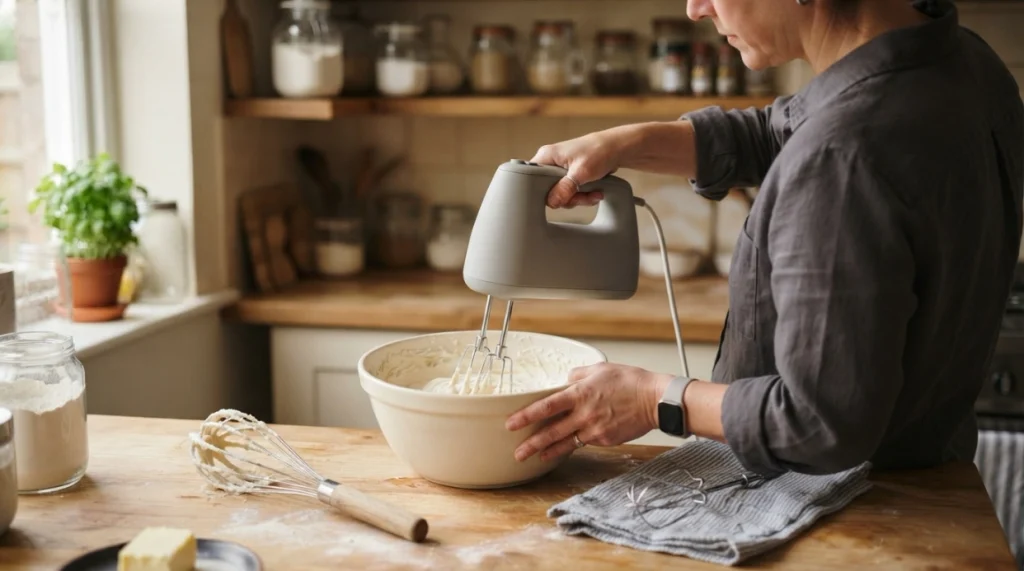
Do not simply turn the mixer to its highest setting. Start with the lowest practical speed and treat the recipe’s texture description as your stopping point.
- Choose the correct attachment. Use standard beaters for thicker mixtures and a whisk attachment when aeration is the main goal.
- Use a suitable bowl. The bowl should be deep enough to keep ingredients from splashing.
- Start on low speed. This is especially important with flour, powdered sugar, or thin liquids.
- Increase gradually. Move higher only when the recipe needs more vigorous beating or aeration.
- Move through the bowl. Guide the attachments so ingredients around the sides enter the active mixing area.
- Watch the texture closely. Stop as soon as you reach the recipe’s specified stage.
- Turn off and unplug before handling attachments. Never put fingers or utensils near moving beaters.
Electrical safety deserves the same attention as recipe technique. The U.S. Consumer Product Safety Commission provides consumer-product safety and recall information.
You can also check whether appliances carry appropriate certification or safety markings. UL Solutions’ appliance resources explain its work with appliance safety, performance, and certification.
Pro tip: If a hand mixer has a damaged cord, unusual burning smell, sparking, or internal mechanical problem, stop using it. Do not bypass safety features or open a sealed appliance unless the manufacturer specifically permits servicing; follow the manual or use a qualified repair technician.
Section Takeaway: When converting from hand whisking, begin slowly, use the correct attachment, and stop according to texture instead of assuming the original mixing time still applies.
Frequently Asked Questions
Can I use a hand mixer instead of a whisk for whipped cream?
Yes. A hand mixer works well for whipped cream and usually requires much less physical effort. Start at a controlled speed, increase as the cream thickens, and stop when you reach the peak firmness required by the recipe.
Can a hand mixer replace a whisk for egg whites?
Yes. A hand mixer with beaters or a whisk attachment can whip egg whites effectively. Watch the foam carefully because powered mixing can reach soft or stiff peaks quickly, and excessive beating can damage the final texture.
Can I use a hand mixer instead of whisking pancake batter?
You can, but use low speed and mix briefly. Pancake batter usually needs only enough mixing to combine wet and dry ingredients. A manual whisk often provides better control when you want to avoid unnecessary overmixing.
Is a hand mixer the same as an electric whisk?
The terms are sometimes used interchangeably, but designs vary. A hand mixer commonly uses two removable beaters and may include a separate wire-whisk attachment. An electric whisk may refer more specifically to a powered tool designed mainly for aeration.
Can a hand mixer replace hand whisking for sauces?
Sometimes, but it is rarely my first choice for small or heat-sensitive sauces. A manual whisk gives better control in a saucepan and makes gradual ingredient additions easier without sending hot or thin liquid around the kitchen.
Does using a hand mixer make food fluffier?
It can when the recipe benefits from aeration. Fast-moving beaters or a whisk attachment can introduce air into cream, egg whites, and certain butter mixtures. The final result still depends on ingredients, temperature, attachment choice, and when you stop mixing.
Should I use the highest hand-mixer speed for whisking?
No. Start low and increase only when necessary. High speed is useful for some whipping jobs, but it can cause splashing or take delicate mixtures past their ideal texture before you notice the change.
Final Takeaway: Which Tool Should You Use?
A hand mixer can replace hand whisking in many everyday recipes. It is especially useful for whipped cream, egg whites, frosting, creamed butter, and other mixtures that require sustained beating.
A manual whisk remains useful because it offers unmatched simplicity and direct control. Keep one nearby for small quantities, quick batters, sauces, and delicate mixing.
- Choose a hand mixer for sustained whipping, beating, creaming, and larger batches.
- Choose a manual whisk for small amounts, delicate sauces, and controlled mixing.
- Choose a spatula when the recipe specifically requires folding.
For most home kitchens in 2026, the two tools complement each other rather than compete. Use the hand mixer to remove unnecessary effort, then switch back to manual control whenever the recipe needs a gentler touch.
