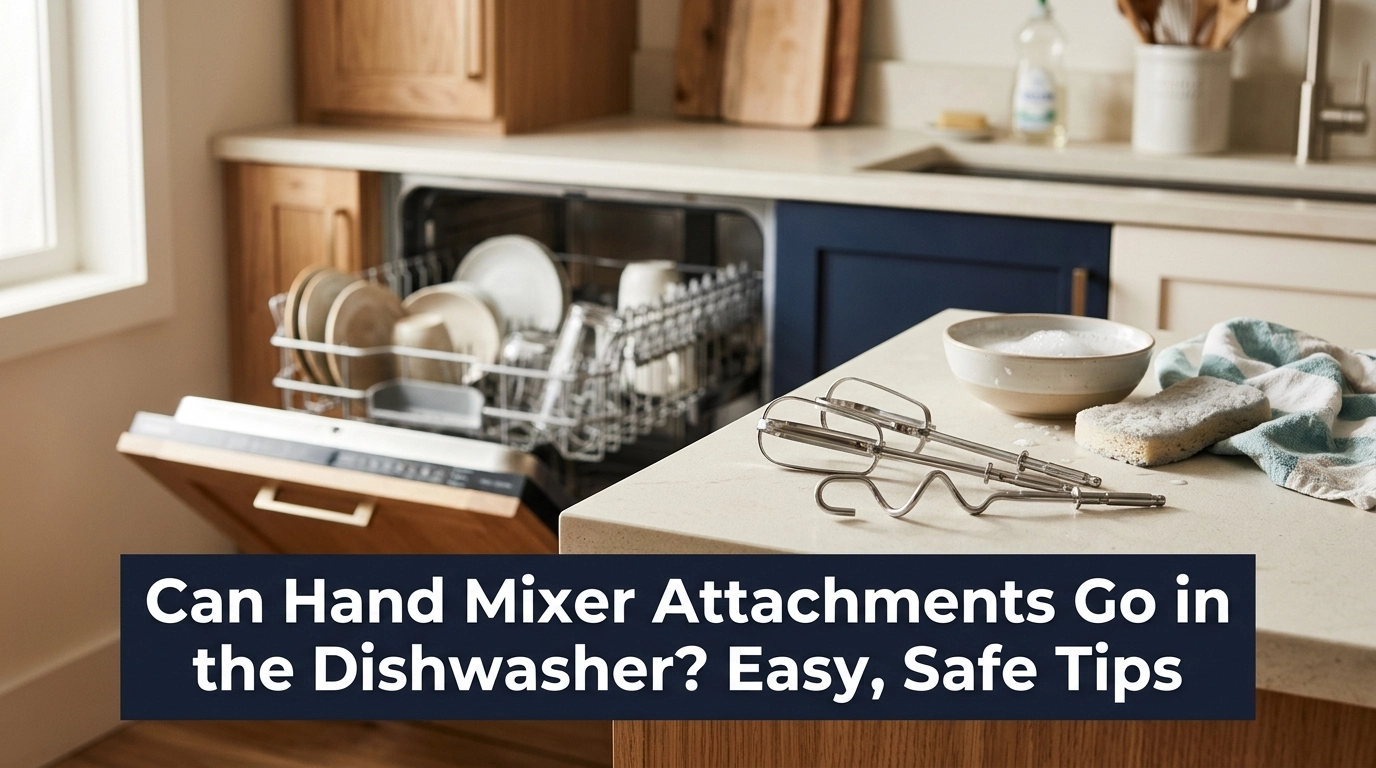
Can hand mixer attachments go in the dishwasher? Yes, many can, but it depends on the part and the maker’s instructions. Some beaters are dishwasher-safe, while other parts can rust, fade, or wear out.
When I check how to wash mixer parts, I look at the material and the care label first. This simple step helps me avoid damage and keeps the parts ready for the next use.
In this guide, I’ll explain which parts may go in the dishwasher, what to check first, and how to wash them by hand when needed. I’ll also cover common mistakes that can shorten the life of your mixer parts.
Common Signs Your Hand Mixer Attachments Need Care
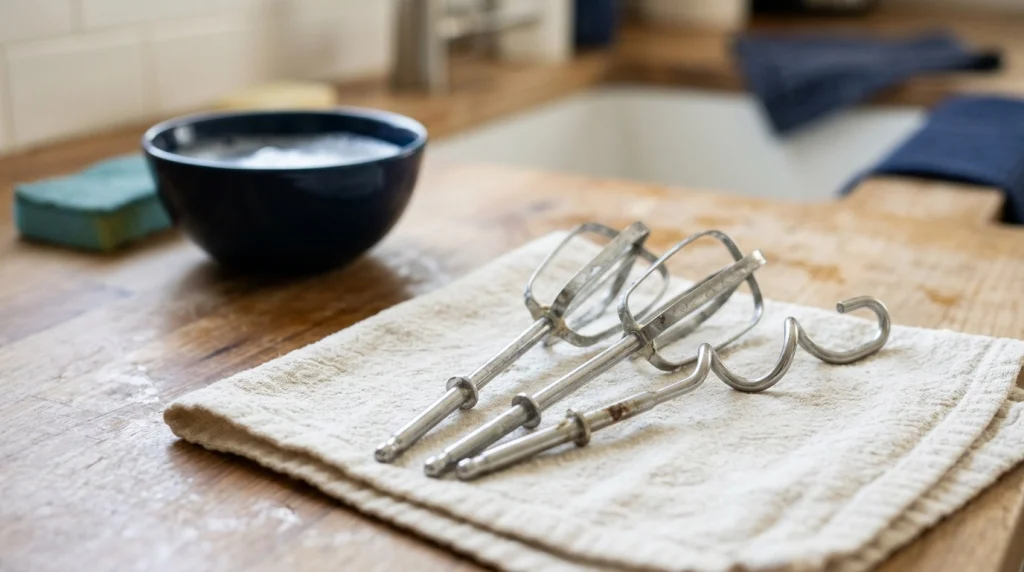
Mixer parts can collect food, grease, and dried batter. A quick rinse may not remove all of it, so the right cleaning method matters.
Here are some signs that your attachments need more care:
- Sticky beaters: Dried cake mix or dough clings to the metal.
- White marks: Soap or hard water may leave spots on the surface.
- Rust spots: Some metal parts may corrode after repeated contact with water.
- Dull finishes: Harsh soap or rough scrubbing may affect the surface.
- Food trapped in joints: Small gaps can hold batter and crumbs.
If you see rust, peeling, or damage, stop using the affected part until you know it is safe. A damaged attachment can leave bits of metal or coating in your food.
Possible Causes of Dishwasher Damage
Not every hand mixer attachment is made from the same material. The finish, shape, and maker’s care rules all affect how well a part handles a dishwasher.
The most common reasons for damage include:
- Wrong material: Some metal finishes do not handle repeated dishwasher cycles well.
- High heat: Hot water and drying heat may damage some coatings or plastic parts.
- Strong detergent: Dishwasher soap can be too harsh for certain finishes.
- Long wet periods: Leaving parts damp may lead to rust on some metals.
- Poor placement: Attachments can knock against other items and get scratched.
- Unclear care labels: Similar-looking parts from different brands may have different cleaning rules.
Chrome-plated parts, coated beaters, and plastic attachments may need special care. Stainless steel parts often resist rust well, but that alone does not prove that a part is dishwasher-safe.
How to Clean Hand Mixer Attachments Safely
The safest method is to follow the care instructions for your exact mixer model. If you cannot find them, wash the attachments by hand until you can confirm the right method.
1. Check the Manual or Care Label
First, find the mixer model number. It is often printed on the base, handle, or rating label.
Look up the maker’s cleaning guide. Check each attachment separately, since the beaters and dough hooks may have different care rules.
If the guide says an attachment is dishwasher-safe, follow its instructions for placement and washing. If it says hand-wash only, do not put that part in the machine.
2. Identify Each Attachment’s Material
Look closely at the part before washing it. Most standard beaters and dough hooks are metal, while some special attachments use plastic or coated surfaces.
Use this table as a starting point, not as a replacement for the maker’s advice.
| Attachment type | Dishwasher guidance | Best next step |
|---|---|---|
| Stainless steel beaters | Often safe if approved | Check the manual |
| Chrome-plated beaters | Depends on the finish | Hand-wash if unsure |
| Dough hooks | Model-dependent | Check the care label |
| Plastic attachments | Heat may cause damage | Follow the maker’s guide |
| Mixer body and cord | Never immerse or dishwash | Wipe with a damp cloth |
A shiny finish does not always mean a part is stainless steel. If you cannot tell what the attachment is made of, gentle hand-washing is the safer choice.
3. Remove Food Before Washing
Unplug the mixer before removing its attachments. Press the eject button only when the mixer is off and disconnected from power.
Scrape off thick batter with a soft spatula. Then rinse the attachments with warm water to loosen any food that remains.
This step helps prevent food from drying into corners and makes hand-washing much easier.
4. Wash Approved Parts in the Dishwasher
If the manual confirms that your attachments are dishwasher-safe, place them in a secure spot. Keep them apart from heavy pans and sharp utensils that could scratch them.
Use the wash cycle and detergent recommended by the manufacturer. Avoid forcing attachments into a crowded basket or letting them block the spray arms.
When the cycle ends, remove the parts and check for food residue. Dry them fully before putting them away.
5. Hand-Wash Parts That Are Not Approved
For parts that need hand-washing, use warm water, mild dish soap, and a soft sponge. Gently clean around the wires, curves, and joints where batter can collect.
Rinse away all soap. Dry each part with a clean, soft cloth, then let it air-dry fully before storage.
I prefer this method when the material or care instructions are unclear. It gives me more control and avoids exposing delicate finishes to high heat.
6. Store the Attachments Properly
Once the parts are dry, store them in a clean drawer or container. Keep them away from damp areas and avoid piling heavy tools on top of them.
Good cleaning habits also mean checking for rust, cracks, and loose parts after washing. If an attachment has a damaged coating or rough, corroded spots, replace it if the maker cannot confirm that it remains safe to use.
Quick Guide to Common Problems
| Problem | Likely cause | Quick fix |
|---|---|---|
| Rust spots | Moisture or a vulnerable finish | Stop using the damaged part and check replacement advice |
| White residue | Hard water or detergent | Rinse and wipe; hand-wash next time |
| Food still stuck | Crowded loading or dried batter | Soak briefly in warm, soapy water if permitted |
| Scratches | Contact with other utensils | Separate the parts during washing |
| Warped plastic | Excessive heat | Stop using the part if its shape or fit has changed |
Mistakes to Avoid
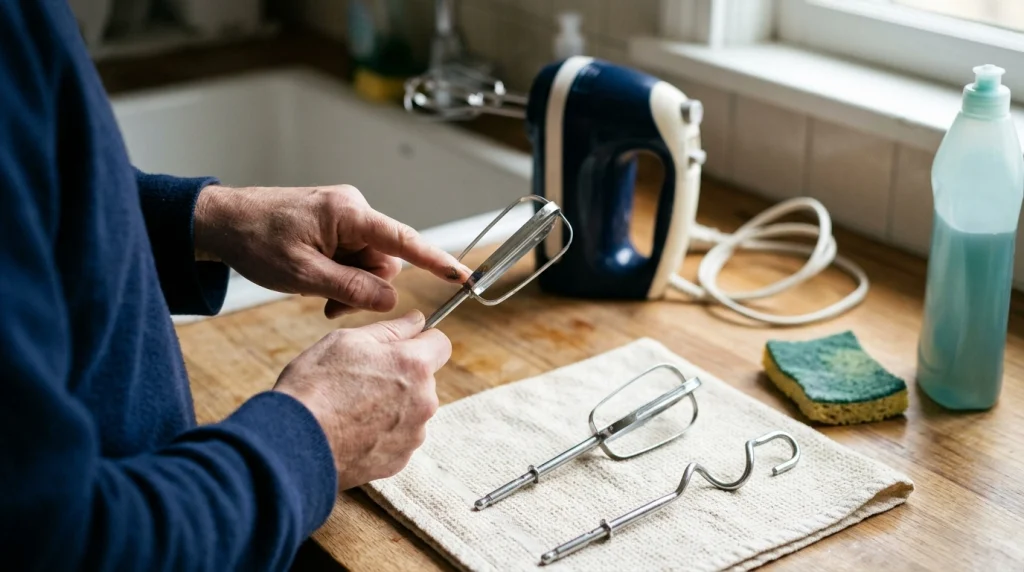
A few small mistakes can cause lasting damage. Avoid these common habits when caring for your attachments.
- Do not guess based on appearance. Similar metal parts may have different finishes.
- Do not wash the mixer body. Keep the motor housing, power cord, and plug out of water and away from the dishwasher.
- Do not use steel wool. It may scratch or damage the surface.
- Do not use harsh cleaners without approval. Bleach and strong cleaning products may harm some materials.
- Do not store wet attachments. Moisture can encourage corrosion.
- Do not force a stuck attachment into place. Check the fitting and instructions instead.
Never open the mixer’s motor housing to clean it or attempt electrical repairs unless you are qualified and the maker’s service instructions allow it. If the body gets wet inside, unplug it and contact the manufacturer or a qualified repair service before using it again.
When to Replace Hand Mixer Attachments
A replacement may be the best choice if an attachment is badly rusted, cracked, bent, or has a peeling coating. Damage can affect how securely it fits and whether it is safe for food use.
Before buying a new part, check the model number and the attachment’s shape and connection. Parts that look alike may not fit every mixer.
| Repair issue | Typical cost level | Replace instead? |
|---|---|---|
| Light food residue | Low | No; clean it properly |
| Minor water spots | Low | Usually not |
| Severe rust or peeling | Varies by model | Often yes |
| Bent or loose attachment | Varies by model | Usually yes |
| Missing compatible part | Depends on availability | Consider a genuine replacement |
Prices vary by brand and model, so check the maker’s parts list before spending money. Do not use a damaged attachment just because a replacement is hard to find.
My Personal Experience With Cleaning Mixer Attachments
When I assess the safest way to clean mixer attachments, I start by checking the manual rather than assuming that all metal parts can go in the dishwasher. I also look for worn finishes, rust, and food trapped around the attachment’s bends.
My first step is to remove loose batter and rinse the parts. If the maker allows dishwasher cleaning, I use the approved method and check the parts after the cycle. If the instructions are unclear, I choose warm water, mild soap, and a soft sponge instead.
The main lesson is that dishwasher-safe does not mean damage-proof. Even approved parts need proper loading, careful handling, and thorough drying.
I also avoid using the dishwasher as a shortcut for cleaning the mixer itself. The motor body needs a separate approach: unplug it, then wipe the outside with a slightly damp cloth as the manual directs.
These checks take only a little time. They also help me spot damage before it becomes a bigger problem.
Final Thoughts
So, can hand mixer attachments go in the dishwasher? Many can, but only when the manufacturer confirms that they are dishwasher-safe. The answer depends on the material, finish, and model.
Check the manual first. Remove food before washing, use the approved method, and dry every attachment well before storage.
If you are unsure, hand-washing with mild soap and warm water is a simple choice. It helps protect the finish and keeps your attachments ready for your next baking project.