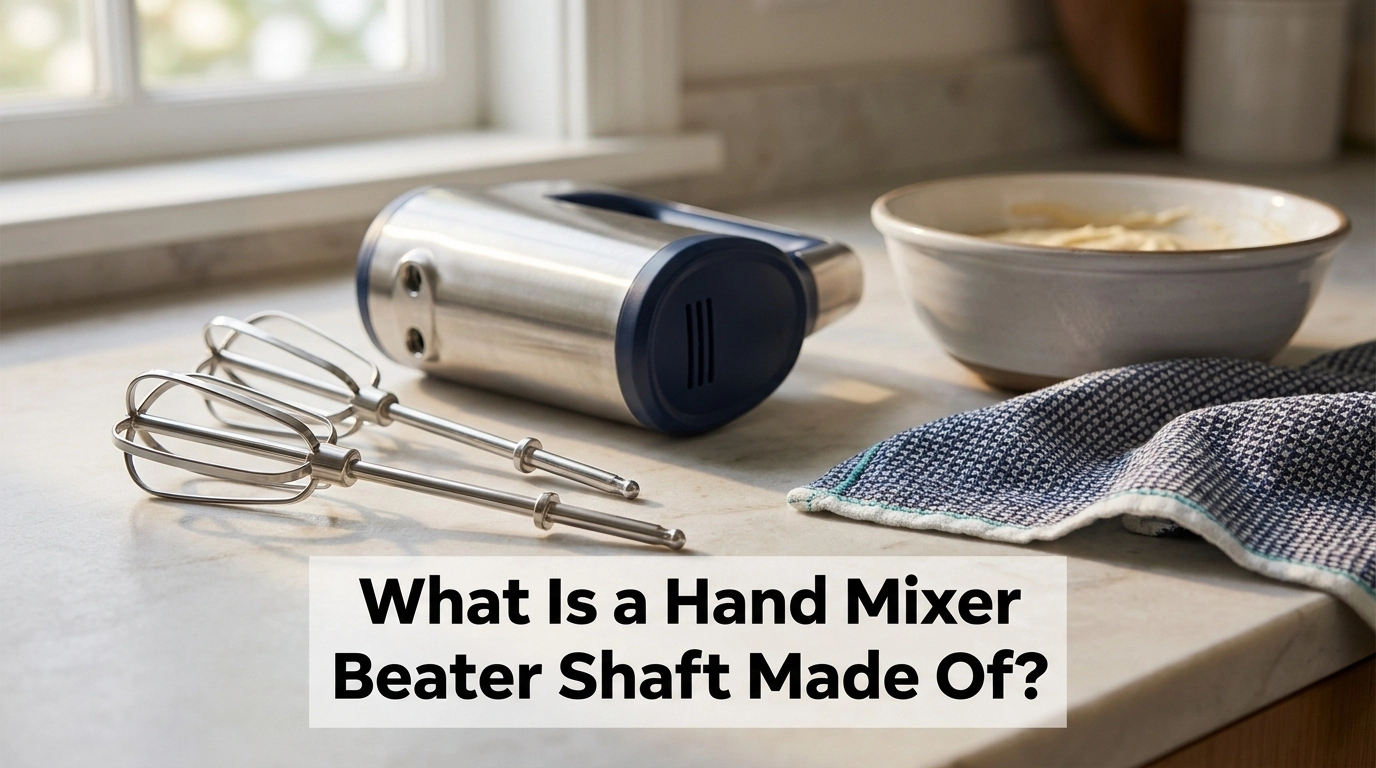
Quick Answer
A hand mixer beater shaft is commonly made from stainless steel or another metal selected for strength, corrosion resistance, and repeated contact with food. However, the exact material depends on the mixer model and the part being described: the metal rod entering the mixer may differ from the wire loops, gears, or internal drive shaft. Check the manufacturer’s parts list or manual to confirm the material of your specific attachment.
Materials and What They Mean
- Stainless steel: Common in food-contact beaters because it resists rust and cleans easily.
- Other metals: Some internal drive components use steel or other engineered metals for strength and wear resistance.
- Protective coatings: Certain beaters use coated metal rather than exposed stainless steel.
- Plastic components: Some mixer housings, couplings, and release mechanisms contain plastic, but that doesn’t mean the food-contact beater is plastic.
- Model differences: Material, finish, and dishwasher compatibility vary by manufacturer and attachment.
How to Verify Yours
- Find the model number and check the manufacturer’s official specifications or replacement-parts documentation.
- Don’t rely on silver color or a magnetic test alone to identify the exact alloy.
A hand mixer looks simple from the outside, but its beaters depend on several carefully chosen materials to work reliably. Knowing what the beater shaft is made of can help you choose replacement attachments, clean them correctly, and spot signs of wear.
In this guide, I’ll explain the difference between the visible beater shaft and the internal drive shaft, how stainless steel compares with coated metal, and what to check before buying or maintaining a replacement part.
In This Guide
- What is a hand mixer beater shaft?
- What materials are used to make beater shafts?
- Stainless steel vs. coated metal: What’s the difference?
- How does shaft material affect performance and durability?
- How can you identify your beater shaft material?
- How should you clean and replace a beater shaft?
- Frequently asked questions
What Is a Hand Mixer Beater Shaft?
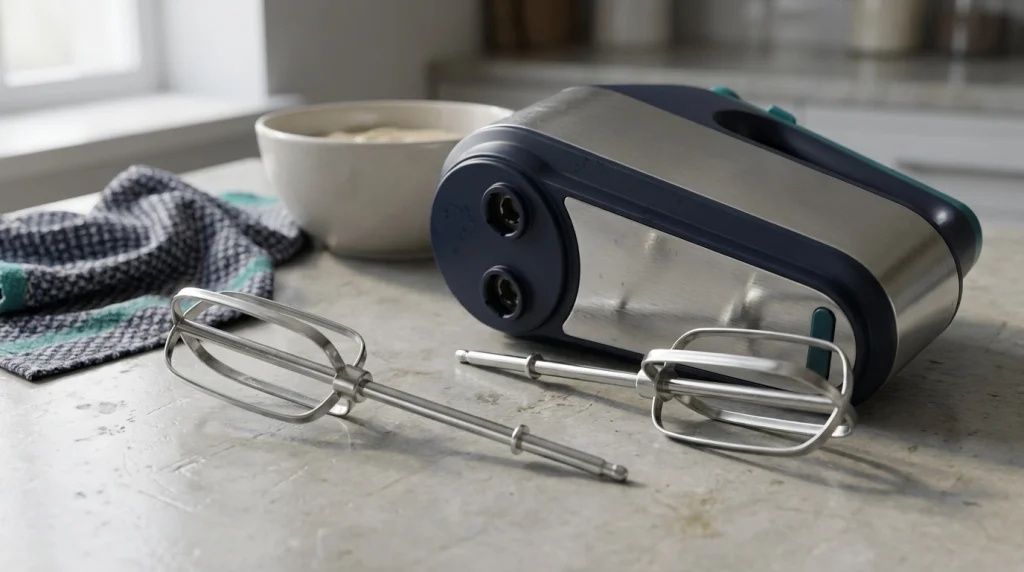
A hand mixer beater shaft is the metal stem or connecting section that helps transfer the mixer’s rotating motion to its beater attachment. The term can describe different parts, so identifying the exact component matters before assuming what material it uses.
The attachment shaft versus the internal drive shaft
On many hand mixers, the removable beater has a narrow stem that fits into a socket in the appliance. That stem connects the beater to the mechanism that turns it.
The internal drive shaft is different. It belongs to the mixer’s drive assembly and may connect to gears or other transmission components inside the housing.
- Beater stem: The part inserted into the mixer.
- Beater loops or blades: The parts that contact the ingredients.
- Internal drive shaft: The mechanism that transmits rotational force inside the appliance.
- Drive socket or coupling: The connection that receives and engages the removable beater.
These components can use different materials because they face different demands. A food-contact beater needs a suitable surface for repeated cleaning, while an internal drive component must withstand mechanical loads and wear.
Why the distinction matters
Suppose a replacement listing says its beaters are made from stainless steel. That description doesn’t automatically confirm that every internal shaft, coupling, or gear in your mixer uses the same metal.
For example, Kenwood’s HM220 hand mixer documentation distinguishes stainless-steel beater components from other parts made using materials such as polypropylene and ABS plastic. The material depends on the component, not simply on the appliance category.
When ordering parts, use the exact model number and the manufacturer’s parts diagram. This helps prevent confusion between a complete beater attachment and a shaft sold as a separate replacement component.
Section Takeaway: Identify the precise part first. A removable beater stem and an internal drive shaft aren’t necessarily made from the same material.
What Materials Are Used to Make Beater Shafts?
Stainless steel is a common material for hand mixer beaters, including their stems and food-contact sections. Some models use coated metal, while internal transmission components may use other metals or engineered materials.
Stainless steel
Stainless steel is an iron-based alloy containing chromium, which helps form a protective surface against corrosion. Different stainless-steel grades contain different alloying elements and offer different properties.
Manufacturers often choose stainless steel for removable beaters because it combines useful strength with a smooth, cleanable surface. It also resists ordinary kitchen moisture better than unprotected carbon steel.
That doesn’t mean stainless steel can never stain or corrode. Damage, prolonged exposure to salty or acidic residues, unsuitable cleaners, and poor drying practices can affect its surface over time.
Coated metal
Some mixer beaters use a metal core with a protective outer coating. The underlying metal provides the structure, while the coating separates the core from direct contact with ingredients.
The coating may help protect the metal or provide a particular finish. Its exact composition depends on the manufacturer, so a silver or dark-colored attachment shouldn’t be assumed to have a specific coating without documentation.
Coated beaters need careful inspection. If the finish chips, flakes, or exposes corroded metal, stop using the attachment until the manufacturer confirms whether it remains suitable for food preparation.
Other metals and engineered components
The internal drive system may use steel or other metals selected for strength, wear resistance, and compatibility with gears. Some parts may also use durable engineering plastics where the design permits.
These components don’t all need the same properties. A gear, coupling, and food-contact beater can perform different jobs, even when they belong to the same mixer.
| Material or construction | Typical role | Main consideration |
|---|---|---|
| Stainless steel | Removable beaters and food-contact stems | Corrosion resistance and cleaning compatibility |
| Coated metal | Certain beater attachments | Coating integrity and approved cleaning method |
| Steel or other engineered metals | Internal shafts, gears, and transmission parts | Strength, wear, and correct mechanical fit |
| Engineering plastic | Selected couplings, housings, or mechanisms | Part-specific temperature and load limits |
This table describes common material roles, not a universal specification for every hand mixer. The manufacturer’s documentation takes priority when identifying an individual component.
Section Takeaway: Stainless steel is common for removable beaters, but material choices vary throughout the appliance. Never assume that every shaft or connector is stainless steel.
Stainless Steel vs. Coated Metal: What’s the Difference?
Stainless steel and coated metal can both work well in a hand mixer, but they differ in surface protection and maintenance. The better choice depends on the manufacturer’s design, the quality of the finish, and how you plan to clean the beaters.
Which material is better for everyday mixing?
For many home cooks, stainless-steel beaters are a practical choice because they resist corrosion and don’t rely on an applied coating to protect their exposed surfaces. They’re useful for frequent tasks such as beating eggs, mixing cake batter, and preparing whipped cream.
Coated beaters can also perform well when their finish remains intact. However, a damaged coating introduces a maintenance concern that doesn’t apply in the same way to an uncoated stainless-steel surface.
Neither material guarantees better mixing on its own. Beater shape, spacing, stiffness, mixer speed, and the consistency of the ingredients also influence the results.
How do the materials compare?
| Feature | Stainless steel | Coated metal |
|---|---|---|
| Corrosion resistance | Generally good; depends on grade and care | Depends on the coating, underlying metal, and condition |
| Surface damage | Can scratch, pit, or corrode | Coating may chip or wear |
| Cleaning | Follow the model’s cleaning instructions | Use cleaning methods approved for the finish |
| Dishwasher use | Only if the manufacturer permits it | Only if the manufacturer permits it |
| Best selection approach | Check grade if disclosed and model compatibility | Check coating type, condition, and care guidance |
The important distinction is not simply metal versus metal. It’s the complete construction, including the exposed surface, attachment design, and cleaning requirements.
Does a more expensive beater use better metal?
Not necessarily. A higher price can reflect a brand, attachment design, manufacturing process, or compatibility with a particular mixer rather than a clearly superior alloy.
Look for a stated material, an exact model match, and clear cleaning instructions instead of relying on price or appearance. If the manufacturer doesn’t disclose the grade, avoid assuming that a particular stainless-steel designation applies.
Section Takeaway: Stainless steel is a sensible option for many kitchens, while intact coated beaters can also be suitable. Verified specifications matter more than appearance or price alone.
How Does Shaft Material Affect Performance and Durability?
The shaft material affects corrosion resistance, structural strength, and how well a component tolerates repeated use. However, material alone doesn’t determine the mixer’s overall performance or expected lifespan.
Strength and resistance to bending
A beater stem must withstand the forces created as the mixer turns through ingredients. A damaged, bent, or poorly fitted stem can cause the attachment to wobble or operate incorrectly.
The strength of a metal depends on its composition, heat treatment, dimensions, and manufacturing process. A thicker shaft isn’t automatically better if its shape prevents a proper fit or places extra stress on the mixer mechanism.
Use the beater designed for your specific model. Don’t straighten a badly bent attachment and return it to service without the manufacturer’s approval.
Rust and corrosion resistance
Stainless steel generally handles routine exposure to water better than unprotected carbon steel. That makes it a useful choice for removable kitchen attachments that need frequent cleaning.
Still, corrosion resistance isn’t the same as complete immunity to rust. Food residue, prolonged damp storage, surface damage, and harsh cleaning chemicals can all contribute to discoloration or corrosion.
To reduce the risk, rinse off sticky batter promptly, wash the attachment according to its manual, and dry it thoroughly before storage when instructed.
Mixing performance and weight
A shaft’s stiffness and the beater’s overall shape influence how the attachment behaves under load. The mixer motor, speed settings, gear design, and ingredient consistency also affect how easily the appliance mixes a recipe.
For example, a lightweight beater isn’t automatically more efficient, and a heavier one isn’t necessarily stronger. The complete attachment needs to suit the motor and the intended task.
If you’re mixing thick cookie dough, follow the manufacturer’s guidance about whether your hand mixer and beaters can handle that consistency. Don’t force a lightweight appliance to perform work intended for a more powerful mixer.
Food contact and safe use
Any surface that regularly touches ingredients should be suitable for its intended food-contact use. A manufacturer’s material declaration is more useful than assuming a part is food-safe because it looks shiny or feels smooth.
In the United States, the FDA provides information about food-contact substances and materials through its food ingredients and packaging resources. Applicable requirements depend on the material and its intended use.
Material suitability also doesn’t replace routine inspection. A cracked coupling, loose attachment, badly corroded stem, or flaking coating deserves attention even when the original material was appropriate.
Section Takeaway: Choose an attachment designed for your mixer, keep its surface in good condition, and follow the manufacturer’s instructions for the foods and tasks it can handle.
How Can You Identify Your Beater Shaft Material?
The most reliable way to identify a hand mixer beater shaft is to check the manufacturer’s specifications or parts documentation for your exact model. Visual inspection can provide clues, but it cannot reliably identify every alloy or coating.
Step 1: Find the model number
Look for the model number on the rating label, product packaging, purchase record, or instruction manual. Depending on the design, the label may be on the underside or rear of the mixer housing.
Record the complete model designation, including any letters or numbers that distinguish one version from another. Similar-looking mixers can use different beaters or attachment mechanisms.
Step 2: Check the official parts list
Search the manufacturer’s official support pages for the manual, product specifications, or replacement-parts diagram. Look for wording such as stainless-steel beaters, coated metal attachments, or a separately identified shaft assembly.
For instance, Smeg’s HMF01 hand mixer product information identifies stainless steel as the material for its flat beaters and wire whisks. That confirms the listed attachments for that product family, not the construction of every hand mixer on the market.
Step 3: Inspect the attachment safely
Unplug the mixer before removing or inspecting a beater. Clean off food residue and examine the exposed stem, loops, connection points, and any visible coating under good lighting.
Look for the following warning signs:
- Orange or reddish spots: Possible corrosion or contamination that needs closer inspection.
- Flaking finish: A potential coating failure that warrants discontinuing use.
- Bending or distortion: Possible damage that can affect fit and rotation.
- Cracks or loose connections: Signs that the attachment may no longer be safe to use.
- Persistent discoloration: A reason to investigate rather than assume the surface is harmless.
A magnet test can sometimes help distinguish strongly magnetic metals from some less magnetic stainless-steel grades. However, certain stainless steels are magnetic, while some other metal constructions may not respond as expected.
For that reason, don’t use a magnet, surface color, or a scratch test as definitive proof of the alloy. Avoid scratching the attachment to reveal the metal underneath.
Step 4: Confirm the replacement part
If you need a replacement, match the complete mixer model and the part number whenever possible. Check the stem length, shape, locking notch, and attachment configuration against the manufacturer’s specifications.
A beater that looks almost identical may not lock securely or engage the drive mechanism correctly. Compatibility matters just as much as the material.
Section Takeaway: Use official documentation to verify the material, then inspect the attachment for damage. Never rely on a visual guess when choosing a replacement part.
How Should You Clean and Replace a Beater Shaft?
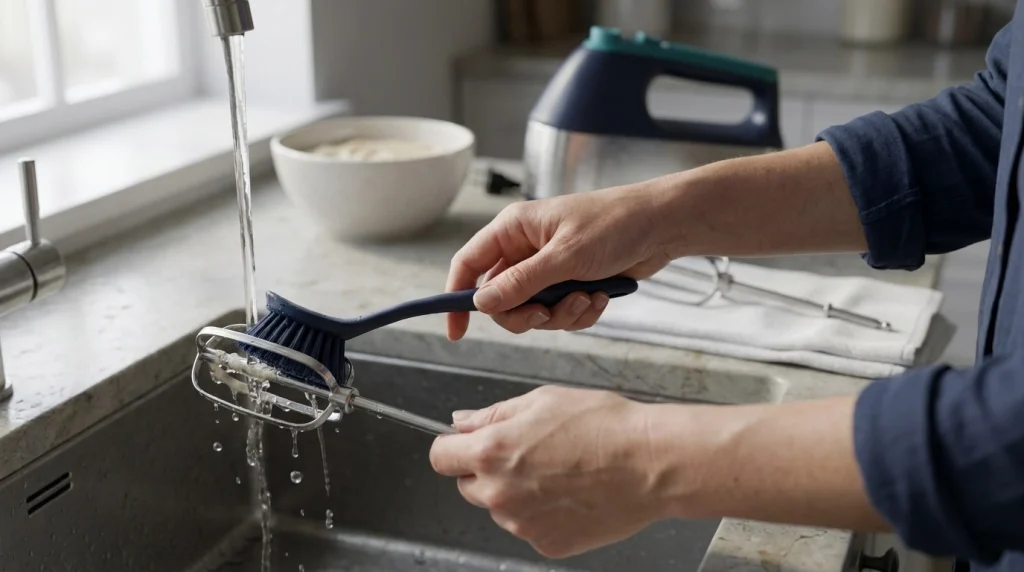
Proper cleaning helps protect the beater’s surface and reduces residue buildup around the stem. The correct method depends on the attachment’s material, finish, and the instructions supplied with your mixer.
Cleaning stainless-steel beaters
For a removable stainless-steel beater, start with warm water and ordinary dish soap unless the manufacturer recommends another method. Remove batter from the loops and the narrow areas around the stem before it hardens.
Follow this routine after mixing:
- Unplug the mixer: Disconnect the appliance before removing attachments.
- Release the beaters: Use the designated release button or mechanism.
- Wash the attachments: Use an approved cleaning method and avoid abrasive tools that could damage the finish.
- Rinse thoroughly: Remove soap and any remaining food residue.
- Dry and store: Follow the manufacturer’s instructions for drying and storage.
Some stainless-steel beaters are dishwasher-safe, but that doesn’t mean every attachment is. Check the manual before placing a beater in the dishwasher, particularly if it contains a coating, plastic component, or specialized connection.
Cleaning coated-metal beaters
Coated attachments need particular care because the outer finish can wear or chip. Avoid steel wool, harsh abrasives, and cleaning chemicals that the manufacturer hasn’t approved.
Inspect the surface after washing. If the coating begins to peel or exposes corroded metal, stop using the attachment and contact the manufacturer about a suitable replacement.
When should you replace the shaft or beater?
Replace a removable beater when it becomes bent, cracked, badly corroded, or otherwise damaged in a way that could affect safe operation. A damaged attachment can also cause unusual movement or interfere with the mixer’s drive connection.
Before ordering a replacement, check these details:
- The exact hand mixer model and compatible part number.
- The shaft length, connection shape, and locking mechanism.
- The specified material and any protective coating.
- The manufacturer’s cleaning and dishwasher guidance.
- Whether the problem involves the removable beater or the internal drive mechanism.
If the beater is intact but the mixer makes grinding noises, fails to turn an attachment, or has a damaged socket, the problem may be inside the appliance rather than in the shaft itself.
Pro tip: Never open a sealed motor housing or attempt electrical or gear repairs while the mixer is connected to power. Consult the manufacturer’s manual or a qualified appliance repair technician for internal faults.
For general appliance safety guidance, the U.S. Consumer Product Safety Commission’s safety education resources offer information about safe product use and avoiding household hazards.
Section Takeaway: Clean attachments according to their specific care instructions and replace damaged parts with compatible components. If the drive mechanism itself appears faulty, don’t treat it as a simple beater replacement.
Frequently Asked Questions
1. Are all hand mixer beater shafts made of stainless steel?
No. Stainless steel is common in removable beaters, but manufacturers use different materials and constructions across product lines. Internal drive shafts, couplings, and gears may use other metals or engineered materials. Check the exact model’s official specifications to identify the material.
2. Is a stainless-steel hand mixer beater rustproof?
No. Stainless steel resists corrosion, but it can still stain, pit, or corrode under certain conditions. Food residue, prolonged moisture, surface damage, and unsuitable cleaning chemicals can contribute to problems. Clean the beater promptly and follow the manufacturer’s drying and storage guidance.
3. How can I tell whether my beater shaft is stainless steel?
Check the product manual, official specifications, or replacement-parts documentation for your mixer model. Appearance and magnetism may provide limited clues, but neither can reliably identify every stainless-steel grade. Avoid scratching the surface or using damaging tests to reveal the underlying metal.
4. Are coated-metal beaters safe for food?
They can be suitable when the manufacturer designed them for food contact and the coating remains intact. Follow the product’s cleaning instructions and inspect the finish regularly. Stop using a beater with flaking, peeling, or badly damaged coating until the manufacturer advises you on replacement.
5. Can I put stainless-steel hand mixer beaters in the dishwasher?
Only when the manufacturer identifies the particular attachments as dishwasher-safe. Stainless steel alone doesn’t establish dishwasher compatibility for every design. Heat, detergents, coatings, and attached components can affect care requirements, so check your model’s manual before washing.
6. Does a heavier beater shaft mean better quality?
Not necessarily. Weight alone doesn’t establish the metal’s grade, strength, or durability. The shaft’s dimensions, design, manufacturing quality, and compatibility with the mixer also matter. Choose a manufacturer-approved attachment rather than judging quality by weight alone.
7. Should I replace a beater if I see rust?
If you find persistent rust, pitting, or corrosion on a food-contact surface, stop using the attachment until you establish whether it can be safely restored. Replace it if the damage compromises the surface or the manufacturer recommends replacement. Don’t use a damaged or heavily corroded beater for food preparation.
Final Takeaway: Choose the Right Material for Your Hand Mixer
A hand mixer beater shaft is commonly made from stainless steel or another suitable metal, but the exact construction varies by model and component. The removable beater, its connecting stem, and the internal drive shaft may all use different materials.
For everyday kitchen use, focus on verified material information, corrosion resistance, surface condition, and correct attachment fit. These factors are more useful than judging a beater by its color, weight, or price.
Before buying a replacement, confirm your mixer’s model number and consult the manufacturer’s documentation. That simple check helps you select the right part, maintain it properly, and keep your mixer working as intended.