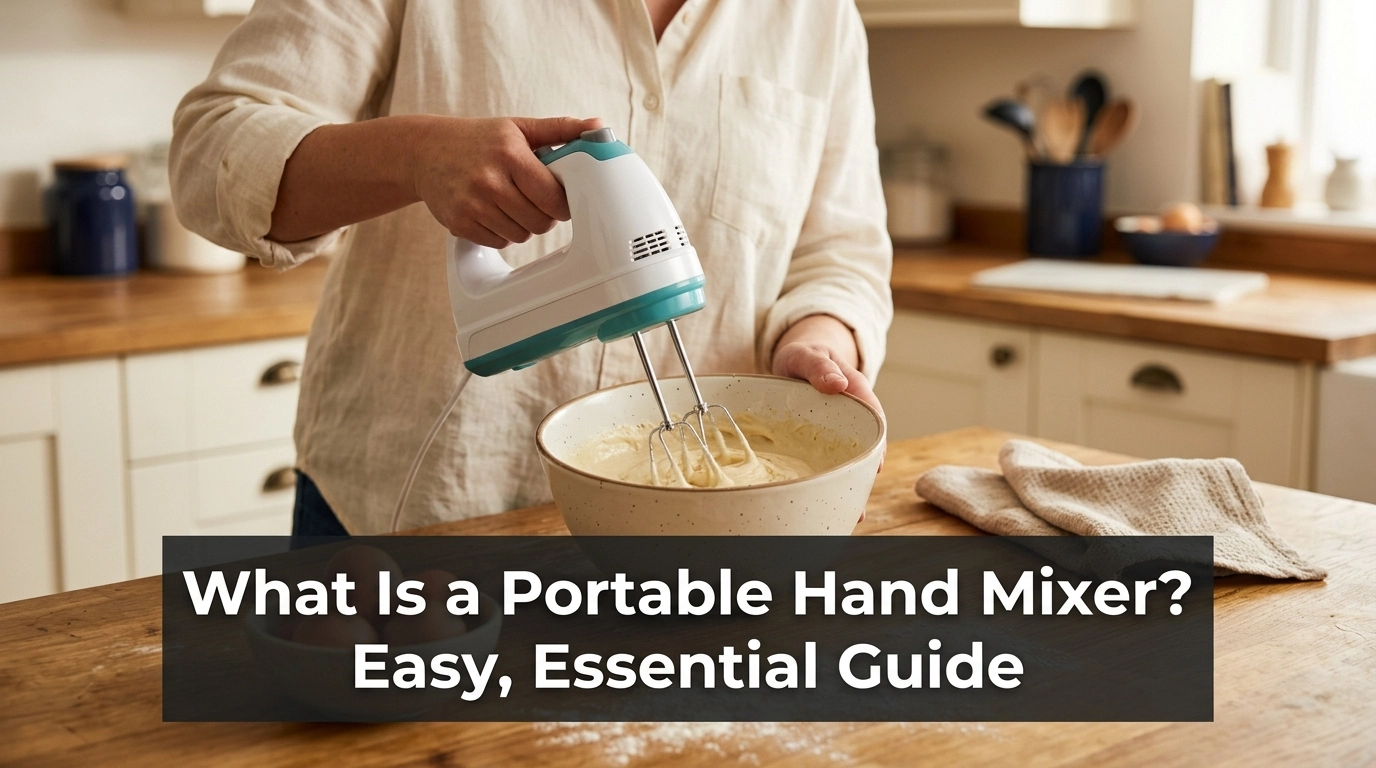
A portable hand mixer is a small kitchen tool that helps you mix food with less work. You can use it to beat eggs, whip cream, or mix cake batter. It is light, easy to hold, and simple to store.
When I look for a hand mixer, I want one that feels good in my hand. I also want it to mix well without taking up too much space. A large stand mixer is not always needed for small kitchen jobs.
But not all portable mixers work the same way. Some have a power cord. Others use a battery. Some can mix thick batter, while others work best with light foods.
In this guide, I will explain how portable hand mixers work, what they can do, how to choose one, and how to fix common issues safely.
What Is a Portable Hand Mixer?
A portable hand mixer is a handheld kitchen appliance that uses a motor to spin beaters or whisks. It helps blend, beat, and whip food in a bowl.
Unlike a stand mixer, you hold the tool while it runs. This gives you more control over where the beaters move.
Most models have speed settings. You can start slow to mix dry and wet foods, then raise the speed to make the mix smooth.
Some portable hand mixers use a power cord. Others have a battery you can charge. Both types are made for quick kitchen tasks.
Main Parts of a Portable Hand Mixer
| Part | What It Does |
|---|---|
| Motor | Spins the beaters |
| Beaters | Mix eggs, batter, and cream |
| Speed switch | Controls mixing speed |
| Handle | Helps you hold the mixer |
| Eject button | Releases the beaters |
| Cord or battery | Supplies power |
Not every model has the same parts. For example, some small mixers have a single whisk, while larger models use two beaters.
Common Signs of a Good or Poor Portable Hand Mixer
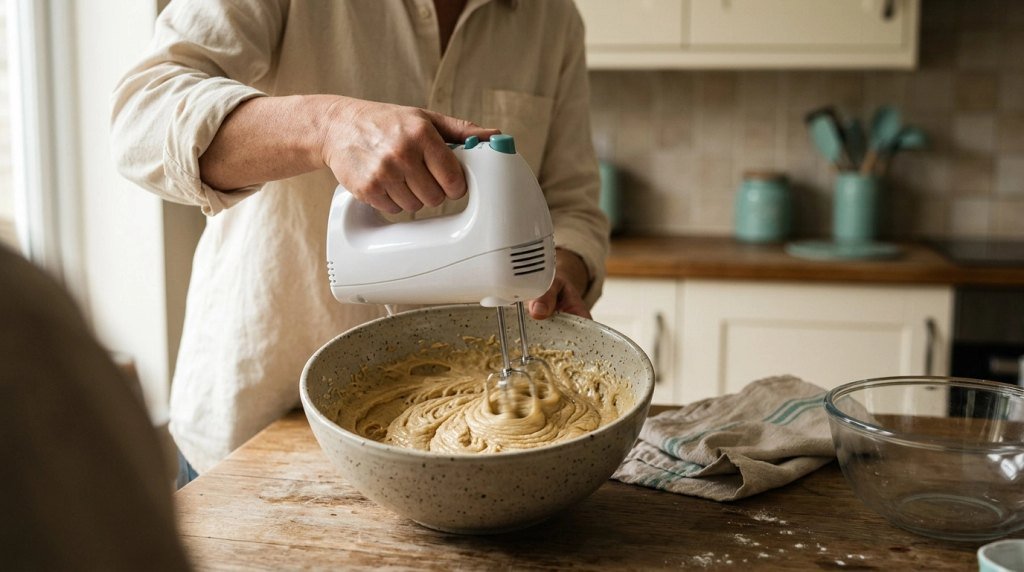
A good portable hand mixer should feel easy to use. It should run at a steady speed and mix light foods without much strain.
It should also feel balanced in your hand. A mixer that feels too heavy can make even a short task less pleasant.
There are also signs that a mixer may not suit your needs. These can show up when you use it for thick batter or long mixing jobs.
- The mixer slows down in thick batter.
- The handle feels hard to grip.
- The beaters shake or make odd sounds.
- The unit becomes very hot during use.
- The battery runs out too soon.
- The lowest speed is still too fast.
These signs do not always mean the mixer is broken. In some cases, the task is just too hard for a small motor.
A light mixer may be perfect for eggs and cream but poor for stiff cookie dough.
Possible Causes of Portable Hand Mixer Problems
Portable hand mixers have a simple design, but a few things can affect how well they work.
One common cause is low power. A battery model may slow down when its charge is low. A corded model may stop if the plug or cord has a fault.
Another cause is thick batter. Small motors can struggle when the mix is too dense. The beaters may turn slowly or stop.
The way you use the mixer also matters. Starting on a high speed can cause splashes. Mixing too long can make the motor hot.
Here is a quick guide to common issues.
| Problem | Likely Cause | Quick Fix |
|---|---|---|
| Mixer will not start | No power | Check plug or charge |
| Beaters spin slowly | Low charge or thick mix | Charge or reduce load |
| Food splashes | Speed too high | Start on low |
| Mixer gets hot | Long or heavy use | Stop and let it cool |
| Beaters shake | Poor fit or damage | Check attachments |
| Odd smell | Motor stress or fault | Stop using it |
A burning smell, smoke, or sparks can point to a serious fault. Stop using the mixer at once if you notice any of these signs.
How to Use and Troubleshoot a Portable Hand Mixer
Learning to use a portable hand mixer is easy. A few simple habits can help you get smooth results and avoid common faults.
1. Check the Power Source
First, make sure the mixer has power. If you have a corded model, check that the plug is secure.
You can test the wall outlet with another safe device. If the outlet works but the mixer does not, the fault may be in the mixer.
For a battery model, charge it as the maker directs. Do not use a damaged charging cable or a charger that is not suitable for the unit.
2. Fit the Beaters the Right Way
Before you start, make sure the mixer is off and unplugged, or that its motor cannot start.
Fit each beater into the right slot. Some mixers use two beaters that look alike but have different stems.
Push each one in as the manual shows. A loose beater may shake, slip, or fail to turn.
If a beater is bent or worn, use a replacement made for your exact mixer model. Do not force a part that does not fit.
3. Start at a Low Speed
I think starting slow is one of the best habits to learn. It gives you more control and helps keep food inside the bowl.
Place the beaters in the mix before you turn the motor on. Then raise the speed as needed.
For eggs, a low or medium speed may be enough. For whipped cream, you can raise the speed as the cream begins to thicken.
Turn the mixer off before lifting the beaters out of the bowl.
4. Avoid Thick or Heavy Mixtures
Not all portable mixers can handle bread dough or dense cookie dough. These foods can put a lot of strain on a small motor.
If the mixer slows down, stop and check the mix. Do not force the beaters through stiff dough.
Some larger hand mixers come with dough hooks. Even then, you should follow the maker’s limits for dough size and mixing time.
For heavy dough, a suitable stand mixer or hand kneading may be a better choice.
5. Keep the Beaters Clean
Good cleaning helps the mixer work well and keeps old food from building up on the parts.
Unplug the mixer or make sure it is off before you remove the beaters. Wash them as the care guide directs.
Use warm water, mild dish soap, and a soft sponge for beaters that are safe to hand wash. Dry them well before storage.
Wipe the mixer body with a soft, damp cloth. Never place the motor unit in water.
6. Let the Motor Cool
A portable hand mixer may feel warm after use. A little warmth can be normal, but high heat is not.
If the case becomes very hot, stop mixing. Let it cool for the time stated in the manual.
Do not keep turning it on if it stops due to heat. That may cause more damage.
If the mixer often overheats during light tasks, it may need service or replacement.
Corded vs Cordless Portable Hand Mixers
Both types can make kitchen work easier. The best one depends on how you plan to use it.
| Feature | Corded Mixer | Cordless Mixer |
|---|---|---|
| Power source | Wall outlet | Rechargeable battery |
| Movement | Limited by cord | More freedom |
| Mixing time | No battery limit | Limited by charge |
| Storage | Cord needs space | Often easy to store |
| Best use | Regular home mixing | Light, quick tasks |
A corded mixer may suit you if you bake often. You do not need to stop to charge it.
A cordless model is handy when you want more freedom to move. It may also work well in a small kitchen with few outlets.
Still, battery power alone does not tell you how strong a mixer is. Check the maker’s stated uses and limits.
Mistakes to Avoid With a Portable Hand Mixer
A few common mistakes can make mixing hard or unsafe.
One is using a small mixer for dough that is too thick. Another is running the motor for too long without a break.
Using the wrong attachment can also cause trouble. Parts that do not fit may come loose during use.
Here are a few rules I would keep in mind:
- Do not put fingers or tools near moving beaters.
- Do not leave the mixer running on its own.
- Do not place the motor body in water.
- Do not pull the power cord to unplug it.
- Do not use damaged beaters or cords.
- Do not open the motor case or bypass safety parts.
Also, keep loose hair and clothing away from the beaters. Turn the mixer off before you scrape the bowl.
When to Replace a Portable Hand Mixer
Not every mixer fault means you need a new unit. A loose beater or weak battery charge may be easy to deal with.
But some signs are more serious. A burnt smell, sparks, damaged cord, or frequent loss of power can point to an unsafe electrical fault.
If the mixer stops often during light tasks, it may also be near the end of its useful life.
Check the warranty and ask the maker about safe repair options. If the repair costs almost as much as a new mixer, replacement may make more sense.
Do not try to repair sealed electrical parts on your own.
My Personal Approach to Choosing a Portable Hand Mixer
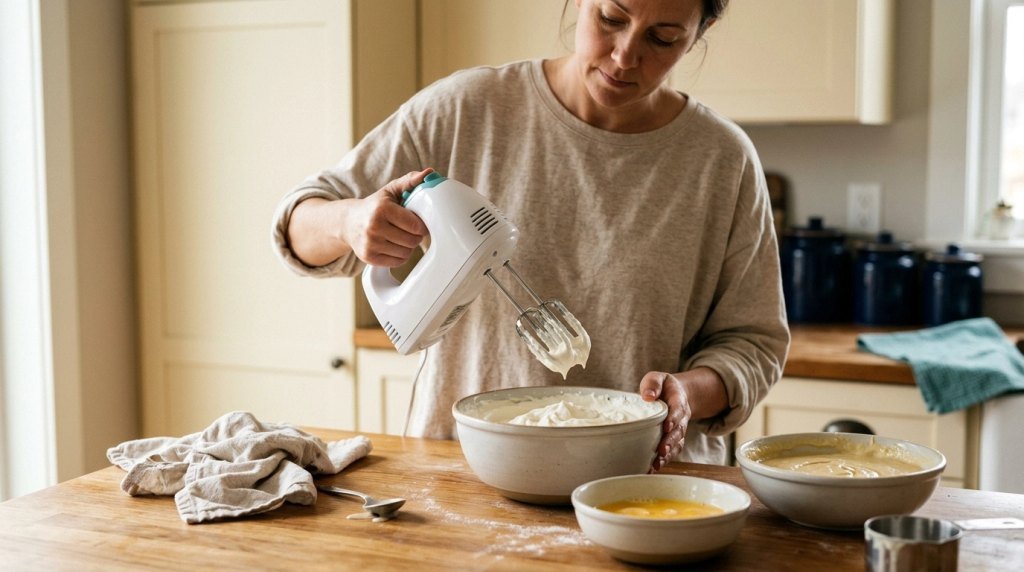
When I assess a portable hand mixer, I focus on comfort, control, and ease of care. These matter more to me than a long list of extra features.
I would first check how the handle feels. Next, I would look at the speed settings and how easy it is to fit and remove the beaters.
I would also check the weight. A light mixer is easier to move, but it should still feel firm and steady.
For a practical home test, I would start with beaten eggs, then try cake batter and whipped cream. These tasks can show how smoothly the mixer runs.
I would avoid judging a small mixer by how well it handles heavy bread dough. That may not be what it was made to do.
The key lesson is to match the mixer to the food you make most. A simple mixer can be a great fit for small daily tasks.
Final Thoughts
So, what is a portable hand mixer? It is a compact kitchen tool that makes beating, whipping, and mixing food faster and easier.
A corded model is often a good fit for regular baking. A cordless model may be better when you want more freedom to move.
Choose a mixer that feels good to hold, has useful speed settings, and can handle the foods you plan to make.
With safe use and good care, a portable hand mixer can be a handy part of your kitchen for years.