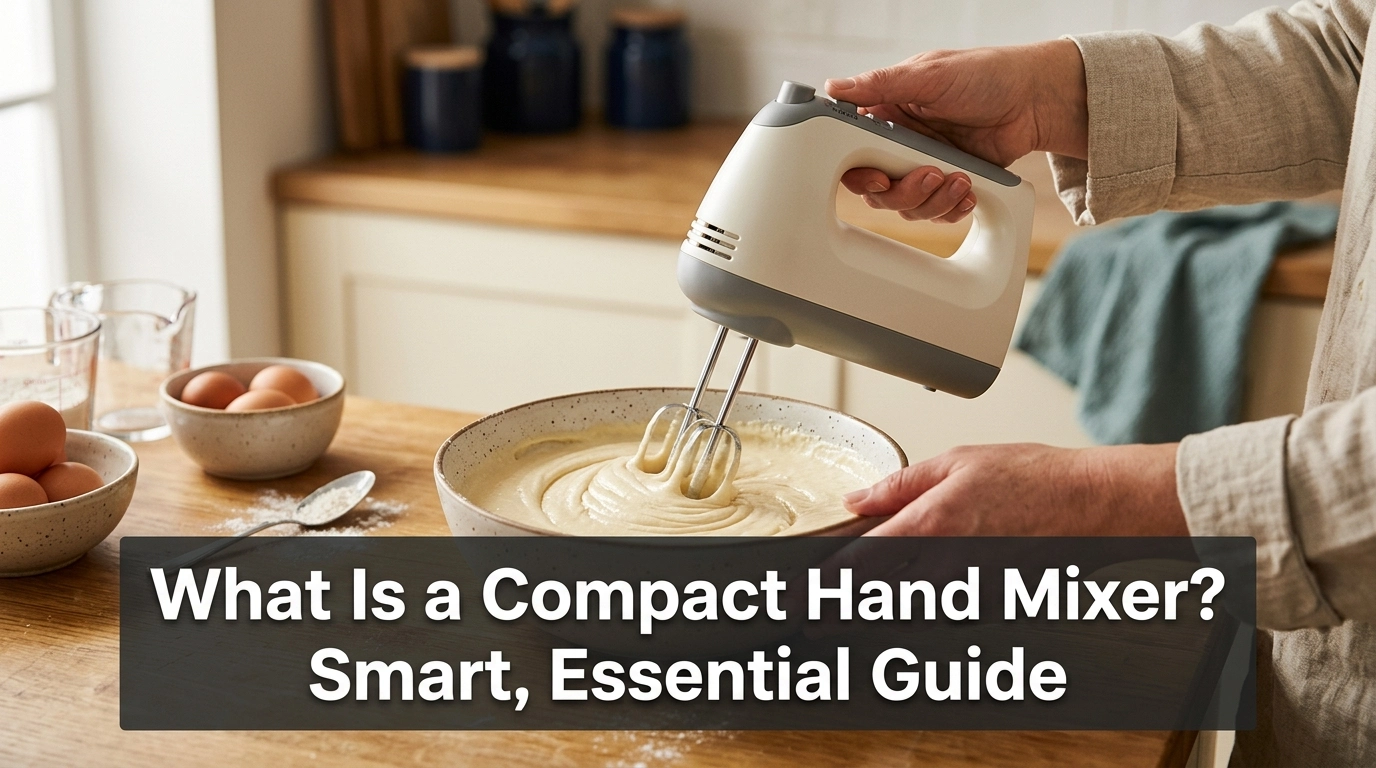
A compact hand mixer is a small, light kitchen tool. It helps you beat eggs, mix cake batter, and whip cream. You hold it in your hand while it mixes food in a bowl.
If you have a small kitchen, this tool can save space. It is also easy to move and store. You do not need a large stand mixer for many simple baking jobs.
But small mixers do have limits. Some may struggle with thick dough. Others may shake, slow down, or get warm during use.
In this guide, I’ll explain what a compact hand mixer does, how to use one, what can go wrong, and how to fix common issues safely.
What Is a Compact Hand Mixer and How Does It Work?
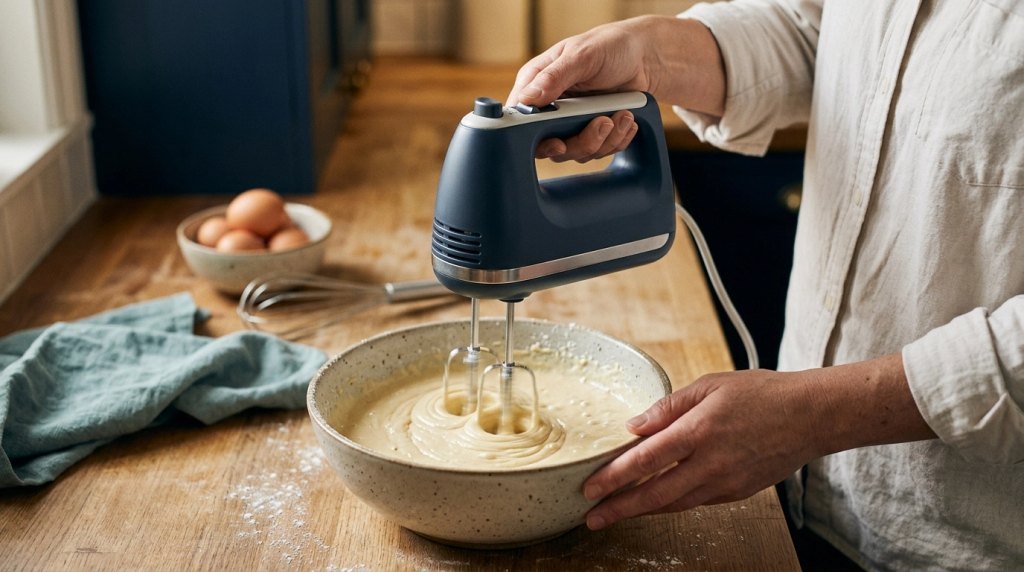
A compact hand mixer is a small electric mixer with one or two removable mixing tools. Most models use two beaters that spin to blend food.
The motor turns the beaters when you press the power or speed switch. You hold the handle and move the beaters through the mix.
Many compact mixers have several speed settings. A low speed helps blend dry and wet food. A higher speed can whip eggs or cream.
Some models also include dough hooks. These can help with certain soft doughs, but not all compact mixers can handle heavy bread dough.
The main benefit is size. A compact mixer takes less room than a stand mixer and is often easier to lift.
Compact Hand Mixer vs. Regular Hand Mixer
Both tools work in much the same way. The key difference is often their size and weight.
| Feature | Compact Hand Mixer | Regular Hand Mixer |
|---|---|---|
| Size | Small | Often larger |
| Weight | Often lighter | Varies by model |
| Storage | Easy in tight spaces | May need more room |
| Best use | Small mixing jobs | Small to medium jobs |
| Thick dough | Often limited | Depends on motor and design |
A small mixer is not always less powerful. Motor design, gearing, and the shape of the beaters also affect how well it works.
Common Signs of a Compact Hand Mixer Problem
A compact hand mixer should run with a steady sound. The beaters should turn with no harsh noise or strong shaking.
When something is wrong, you may see or hear a few clear signs. Some are easy to fix. Others mean the mixer needs to be replaced.
Common signs include:
- The mixer will not turn on.
- The beaters move too slowly.
- The motor stops during mixing.
- The mixer makes a loud or odd sound.
- The beaters shake or slip out.
- The handle gets very hot.
- The mixer gives off a burning smell.
A slight change in sound when you add thick food can be normal. But a sharp noise or a sudden stop needs care.
If you see smoke, sparks, or a damaged power cord, stop at once. Unplug the mixer and do not use it again until it has been checked by a qualified repair professional.
Possible Causes of Compact Hand Mixer Problems
Most small mixer problems come from power, food thickness, or poor care. A worn part can also cause trouble.
Here are some common causes:
- Loose plug: The cord may not sit firmly in the wall outlet.
- Thick batter: The mix may be too heavy for the motor.
- Wrong speed: Starting too fast can make food splash and strain the mixer.
- Loose beaters: A beater may not be locked in place.
- Blocked vents: Dust or dried batter may restrict airflow.
- Long mixing time: The motor may get too hot.
- Worn parts: A damaged cord, switch, or internal gear can stop normal use.
If you often mix thick food, check the user manual. It should tell you which jobs your mixer can handle.
It also helps to keep a soft cloth and a non-abrasive sponge near your sink. These make it easy to clean the beaters without scratching their finish.
How to Fix Common Compact Hand Mixer Problems
You do not need special tools for most basic checks. Start with the simple steps below.
Always unplug a corded mixer before you touch the beaters or inspect its parts.
1. Check the Power Source
If the mixer will not start, check the plug first. Make sure it is fully in the wall outlet.
You can test the outlet with a small device that you know works. This helps rule out a power problem.
Next, look at the cord. Do not use the mixer if the cord is cut, frayed, or has exposed wire.
For a battery-powered mixer, check that the battery has enough charge. Follow the charging steps in its manual.
2. Check the Beaters
Loose beaters can shake or fail to turn as they should. Turn off and unplug the mixer before you check them.
Remove each beater and look for bends or damage. Then fit it back into the correct slot.
Some models use two beaters with different stems. The correct position matters, so check the manual.
Never push a beater into place while the motor is running. Do not try to straighten a badly bent beater by hand.
3. Use the Right Mixing Speed
A compact hand mixer works best when you start slow. This helps keep flour, milk, and batter in the bowl.
Once the food starts to blend, you can raise the speed. Use only the speed needed for the job.
If the motor slows down a lot, stop mixing. The food may be too thick or the batch may be too large.
Do not force the mixer through stiff dough. Use a tool made for that task instead.
4. Let the Motor Cool Down
A small motor can get warm during a long mixing job. Some mixers also have a safety feature that stops the motor if it gets too hot.
Turn the mixer off and unplug it if it becomes unusually hot. Let it cool as the manual directs.
Check that the air vents are clear. Never cover these vents while you mix.
If the mixer stops again during a light task, do not keep trying to restart it. A fault may need repair.
5. Clean the Beaters and Mixer Body
Good cleaning can help keep a compact hand mixer in good shape. Dried batter can build up around the beaters and their fittings.
Unplug the mixer first. Remove the beaters, then wash them as the manual allows. Some are safe for the dishwasher, while others need hand washing.
Wipe the mixer body with a soft, slightly damp cloth. Keep water away from the vents, switches, and motor.
Never place the motor body in water. Let all parts dry before you put them away.
6. Check for Odd Sounds or Shaking
Some motor noise is normal. But loud grinding, sharp clicks, or strong shaking can point to a fault.
Stop the mixer and check the beaters. Look for damage or a loose fit.
If the noise remains after the beaters are set right, stop using the mixer. The gears or other parts may be worn.
Do not open the sealed motor case to inspect it. That work is best left to a qualified repair technician.
Quick Troubleshooting Table
This table can help you find the next safe step.
| Problem | Likely Cause | Quick Fix |
|---|---|---|
| Will not start | Power issue | Check outlet and plug |
| Mixes too slowly | Thick food | Use a smaller batch |
| Stops during use | Motor too hot | Unplug and cool |
| Beaters shake | Loose or bent beater | Check fit and condition |
| Food splashes | Speed too high | Start on low speed |
| Burning smell | Motor or wiring fault | Stop and unplug |
If a safe check does not solve the issue, consult the manual or the brand’s support team.
Mistakes to Avoid When Using a Compact Hand Mixer
One common mistake is using a small mixer for very stiff dough. This puts too much strain on its motor.
Another mistake is starting at full speed. This can send flour or batter out of the bowl and make the mixer hard to control.
Try to avoid these habits:
- Mixing for longer than the manual allows.
- Using damaged or loose beaters.
- Pulling the plug out by its cord.
- Putting the motor body in water.
- Blocking the air vents.
- Touching moving beaters.
- Running the mixer when it smells burnt.
Keep long hair, loose sleeves, and hands away from the beaters. Use a spatula only after the mixer is off and the beaters have stopped.
When to Replace a Compact Hand Mixer
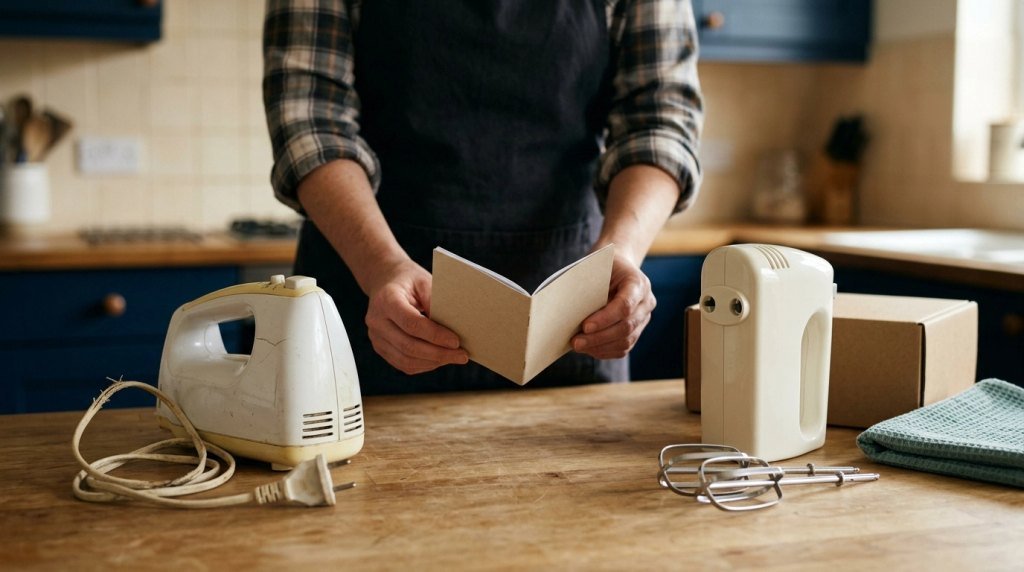
Not every mixer needs to be replaced when it stops working. Some issues are simple, such as a loose beater or an overloaded motor.
But an electrical fault can be unsafe. A cracked case, damaged cord, or repeated burning smell is a clear reason to stop using the tool.
You should also think about a new mixer if repair costs are high. For a low-cost compact model, a professional repair may cost more than a replacement.
Before you buy a new one, check its warranty. Some brands may offer parts, service, or a replacement unit.
My Practical Take on Compact Hand Mixers
For small baking jobs, I would start with a compact hand mixer rather than a large stand mixer. It is easy to hold, simple to set up, and takes little space.
The best way to judge one is to look at the food you make most. If you often beat eggs, whip cream, or mix light cake batter, a small mixer may be enough.
I would also check the grip, speed switch, weight, and beater release button. These small details can make mixing much easier.
I have not tested a specific compact model for this article, so I cannot claim one works better than another. A fair test would use the same light batter, the same bowl, and the same mixing time.
For thick bread dough, I would choose a suitable stand mixer or knead by hand. A compact mixer is best used within its stated limits.
Final Thoughts
So, what is a compact hand mixer? It is a small electric kitchen tool that helps you mix, beat, and whip food without taking up much room.
It works well for light baking jobs and small kitchens. Just make sure you use the right speed, fit the beaters well, and keep the tool clean.
If your compact mixer slows down, stops, or makes odd sounds, start with safe checks. For heat, smoke, or electrical faults, stop using it.
A compact hand mixer can be a handy tool when you match it to the right tasks and care for it well.