Quick Answer
You can make cakes, cookies, brownies, whipped cream, frosting, meringue, mashed potatoes, scrambled eggs, pancake batter, cheesecake filling, and much more with a hand mixer. Standard beaters handle everyday mixing, while a whisk or dough hooks can expand what the appliance does; current hand mixer designs and attachments vary by model.
Best things to make with a hand mixer
- Cake batters: Cream butter and sugar, then blend in eggs and dry ingredients.
- Cookie dough: Mix soft butter doughs without hauling out a stand mixer.
- Whipped cream: A whisk attachment makes light, fluffy cream quickly.
- Frostings: Beat buttercream, cream cheese frosting, and whipped toppings smooth.
- Egg mixtures: Whip egg whites, whole eggs, and omelet mixtures evenly.
- Mashed potatoes: Mix cooked potatoes carefully for a light, smooth texture.
One important rule
- Start at the lowest useful speed, then increase gradually to reduce splatter and overmixing.
I reach for a hand mixer when a whisk feels like too much work but a stand mixer feels excessive. It is especially useful for quick baking, whipping, and mixing jobs in a normal home kitchen.
The trick is knowing which foods suit the motor and attachments. This guide covers the useful choices, the questionable ones, and the jobs better left to another appliance.
In This Guide
What Can You Make With a Hand Mixer?
A hand mixer is best for foods that need beating, whipping, creaming, or moderate mixing. Think batters, soft doughs, frostings, whipped ingredients, and cooked foods that need a smoother texture.
I would not treat it as a miniature blender. Its rotating beaters mix ingredients together rather than cutting or pureeing them.
Definition: A hand mixer is a portable electric mixer that turns removable beaters, whisks, or compatible attachments inside a bowl. Unlike a stand mixer, you guide it by hand while controlling its position and speed.
Here are 25 practical foods and recipes that suit a hand mixer:
- Cupcake batter
- Layer cake batter
- Brownies
- Soft cookie dough
- Muffin batter
- Banana bread batter
- Pancake batter
- Waffle batter
- Cheesecake filling
- Quick-bread mixtures
- Whipped cream
- Buttercream frosting
- Cream cheese frosting
- Chocolate ganache after cooling
- Meringue
- Whipped egg whites
- Whipped butter
- Homemade butter from cream
- Mousse mixtures
- Mashed potatoes
- Mashed sweet potatoes
- Scrambled egg mixture
- Omelet mixture
- Soft cheese spreads
- Shredded cooked chicken
Section Takeaway: Hand mixers shine when a recipe needs air, smoothness, or even ingredient distribution without heavy kneading or chopping.
What Baking Recipes Work Well With a Hand Mixer?
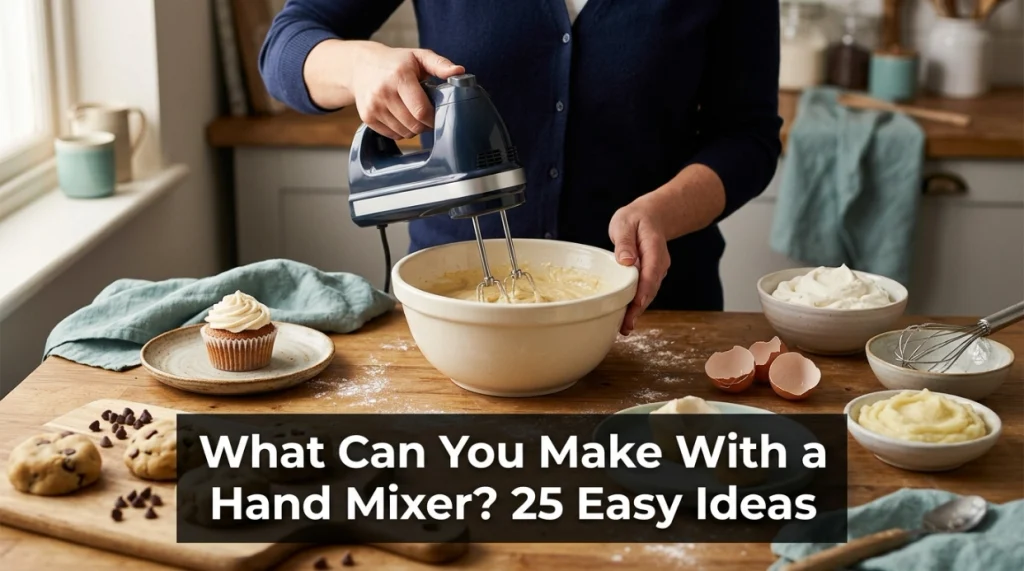
Cakes, cookies, brownies, quick breads, and similar recipes are among the best uses for a hand mixer. The appliance is especially good at creaming softened butter with sugar and beating eggs into a mixture.
Cakes and cupcakes
For butter cakes, I start with softened butter and sugar at a moderate speed. Once the mixture looks evenly combined, I add eggs as the recipe directs.
After flour enters the bowl, I reduce the speed. Aggressive mixing at this stage can make some cakes tougher than intended.
- Good choices: Butter cakes, cupcakes, sheet cakes, sponge-style mixtures, and boxed cake mixes.
- Watch for: Flour flying from the bowl when the beaters start too fast.
- Best habit: Scrape the bowl with a spatula between mixing stages.
Cookies and brownies
A hand mixer handles many soft cookie doughs without difficulty. Chocolate chip, sugar, oatmeal, and peanut-butter-style doughs are natural candidates when the butter is properly softened.
Dense dough can be different. I stop using the motor if the mixer starts slowing noticeably or the dough repeatedly climbs the beaters.
Muffins and quick breads
Muffin and banana-bread recipes usually need less mixing than cake. I use the mixer for wet ingredients, then combine flour gently at low speed or switch to a spatula.
This matters because a hand mixer makes it easy to keep going after the batter is already mixed. More mixing is not automatically better.
Section Takeaway: Use a hand mixer confidently for baking, but slow down once flour is added and avoid forcing it through unusually stiff dough.
What Can You Whip With a Hand Mixer?
Whipping is where a hand mixer can save the most physical effort. Cream, egg whites, frosting, and some dessert fillings need repeated agitation that would otherwise require plenty of whisking.
Whipped cream and frosting
Cold heavy cream can be whipped with standard beaters, although I prefer a wire-whisk attachment when one is included. A cool bowl also helps the process stay controlled.
Buttercream and cream cheese frosting usually suit standard beaters. Start slowly when powdered sugar enters the bowl, or you may cover the counter with it.
- Whipped cream: Stop once it reaches the firmness your recipe needs.
- Buttercream: Beat softened butter first, then add sugar gradually.
- Cream cheese frosting: Mix only until smooth enough for the intended texture.
- Mousse: Use the mixer for the whipped component, then fold delicate ingredients by hand.
Meringue and egg whites
Egg whites can go from loose liquid to a stable foam with a hand mixer. Keep the bowl and whisk free from grease because fat can interfere with foaming.
For recipes involving eggs that will not receive further cooking, check appropriate egg-safety guidance from the USDA Food Safety and Inspection Service.
Section Takeaway: A whisk attachment turns a hand mixer into an especially useful tool for cream, egg whites, mousse components, and light frostings.
Can You Make Savory Foods With a Hand Mixer?
Yes. A hand mixer is not limited to baking, although savory uses work best with soft or already-cooked foods.
Mashed potatoes
You can beat cooked potatoes after draining them thoroughly. Add warm milk, butter, or your preferred ingredients gradually while mixing at a modest speed.
I avoid prolonged high-speed beating because potatoes can become gummy. A potato masher remains better when you want a rustic texture.
Eggs and soft mixtures
- Scrambled eggs: Beat eggs briefly before they reach the pan.
- Omelets: Mix eggs and seasonings evenly without long whisking.
- Cheese spreads: Blend softened cream cheese with herbs or other soft ingredients.
- Mashed sweet potatoes: Beat cooked flesh with butter and seasonings.
- Cooked chicken: Use low speed carefully to pull boneless cooked chicken into shreds.
Shredding chicken works best in a deep bowl because pieces can move quickly. Let hot meat cool enough to handle safely before bringing an electrical appliance close to the bowl.
Manufacturers also sell models with different accessories. For example, the Hamilton Beach hand mixer range includes configurations with whisks, beaters, and dough hooks.
Section Takeaway: For savory cooking, think soft, cooked, and mixable rather than hard, raw, or fibrous ingredients.
Can a Hand Mixer Replace a Stand Mixer or Blender?
A hand mixer can replace a stand mixer for many small and medium mixing jobs, but it cannot replace every appliance. The difference becomes clear when you compare what each machine does to the food.
| Task | Hand Mixer | Stand Mixer | Blender |
|---|---|---|---|
| Whipped cream | Excellent | Excellent | Not ideal |
| Cake batter | Excellent | Excellent | Poor fit |
| Dense bread dough | Model-dependent | Better choice | Wrong tool |
| Smoothie | Wrong tool | Wrong tool | Excellent |
| Small batch frosting | Excellent | Good | Poor fit |
A blender uses sharp blades to chop and puree. A mixer uses beaters or whisks to combine ingredients and incorporate air.
A stand mixer adds a stable bowl, larger attachments, and hands-free operation. That makes it more comfortable for prolonged mixing and many heavy dough recipes.
Some hand mixers do include dough hooks. The Cuisinart hand mixer range, for example, shows why attachment sets differ between models.
Practical rule: If an ingredient needs chopping or pureeing, use a blender or food processor. If a dough makes your hand mixer labor heavily, stop and use a method suited to heavier dough.
Section Takeaway: A hand mixer can cover much of everyday home baking, but blenders and stand mixers still solve different kitchen jobs.
How Do You Get Better Results With a Hand Mixer?
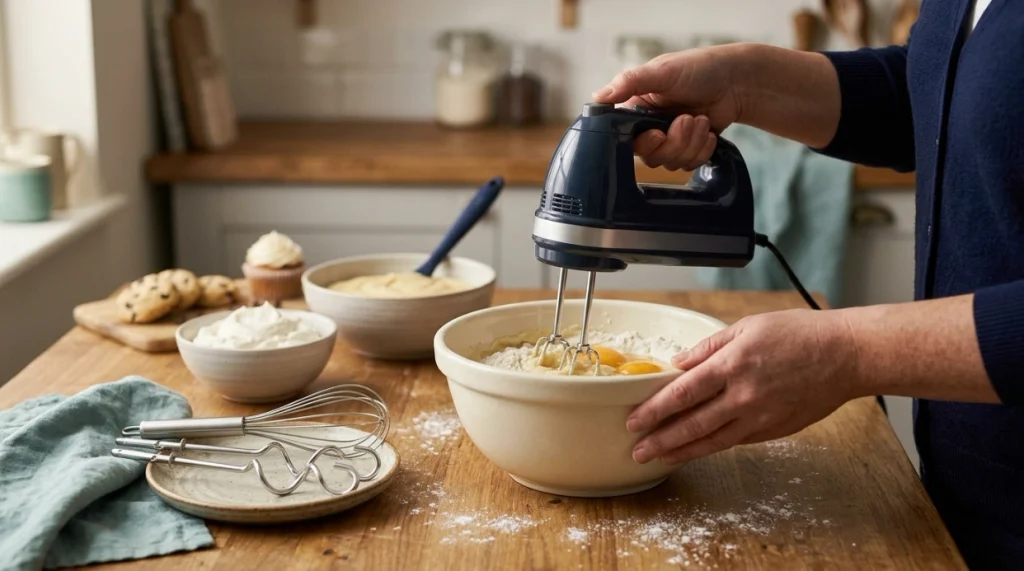
The biggest improvement usually comes from speed control rather than extra power. Starting slowly keeps ingredients in the bowl and gives you time to judge the mixture.
Match the speed to the job
| Speed Range | Useful For | Main Benefit |
|---|---|---|
| Low | Dry ingredients, flour, initial combining | Less splatter |
| Medium | Cake batter, butter and sugar, frosting | Controlled mixing |
| High | Whipped cream and egg whites | Rapid aeration |
Avoid the mistakes that cause poor results
- Starting too fast: Begin low when ingredients are loose or powdery.
- Using a tiny bowl: Give the beaters enough room to move without throwing ingredients outward.
- Forcing dense dough: Stop when the motor sounds strained or the mixer becomes difficult to control.
- Overmixing batter: Stop once the recipe reaches the intended consistency.
- Using the wrong attachment: Choose beaters, a whisk, or dough hooks according to your model and recipe.
- Ignoring the manual: Attachment compatibility and operating limits differ between mixers.
Unplug the appliance before inserting, removing, or cleaning attachments unless its manual specifically instructs otherwise. Never immerse the powered motor housing in water.
Pro tip: If the mixer has a damaged cord, burning smell, abnormal sparking, or internal mechanical problem, stop using it. Follow the manufacturer’s instructions or use a qualified appliance repair professional rather than opening the sealed housing yourself.
Section Takeaway: Start slowly, choose the right attachment, stop before overmixing, and never force the motor through a job it is not designed to handle.
Frequently Asked Questions
Can you make bread with a hand mixer?
You can mix some bread dough with a hand mixer if your specific model includes dough hooks and permits that use. Dense dough can overload lighter mixers, so check the manual and stop if the motor labors or the machine becomes difficult to control.
Can you make whipped cream with regular beaters?
Yes. Standard beaters can whip heavy cream even if your mixer does not include a wire whisk. A whisk attachment may feel more natural for aeration, but cold cream, a suitable bowl, and careful monitoring matter more than using one exact attachment.
Can you make mashed potatoes with a hand mixer?
Yes. A hand mixer can make smooth mashed potatoes from fully cooked potatoes. Mix briefly and at a controlled speed because prolonged beating can make potatoes gummy. For chunky or rustic mashed potatoes, a traditional hand masher gives you more texture control.
Can a hand mixer make cookie dough?
Most soft cookie doughs work well with a hand mixer, especially recipes based on softened butter. Once the dough becomes thick with flour, chocolate chips, or nuts, finish by hand if the motor starts struggling instead of forcing the beaters through it.
Can I use a hand mixer instead of a blender?
Not for most blender jobs. A hand mixer combines and aerates ingredients but does not have cutting blades. Use a blender for smoothies, purees, crushed ingredients, and similar foods that need chopping rather than simply mixing.
What attachment should I use on a hand mixer?
Standard beaters suit cakes, cookies, batters, potatoes, and many frostings. A wire whisk is useful for cream and egg whites. Dough hooks are for compatible dough recipes, but only use attachments designed for your exact mixer model.
As of 2026, the basic hand mixer remains one of the most useful small appliances for cooks who bake occasionally and want something easier to store than a stand mixer. It handles a surprisingly broad range of recipes without occupying much counter space.
Start with cakes, frosting, whipped cream, cookies, eggs, or mashed potatoes. Once you understand how your mixer’s speeds and attachments behave, you will quickly see which everyday whisking and mixing jobs it can take off your hands.