Quick Answer
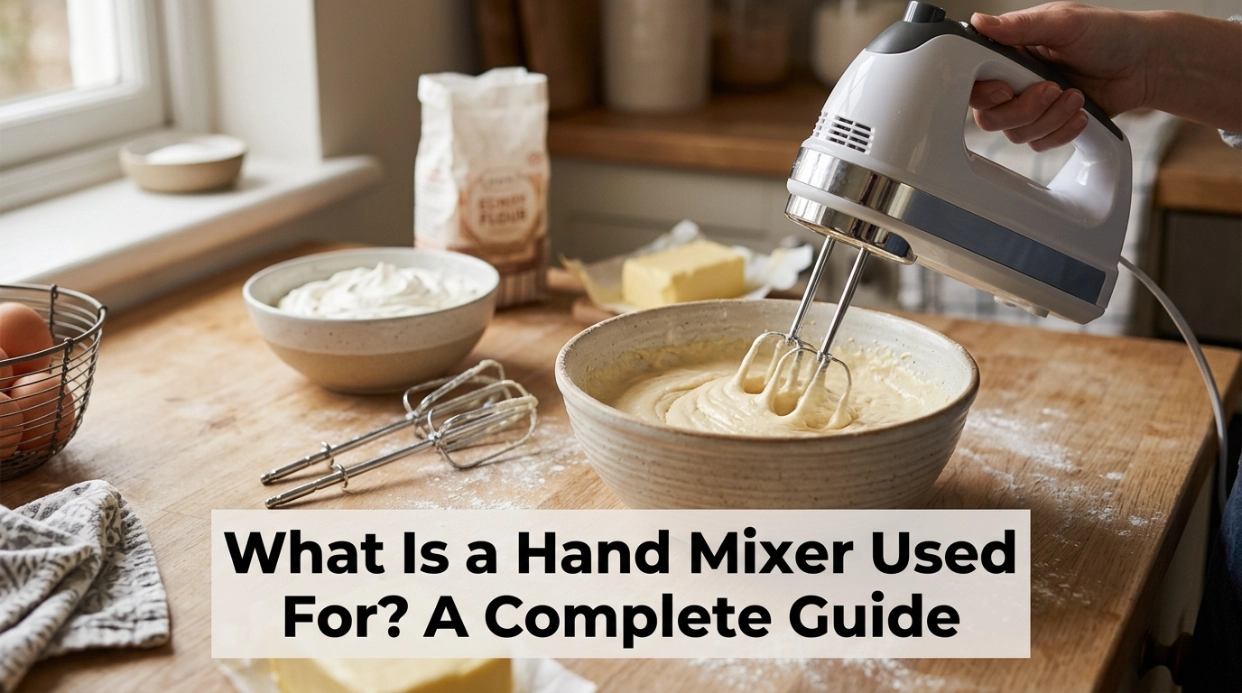
A hand mixer is used to mix, beat, whip, cream, and combine ingredients without the size of a stand mixer. It works especially well for cake batter, cookie dough, whipped cream, egg whites, frosting, mashed potatoes, and other small-to-medium batches. KitchenAid’s hand mixer use guide also lists mixing, whipping, kneading, and other everyday jobs.
Common hand mixer uses
- Mixing batter: Combine wet and dry ingredients for cakes, pancakes, muffins, and similar recipes.
- Creaming butter: Beat softened butter with sugar for cookies, cakes, and frosting.
- Whipping cream: Add air to heavy cream for a light, fluffy texture.
- Beating eggs: Mix whole eggs or whip egg whites for meringue and airy desserts.
- Mashing foods: Prepare smooth mashed potatoes and other soft cooked foods.
- Kneading light dough: Some models include dough hooks for smaller yeast-dough batches.
Best rule to remember
- Use a hand mixer for quick, lighter mixing jobs. Choose a stand mixer when the mixture is unusually heavy, large, or needs long kneading.
If you’ve wondered what a hand mixer is used for, the short answer is much broader than cake batter. This compact electric mixer can handle many everyday baking and cooking jobs without occupying permanent counter space.
As of 2026, hand mixers remain useful because they sit between a manual whisk and a full-size stand mixer. I find the easiest way to understand them is to look at the jobs they do well, the attachments involved, and where their limits start.
In This Guide
What Is a Hand Mixer and How Does It Work?
A hand mixer is a compact motorized kitchen appliance that spins removable beaters or other attachments inside a bowl. You hold the motor housing while moving the beaters through the ingredients.
Definition: A hand mixer is an electric handheld mixer designed for short mixing, beating, whipping, and similar food-preparation tasks.
Unlike a stand mixer, it doesn’t have a fixed bowl or heavy countertop base. That makes it easier to store and lets you choose your own mixing bowl.
- Motor: Turns the attachments at controlled speeds.
- Speed control: Lets you adjust the mixer for thin liquids or thicker mixtures.
- Beaters: Handle most everyday mixing and beating jobs.
- Eject button: Releases removable attachments after use.
- Optional attachments: May include a whisk, dough hooks, or blending accessories.
Speed counts differ between models. Current KitchenAid hand mixers, for example, include models with 3, 5, 6, 7, and 9 speed settings.
More speeds don’t automatically mean a better mixer. Control at the lowest speed often matters more because it helps keep flour and liquids inside the bowl.
What Is a Hand Mixer Used For in the Kitchen?
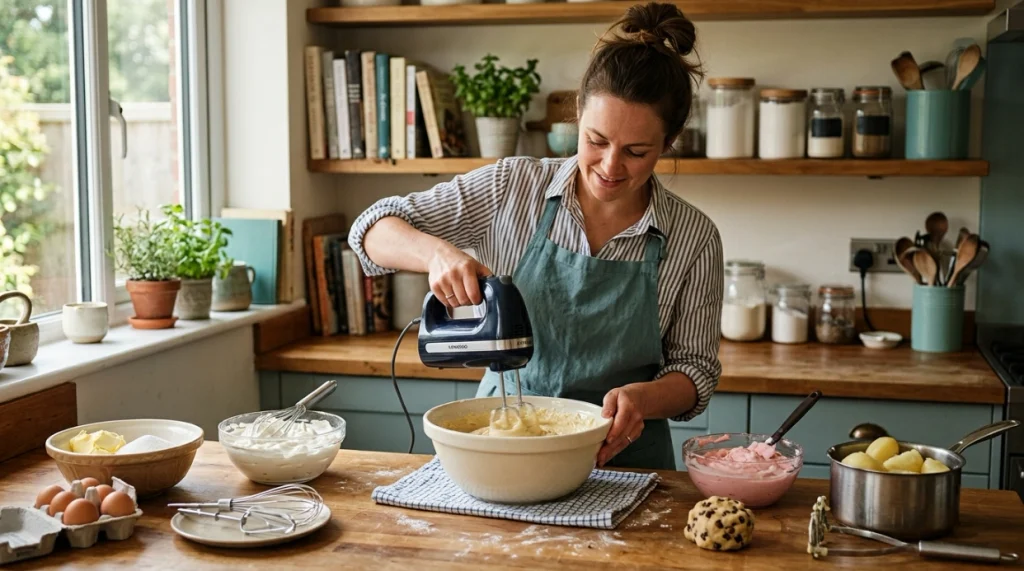
A hand mixer is mainly used when ingredients need mechanical agitation but don’t require a large stand mixer. Its biggest strengths are speed, control, portability, and quick cleanup.
1. Mixing Cake, Muffin, and Pancake Batter
Hand mixers combine liquid and dry ingredients quickly and evenly. They’re especially convenient for cake mixes and batters where a spoon would take more effort.
Start slowly when flour is still dry. Once it begins absorbing moisture, increase the speed only as the recipe requires.
2. Creaming Butter and Sugar
Creaming means beating softened butter and sugar together until the mixture becomes lighter and more aerated. This step is common in cookies, butter cakes, and many frostings.
A hand mixer makes this much easier than a wooden spoon. The beaters repeatedly work air into the softened fat while dispersing the sugar.
3. Whipping Cream
Whipped cream needs air incorporated into cold heavy cream. A hand mixer fitted with beaters or a whisk attachment can do this quickly.
Watch the texture closely near the end. Cream can move from soft peaks to stiff peaks faster than beginners expect.
4. Whipping Egg Whites
Egg whites can be whipped into a foam for meringues, soufflés, sponge-style desserts, and other recipes. Higher mixer speeds are commonly used after the whites begin foaming.
Keep the bowl and attachments free from grease when whipping egg whites. Even a small amount of fat can make building a stable foam harder.
5. Making Frosting and Icing
Buttercream, cream-cheese frosting, and many simple icings are ideal hand-mixer jobs. You can control the texture while scraping the sides of the bowl between mixing stages.
Begin at low speed when powdered sugar is present. Jumping straight to high speed can throw fine sugar across the work surface.
6. Mixing Cookie Dough
A capable hand mixer can handle many ordinary cookie doughs. It works well for creaming butter and sugar before eggs, flour, and flavorings are added.
Stop if the dough becomes so stiff that the mixer strains or slows sharply. Dense dough is where a stronger stand mixer becomes more practical.
7. Making Mashed Potatoes
A hand mixer can turn cooked potatoes into a smooth mash quickly. Use a low setting and stop once you reach the texture you want.
Too much mixing can make potatoes gummy because aggressive mixing releases more starch. Short mixing is the safer approach.
8. Mixing Eggs and Light Savory Foods
A hand mixer isn’t limited to desserts. It can beat eggs, mix creamy fillings, combine soft cheese mixtures, and handle other soft savory preparations.
Some cooks also use beaters to shred tender cooked meat. That works, but it can shred very quickly, so short bursts give you more control.
9. Kneading Small Batches of Dough
Some hand mixers include dough hooks designed for yeast dough. KitchenAid’s hand mixer attachment guide identifies dough hooks as an available accessory on compatible models.
Check the manual before kneading because mixer capacity varies considerably. Large, stiff bread dough can overload a hand mixer that was designed mainly for lighter mixing.
Section Takeaway: A hand mixer is strongest at quick, small-to-medium mixing jobs such as batter, frosting, whipped cream, eggs, cookies, and mashed potatoes. Heavy dough and long mixing sessions are better handled by equipment designed for greater loads.
Which Hand Mixer Attachments Do You Use for Each Job?
The attachments determine what your mixer can do efficiently. Standard beaters are the most versatile, while specialized accessories suit narrower jobs.
| Attachment | Best Uses | Avoid Using It For |
|---|---|---|
| Standard beaters | Cake batter, cookie dough, frosting, mashed potatoes | Very heavy bread dough |
| Wire whisk | Egg whites, whipped cream, mousse | Dense mixtures |
| Dough hooks | Compatible small yeast-dough batches | Using beyond the mixer’s stated capacity |
| Blending accessory | Specific blending tasks on compatible models | Tasks not approved in the model manual |
Attachments are not universally interchangeable. Shaft shape, locking mechanisms, length, and motor design can differ between manufacturers and models.
Always use attachments approved for your exact mixer. A part that appears to fit isn’t necessarily designed to lock or operate safely in another unit.
Hand Mixer vs. Stand Mixer vs. Immersion Blender: Which One Do You Need?
A hand mixer is best for portable beating and whipping, while a stand mixer is better for demanding mixing. An immersion blender solves a different problem by using a blade to purée and emulsify food.
| Feature | Hand Mixer | Stand Mixer | Immersion Blender |
|---|---|---|---|
| Main action | Beats, mixes, whips | Mixes and kneads hands-free | Blends and purées with blades |
| Best batch size | Small to medium | Medium to large | Varies by container |
| Whipped cream | Excellent | Excellent | Not its main purpose |
| Heavy bread dough | Model-dependent | Better suited | No |
| Puréeing soup | Not the normal tool | Not the normal tool | Excellent |
| Storage space | Low | High | Low |
KitchenAid’s stand mixer versus hand mixer guide describes hand mixers as well suited to smaller, lighter batches. Stand mixers make more sense for long mixing times, thick mixtures, and hands-free work.
An immersion blender should not be confused with a hand mixer. Its rotating blade is designed mainly to blend, chop, emulsify, or purée rather than beat batter with two beaters.
For a small kitchen, the hand mixer has a practical advantage. It can go into a drawer or cabinet instead of claiming permanent countertop space.
How Do You Use a Hand Mixer Correctly?
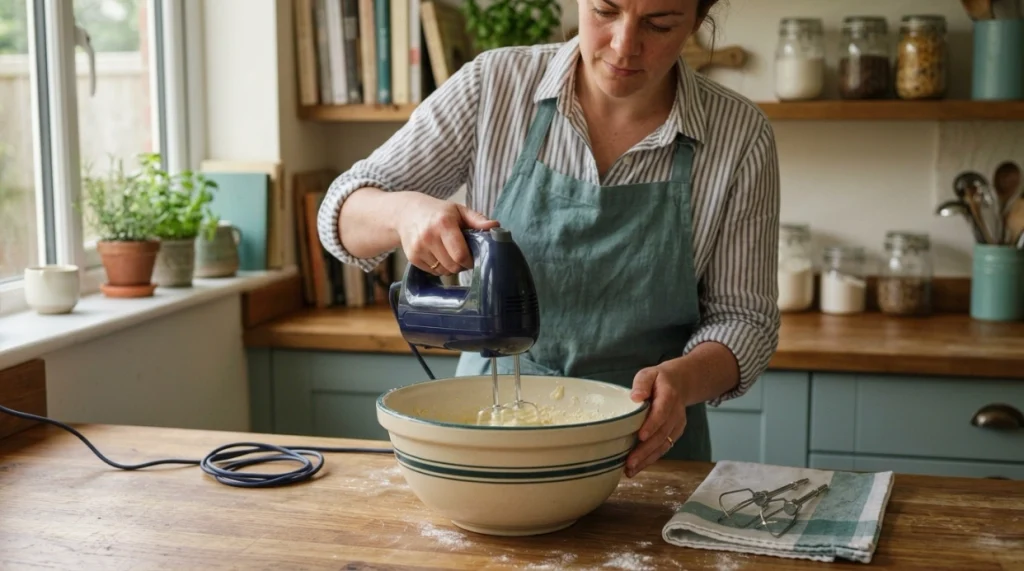
Start with the right attachment, a large enough bowl, and the lowest useful speed. Good technique reduces splashing and keeps unnecessary strain off the motor.
- Fit the attachments while unplugged. Push them into the correct sockets until properly seated.
- Place ingredients in a roomy bowl. Leave enough empty space to reduce splatter.
- Put the beaters into the mixture first. This keeps loose ingredients from flying outward.
- Start on low speed. Increase gradually as the ingredients combine.
- Move around the bowl steadily. Let the beaters reach different areas without banging them against the sides.
- Turn the mixer off before lifting it out. Wait for the attachments to stop spinning.
- Unplug before removing attachments. Clean them according to the manufacturer’s instructions.
Why Starting Slowly Matters
Low speed gives you more control when flour, cocoa powder, powdered sugar, or thin liquid is loose in the bowl. Once the mixture becomes cohesive, you can increase the speed.
High speed isn’t better for every task. Gentle mixing can also help prevent overworking cake batter or mashed potatoes.
Basic Electrical Safety
Keep the motor housing and electrical cord away from water. The CPSC Home Electrical Safety Checklist advises keeping countertop appliances away from sinks and hot surfaces.
Unplug the mixer when it’s not in use and before cleaning or changing accessories. Stop using a unit with a damaged plug, damaged cord, unusual smell, sparking, or other electrical fault.
Household motor-operated food-preparation machines, including mixers, fall within the scope of UL 982. That standard addresses safety requirements for this category of household appliance.
Pro tip: If a mixer has an electrical fault, damaged internal wiring, or a motor problem, don’t open the sealed housing unless you’re qualified to repair appliances. Check the manufacturer manual or use a qualified appliance repair technician.
Don’t Push a Hand Mixer Beyond Its Capacity
A motor that becomes unusually hot, slows dramatically, or struggles with thick dough is telling you the load may be excessive. Stop rather than forcing the mixer through it.
Capacity depends on the exact model. The manual is the best source for approved attachments, dough quantities, operating speeds, and duty limits.
Section Takeaway: Start slowly, use the correct attachment, and let the mixer work within its intended capacity. Good technique improves control while protecting both the recipe and the appliance.
Hand Mixer FAQ
Can you use a hand mixer for cake batter?
Yes. Cake batter is one of the most common hand mixer uses. Start at low speed while dry ingredients are loose, then follow the recipe’s mixing instructions. Avoid excessive mixing once flour is incorporated because some cakes can become tougher when the batter is overworked.
Can a hand mixer make whipped cream?
Yes. A hand mixer can whip cold heavy cream by incorporating air until it reaches soft or stiff peaks. Standard beaters can work, while a compatible wire-whisk attachment may provide even more efficient aeration.
Can I use a hand mixer for cookie dough?
Yes, for many ordinary cookie doughs. It works especially well for creaming butter and sugar. If the finished dough becomes unusually stiff and the motor starts struggling, finish by hand or use a stand mixer designed for heavier loads.
Can a hand mixer knead bread dough?
Some models can knead small batches when they include approved dough hooks. Check the manufacturer’s instructions first because motor strength and dough capacity vary. Large or stiff doughs are generally better suited to a capable stand mixer.
Can I use a hand mixer instead of a blender?
Not for most blending jobs. A hand mixer uses beaters to mix and aerate ingredients, while a blender uses sharp rotating blades to chop and purée. For smooth soups, sauces, or purées, a blender or immersion blender is normally more appropriate.
Can a hand mixer replace a stand mixer?
It can replace a stand mixer for many lighter recipes, including cakes, frosting, whipped cream, eggs, and some cookies. A stand mixer remains more practical for large batches, heavy mixtures, long kneading, and recipes that benefit from hands-free mixing.
What speed should I use on a hand mixer?
Use low speed for starting mixtures, adding dry ingredients, and reducing splatter. Medium speeds suit many batters and creaming tasks, while higher speeds are often used for whipping cream or egg whites. Follow your recipe and model manual when available.
Is a Hand Mixer Worth Having?
A hand mixer is worth having if you bake occasionally, whip cream or eggs, make frosting, prepare mashed potatoes, or want an electric mixer that stores easily. It gives you much of the everyday mixing ability people need without the footprint of a stand mixer.
I would focus less on maximum advertised power and more on control, comfortable handling, useful attachments, easy cleanup, and a low speed that doesn’t throw ingredients everywhere. Those details affect everyday use far more often.
- Choose a hand mixer if: You make small or medium batches and value easy storage.
- Choose a stand mixer if: You frequently knead heavy dough or make large batches.
- Choose an immersion blender if: Your main goal is puréeing soups, sauces, or drinks.
For most home cooks, a hand mixer fills the gap between manual mixing and a large countertop machine. Use the right attachment, start slowly, and respect the mixer’s capacity, and it becomes one of the simplest tools for everyday baking and food prep.
