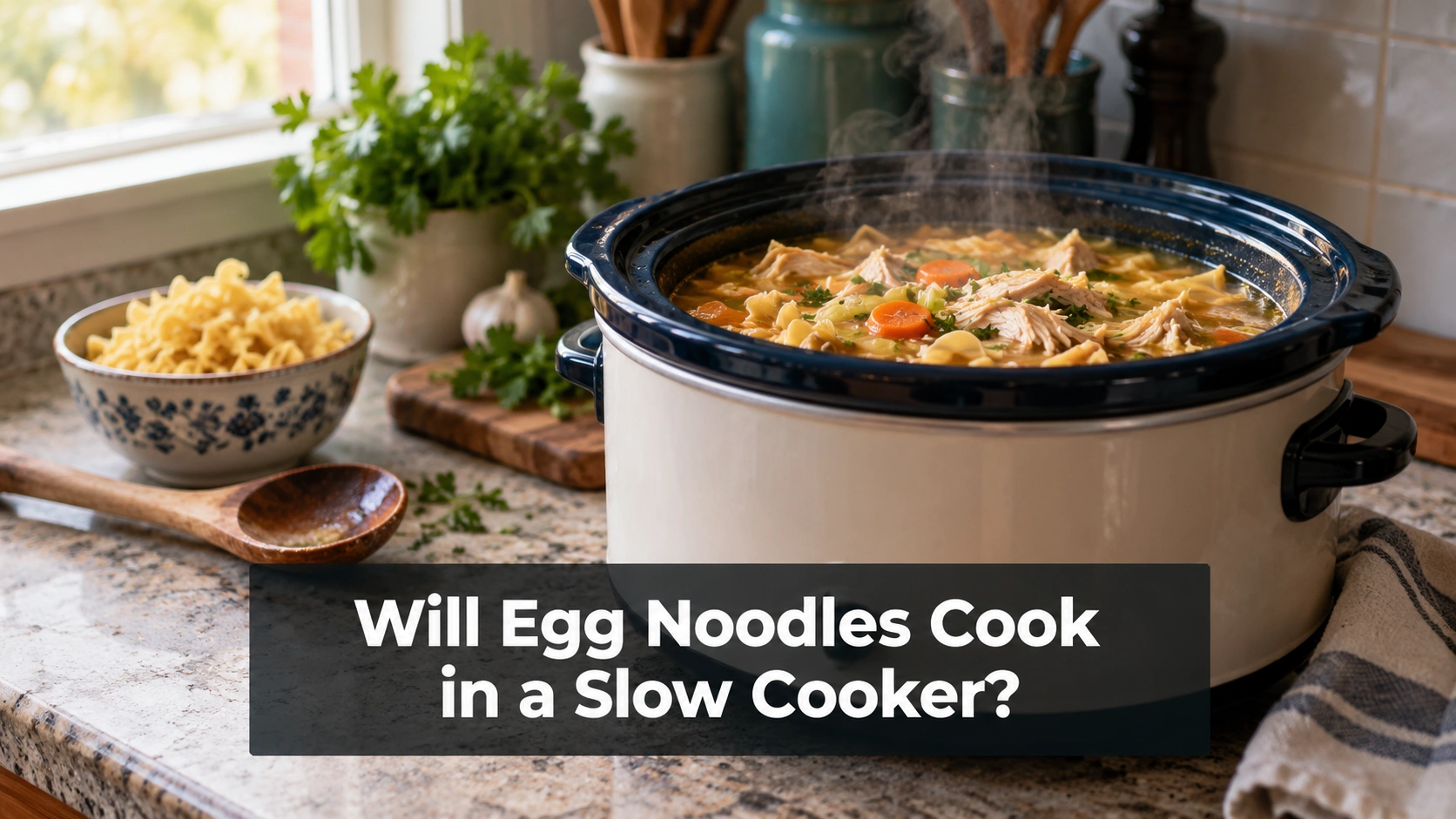
Quick Answer
Yes, egg noodles will cook in a slow cooker, but they should usually be added near the end rather than at the beginning. Dried egg noodles typically need only about 15–35 minutes in hot broth or sauce, depending on the noodle thickness and cooker. For food-safety guidance on slow-cooker use, see the USDA slow cooker safety guidance.
What to know before adding them
- Late addition: Add egg noodles during the final 15–35 minutes so they don’t turn mushy.
- Enough liquid: Make sure the noodles can contact hot broth, sauce, or another suitable cooking liquid.
- Check early: Start testing a noodle before the estimated finish time because brands and thicknesses vary.
- Stir gently: One gentle stir helps distribute the noodles without breaking them apart.
- Best texture: Cook noodles separately when you need firm, springy noodles for meal prep or leftovers.
One important distinction
- A slow cooker is different from a dedicated electric egg cooker. This guide is about using a crock-pot-style slow cooker to cook egg noodles.
I’ve found that noodles are one of the easiest slow-cooker ingredients to mishandle. They look harmless when you add them early, but hours of hot liquid can turn a good noodle dish soft and starchy.
The good news is that egg noodles can cook successfully in a slow cooker. The trick is timing, liquid, and knowing when to stop cooking.
In This Guide
- Can egg noodles cook in a slow cooker?
- When should you add egg noodles to a slow cooker?
- How do you cook egg noodles in a slow cooker?
- Why do egg noodles get mushy in a slow cooker?
- Is a slow cooker better than the stovetop for egg noodles?
- What mistakes should you avoid?
- Egg noodle slow cooker FAQs
Can egg noodles cook in a slow cooker?
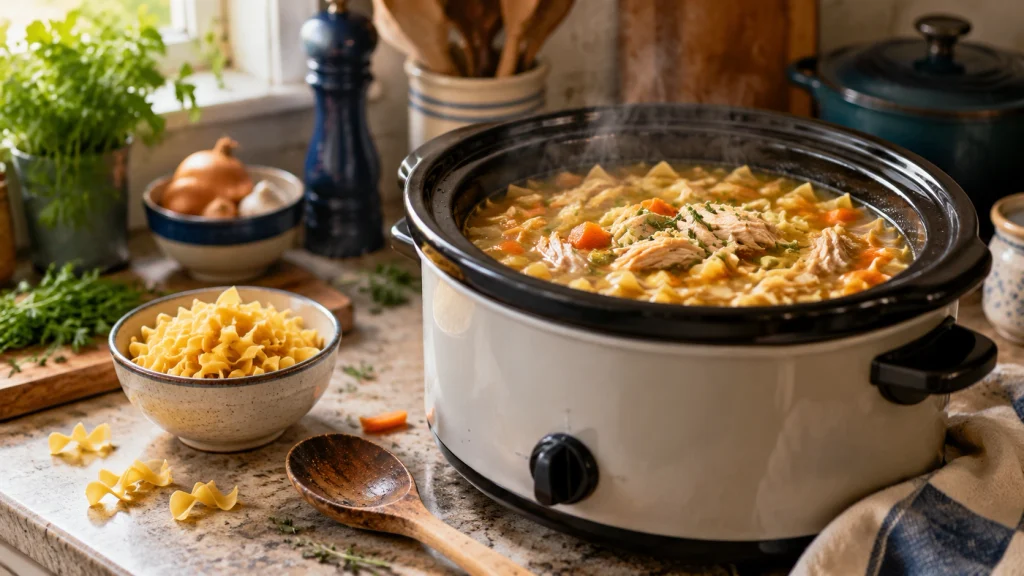
Yes, egg noodles can cook in a slow cooker when you add them near the end of the cooking process. They work especially well in soups, chicken-and-noodle dishes, beef and noodles, and creamy slow-cooker meals.
Egg noodles don’t need hours of cooking. Most dried varieties become tender relatively quickly once surrounded by hot liquid.
What are egg noodles?
Egg noodles are wheat-based noodles made with eggs or a higher proportion of egg than many standard pasta products. Their tender texture makes them popular in soups, casseroles, stroganoff-style dishes, and comfort-food recipes.
That tender texture is also why timing matters. A noodle that tastes pleasantly firm at first can become soft if it continues sitting in hot broth.
What happens if you add them too early?
If you add egg noodles during the first few hours of a slow-cooker recipe, they keep absorbing liquid as the meal cooks. They can swell, become overly soft, and make the surrounding broth thicker.
In my own approach to slow-cooker noodle dishes, I treat the noodles as a finishing ingredient rather than a long-cooking ingredient. That small change makes a noticeable difference.
- Too early: Noodles may become mushy and absorb excessive liquid.
- Too little liquid: Some noodles may remain firm or cook unevenly.
- Too much stirring: Tender noodles can break apart.
- Too much holding: Noodles can continue softening after they reach doneness.
Section Takeaway: A slow cooker can cook egg noodles well, but the noodles belong near the end of the recipe.
When should you add egg noodles to a slow cooker?
For most slow-cooker recipes, add dried egg noodles during the final 15–35 minutes of cooking. Start checking them early because noodle thickness, liquid temperature, recipe volume, and the slow cooker itself can change the timing.
Recipes vary considerably. Some slow-cooker chicken-and-noodle recipes use roughly 20–25 minutes, while other preparations call for closer to 30–35 minutes on HIGH.
Why is the final stage best?
By the end of the recipe, the broth or sauce is already hot and the main ingredients are usually finished. The noodles can then absorb enough liquid to become tender without sitting in that liquid for several hours.
Keeping the lid on also helps retain heat. I avoid repeatedly opening the cooker because every lid lift releases heat and can extend the cooking time.
Should you cook egg noodles on LOW or HIGH?
There isn’t one universal setting for every recipe. If your recipe specifies HIGH for the noodle-finishing stage, follow that instruction and begin checking the noodles before the stated time is complete.
If you’re adapting a recipe, use the manufacturer’s instructions for your slow cooker and watch the noodles closely. The goal is tenderness, not a specific number of minutes.
| Method | Typical timing | Texture control | Best use |
|---|---|---|---|
| Slow cooker, added near end | About 15–35 minutes | Moderate | Soups and one-pot meals |
| Slow cooker, added at beginning | Several hours | Poor | Generally not recommended for egg noodles |
| Stovetop | Usually follows package directions | High | Firm noodles and precise timing |
Section Takeaway: Adding noodles late gives you far more control than leaving them in the slow cooker for hours.
How do you cook egg noodles in a slow cooker?
The simplest method is to finish the main dish first, then add the dried egg noodles directly to the hot liquid. Give them enough liquid to hydrate, cover the cooker, and check for tenderness before they become soft.
Step 1: Cook the main ingredients first
Prepare your chicken, beef, vegetables, broth, sauce, or other ingredients according to the recipe. The slow-cooked ingredients should be nearly or completely finished before the noodles go in.
This approach keeps the noodles from competing with tougher ingredients that need several hours to tenderize.
Step 2: Check the liquid
Egg noodles need moisture to cook. If the mixture is extremely thick, they may not cook evenly unless enough broth, sauce, or other appropriate liquid surrounds them.
Don’t blindly pour in a large amount of water. Excess liquid can dilute the flavor and change the consistency of the finished dish.
Step 3: Add the dried egg noodles
Stir the noodles into the hot mixture and try to distribute them evenly. If possible, press them gently beneath the liquid so the exposed pieces don’t remain dry.
A gentle stir is enough. Aggressive stirring can break tender noodles and make the dish look pasty.
Step 4: Cover and cook
Replace the lid and let the noodles cook according to the recipe. Begin checking them before the expected finish time rather than waiting for the noodles to become obviously soft.
- Check early: Test one noodle for tenderness.
- Stir once: Redistribute noodles if needed.
- Watch the liquid: Add a small amount of suitable hot liquid only if the recipe requires it.
- Stop promptly: Serve when the texture is tender enough for your preference.
Step 5: Serve soon after cooking
Egg noodles continue absorbing liquid while they sit. If you leave them in the slow cooker on a warm setting for a long time, their texture can change even after the cooking stage ends.
For the best texture, serve the finished meal soon after the noodles become tender.
Section Takeaway: Cook the main dish first, add the noodles late, and check them early for tenderness.
Why do egg noodles get mushy in a slow cooker?
Egg noodles usually become mushy because they spend too much time in hot liquid. They continue absorbing moisture after they have already reached a tender texture.
This is the biggest difference between cooking noodles in a slow cooker and boiling them on the stovetop.
Cooking time is the main problem
A slow cooker is designed for long cooking, but egg noodles are not. Putting noodles into a recipe at the beginning can expose them to hours of moisture and heat.
The result may be swollen noodles, cloudy broth, or a thick, starchy sauce. That’s especially noticeable in recipes with a relatively small amount of liquid.
Why does the broth disappear?
Dried noodles absorb liquid as they hydrate. If you add too many noodles, they can pull a surprising amount of moisture from the dish.
This can leave a soup thicker than expected. It can also make the remaining noodles compete for the same liquid.
Can you fix mushy egg noodles?
You can’t fully reverse overcooked noodles. If they’re only slightly too soft, serving them immediately can prevent further deterioration.
If the dish has become too thick, you can sometimes loosen it with a little hot broth. That won’t restore the original noodle texture, but it can improve the overall consistency.
Section Takeaway: Mushy egg noodles are usually a timing problem, not a defective slow cooker.
Is a slow cooker better than the stovetop for egg noodles?
For precise noodle texture, the stovetop is usually easier. A slow cooker becomes more useful when the noodles are part of a soup, stew, chicken dish, or other meal that’s already cooking there.
I prefer the slow cooker when convenience matters more than perfectly firm noodles. If I’m making plain buttered egg noodles, I’d choose a saucepan instead.
| Factor | Slow cooker | Stovetop |
|---|---|---|
| Convenience | Excellent for one-pot meals | Requires active cooking |
| Texture control | Moderate | Excellent |
| Best for soups | Yes | Yes |
| Best for plain noodles | Not ideal | Yes |
| Risk of overcooking | Higher if left unattended | Lower with active monitoring |
If you’re preparing noodles for several meals, cooking them separately can also be a smart choice. The noodles stay easier to control and won’t continue absorbing soup or sauce while stored.
For food safety, don’t use a slow cooker as a shortcut for reheating refrigerated leftovers. USDA guidance says reheating leftovers in a slow cooker isn’t recommended because food can remain too long in the 40°F–140°F danger zone.
Section Takeaway: Use the slow cooker for convenience and one-pot meals, but choose the stovetop when noodle texture is the priority.
What mistakes should you avoid?
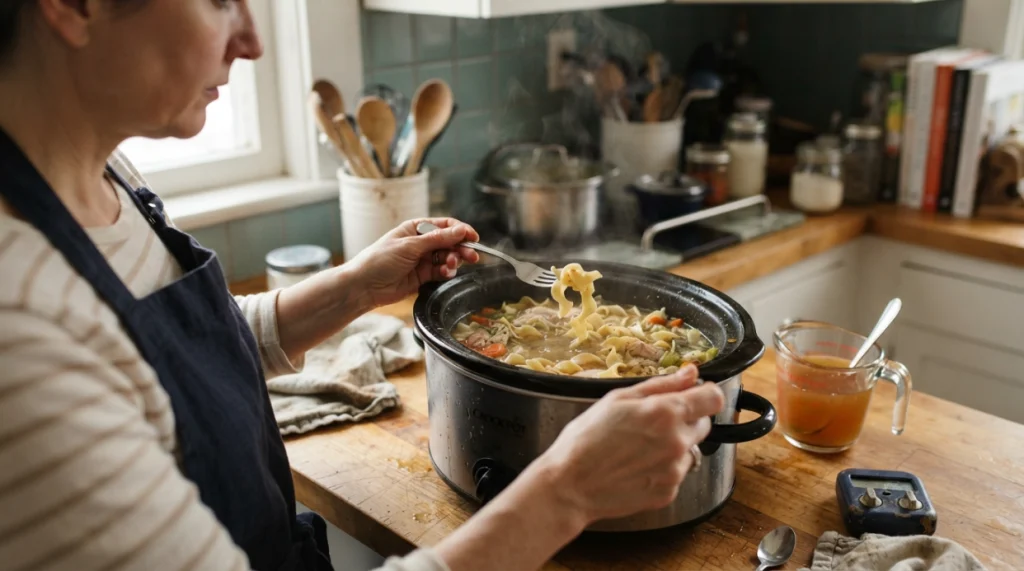
The most common problems are easy to prevent. Most come down to adding noodles too soon, using the wrong amount of liquid, or leaving the finished noodles sitting in the cooker.
- Adding noodles at the start: This gives them far more cooking time than they need.
- Ignoring noodle thickness: Thin egg noodles can finish faster than thicker varieties.
- Skipping the first taste test: Check a noodle before the recipe’s estimated finish time.
- Using excessive liquid: Extra water can weaken the flavor and make the finished dish soupy.
- Adding too many noodles: They can absorb enough liquid to dramatically thicken the dish.
- Leaving noodles on warm: Continued exposure to heat and liquid can soften them further.
- Stirring aggressively: Egg noodles can break once they become tender.
What if the noodles are still hard?
If the noodles are still firm, keep the cooker covered and give them additional time. Make sure the noodles have adequate hot liquid around them.
Check again after a short interval rather than adding a large amount of extra cooking time. This makes it easier to catch the noodles at the texture you want.
What if the slow cooker isn’t getting hot enough?
First, make sure the cooker is switched on and that the lid is properly positioned. USDA guidance recommends keeping the lid in place during slow cooking because removing it releases heat.
If your appliance consistently fails to heat food properly, consult its manual or contact the manufacturer. Don’t open a sealed electrical appliance or bypass a thermal or safety control yourself.
Pro tip: If you suspect a faulty heating element, control panel, cord, or safety component, stop using the appliance and follow the manufacturer’s service guidance or contact a qualified appliance repair technician.
How should you handle leftovers?
Refrigerate perishable leftovers promptly rather than leaving the slow cooker full of noodles sitting at room temperature. USDA guidance recommends refrigerating leftovers within two hours and using most cooked leftovers within three to four days.
For reheating, use the stovetop or microwave rather than relying on the slow cooker. USDA recommends reheating leftovers to 165°F throughout.
Section Takeaway: Good noodle texture depends on timing, while safe leftovers depend on prompt refrigeration and proper reheating.
Egg noodle slow cooker FAQs
Can you put uncooked egg noodles in a slow cooker?
Yes. Uncooked egg noodles can be added directly to a slow cooker near the end of cooking, provided there is enough hot liquid for them to hydrate. Avoid adding them at the beginning because several hours of cooking can make them excessively soft.
How long do egg noodles take to cook in a slow cooker?
Many dried egg noodles take roughly 15–35 minutes in a hot slow-cooker mixture. The exact time varies by noodle thickness, recipe, liquid temperature, and cooker. Start checking early rather than relying on a fixed time.
Can egg noodles cook on LOW in a slow cooker?
Yes, egg noodles can finish on LOW, but the timing varies between recipes and appliances. Because they cook much faster than most slow-cooker ingredients, add them late and monitor their texture closely instead of leaving them in for the entire LOW cooking cycle.
Why did my egg noodles absorb all the broth?
Egg noodles naturally absorb liquid as they cook. If you use too many noodles, add them too early, or use a recipe with limited broth, they can absorb much of the available liquid and leave the dish unusually thick.
Should I cook egg noodles separately for leftovers?
Cooking egg noodles separately is often the better option for leftovers. Noodles stored directly in soup or sauce continue absorbing liquid and can become soft overnight. Keeping them separate gives you better control when reheating individual portions.
Can you reheat egg noodles in a slow cooker?
It’s not recommended to reheat leftovers in a slow cooker. USDA guidance recommends reheating leftovers using methods such as the stovetop or microwave and reaching 165°F throughout, because slow reheating can keep food in the temperature danger zone too long.
Final Takeaway: Yes, but Add Egg Noodles Late
So, will egg noodles cook in a slow cooker? Yes, and they can turn out tender and flavorful when you add them near the end.
The main mistake is treating egg noodles like meat, beans, or root vegetables that need hours of cooking. They don’t.
For the best results, finish the slow-cooked ingredients first, add the noodles to the hot liquid, keep the lid on, and start checking them early.
If you want the firmest, most predictable noodle texture, cook the noodles separately on the stovetop. If you’re making a cozy one-pot soup or chicken-and-noodle meal, the slow cooker is a convenient option.
As of 2026, the basic rule remains simple: slow-cook the meal, not the noodles.