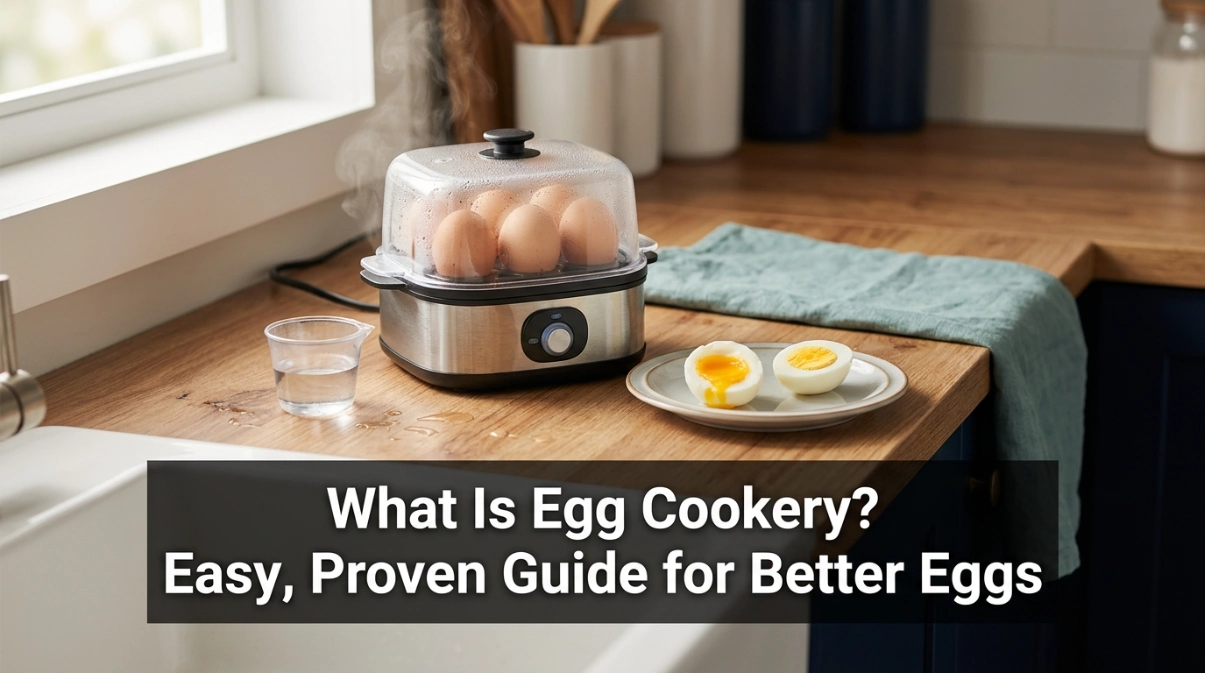
If you are asking what is egg cookery, the simple answer is this: egg cookery means the methods used to cook eggs. It covers boiling, poaching, steaming, frying, scrambling, baking, and more.
In an electric egg cooker, egg cookery is mostly about heat, steam, water, and time. I learned this after getting very different results from the same cooker on different days.
At first, I thought the machine was at fault. One batch was too soft. Another had a gray ring around the yolk. A few eggs even cracked while cooking.
After testing the basics, I found that small things mattered most. Water level, egg size, lid fit, and mineral buildup could all change the final result.
Egg cookery is not just about turning on a machine. It is about controlling heat so the egg reaches the texture you want.
What Is Egg Cookery? Common Signs Your Method Is Off
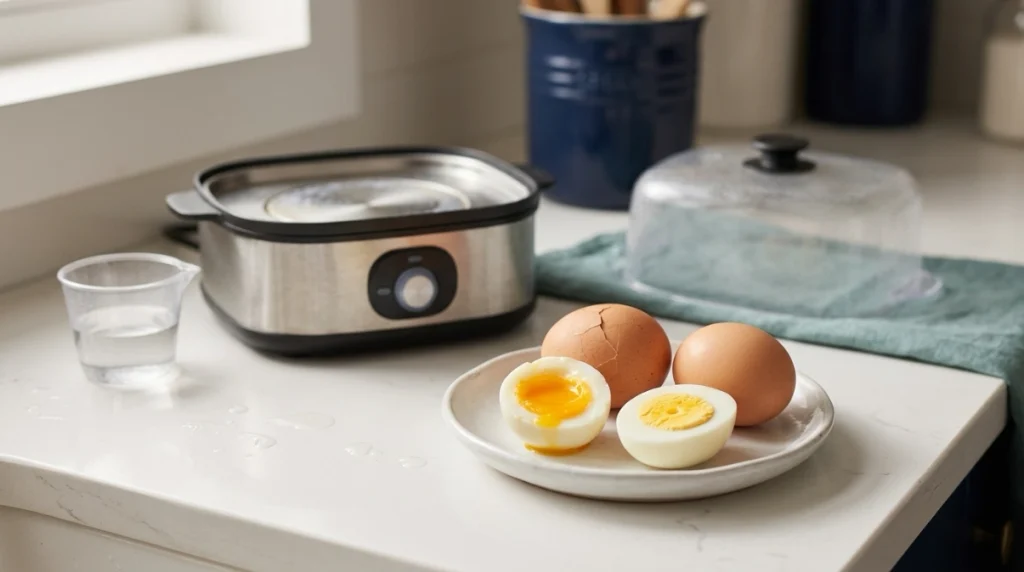
Good egg cookery should give you a result that is close to what you selected. Soft eggs should stay soft. Hard eggs should have firm whites and yolks.
When something is wrong, the signs are often easy to spot.
| Symptom | Likely Cause | Quick Fix |
|---|---|---|
| Eggs are too soft | Too little water or short cook time | Add the correct water amount |
| Eggs are rubbery | Too much heat or long cooking | Use less water or stop sooner |
| Eggs crack | Cold eggs or poor tray position | Seat eggs well and pierce only if required |
| Cooker spits water | Lid or vent problem | Check lid fit and steam vent |
| Eggs cook unevenly | Scale on heating plate | Descale the plate |
One thing I stopped doing was guessing the water amount. The water measuring cup that comes with many egg cookers is more useful than it looks.
If that cup gets lost, a matching replacement measuring cup can help. I would not use a random cup unless I knew the exact volume needed for that cooker.
The same applies to a cracked egg tray or lid. A damaged part can let steam escape and make cooking less even.
Possible Causes of Poor Egg Cookery in an Egg Cooker
Most poor results do not mean the egg cooker is broken. In my testing, simple setup errors were much more common.
The first cause is the wrong amount of water. Most electric egg cookers use water to control how long steam is made.
Too little water may stop cooking too soon. Too much can cook the eggs longer than you wanted.
Egg size also matters. A small egg heats faster than a large egg. Eggs taken straight from a cold fridge may also need a little more time than eggs that have warmed slightly.
The lid matters too. It traps steam around the eggs. If it does not sit well, heat can escape.
A blocked steam vent can cause extra pressure or water spitting. The vent should always stay open unless the maker says otherwise.
Mineral scale is another common cause. Hard water leaves a white or brown layer on the heating plate.
That layer can slow heat transfer. It may also cause odd sounds or uneven cooking.
How to Fix Common Egg Cookery Problems
The best way to fix egg cookery problems is to change one thing at a time. That helped me find the real cause instead of guessing.
Check the Water Amount
Start with the water measuring cup that came with your cooker. Look for marks for soft, medium, or hard eggs.
Do not assume more water means a better result. In many models, more water simply means a longer steam cycle.
If your eggs are too soft, add a small amount more next time. If they are too firm, use a little less.
Make small changes. That gives you much more control.
Inspect the Egg Tray and Lid
Remove the tray when the cooker is cool. Check that it sits flat and does not rock.
Look at the lid too. Cracks or warped edges can let steam leak out.
I also check the steam vent each time. A bit of dried egg or scale can partly block it.
Do not plug or cover the vent to keep more steam inside. The vent is there for safe steam release.
Match Egg Size and Starting Temperature
I once used the same water mark for small eggs and extra-large eggs. The results were not the same.
Large eggs usually need more heat to reach the center. Very cold eggs may also cook a little differently.
For steady results, use eggs of a similar size in each batch. Try to start them at about the same temperature too.
Let Overheat Protection Reset
Some egg cookers stop when the water runs dry. This may be part of the auto shut-off or overheat protection system.
If the cooker stops and will not start again, unplug it. Let the base cool fully.
Do not keep pressing the button while the heating plate is still hot. Once cool, add the right amount of water and try again.
Check for Mineral Buildup
This was one of the biggest changes for me. My heating plate looked dull, and eggs began taking longer to cook.
After cleaning the plate, the cooker worked much more like it did when it was new.
White vinegar can help with light mineral scale if the manufacturer allows it. Put a small amount on the cool plate and let it sit briefly.
Then wipe it with a soft cloth or non-abrasive sponge. Do not scrape the plate with a knife or steel pad.
Never immerse the powered base in water. Wipe it only after it is unplugged and cool.
| Problem | Recommended Solution | Difficulty |
|---|---|---|
| Too-soft eggs | Adjust water slightly | Easy |
| Uneven eggs | Check tray and egg size | Easy |
| Steam leaking | Reseat lid and inspect damage | Easy |
| Scale on plate | Descale when cool | Easy |
| Cooker shuts off early | Cool and reset | Easy |
| Burning smell | Unplug and stop using | Do not repair yourself |
Test the Button or Control Setting
If your cooker has soft, medium, or hard settings, make sure the right one is selected before each batch.
Some basic cookers have only one switch. In those models, the water amount often controls the final egg texture.
If a button feels loose, gets very hot, or works only at certain angles, stop using the cooker. That may point to an electrical fault.
Mistakes to Avoid
The biggest mistake I made was changing several things at once. I changed the water, egg size, and tray position in the same test.
That made it hard to know what fixed the problem. Changing one thing at a time gave me much better answers.
Do not add water while the heating plate is very hot. Sudden cooling can damage some surfaces and may create fast steam.
Do not touch the steam vent during use. Hot steam can burn skin very fast.
Do not use a damaged power cord. Do not tape over a loose switch or try to bypass an auto shut-off system.
I would also never open a sealed heating base to repair wires or the heating element. Electrical work inside a small wet-use appliance can be dangerous.
Unplug the cooker before wiping it. Let all parts cool before handling them.
When to Replace the Egg Cooker
Most doneness problems are easy to fix. A little water adjustment or descaling may be all you need.
Replacement makes more sense when the problem involves the power system, heating unit, or damaged base.
A strong burning smell is a warning sign. So are melted plastic, sparks, a badly damaged cord, or a base that becomes far hotter than normal.
A cooker that repeatedly fails to shut off should also be taken out of use. The safety system is more important than saving the appliance.
A cracked removable lid or tray may be worth replacing if the correct part is available. A cracked electrical base is a different matter and should not be used.
My Personal Experience
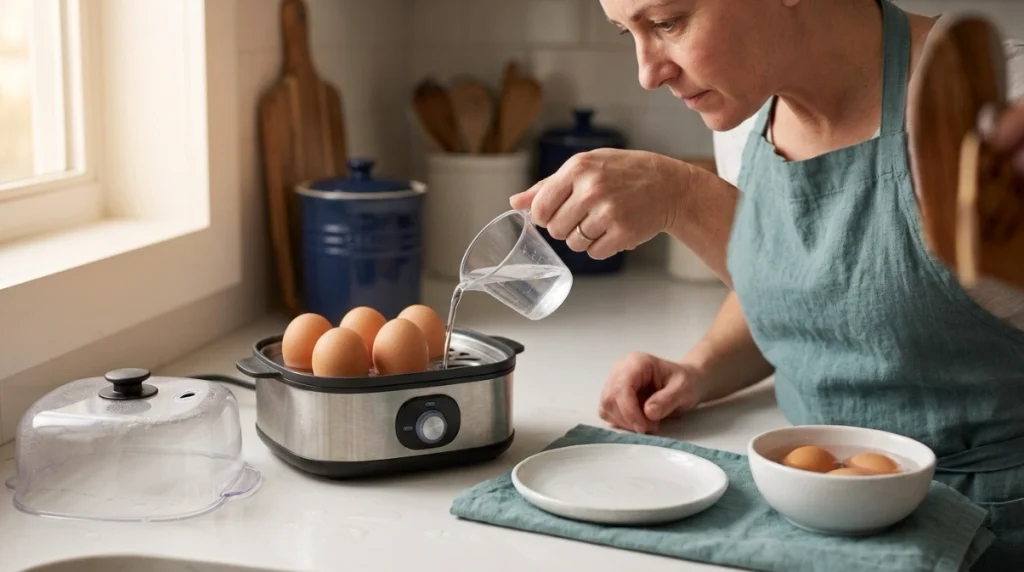
The most useful lesson I learned was that egg cookery is very sensitive to small changes.
My first bad batch had soft whites. I blamed the heating element and almost stopped using the cooker.
Instead, I ran another batch with the same size eggs. I measured the water with the original cup and made sure the tray was flat.
The result was much better.
Later, cooking became slow again. This time I noticed a pale layer on the heating plate.
I removed the mineral buildup after the cooker had cooled. That brought the cook time much closer to normal.
I also learned not to judge the eggs while they were still very hot. An egg can keep cooking for a short time from its own heat.
For a soft center, moving the cooked eggs into cool water can help stop that extra cooking.
These small tests worked better for me than changing parts or assuming the machine had failed.
Final Thoughts
So, what is egg cookery? It is the simple skill of using heat in the right way to get the egg texture you want.
With an egg cooker, that means paying attention to water, steam, egg size, the tray, the lid, and the condition of the heating plate.
If your eggs are too soft or too firm, start with the water amount. If they cook unevenly, check the tray, lid, vent, and mineral scale.
Most small egg cookery problems are easy to correct. You usually do not need to repair anything inside the machine.
If you see sparks, melted parts, a damaged cord, or smell strong burning, unplug the cooker and stop using it.
For normal cooking problems, simple checks and small changes are often enough to give you safer, more consistent eggs.