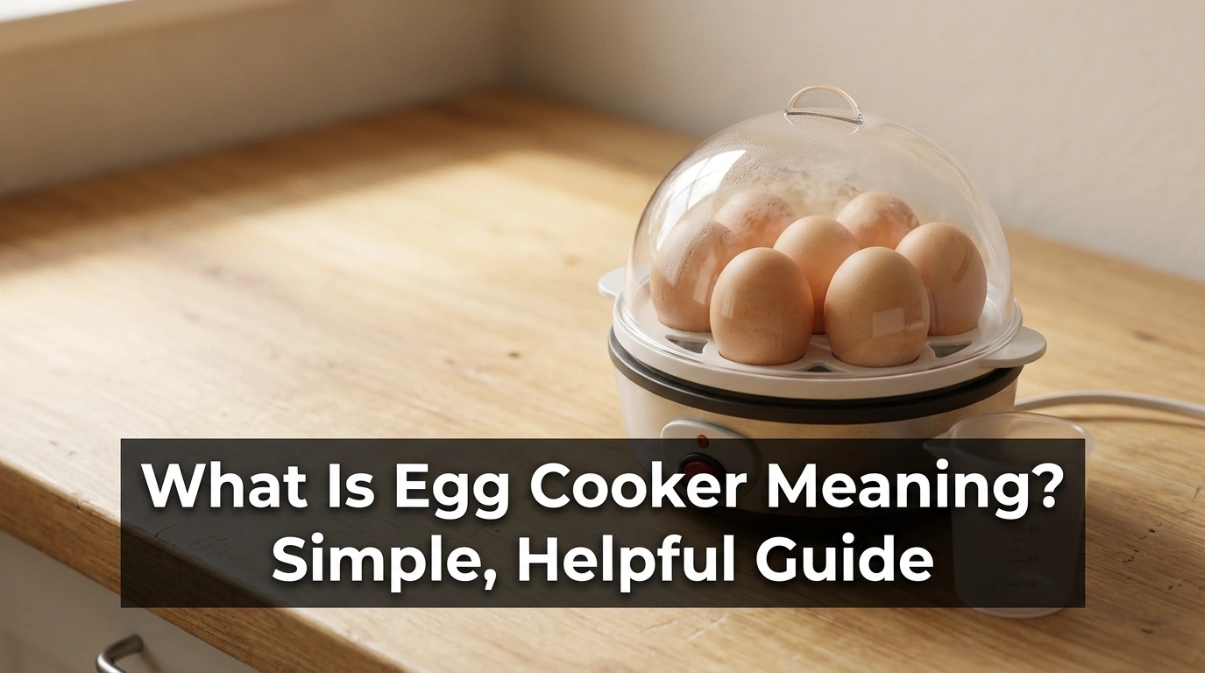
If you are searching what is egg cooker meaning, the answer is simple. An egg cooker is a small electric kitchen appliance made to cook eggs with heat and steam.
Most models can make soft, medium, or hard-boiled eggs. Some also include trays for poached eggs or small omelets.
The first time I looked closely at how an egg cooker works, the design seemed almost too simple. There was a heating plate, a cup for water, an egg tray, and a plastic lid.
That simple design is also why many problems are easy to understand. The amount of water, the way the tray sits, and the steam inside the lid all affect the result.
What Is Egg Cooker Meaning in Simple Terms?
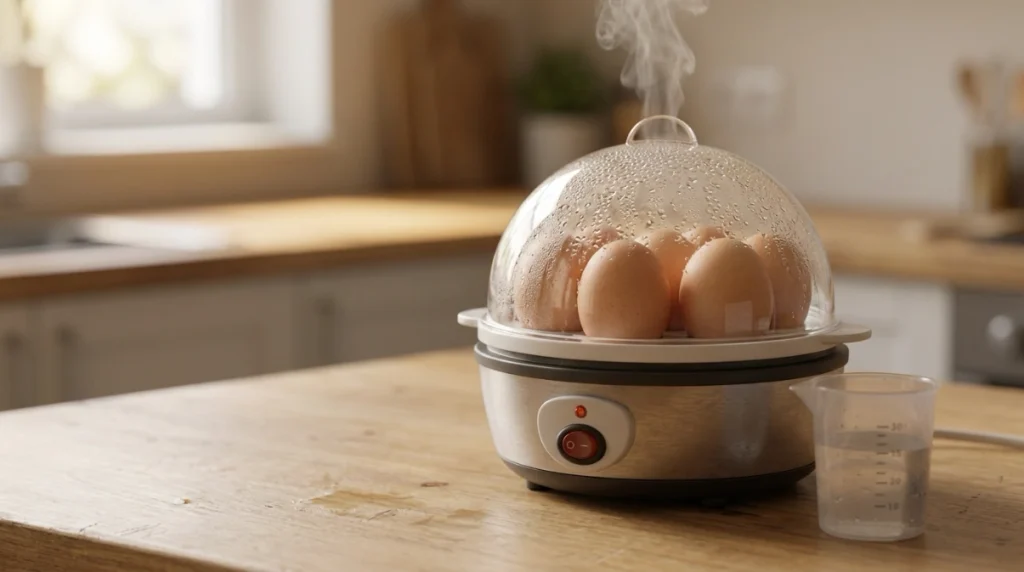
An egg cooker is basically a small electric steamer designed for eggs. You add a measured amount of water, place the eggs in the tray, fit the lid, and turn the unit on.
The heating plate warms the water. The water turns into steam, and that steam cooks the eggs.
Many models stop heating when the water has boiled away. Some beep, flash a light, or switch off when cooking is done.
This is different from boiling eggs in a saucepan. You normally do not fill an egg cooker with enough water to cover the eggs.
| Part | What It Does | Why It Matters |
|---|---|---|
| Heating plate | Heats the water | Creates steam |
| Egg tray | Holds eggs upright | Keeps eggs positioned safely |
| Measuring cup | Measures water | Helps control doneness |
| Lid | Holds steam around eggs | Supports even cooking |
| Auto shut-off | Stops heating | Helps prevent overheating |
If your cooker is missing its measuring cup, egg tray, or lid, I would replace the correct part instead of guessing. A replacement measuring cup can be especially useful because water amount often controls cooking time.
A cracked tray or badly damaged lid should also be replaced. Using parts that do not fit properly may cause poor cooking or excess steam loss.
Common Signs of an Egg Cooker Problem
Once you understand the egg cooker meaning, it becomes easier to tell normal operation from a real problem.
Steam coming from the vent is normal. A beep at the end of the cycle is also normal on many models.
Problems are more likely when the appliance does not heat, the eggs stay raw, water leaks from the base, or you notice a strong burning smell.
| Symptom | Likely Cause | Quick Fix |
|---|---|---|
| Eggs are undercooked | Too little water | Measure water again |
| Eggs are overcooked | Too much water | Reduce water |
| No heat | Outlet or power issue | Test the outlet |
| Excess steam escapes | Lid not seated well | Refit the lid |
| White marks on plate | Mineral buildup | Descale the plate |
| Burning smell | Dry or dirty plate | Unplug and inspect |
A little water left around the tray does not always mean something is wrong. Designs vary, so check the instructions for your model when possible.
Possible Causes of Egg Cooker Problems
Most egg cooker issues come from setup rather than a failed heating element. That is one reason I always start with the simple checks.
Common causes include:
- Using the wrong amount of water
- Placing the egg tray incorrectly
- Leaving the lid loose
- Mineral buildup on the heating plate
- Using the wrong cooking setting
- A damaged power cord or wall outlet
- Restarting the cooker while it is still hot
- Blocking the steam vent
- Expecting the machine to work like a saucepan
Water measurement causes more trouble than many people expect. On some models, less water may actually be used for certain egg quantities or doneness levels.
Always follow the markings on the supplied cup or the manufacturer’s instructions when available.
How to Fix Common “What Is Egg Cooker Meaning?” Problems
If you understand what the appliance is supposed to do, troubleshooting becomes much easier. I work through these checks from simplest to most important.
Check the Power Source
Make sure the plug is fully inserted into the wall outlet. If the cooker has no light, heat, or sound, test the outlet with another small appliance.
Look at the power cord too. Stop using the cooker if the cord is cut, melted, loose, or badly damaged.
Do not open the electrical base to repair internal wires yourself.
Check the Egg Tray and Lid
Place the egg tray flat on the cooker. It should not rock, tilt, or sit partly outside its normal position.
Then fit the lid correctly. Steam needs to circulate around the eggs, so a badly fitted lid can affect cooking.
Never block the steam vent. Hot steam needs a safe place to escape.
Measure the Water Correctly
The measuring cup is more important than it looks. The amount of water often controls how long the heating plate produces steam.
Use the marks for soft, medium, or hard eggs if your cup has them.
I would avoid pouring in random amounts of water. Too little may leave the center too soft, while too much may keep the eggs cooking longer than expected.
Let the Auto Shut-Off Work
Many egg cookers use the loss of water to determine when the cycle is finished. When the water is gone, the machine may beep or shut itself off.
Do not keep restarting the cooker just because you hear the beep.
If the eggs need more cooking, allow the appliance to cool first. Then add the correct amount of water for another short cycle if the manual allows it.
Check for Mineral Buildup
A white, chalky layer on the heating plate is usually mineral residue from water. It can reduce good contact between the water and the hot plate.
Regular cleaning helps the cooker heat more evenly.
After unplugging and cooling the unit, wipe the plate with a soft cloth or non-abrasive sponge. For stubborn mineral marks, a small amount of diluted white vinegar may help if the manufacturer allows it.
Never immerse the electrical base in water.
Check Buttons and Settings
Some egg cookers have only one switch. Others have buttons for boiling, poaching, omelets, or different cooking times.
If the machine seems to stop too early, check that you selected the correct mode.
A flashing light or beep may simply show that the cycle has ended. It does not always mean an error.
Common Mistakes to Avoid
One mistake I see easily happening is treating an egg cooker like a normal pot. Adding large amounts of water usually does not improve the result.
Another mistake is removing the lid immediately with your face or hand over the steam vent. The steam inside can be very hot.
Avoid these errors:
- Do not touch the heating plate while hot.
- Do not block the steam vent.
- Do not immerse the electrical base.
- Do not use a damaged power cord.
- Do not force a lid or tray that does not fit.
- Do not bypass the auto shut-off or safety switch.
- Do not open a sealed heating unit for DIY electrical repairs.
If you smell melting plastic or electrical burning, unplug the cooker and stop using it.
When to Replace the Egg Cooker
An egg cooker is a simple appliance, so small issues such as a lost measuring cup or damaged removable tray may be easy to solve.
Internal electrical failures are different.
| Repair Issue | Best Action | Replace? |
|---|---|---|
| Missing measuring cup | Get correct replacement | Usually no |
| Cracked removable tray | Replace tray | Usually no |
| Heavy mineral buildup | Descale safely | Usually no |
| Damaged power cord | Stop using unit | Often yes |
| Burning electrical smell | Unplug immediately | Yes |
| Base leaks internally | Stop using unit | Usually yes |
Replacement makes more sense when the electrical base is damaged, the cooker repeatedly overheats, or a burning smell returns after basic checks.
It is not worth bypassing a safety device to keep a low-cost appliance running.
My Practical Testing Approach
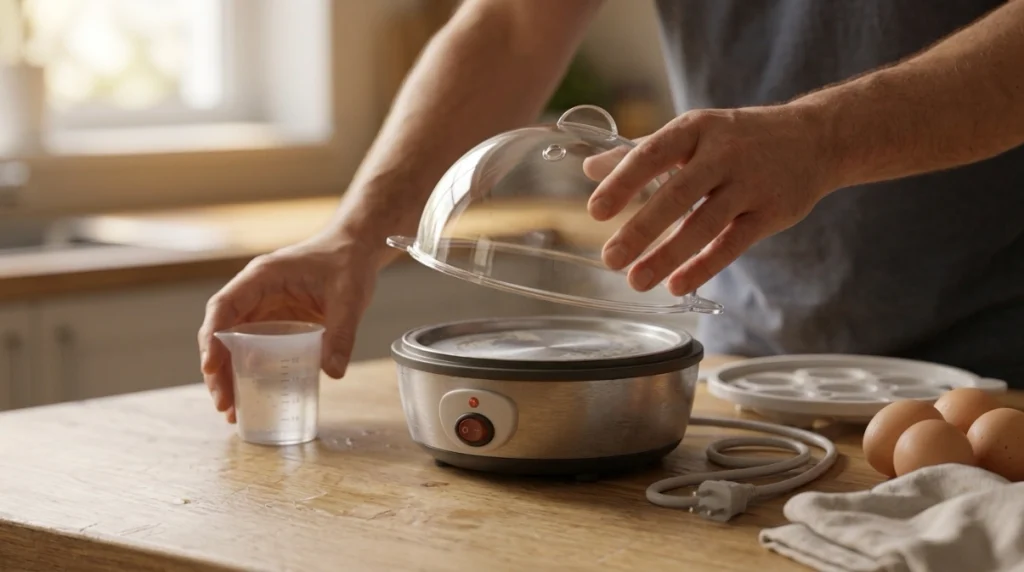
I use a very simple process when checking an egg cooker. I start with the parts I can safely inspect without opening the base.
First, I check the cup, tray, lid, cord, and heating plate. Then I make sure the steam vent is clear and the plate has no heavy mineral layer.
Next, I use the exact water amount recommended for the egg setting. This removes one of the biggest variables.
If the eggs still cook poorly, I check the lid fit and the selected mode before assuming the appliance itself has failed.
The main lesson is that more water is not always better. Correct measurement and proper setup matter far more.
Final Thoughts
So, what is egg cooker meaning? It means a small electric appliance that uses measured water, heat, and steam to cook eggs with less hands-on work than a normal saucepan.
A heating plate creates steam, an egg tray holds the eggs, and the lid keeps the heat around them. Many models also use an automatic shut-off or beep to tell you when cooking is complete.
If your cooker seems to behave strangely, start with the water amount, tray, lid, heating plate, power source, and settings.
Most beginner problems come from setup or mineral buildup. If you find damaged electrical parts, internal leaks, repeated overheating, or an electrical burning smell, stop using the cooker and replace it rather than attempting an unsafe repair.