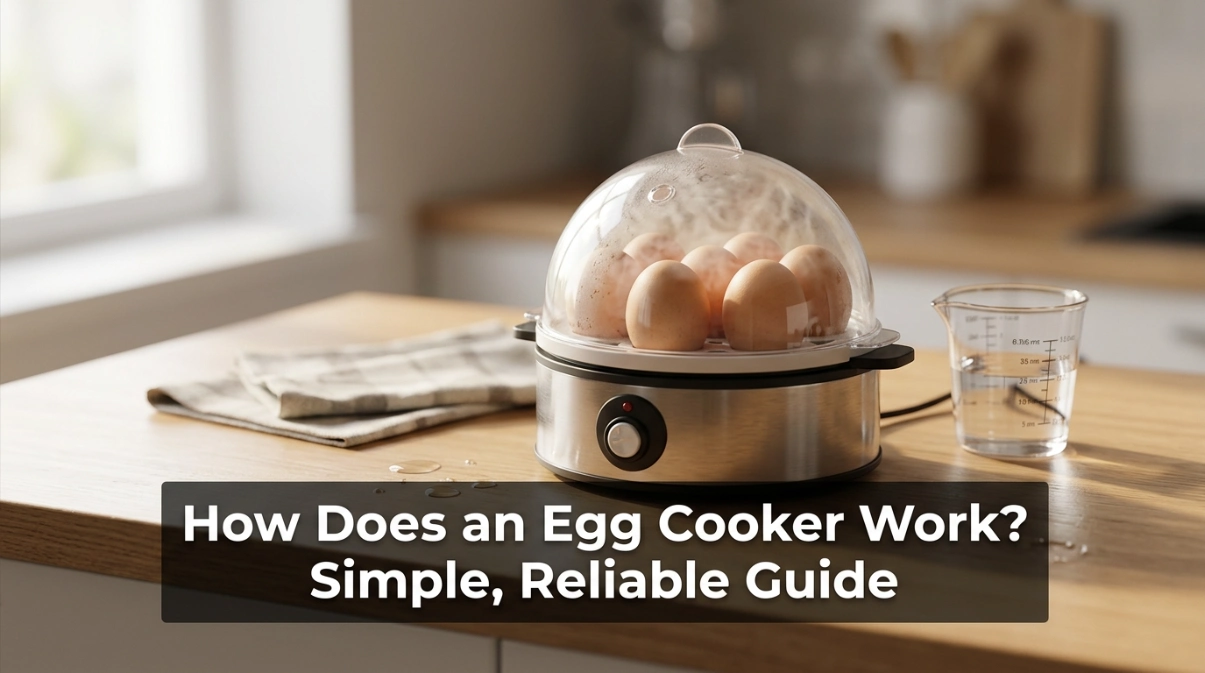
The first time I used an egg cooker, I thought it worked like a small pot. I added eggs, poured in some water, and pressed the button.
The machine stopped on its own, yet the eggs were softer than I wanted. That made me ask: how does an egg cooker work, and how does it know when the eggs are done?
An egg cooker uses steam to cook eggs. The heating plate boils a measured amount of water. When that water is gone, the cooker turns off or sounds an alarm.
This guide explains the full process. I will also share the simple checks I use when eggs come out too soft, too firm, wet, cracked, or unevenly cooked.
Common Signs of an Egg Cooker Problem
Most egg cooker problems show up in the finished eggs. The machine may still turn on and appear normal.
These are the signs I noticed during my tests:
- The eggs are too soft or still runny.
- The yolks are dry or have a green edge.
- One egg cooks faster than the others.
- Water remains on the heating plate.
- Eggs crack and leak into the tray.
- The cooker shuts off too soon.
- The cooker keeps heating after the water is gone.
- Steam escapes from the side of the lid.
- The unit smells hot or makes odd sounds.
A short beep at the end is normal on many models. Flashing lights or repeated beeps may point to a poor tray fit, low water, or a model-specific error.
| Symptom | Likely cause | Quick fix |
|---|---|---|
| Eggs are too soft | Too little water | Use the correct cup mark |
| Eggs are too firm | Too much water | Reduce the water amount |
| Eggs cook unevenly | Tray or lid is not seated | Refit both parts |
| Cooker stops early | Scale on the heating plate | Descale the plate |
| Steam leaks sideways | Lid or seal is damaged | Check the lid and gasket |
A marked water measuring cup is more important than it looks. I once lost mine and used a normal kitchen cup. My results changed with every batch.
If your cup, egg tray, lid, or silicone gasket is damaged, a matching replacement part can restore normal cooking. Check the model number before buying a part because these items are not always universal.
Possible Causes of Poor Cooking Results
An egg cooker has few parts, but each part has a clear job. A small setup error can change how long the eggs cook.
The most common causes are:
- The wrong amount of water
- A dirty or scaled heating plate
- An egg tray placed at an angle
- A blocked steam vent
- A loose lid or worn lid gasket
- Very large, very cold, or cracked eggs
- A weak wall outlet or loose power cord
- A faulty button or safety switch
- Damage to the heating element
The measuring cup controls cooking time on many basic models. More water creates steam for a longer time. Less water gives a shorter cooking cycle.
Some models use buttons and set times instead. However, they still depend on water, heat, steam, and a good lid fit.
How Does an Egg Cooker Work?
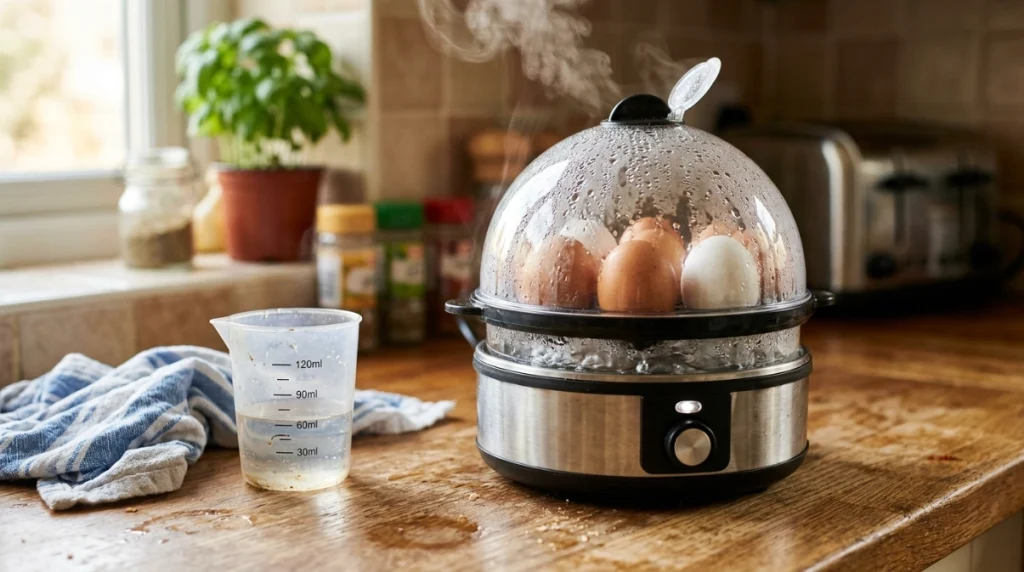
A basic electric egg cooker has a heating plate at the bottom. You pour a measured amount of water onto this plate.
The egg tray sits above the water. Eggs rest in the tray while the lid holds most of the steam inside.
When you switch on the cooker, the heating element warms the plate. The water begins to boil and turns into steam.
That steam moves around the eggs and transfers heat through the shells. It cooks the egg whites first, followed by the yolks.
The Water Sets the Cooking Time
Many egg cookers do not check the yolk itself. They use the amount of water to control how long heat is applied.
For soft eggs, you normally add less water. Medium and hard eggs need more water and a longer steam cycle.
The exact marks can vary by model. I always follow the original measuring cup and manual rather than copying the amount used by another cooker.
The Cooker Detects When the Water Is Gone
While water covers the heating plate, the plate stays near the boiling point of water. After the water evaporates, the plate’s temperature rises.
A thermostat or heat sensor detects this change. It then triggers the auto shut-off, changes the light, or starts a beeping sound.
This is how many simple egg cookers know when to stop. They measure heat and water loss rather than checking the egg directly.
The Lid Controls the Steam
The lid keeps hot steam around the eggs. Its vent lets extra pressure escape safely.
The vent must stay open. Blocking it can trap too much heat and steam.
Never place a towel over the cooker. Never hold the vent closed, even if you think steam is escaping too fast.
The Tray Keeps the Eggs Above the Plate
The egg tray holds each egg in a set position. It also keeps the eggs away from the direct heat of the plate.
Some measuring cups include a small piercing pin. The manual may tell you to pierce the wide end of each egg before cooking.
Use the pin only if your model calls for it. Hold the egg gently, and keep your fingers away from the sharp point.
| Main part | What it does | Common issue |
|---|---|---|
| Heating plate | Boils the water | Limescale slows heating |
| Egg tray | Holds eggs above the plate | Poor fit causes uneven heat |
| Lid and vent | Retain and release steam | Blockage causes excess steam |
| Heat sensor | Ends the cooking cycle | Damage may stop shut-off |
| Measuring cup | Sets the water amount | Wrong cup changes cook time |
How to Fix Common Egg Cooker Problems

Most poor results do not need a repair. I start with the water, tray, lid, and heating plate.
Check the Power Source
Plug the cooker straight into a working wall outlet. Test the outlet with a safe, simple device if the cooker has no power.
Inspect the cord and plug for cuts, melted spots, or bent pins. Stop using the cooker if you see heat damage.
Do not open the base or try to replace internal wires. The heating unit contains live electrical parts.
Measure the Water Again
Use the cup supplied with the cooker. Select the mark for the number of eggs and the result you want.
Make only small changes after your first test. When my eggs were too soft, adding a little more water worked better than filling the plate at random.
| Cooking problem | Recommended solution | Difficulty |
|---|---|---|
| Runny yolk | Add slightly more water | Easy |
| Dry yolk | Use slightly less water | Easy |
| Uneven eggs | Use similar egg sizes | Easy |
| Early shut-off | Descale the plate | Easy |
| No auto shut-off | Stop use and seek service | Professional |
Inspect the Tray and Lid
Remove and refit the egg tray. It should sit flat without rocking.
Place the lid in its normal position. Check it for cracks, warping, or a damaged silicone seal if your model has one.
Do not force the lid shut. Most egg cooker lids rest in place and are not meant to form an airtight seal.
Clean the Steam Vent
Wait until the unit is cool. Remove the lid and check the vent for dried egg or mineral deposits.
Wash the removable lid with mild dish soap. Use a soft cloth or non-abrasive sponge to avoid scratches.
Regular cleaning helped my cooker produce steadier results. It also stopped water from spitting around the edge of the lid.
Descale the Heating Plate
White or brown marks on the plate are often mineral buildup. They can slow heat transfer and affect the shut-off point.
Unplug the cooker and let it cool. Apply a small amount of white vinegar and water, following the manual if it gives a set ratio.
Let it sit briefly. Wipe it with a soft cloth, then wipe again with clean water.
Do not immerse the cooker base. Do not use steel wool, knives, or harsh powder on the heating plate.
Reset Overheat Protection
Some models stop after they run dry or become too hot. Unplug the cooker and allow it to cool fully.
Refill it correctly and try one new cycle. If it still stops early, the thermostat or safety switch may be faulty.
Never bypass an overheat switch. It protects the cooker from unsafe heat.
Mistakes to Avoid
My biggest mistake was treating the water marks as rough advice. They are often the main cooking control.
Avoid these common errors:
- Adding water without measuring it
- Mixing very small and extra-large eggs
- Blocking the lid vent
- Running the cooker without water
- Touching the hot lid or steam vent
- Pouring cold water onto a hot plate
- Immersing the electrical base
- Scraping scale with a metal tool
- Opening the sealed heating unit
- Bypassing the thermostat or safety switch
Lift the lid away from your face. Hot steam can burn skin even when the cooker looks calm.
Unplug the cooker before wiping the plate. Allow every part to cool before handling or storing it.
When to Replace the Egg Cooker
Replace the cooker if the power cord is damaged, the base leaks, or you smell burning plastic. These signs can point to an electrical or heat fault.
I would also replace a low-cost unit if it no longer shuts off. Internal electrical work may cost more than a safe new cooker.
A tray, lid, cup, or gasket can often be replaced. A damaged heating element, thermostat, or sealed base is a more serious issue.
Stop using the cooker if it trips a breaker, sparks, smokes, or overheats. Do not run another test to “make sure.”
My Personal Experience
My first batch failed because I used too little water. The whites looked done, but the yolks were much softer than I expected.
I first blamed the cooker. Then I checked the cup and saw that I had used the mark for fewer eggs.
On another test, the cooker stopped early. A chalky layer had formed on the heating plate from hard water.
I unplugged it, let it cool, and used diluted white vinegar. After wiping away the scale, the next batch cooked more evenly.
I also learned not to judge the process by the sound alone. Some units beep and stop heating, while others beep but must be switched off by hand.
Now I check four things before each batch: the water mark, egg size, tray position, and steam vent. Those quick checks prevent most problems.
Final Thoughts
So, how does an egg cooker work? It heats a measured amount of water and uses steam to cook the eggs.
When the water is gone, a heat sensor detects the rise in plate temperature. The cooker then stops heating or alerts you.
For better results, measure the water with care. Keep the plate and vent clean, seat the tray well, and never bypass a safety part.
If the unit leaks, smells burnt, or fails to shut off, stop using it. Simple setup issues are easy to fix, but electrical faults are not safe home repairs.
5 thoughts on “How Does an Egg Cooker Work? Simple, Reliable Guide”