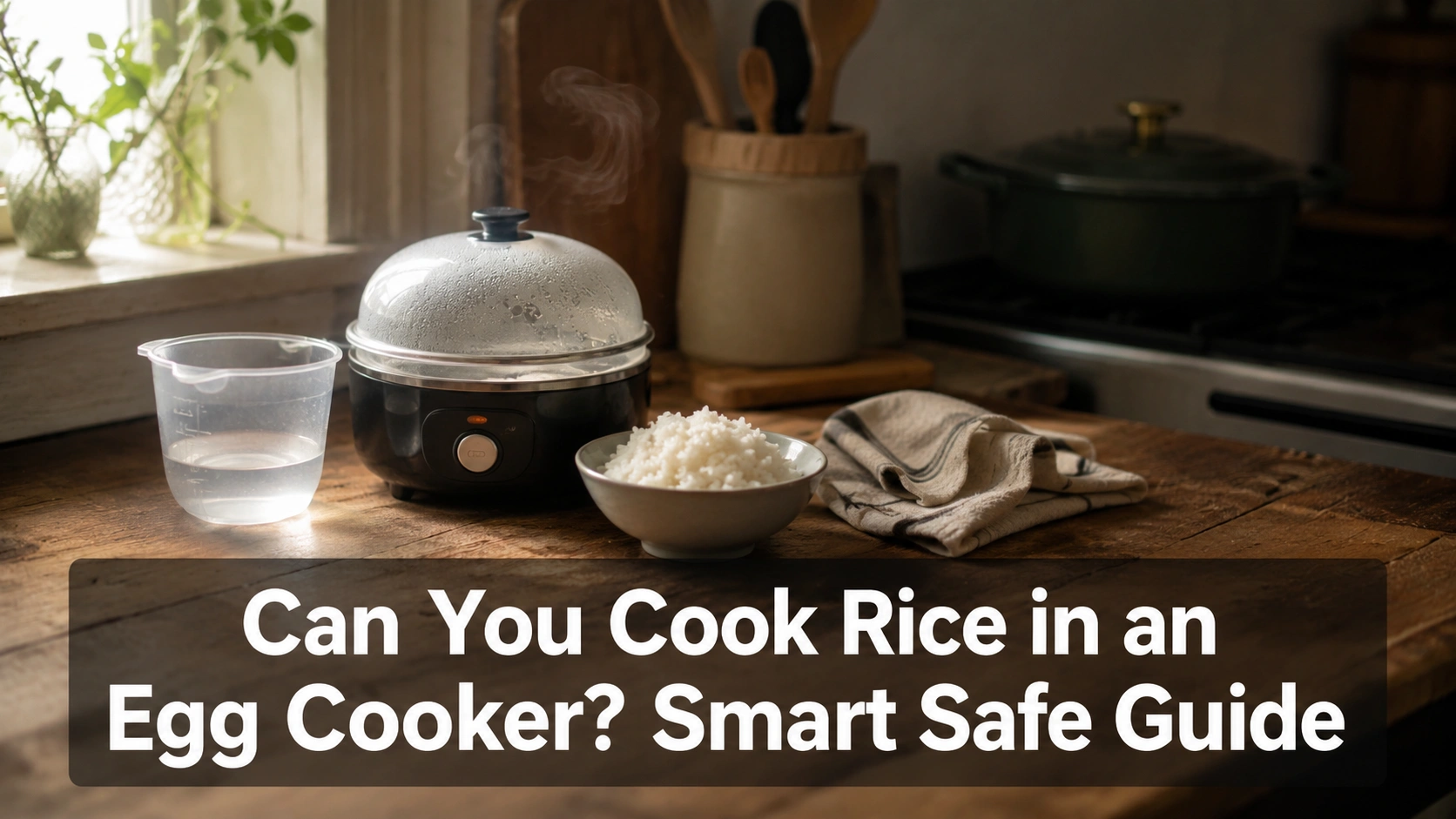
Can you cook rice in an egg cooker? Yes, sometimes you can, but only in a very small amount and only if your egg cooker can safely hold a bowl or steaming tray.
I tested this because I wanted a quick way to make a tiny serving of rice without using a rice cooker. My first try was not perfect. I used too much water, and the lid started spitting steam.
After a few careful tests, I learned what works and what can go wrong. In this guide, I will show you the safe way to try it, the common problems, and when it is better to stop.
Common Signs of the Problem
The first sign is usually water bubbling out from under the lid. This happens when the rice foams as it cooks and the egg cooker has very little space inside.
Another sign is rice staying hard after the cooker shuts off. Egg cookers are made for eggs, so the auto shut-off may stop before rice has enough time to soften.
You may also notice a light burning smell. This can happen if the bowl gets dry or if starch water spills onto the heating plate.
| Symptom | Likely Cause | Quick Fix |
|---|---|---|
| Rice is still hard | Not enough cooking time | Add a little hot water and run one short cycle |
| Water leaks out | Too much rice or water | Use a smaller amount next time |
| Burning smell | Bowl dried out or spill on plate | Stop, unplug, and let it cool |
| Cooker shuts off too soon | Auto shut-off reached limit | Rest the rice, then run a short second cycle |
If the egg cooker beeps, flashes, or shuts off fast, do not keep forcing it. That may be the overheat protection doing its job.
Possible Causes
The biggest cause is using the egg cooker like a rice cooker. It is not the same machine, even though both use steam and heat.
Most egg cookers have a small heating plate, a water measuring cup, an egg tray, and a lid with a steam vent. They are designed to steam eggs, not boil grains for a long time.
Common causes include:
- Adding too much rice
- Adding too much water
- Blocking the steam vent
- Using a plastic bowl that is not heat-safe
- Pouring rice directly onto the heating plate
- Leaving the egg tray or egg insert in the wrong position
- Not cleaning starch spills after cooking
Around this point in my testing, I found that small accessories matter. A proper heat-safe steaming bowl, a replacement measuring cup, or even a good non-abrasive sponge can make the process safer and less messy.
But I would not buy extra parts just to turn an egg cooker into a rice cooker. They only help if your cooker already supports steaming small foods.
How to Fix Can You Cook Rice in an Egg Cooker
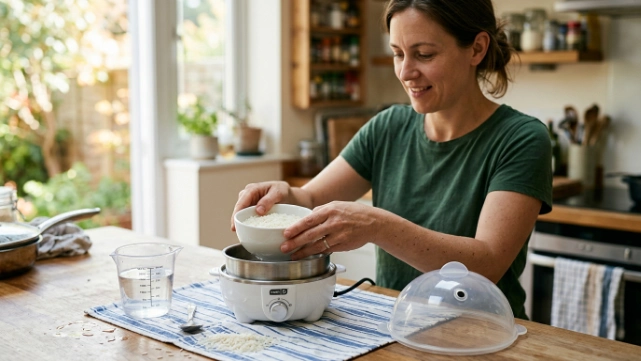
The best fix is to treat the egg cooker as a mini steamer, not a true rice cooker. That one change makes the whole process safer.
Check the Manual First
Before adding rice, check the manual or the label under your cooker. Some egg cookers allow vegetables, dumplings, or small steamed foods.
If your manual says eggs only, do not cook rice in it. That is not worth the risk.
Also check the power cord and wall outlet before testing. A weak outlet or loose plug can cause uneven heating or sudden shut-off.
Use the Right Bowl
Never place rice directly on the heating plate. That plate is only for water, not food.
Use a small heat-safe bowl if your egg cooker has enough room. The lid should close well without pressing down hard.
The steam vent must stay open. If the bowl touches the lid or blocks the vent, the cooker can leak, spit, or overheat.
Measure a Tiny Amount
Start with 1 to 2 tablespoons of uncooked rice. That sounds small, but rice expands a lot.
Rinse the rice first. This removes extra starch and cuts down on foaming.
For white rice, I had better results with about 1 part rice and 1.5 to 2 parts water inside the small bowl. Then I added water to the heating plate as the egg cooker manual suggests.
Let the Rice Rest
Egg cookers often shut off before rice is fully done. So resting matters.
After the first cycle, keep the lid on for 8 to 10 minutes. The trapped steam helps the rice soften.
If the rice is still firm, add a spoon of hot water to the bowl and run a short second cycle. Do not run many cycles back to back without cooling the cooker.
Watch for Leaks and Steam
Stay near the cooker during the test. Rice water can foam and leak fast.
If water comes out near the lid, unplug the cooker. Let it cool before wiping anything.
This is also where cleaning matters. Starch spills can dry onto the heating plate and cause bad smells the next time you use the cooker.
Descale the Heating Plate
If the cooker heats poorly, the heating plate may have mineral buildup or limescale. This is common if you use hard water.
Add a little white vinegar and water to the cool heating plate. Let it sit for a short time, then wipe it with a soft cloth.
Do not scrape the plate with a knife or harsh scrubber. That can damage the surface.
Test the Lid and Steam Vent
A loose lid can let steam escape too fast. A blocked vent can cause pressure and leaks.
Check the lid for cracks. Also check the steam vent for dried starch.
If your cooker has a silicone lid gasket, make sure it sits flat. A damaged gasket can lead to water leaks and uneven cooking.
| Problem | Recommended Solution | Difficulty Level |
|---|---|---|
| Rice foams over | Use less rice and rinse it first | Easy |
| Rice is dry | Add a little more water next time | Easy |
| Cooker smells burnt | Unplug, cool, and wipe the plate | Easy |
| Steam escapes too fast | Check lid fit and gasket | Easy |
| Cooker keeps shutting off | Let it cool before another cycle | Medium |
Mistakes to Avoid
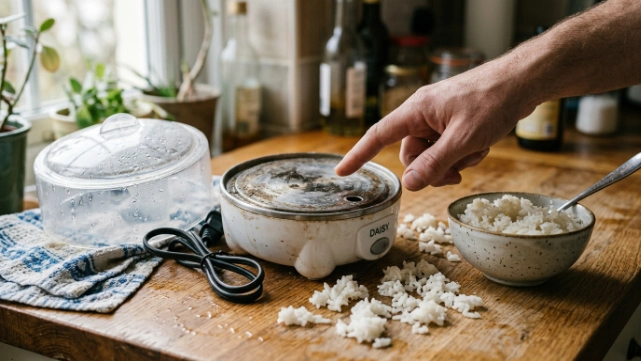
The biggest mistake is adding rice and water directly to the heating plate. I know it seems easy, but it can burn, stick, and damage the cooker.
Another mistake is filling the bowl too high. Rice needs room to bubble and expand.
Do not cover the steam vent with foil, cloth, or a bowl. The vent is there for safety.
Do not open the sealed heating unit. Do not bypass the safety switch, auto shut-off, or overheat protection. If the cooker has electrical trouble, stop using it.
Also avoid metal tools on the heating plate. Use a soft cloth or non-abrasive sponge instead.
When to Replace the Egg Cooker
Replace the egg cooker if it smells burnt even after cleaning. That may mean starch or water reached a place you cannot safely reach.
You should also replace it if the power cord is damaged, the plug gets hot, or the control button does not work well.
If the lid is cracked, steam may escape in the wrong place. A replacement lid may help if the brand sells one, but only if the heating base still works safely.
| Repair Issue | Estimated Cost | Replace Instead? |
|---|---|---|
| Lost measuring cup | Low | No |
| Cracked lid | Low to medium | Maybe |
| Damaged power cord | Unsafe to repair at home | Yes |
| Bad burning smell | Unknown | Yes |
| Faulty heating plate | Not beginner-safe | Yes |
In my view, repair is only worth it for simple parts like a lid, tray, or measuring cup. Electrical faults are not worth the risk.
My Personal Experience
My first test failed because I used too much rice. The water foamed, the lid rattled, and the rice was still firm.
For the second test, I used less rice and rinsed it well. I also used a small heat-safe bowl instead of placing anything on the heating plate.
That worked much better. The rice cooked softly after one cycle and a short rest. It was not as fluffy as rice from a real rice cooker, but it was fine for a small snack.
The biggest lesson was simple. An egg cooker can steam a tiny amount of rice, but it should not be treated like a full rice cooker.
I also learned to wipe the heating plate right after it cooled. When I skipped that step, the next batch of eggs had a faint burnt smell.
Final Thoughts
So, can you cook rice in an egg cooker? Yes, but only in a small, careful way.
Use a heat-safe bowl, rinse the rice, keep the steam vent clear, and start with a tiny amount. Let the rice rest after cooking, and do not force the cooker through too many cycles.
If your egg cooker leaks, smells burnt, shuts off too fast, or has a damaged cord, stop using it for rice. Safety matters more than saving a few minutes.
For regular rice, a rice cooker or small pot is still better. But for a tiny test batch, an egg cooker can work if you use it with care.