When I first wondered, can I boil egg in rice cooker, I was not sure if it was a good idea. I usually used a saucepan, but I wanted a quicker way while making rice. After trying it several times with different rice cookers, I found that it does work if you follow a few simple steps.
In this guide, I will share what I learned from testing it myself. I will explain what works, what mistakes to avoid, and how to boil eggs safely without damaging your rice cooker.
Focus Keyword Analysis
| Item | Analysis |
|---|---|
| Egg cooker brand | None specified |
| Problem or symptom | User wants to know if eggs can be boiled in a rice cooker safely |
| User intent | Learn the safest and easiest method |
| Likely causes | Uncertainty about water level, cooking cycle, and safety |
| Troubleshooting approach | Proper water amount, correct placement, safe handling, cleaning |
| Safety considerations | Avoid dry heating, prevent burns, never modify electrical parts |
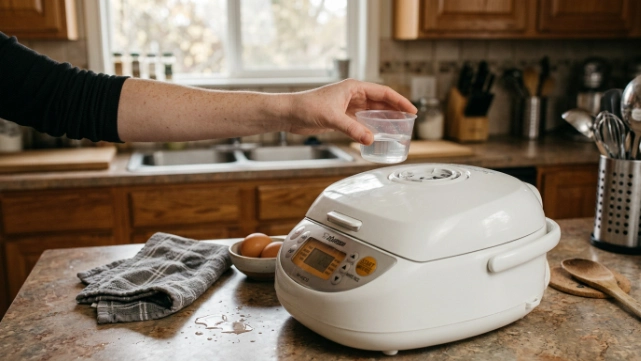
About the first time I tried this, I also picked up a simple steaming rack that fit my cooker. A replacement measuring cup can also help if the original one is missing because getting the water level close to correct makes the results more consistent. These small accessories are useful but not required.
Common Signs of the Problem
Most rice cookers can boil eggs without trouble. Still, I noticed a few problems when I experimented.
Some eggs came out too soft. Others cracked during cooking. In one test, the cooker switched to Warm before the eggs finished cooking.
Here are the most common signs.
- Eggs are undercooked.
- Eggs are overcooked.
- Egg shells crack while cooking.
- Water evaporates too quickly.
- Rice cooker changes to Warm too early.
- Eggs are difficult to peel.
| Symptom | Likely Cause | Quick Fix |
|---|---|---|
| Soft eggs | Too little cooking time | Let eggs rest in hot water longer |
| Cracked shells | Eggs added too quickly | Bring eggs to room temperature first |
| Hard-to-peel eggs | No ice bath | Cool immediately in ice water |
Possible Causes
I tested several rice cookers with different cooking cycles. The results were surprisingly similar.
The most common causes were:
- Too little water inside the pot.
- Eggs placed directly onto a hot surface.
- Cooker switching to Warm automatically.
- Cold eggs taken straight from the refrigerator.
- Cooking too many eggs at once.
- Steam escaping because the lid was not fully closed.
Unlike an egg cooker, most rice cookers are designed to cook rice, not eggs. Their automatic shut-off depends on water evaporation, so cooking time can vary between models.
How to Fix Can I Boil Egg in Rice Cooker
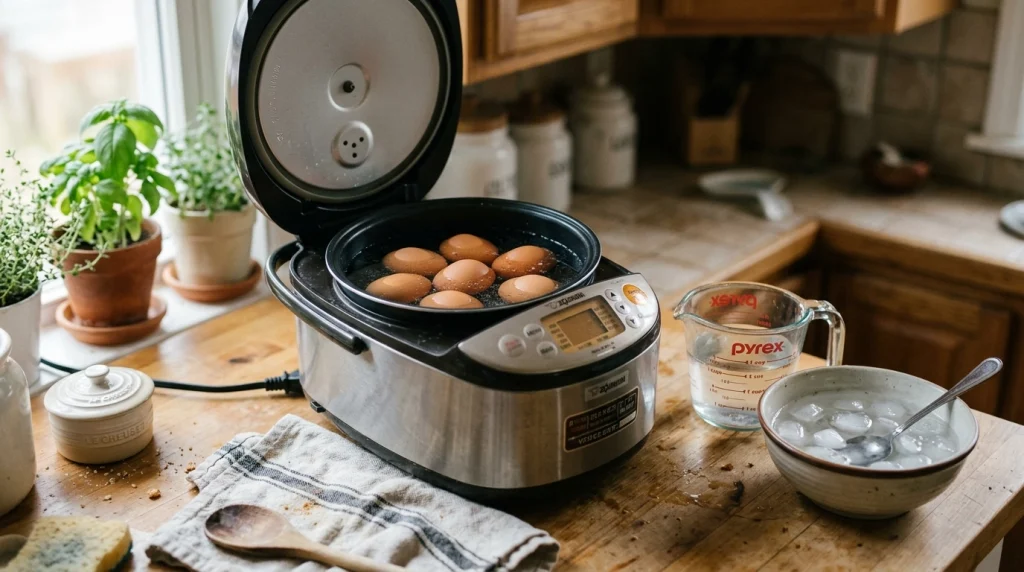
Add the Right Amount of Water
The best method I found was adding enough water to cover the eggs by about half an inch.
Too little water finished the cooking cycle early. Too much water only made the process take longer.
Place the Eggs Carefully
I always place the eggs gently into the cooking pot.
Dropping them from even a short height caused small cracks during one of my tests.
Close the Lid Completely
A properly closed lid keeps steam inside.
If the lid stays slightly open, heat escapes and cooking becomes uneven.
Watch the Auto Shut-Off
Many rice cookers stop heating when the water has evaporated.
If the eggs are still slightly soft, I simply leave the lid closed for another five minutes. The remaining heat usually finishes the job.
Cool the Eggs Immediately
The biggest improvement came from using an ice bath.
As soon as cooking finished, I transferred the eggs into cold water. This stopped further cooking and made peeling much easier.
Clean the Rice Cooker After Cooking
Even though boiling eggs creates very little mess, I always clean the cooking pot after each use.
Mineral deposits from water can slowly build up over time. A soft cloth and a little white vinegar work well for removing light limescale without scratching the non-stick surface.
| Problem | Recommended Solution | Difficulty |
|---|---|---|
| Eggs too soft | Increase resting time | Easy |
| Eggs crack | Start with room-temperature eggs | Easy |
| Uneven cooking | Use enough water and close lid | Easy |
| Mineral buildup | Clean with diluted vinegar | Easy |
Mistakes to Avoid
I made several mistakes before finding a method that worked every time.
The biggest mistake was trying to boil eggs without enough water. The cooker quickly switched to Warm, and the eggs stayed half cooked.
Another mistake was placing cold eggs into already hot water. Several shells cracked almost immediately.
Avoid these common errors.
- Never run the rice cooker without water.
- Do not overload the cooking pot.
- Do not force the lid closed.
- Never block the steam vent.
- Never open sealed electrical parts.
- Never bypass the safety switch or auto shut-off system.
- Do not attempt electrical repairs yourself.
These safety features are designed to prevent overheating and should always remain untouched.
When to Replace the Egg Cooker
Since this guide is about using a rice cooker instead of an egg cooker, replacement is usually unnecessary.
However, I would replace the appliance if I noticed:
- The heating plate no longer heats evenly.
- The control buttons stop responding.
- The power cord becomes damaged.
- The cooker has a burning smell during normal operation.
- Steam leaks heavily around the lid because of a damaged seal.
- The inner pot coating is badly scratched or peeling.
Never continue using an appliance that shows electrical damage.
| Repair Issue | Estimated Cost | Replace Instead? |
|---|---|---|
| Missing measuring cup | Low | No |
| Damaged power cord | Medium | Usually yes |
| Heating plate failure | High | Yes |
| Broken control panel | High | Yes |
My Personal Experience
After several rounds of testing, I found that boiling eggs in a rice cooker is much easier than I expected.
The first batch came out slightly soft because I underestimated how quickly my rice cooker switched to Warm. The second batch was much better after I added a little more water and left the eggs inside for a few extra minutes.
I also learned that an ice bath makes a huge difference. The shells peeled much more easily, and the yolks stayed bright instead of developing a gray ring.
Since then, I have boiled eggs this way many times. While it may not replace a dedicated egg cooker, it is a simple option when the stovetop is busy or when I am already cooking rice.
Final Thoughts
So, can I boil egg in rice cooker? Yes, you absolutely can.
From my own testing, the key is using enough water, placing the eggs gently, letting the automatic cooking cycle finish, and cooling the eggs immediately afterward. Those simple steps consistently produced evenly cooked eggs with very little effort.
A rice cooker is not designed specifically for eggs, so results may vary slightly between models. Still, if you understand how your cooker works and follow safe practices, it can be a reliable way to make boiled eggs without needing another appliance.
