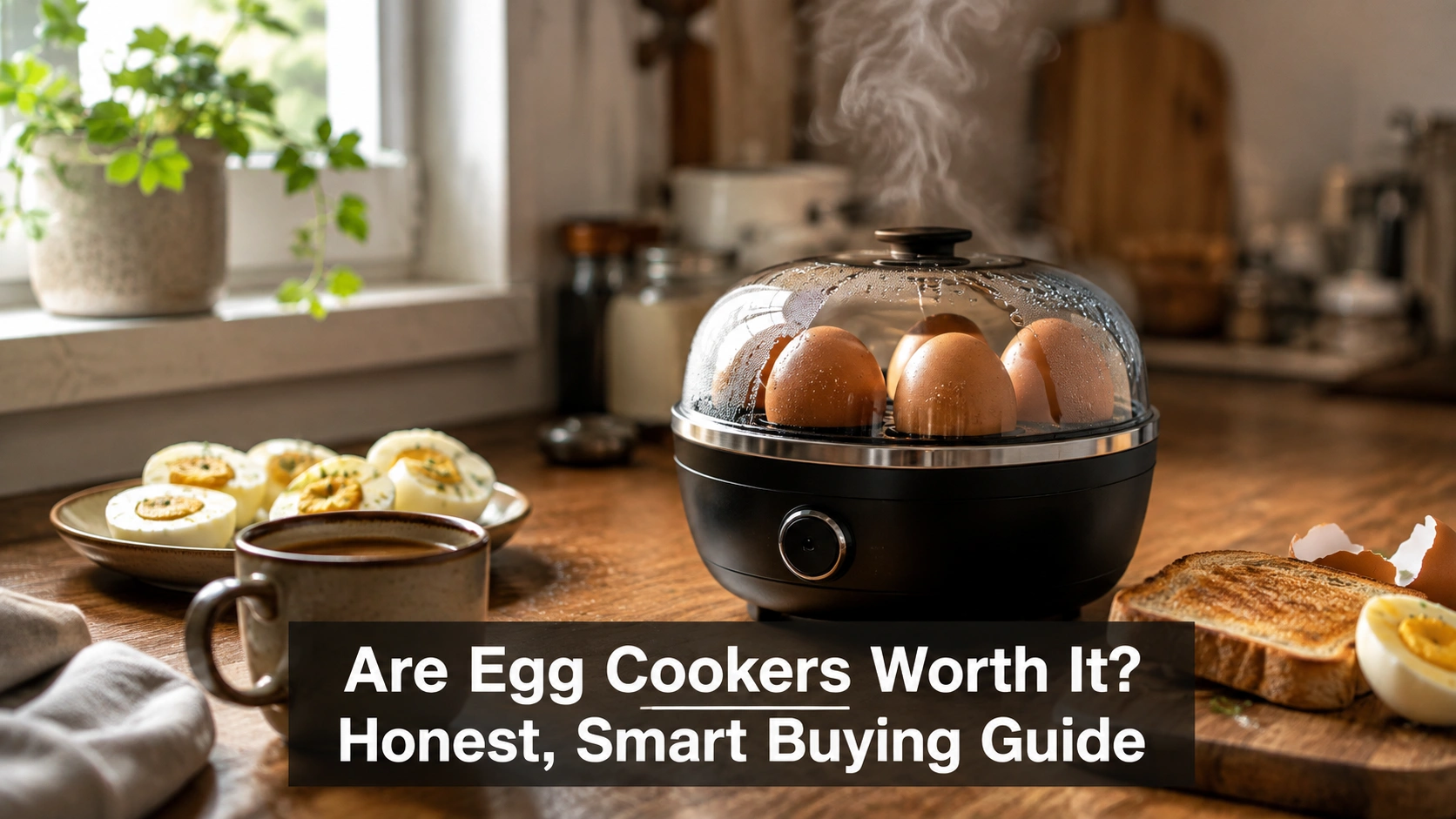
Are egg cookers worth it? I think they can be, but only for the right person. They work best for anyone who cooks eggs often and wants the same result each time.
I looked at egg cookers because boiling eggs on the stove felt easy, yet I still got cracked shells and soft centers. I also forgot the pot more than once. An egg cooker fixed much of that, though it brought a few small issues of its own.
This guide explains when an egg cooker is useful, what can make it feel like a poor buy, and how to fix common problems safely.
Common Signs of the Problem
The main problem is not always a broken machine. The cooker may work, but the results may not feel worth the cost, mess, or counter space.
You may get uneven eggs, water left on the plate, loud beeps, or a burnt smell. White mineral marks may also appear after a few uses.
| Symptom | Likely Cause | Quick Fix |
|---|---|---|
| Eggs are too soft | Too little water | Add a little more |
| Eggs crack | Cold shells or no hole | Warm and pierce them |
| Unit smells burnt | Dry plate or residue | Unplug, cool, and wipe |
| Cooker stops early | Scale or low water | Measure and descale |
| Water leaks | Lid or tray sits badly | Refit the parts |
Small parts can also change the value of the cooker. A spare water measuring cup or egg tray helps if the first one cracks or gets lost.
Check the model before buying replacement lids, trays, or silicone gaskets. Parts that look alike may not fit the same way.
Possible Causes
An egg cooker may feel disappointing for simple reasons. Most are linked to water, egg size, setup, or care.
- The water mark does not match the egg count.
- The eggs are very cold.
- The tray is not flat.
- The steam vent is blocked.
- The heating plate has mineral buildup.
- The auto shut-off ends the cycle too soon.
- The cooker is used only once or twice a month.
Water matters more than I expected. Many egg cookers run until the water is gone. Less water often means a shorter cycle, while more water means a longer one.
A loose outlet or damaged cord can also cause weak or uneven heat. Stop using the cooker if the cord looks cut, melted, or very hot.
Are Egg Cookers Worth It for Everyday Use?
Egg cookers are worth it for people who make boiled, poached, or steamed eggs several times a week. They save attention more than they save raw cooking time.
The best part for me was being able to press a button and work on toast or coffee while the eggs cooked.
They are less useful for people with little storage space. They may also be a poor buy if eggs are cooked only once in a while.
| Situation | Worth It? | Why |
|---|---|---|
| Eggs most mornings | Yes | Easy and steady |
| Weekly meal prep | Usually | Less watching |
| One egg now and then | Probably not | A pot is enough |
| Very small kitchen | Maybe not | Takes up space |
| You forget boiling pots | Yes | Auto shut-off helps |
How to Fix Problems That Make Egg Cookers Feel Not Worth It
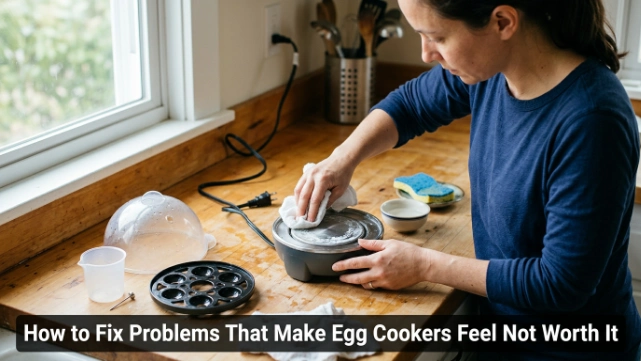
Check the Water Measuring Cup
Use the cup that came with the cooker. Its lines are made for that unit, so a normal kitchen cup may give poor results.
My first mistake was using the “hard” line without checking the egg count. The eggs came out too firm. Small water changes gave me better control.
Inspect the Egg Tray and Lid
Place the tray flat on the base. A tilted tray can make eggs cook at different rates.
Make sure the lid sits well and the steam vent stays open. Never cover the vent, as hot steam needs a safe path out.
Replace a split gasket only with a part made for your model.
Check the Power Source
Plug the cooker into a firm wall outlet. Avoid a loose adapter or damaged extension lead.
Inspect the cord from the outside. Do not open the base or try to repair the heating element yourself.
Remove Mineral Buildup
White or brown marks on the heating plate are often mineral deposits. They can slow heat and cause odd smells.
For cleaning, unplug the unit and let it cool. Wipe the plate with a soft cloth and a little white vinegar.
For thick scale, let a small amount of vinegar sit for a few minutes. Wipe it with a non-abrasive sponge.
Do not pour water into the electrical base. Never scrape the plate with a knife or metal pad.
Test the Auto Shut-Off
Many egg cookers stop when the water is gone. This is normal and helps prevent overheating.
If the cooker stops too soon, descale it and test again with the right water level. Use one or two eggs for the test.
If it still stops early, the safety switch may be failing. Replacement is often safer than repair.
Check Beeps, Lights, and Buttons
A beep often means the cycle is done. A flashing light may mean the unit is hot, dry, or not set well.
Press each button once and make sure it does not stick. If the panel acts on its own or smells burnt, unplug the unit.
Mistakes to Avoid
Do not add water to a hot plate. Fast cooling may harm the surface and send up hot steam.
Lift the lid away from your face. This keeps steam from moving toward your eyes and hands.
Do not overfill the tray or block the vent. Do not run the cooker dry unless the manual says it is safe.
Never bypass the auto shut-off, safety switch, or heat guard. Do not open a sealed heating unit.
When to Replace the Egg Cooker
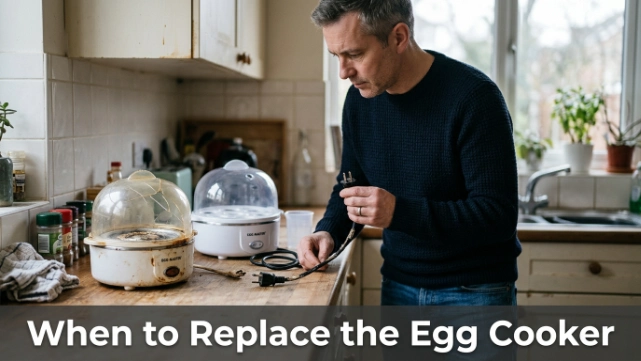
Replace the cooker if the cord is damaged, the base leaks, the plate is cracked, or the unit smells like burnt plastic.
Replace it at once if the auto shut-off fails. A cooker that keeps heating after the water is gone is not safe.
| Repair Issue | Cost Level | Replace Instead? |
|---|---|---|
| Lost measuring cup | Low | No |
| Cracked egg tray | Low | No |
| Damaged lid | Low to medium | Maybe |
| Failed button | Medium | Often |
| Bad heating element | High | Yes |
| Failed shut-off | Safety risk | Yes |
A low-cost unit may not be worth a paid repair. A new model with a clear water guide and good shut-off may be the safer choice.
My Personal Experience
My biggest lesson was that an egg cooker needs a short test period. My first batch was too soft because I used too little water.
The next batch cracked because the eggs were very cold. Letting them sit for a few minutes helped.
I also learned that marks on the plate do not always mean damage. Vinegar removed the scale, and the cooker heated more evenly after that.
What worked best was keeping notes for three batches. I wrote down the egg count, water line, egg size, and final texture.
After that, the results became steady. The cooker felt worth it when I made four to six eggs, but less useful when I cooked only one.
Final Thoughts
So, are egg cookers worth it? Yes, for regular egg eaters, busy mornings, meal prep, and anyone who wants steady results with less watching.
They are not a must for every kitchen. A pot works well if you cook eggs rarely or do not mind using a timer.
Before giving up on an egg cooker, check the water, tray, lid vent, outlet, and heating plate. Most poor results come from setup or mineral buildup.
My honest view is simple. An egg cooker is a small convenience, not a miracle tool. Used often and cared for well, it can earn its place on the counter.
